Topical Steroids: A Practical Guide To Safe Use
Comprehensive guide to topical corticosteroids: uses, potency, application, side effects and safe practices for skin conditions.
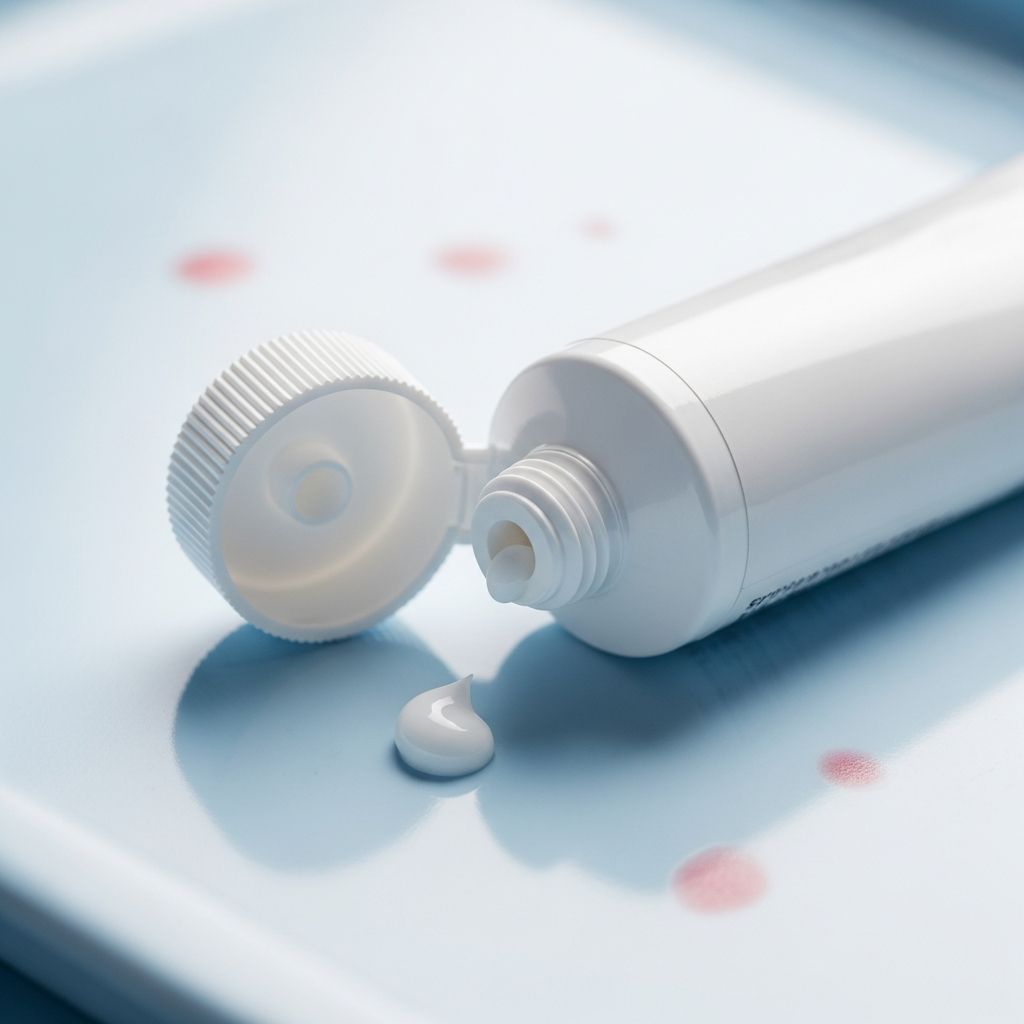
A
topical steroid
is an anti-inflammatory preparation in cream, ointment, lotion or gel form used primarily to controleczema/dermatitis
and many other inflammatory skin conditions. These medications mimic the effects of cortisol, a natural hormone produced by the adrenal glands, to reduce inflammation, itching and redness in the skin.What are topical steroids?
Topical steroids, also known as topical corticosteroids, are synthetic versions of glucocorticoids applied directly to the skin. They are the most commonly prescribed topical medications for rashes and eczema due to their potent anti-inflammatory, immunosuppressive and antiproliferative properties. Unlike systemic steroids, topical forms target the skin locally with minimal systemic absorption when used appropriately.
These agents work by binding to glucocorticoid receptors in skin cells, altering gene expression to suppress inflammatory mediators like cytokines, prostaglandins and leukotrienes. This leads to reduced vasodilation, edema and cellular infiltration in affected areas.
How do topical steroids work?
The effects of topical steroids on various cells in the skin include:
- Suppressing inflammatory cells: Neutrophils, eosinophils, lymphocytes, macrophages and mast cells.
- Vasoconstriction: Reducing blood vessel dilation to decrease redness.
- Stabilizing lysosomal membranes: Preventing release of inflammatory enzymes.
- Inhibiting fibroblast activity: Reducing collagen synthesis and fibrosis.
- Decreasing keratinocyte and endothelial proliferation: Controlling skin thickening and scaling.
This multifaceted action makes topical steroids first-line therapy for acute flares of atopic dermatitis, contact dermatitis, psoriasis and seborrheic dermatitis[10].
What is the potency of a topical steroid?
The
potency of a topical steroid
depends on several factors:- Molecule structure: Number of double bonds, lipophilicity and halogenation increase potency.
- Concentration: Higher concentrations generally mean higher potency, though plateau effects occur.
- Formulation and base: Ointments enhance penetration over creams.
- Release characteristics: How readily the steroid is released from the vehicle.
There is little point in diluting a topical steroid, as potency does not depend much on concentration and dilution does not meaningfully reduce adverse effect risks. After the first 2–3 applications, once-daily application (usually at night) provides equivalent benefits to more frequent use.
Steroid potency classifications
Topical steroids are classified into potency groups based on vasoconstrictor assays, clinical efficacy and molecular properties. Many countries use a four-class system (UK/NZ: Class I strongest; Europe: Class IV strongest).
| Class | Potency | Examples (NZ) | Relative Potency vs Hydrocortisone |
|---|---|---|---|
| Class I/IV | Very potent | Clobetasol propionate 0.05%, Betamethasone dipropionate 0.05% | Up to 600x |
| Class II | Potent | Betamethasone valerate 0.1%, Fluocinonide 0.05% | 50–100x |
| Class III | Moderate | Triamcinolone acetonide 0.1%, Betamethasone valerate 0.025% | 2–25x |
| Class IV | Mild | Hydrocortisone 1%, Hydrocortisone acetate 1% | 1x |
Source: Adapted from DermNet NZ classifications.
As a general rule, use the
weakest possible steroid
that controls the condition. Potent preparations may be used short-term (1–2 weeks) for thick plaques on extremities, then stepped down.Related Stories



Absorption of topical steroids
A topical steroid is absorbed at different rates depending on:
- Skin thickness: Thinner skin (face, eyelids, genitals) absorbs more readily than thick skin (palms, soles).
- Skin condition: Inflamed, broken or denuded skin increases absorption.
- Application site: Flexures and occluded areas enhance penetration.
- Vehicle: Ointments > gels > creams > lotions.
- Occlusion: Covering with plastic wrap or wet dressings can increase absorption 10-fold.
Absorption is greater in the presence of keratolytics like salicylic acid. A mild steroid effective on the face may fail on palms, while potent steroids risk side effects on thin skin within weeks.
The
fingertip unit (FTU)
measures appropriate quantity: one FTU (0.5g) covers two adult palms. Adults need 2–4 FTUs per limb, 20–30 FTUs for trunk.Topical steroid formulations
Several formulations suit different skin lesions and locations:
- Creams: Non-greasy, general purpose, water-miscible; ideal for weeping lesions.
- Ointments: Greasy, occlusive; best for dry, thick plaques.
- Lotions: Light, drying; suitable for hairy areas.
- Gels/solutions: Alcohol-based, non-greasy; for scalp and oily skin.
- Scalp lotions/foams: Easy application to hair-bearing areas.
Prescribe in adequate quantities: 15–30g for face/limbs, 100g+ for trunk.
Combined topical steroids
Topical steroids are sometimes combined with:
- Antibacterials: e.g., Fusidic acid for infected eczema (short-term, <1 week to avoid resistance).
- Antifungals: For candidal intertrigo.
- Calcipotriol: For psoriasis.
Use combinations rarely and briefly under supervision.
How to apply topical steroids
Apply once daily to inflamed skin for 5 days to several weeks, then taper. Thinly coat affected areas; rubbing enhances absorption but avoid broken skin initially. Use FTUs for accuracy. For chronic conditions, intermittent regimens (e.g., 2 days/week) maintain control post-clearance.
What are the side effects of topical steroids?
Side effects are
uncommon or rare
with appropriate use under supervision. They may be falsely blamed when underlying disease persists.Local side effects (from prolonged potent steroid use)
- Atrophy: Skin thinning, telangiectasia, striae, purpura (face/flexures most susceptible).
- Steroid rosacea/acne: Facial erythema, papules.
- Perioral dermatitis:** Facial rash around mouth.
- Hyperpigmentation/hypopigmentation.
- Hypertrichosis.
Potent steroids on face cause effects in weeks; 1% hydrocortisone on extremities rarely problematic. Thinning in children often reversible.
Systemic side effects
Rare; Cushing syndrome only from excessive use (>50g very potent/week or >500g mild/week). Risk higher in children, under occlusion or inappropriate OTC sales.
Infections
May aggravate tinea, impetigo, herpes; but first-line for infected eczema.
Contact allergy
Uncommon to steroid, preservatives or vehicles.
Pregnancy
Large studies show no increased malformation risk; low birth-weight reports unlikely causal.
Topical steroid withdrawal
Rare rebound after long-term overuse: burning, erythema.
Who should avoid topical steroids?
- Untreated bacterial/viral/fungal infections (treat first).
- Acne vulgaris/rosacea (use alternatives).
- Perioral dermatitis.
- Known hypersensitivity.
Caution in children, pregnancy, large areas, occlusion.
Alternatives to topical steroids
Calcineurin inhibitors (tacrolimus), PDE4 inhibitors (crisaborole), wet wraps, emollients for maintenance.
Frequently Asked Questions (FAQs)
Q: How long should I use topical steroid?
A: Typically 5 days to 2 weeks for flares; taper and use intermittently for maintenance. Consult doctor for prolonged use.
Q: Can I use potent steroid on face?
A: Short-term only (3–5 days); prefer mild potency to avoid atrophy.
Q: Is occlusion safe?
A: Enhances efficacy but increases absorption/side effect risk; use overnight max 12 hours.
Q: Do topical steroids thin skin permanently?
A: Thinning usually reverses over months if stopped early; irreversible striae rare.
Q: Safe in pregnancy?
A: Yes, with mild-moderate potency on small areas; avoid high potency/large areas.
Q: What if no improvement?
A: Check diagnosis, compliance, quantity; may need biopsy/potent steroid/referral.
References
- Topical steroids (corticosteroid creams) — DermNet NZ. 2023. https://dermnetnz.org/topics/topical-steroid
- Dermatitis. Corticosteroids — DermNet NZ. 2023. https://dermnetnz.org/cme/dermatitis/corticosteroids
- Topical steroid — Wikipedia (citing primary sources). 2023. https://en.wikipedia.org/wiki/Topical_steroid
- Selection of an effective topical corticosteroid — Royal Australian College of General Practitioners (RACGP). 2021-09-01. https://www1.racgp.org.au/ajgp/2021/september/selection-of-a-corticosteroid
- Reviewing the Evidence Base for Topical Steroid Withdrawal — JMIR. 2024-01-15. https://www.jmir.org/2024/1/e57687
Similar Articles








Read full bio of Sneha Tete