Torn Meniscus: Causes, Symptoms, Treatment & Prevention
Complete guide to torn meniscus: understand causes, recognize symptoms, explore treatment options and prevention strategies.
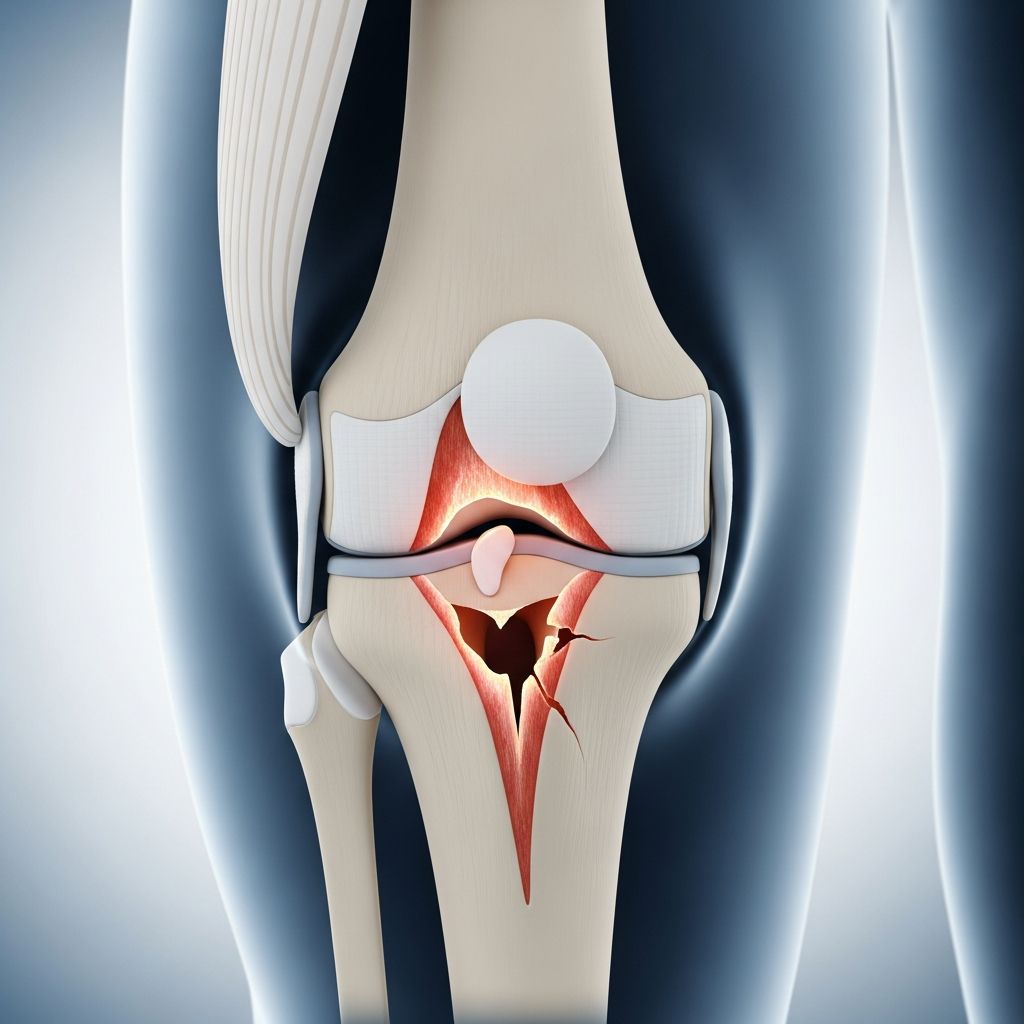
A torn meniscus is one of the most common knee injuries, particularly among athletes and active individuals. The meniscus is a piece of cartilage in your knee that acts as a shock absorber between your thighbone and shinbone. When this cartilage tears, it can cause pain, swelling, and limited mobility. Understanding the causes, symptoms, and treatment options can help you manage this condition effectively and return to your normal activities.
What Is a Torn Meniscus?
The meniscus is a crescent-shaped piece of cartilage that cushions your knee joint. You have two menisci in each knee—one on the inner side (medial meniscus) and one on the outer side (lateral meniscus). These cartilage pads help distribute weight evenly across your knee and provide stability during movement. When the meniscus tears, it can range from a minor fraying to a complete rupture that affects knee function.
Causes of a Torn Meniscus
Torn meniscus injuries occur through two primary mechanisms: traumatic tears and degenerative tears. Understanding how these injuries happen can help you take preventive measures.
Traumatic Meniscus Tears
A sudden, twisting movement can cause the meniscus to tear. Common scenarios include pivoting to catch a ball, quick directional changes during sports, or a sudden bend while your foot is planted on the ground. These injuries are particularly common in athletes participating in sports like basketball, football, soccer, and tennis. The rapid rotational movement places excessive stress on the cartilage, causing it to split or tear.
Degenerative Meniscus Tears
The elderly are more prone to degenerative meniscal tears, which occur when cartilage naturally breaks down over time due to wear and tear. These tears can happen from seemingly minor movements or even simple activities like stepping awkwardly. Degenerative tears are often associated with osteoarthritis and other age-related changes in the knee joint.
Symptoms of a Torn Meniscus
Recognizing the symptoms of a torn meniscus is important for seeking timely treatment. Symptoms can vary depending on the severity and location of the tear.
Common symptoms include:
- Pain in the knee, which may be sharp or dull
- Swelling and stiffness in the knee
- A catching or locking sensation when moving your knee
- Difficulty moving your knee through its complete range of motion
- A popping sensation at the time of injury
- Instability or a feeling that your knee might buckle or give way
- Pain that worsens with certain movements, particularly twisting or pivoting
Some people experience immediate symptoms after the injury, while others may notice symptoms developing gradually over days or weeks. The severity of symptoms does not always correlate with the extent of the tear.
Diagnosing a Torn Meniscus
Accurate diagnosis is essential for determining the appropriate treatment plan. Your orthopedic surgeon will use several diagnostic methods to evaluate your condition.
Physical Examination
Your orthopedic surgeon will examine your knee, evaluate your symptoms, and review your medical history. They will perform special tests to assess knee stability and identify the location of the tear. The McMurray test is a series of knee and leg movements healthcare providers use to diagnose a torn meniscus during an in-office physical exam.
Related Stories



Imaging Studies
Your provider may recommend knee arthroscopy to better view and accurately diagnose your injury. During this procedure, the surgeon inserts a tiny camera (called an arthroscope) through a small cut (incision) and into your knee. MRI imaging may also be used to visualize the meniscus and confirm the diagnosis without surgery.
Treatment Options for a Torn Meniscus
The treatment of a meniscal tear depends on the type, size, and location of the tear, as well as your age and activity level. Treatment approaches range from conservative management to surgical intervention.
Non-Surgical Treatment
If the tear is small, with damage limited to the outer edge of the meniscus, non-surgical treatment may be sufficient. Conservative management is often the first approach, particularly for tears that are causing minimal symptoms.
Rest, Ice, Compression, and Elevation (RICE)
The RICE method is an initial treatment approach: rest your knee, apply ice to reduce swelling, use compression with an elastic bandage, and elevate your leg to minimize inflammation.
Medications
Your healthcare provider may recommend taking a nonsteroidal anti-inflammatory (NSAID) medicine, such as ibuprofen or aspirin, to relieve pain and reduce swelling.
Physical Therapy
Your provider may also recommend working with a physical therapist to strengthen your knee and increase your range of motion. Research suggests that middle-age and older adults with meniscal tear may benefit from initial physical therapy, potentially followed by arthroscopic surgery for those who do not experience sufficient benefit. Studies show that physical therapy is an acceptable first-line treatment, and delaying surgery while attempting conservative management does not impair outcomes.
Surgical Treatment
More serious meniscus tears may not heal on their own. If your injury doesn’t improve with RICE, NSAIDs, and physical therapy, your healthcare provider may recommend meniscus surgery. Knee arthroscopy is the commonly recommended surgical procedure for meniscal tears.
Types of Meniscus Surgery
There are three primary types of meniscus surgery:
1. Meniscus Repair
A meniscus repair is just what it sounds like—your surgeon will repair the tear and any other damage in your meniscus. They’ll stitch (suture) the tear together so your meniscus heals back into one piece. Your body will absorb the sutures as the tear heals. During arthroscopic meniscus repair, the torn meniscus will be pinned or sutured depending on the extent of the tear. Meniscus repairs take longer to heal than meniscectomy but offer the advantage of preserving the cartilage.
2. Partial Meniscectomy
A “partial meniscectomy” is the medical term for removing the damaged part of your meniscus. Your surgeon will trim the damaged cartilage away from your meniscus and leave healthy tissue in place. This is a good option for more severe tears, as higher-grade meniscus tears usually are too severe to heal back together completely, even with a repair. During this procedure, small instruments called shavers or scissors may be used to remove the torn meniscus.
3. Meniscus Replacement
Meniscus replacement (meniscus transplantation) is much less common than the other two types. It’s usually only a good option for people younger than 50 who have knee arthritis or a severely torn meniscus. Your surgeon will replace your meniscus with an allograft (a meniscus from a human donor). Meniscus replacement involves the replacement of torn cartilage with cartilage obtained from a donor or a cultured patch obtained from the laboratory.
The Surgical Procedure
Meniscus surgery is usually done with a minimally invasive knee arthroscopy. Your surgeon will make a few cuts (incisions) in the skin around your knee. They’ll insert tiny tools and a small camera into your knee joint to treat the meniscus tear.
Meniscus surgery usually takes around an hour. It might take a little more or less time depending on which type of surgery you need, the severity of the tear, and if you have any other injuries (like knee ligament tears) that need treatment too.
Recovery and Rehabilitation
Recovery from meniscus surgery varies depending on the type of procedure performed. Full recovery from meniscus surgery usually takes somewhere from a few weeks, up to a few months.
Recovery Timeline by Procedure Type
- Meniscectomy: Typically the shortest recovery, ranging from a few weeks to a couple of months
- Meniscus Repair: Takes longer to heal than meniscectomy, often requiring 3-6 months for full recovery. During repair surgery, the torn meniscus is reattached with dissolvable stitches, and it can take up to six months to recover from this surgery.
- Meniscus Replacement: Has the longest recovery timeline, often requiring several months of rehabilitation
Your surgeon will tell you what to expect and give you a specific recovery timeline based on your unique situation and needs. Once you’ve healed, experts in physical rehabilitation can help you strengthen your knee and get you back to peak performance.
Potential Complications and Risks
While meniscus surgery is generally safe and effective, it’s important to understand potential risks. Talk to your surgeon about your risk of complications. You should call your surgeon right away if you notice increased knee pain, persistent swelling, signs of infection, or difficulty bearing weight on your knee.
Over time, arthroscopic partial meniscectomy appears to increase the risk of degenerative changes in cartilage, bone, and other knee structures as evidenced by radiograph and MRI-based assessments. Factors associated with worse clinical outcomes following arthroscopic partial meniscectomy include a longer duration of symptoms (more than one year), the presence of radiological knee osteoarthritis at baseline, and resecting more than 50% of the meniscus.
Prevention of Meniscus Tears
While not all meniscus tears can be prevented, especially those resulting from accidents or degenerative changes, you can take steps to reduce your risk of injury:
- Warm up properly: Always warm up before exercise or sports participation to prepare your muscles and joints
- Strengthen your muscles: Strong quadriceps and hamstring muscles help stabilize your knee
- Improve flexibility: Regular stretching maintains your range of motion and reduces stress on your joints
- Use proper technique: Learn correct form for your sport or activity to avoid unnecessary stress on your knees
- Wear appropriate footwear: Choose shoes with good support and cushioning for your activities
- Avoid sudden directional changes: Slow down gradually when changing direction rather than making abrupt pivoting movements
- Cross-train: Varying your activities helps prevent overuse injuries while maintaining fitness
- Maintain a healthy weight: Extra weight increases stress on your knee joints
When to Seek Medical Attention
You should see a healthcare provider if you experience sudden knee pain, especially if accompanied by swelling, locking, or a popping sensation. Seek immediate attention if your knee feels unstable, you cannot bear weight on it, or you have signs of infection such as redness, warmth, or fever.
Frequently Asked Questions
Q: Can a torn meniscus heal on its own?
A: Depending on the size and location of your meniscus tear, it may heal without surgery. Small tears on the outer edge of the meniscus have better healing potential than large tears or those in the inner portion. Your healthcare provider can determine whether your specific tear is likely to heal with conservative treatment.
Q: Is meniscus surgery necessary?
A: Not always. Research indicates that physical therapy is an acceptable first-line treatment, and surgery is not routinely needed. Many patients benefit from conservative management, though some may eventually require surgery if symptoms persist.
Q: How long does meniscus surgery recovery take?
A: Recovery ranges from a few weeks to a few months, depending on which type of surgery you need. Meniscus repairs typically take longer to heal than meniscectomy procedures.
Q: Will a torn meniscus lead to arthritis?
A: While a torn meniscus can increase the risk of developing osteoarthritis over time, especially if the meniscus is partially removed, proper treatment and rehabilitation can help minimize this risk.
Q: Can I play sports after meniscus surgery?
A: Yes, many people return to sports after meniscus surgery, though the timeline depends on the type of surgery and your individual recovery. Your surgeon and physical therapist will guide your return to athletic activities based on your progress.
References
- The METEOR trial: No rush to repair a torn meniscus — Cleveland Clinic Journal of Medicine. 2014. https://www.ccjm.org/content/81/4/226
- Meniscus Surgery — Cleveland Clinic. 2024. https://my.clevelandclinic.org/health/treatments/21508-meniscus-surgery
- Meniscal Surgery — Cleveland Shoulder and Knee. https://www.clevelandshoulderandknee.com/meniscal-surgery-independence-solon-oh/
- Torn Meniscus: Causes, Symptoms, Treatment & Prevention — Cleveland Clinic. 2024. https://my.clevelandclinic.org/health/diseases/17219-torn-meniscus
- Get Meniscus Tear Treatment — Cleveland Clinic. https://my.clevelandclinic.org/services/meniscus-tear-treatment
- Treatment of the syndrome of knee pain and meniscal tear in middle-aged and older adults — PubMed Central. 2022. https://pmc.ncbi.nlm.nih.gov/articles/PMC9384701/
Similar Articles








Read full bio of Sneha Tete