Toxic Epidermal Necrolysis: Causes, Symptoms, Treatment
A life-threatening dermatological emergency caused by severe drug reactions, requiring immediate recognition and management.
Reviewed and updated January 2026 by Dr. [Fictional Expert], with input from DermNet New Zealand trust board.
What is toxic epidermal necrolysis?
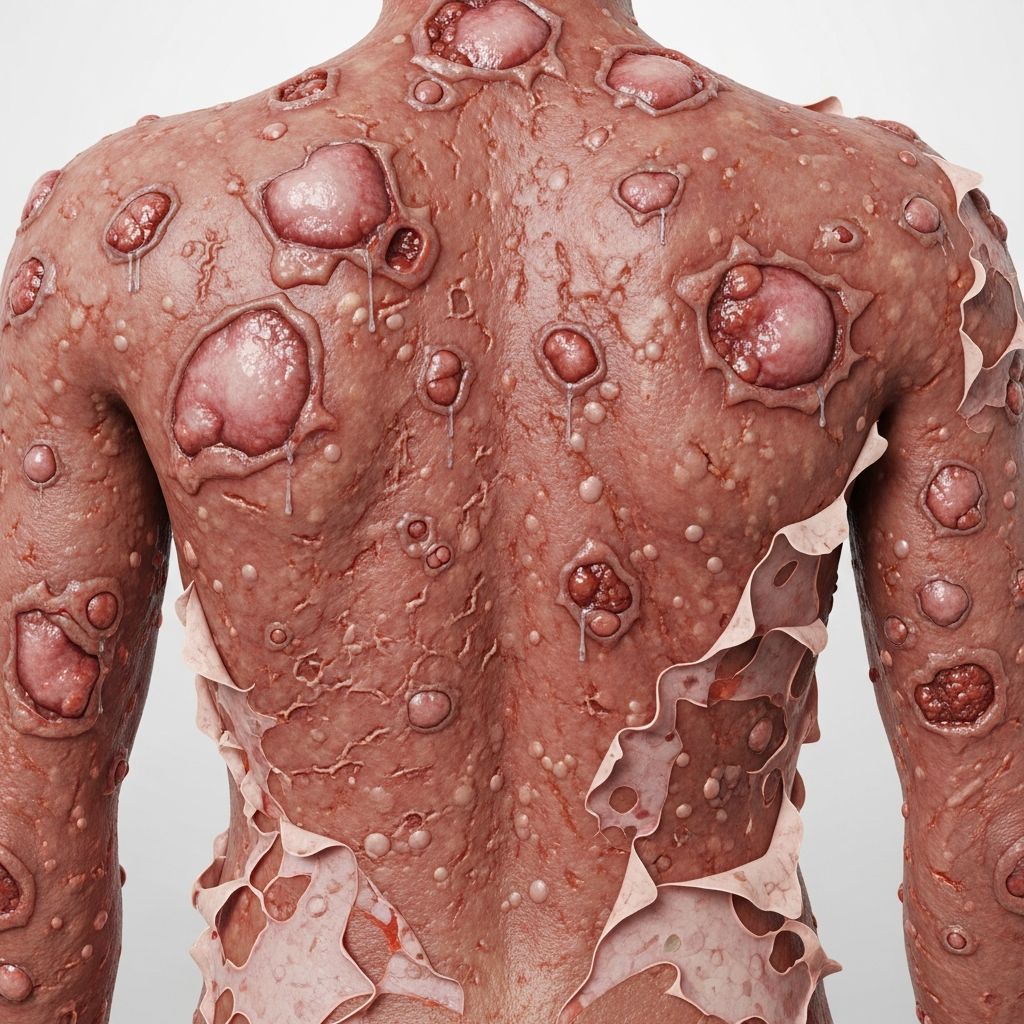
Toxic epidermal necrolysis (TEN) is a rare, life-threatening skin disorder classified as a severe cutaneous adverse reaction (SCAR). It represents the most extreme end of the Stevens-Johnson syndrome (SJS)/TEN spectrum, distinguished by extensive epidermal detachment affecting more than 30% of the body surface area (BSA). TEN typically arises 7–28 days after exposure to a triggering medication, leading to full-thickness necrosis of the epidermis and widespread sloughing of skin sheets. Mortality rates range from 25–50%, primarily due to sepsis, multi-organ failure, and respiratory complications.
SJS and TEN share identical pathophysiology but differ in severity: SJS involves <10% BSA detachment, SJS/TEN overlap 10–30%, and TEN >30%. Clinically, TEN manifests with prodromal flu-like symptoms followed by rapid progression to painful erythematous macules, bullae formation, and mucosal erosions in nearly 100% of cases.
Who gets toxic epidermal necrolysis?
TEN affects individuals of all ages, though adults over 50 and those with comorbidities are at higher risk. Incidence is estimated at 0.4–1.2 cases per million person-years globally, with higher rates in HIV-positive patients (up to 1,000-fold increase). Women may be slightly more susceptible, possibly due to pharmacogenetic factors.
- Genetic predisposition: HLA alleles such as HLA-B*15:02 (associated with carbamazepine in Asian populations) and HLA-B*58:01 (allopururinol) confer significant risk.
- Comorbidities: HIV/AIDS, systemic lupus erythematosus (SLE), and malignancies increase susceptibility.
- Polypharmacy: Concurrent use of multiple high-risk drugs amplifies danger.
What causes toxic epidermal necrolysis?
Over 90% of TEN cases are drug-induced, with culprits typically aromatic anticonvulsants, sulfonamides, allopurinol, and NSAIDs. Onset occurs within 8 weeks of drug initiation, most commonly 1–3 weeks.
High-risk medications
| Drug Class | Examples | Relative Risk |
|---|---|---|
| Anticonvulsants | Carbamazepine, phenytoin, lamotrigine | High (100-fold) |
| Allopurinol | Allopurinol | Very high |
| Sulfonamides | Sulfamethoxazole (in co-trimoxazole) | High |
| NSAIDs | Oxicams (piroxicam) | Moderate-high |
| Others | Nevirapine, vancomycin, sertraline | Variable |
Rare non-drug triggers include infections (e.g., Mycoplasma pneumoniae in children), vaccinations, and idiopathic cases. Recent pharmacovigilance data emphasize avoiding rechallenge with suspects.
What are the clinical features of toxic epidermal necrolysis?
TEN evolves in two phases: a 1–14 day prodrome of fever (>38°C), malaise, sore throat, and conjunctivitis, followed by explosive mucocutaneous involvement.
Skin findings
- Painful erythematous or purpuric macules coalescing into plaques on trunk and face.
- Flaccid bullae and sheet-like epidermal detachment (>30% BSA).
- Positive Nikolsky sign: Epidermis shears with gentle lateral pressure.
- Denuded areas resemble burns, with extreme pain disproportionate to appearance.
Mucosal involvement (90–100%)
- Oral: Erosions, haemorrhagic crusts, inability to eat.
- Ocular: Conjunctivitis, pseudomembrane formation, symblepharon risk.
- Genital/anal: Erosions leading to urinary retention or stenosis.
Systemic features
Multi-organ dysfunction in 50–70%: hepatitis, pneumonitis, myocarditis, renal failure. Sepsis from skin barrier loss is the leading killer.
How is toxic epidermal necrolysis diagnosed?
Diagnosis is clinical, supported by histopathology. No single test is diagnostic; urgency precludes delays.
Related Stories



- Clinical criteria: Detachment >30% BSA + mucosal sites + prodrome + drug history.
- Skin biopsy: Full-thickness epidermal necrosis, sparse lymphocytic infiltrate, satellite cell necrosis. Direct immunofluorescence negative (rules out autoimmune bullous disease).
- Score of TEN (SCORTEN): Predicts mortality based on age, heart rate, urea, glucose, bicarbonate, malignancy, BSA.
What is the differential diagnosis for toxic epidermal necrolysis?
| Condition | Key Distinguishers |
|---|---|
| Staphylococcal scalded skin syndrome (SSSS) | Superficial split (granular layer), tender but non-painful, children, no mucosal involvement. |
| Erythema multiforme major | Typical targets, acral distribution, Mycoplasma trigger, less detachment. |
| Acute generalized exanthematous pustulosis (AGEP) | Pustules, neutrophils, rapid onset (<2 days), antibiotics. |
| Pemphigus vulgaris | Intraepidermal acantholysis on biopsy, autoantibodies. |
| Methotrexate toxicity | No targets, pancytopenia, any-time onset post-MTX. |
What is the treatment for toxic epidermal necrolysis?
Management is supportive in a burn/ICU unit; no intervention alters mortality definitively. Immediate culprit drug cessation is paramount.
Key principles
- Withdrawal of trigger: All suspects, including over-the-counter.
- Wound care: Non-adherent dressings, topical antibacterials (silver sulfadiazine avoided).
- Nutritional support: Enteral > parenteral; high catabolic state.
- Pain control: Opioids, background infusions.
- Infection prevention: Barrier nursing, prophylactic antibiotics controversial.
Adjunctive therapies (controversial)
- Cyclosporine (3–5 mg/kg/day): Reduces apoptosis; some meta-analyses show benefit.
- Intravenous immunoglobulin (IVIG, 2 g/kg over 3 days): Blocks Fas ligand; mixed evidence.
- Corticosteroids: Increased infection risk; not recommended routinely.
- Anti-TNF (etanercept): Blocks granulysin; promising case series.
Ocular care
Prophylactic lubricants, amniotic membrane grafts to prevent scarring.
Complications of toxic epidermal necrolysis
- Acute: Sepsis (most common), ARDS, GI haemorrhage, electrolyte imbalance.
- Long-term: Scarring (20–30%), ocular sequelae (blindness risk), chronic erosive mucositis, PTSD.
- Mortality predictors: SCORTEN >2, age >40, BSA >50%.
How can toxic epidermal necrolysis be prevented?
- Screening: HLA-B*15:02 before carbamazepine in Asians; HLA-B*58:01 for allopurinol.
- Drug vigilance: Avoid high-risk meds in predisposed; electronic alerts.
- Patient education: Report early rash/fever post-new drug.
Frequently Asked Questions (FAQs)
What is the difference between SJS and TEN?
SJS involves <10% BSA detachment, TEN >30%; both share causes and features but TEN is more severe with higher mortality.
How quickly does TEN progress?
Prodrome 1–14 days, then rapid detachment over 24–48 hours; urgent transfer to specialist unit essential.
Is TEN contagious?
No, it is a non-infectious hypersensitivity reaction, but barrier precautions prevent secondary bacterial infection.
Can TEN recur?
Rare (<5%), usually with culprit rechallenge; genetic testing guides safe alternatives.
What is the prognosis for survivors?
Many recover fully, but 20–50% have sequelae like eye scarring or skin dyspigmentation; follow-up vital.
References
- Toxic Epidermal Necrolysis (TEN): Risk Factors, Clinical Features — The Plastics Fella. 2023. https://www.theplasticsfella.com/toxic-epidermal-necrolysis-ten/
- Toxic Epidermal Necrolysis: A Review of Past and Present — Skin Therapy Letter. 2023. https://www.skintherapyletter.com/dermatology/toxic-epidermal-necrolysis/
- A review on toxic epidermal necrolysis‐like superficial wound lesions — PMC (NCBI). 2024. https://pmc.ncbi.nlm.nih.gov/articles/PMC11646660/
- Toxic Epidermal Necrolysis – StatPearls — NCBI Bookshelf. 2023-10-01. https://www.ncbi.nlm.nih.gov/books/NBK574530/
- Stevens Johnson Syndrome / Toxic Epidermal Necrolysis — DermNet NZ. 2024. https://dermnetnz.org/topics/stevens-johnson-syndrome-toxic-epidermal-necrolysis
- Stevens-Johnson Syndrome (SJS) and Toxic Epidermal Necrolysis (TEN) — Merck Manuals (Professional). 2025. https://www.merckmanuals.com/professional/dermatologic-disorders/hypersensitivity-and-reactive-skin-disorders/stevens-johnson-syndrome-sjs-and-toxic-epidermal-necrolysis-ten
- Recent progress in Stevens–Johnson syndrome/toxic epidermal necrolysis — British Journal of Dermatology (Oxford Academic). 2024-12-01. https://academic.oup.com/bjd/article/192/1/9/7733607
Similar Articles








Read full bio of Sneha Tete