Toxic Shock Syndrome and Toxic Shock-Like Syndrome
Rare but life-threatening bacterial toxin illnesses: symptoms, causes, diagnosis, and urgent treatment strategies.
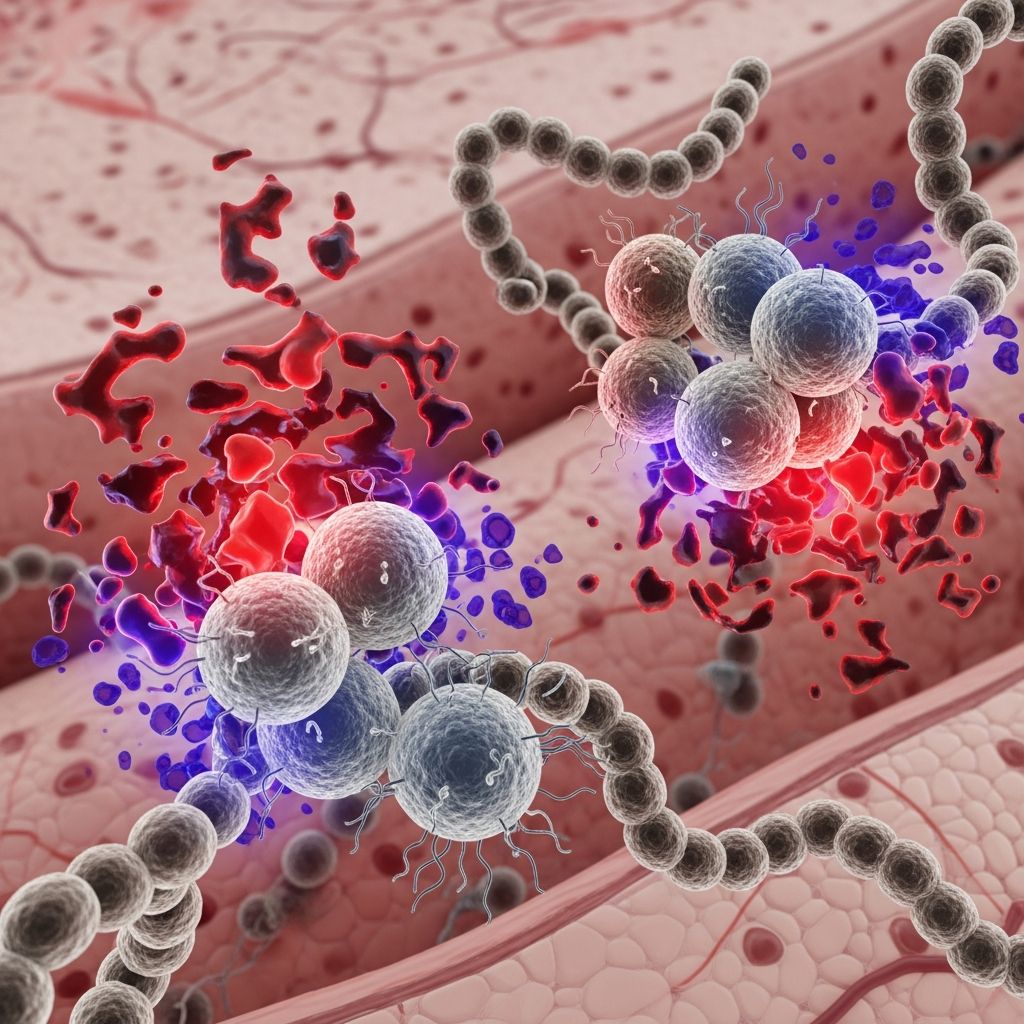
Toxic shock syndrome (TSS) is a rare, acute multisystem illness caused by toxins from Staphylococcus aureus, while toxic shock-like syndrome (TSLS) arises from toxin-producing group A streptococci. Both present with sudden fever, rash, hypotension, and organ dysfunction, requiring immediate hospitalization.
What is the summary of this topic?
TSS and TSLS are toxin-mediated diseases triggered by superantigens that provoke massive cytokine release, leading to capillary leak, shock, and multiorgan failure. Staphylococcal TSS links historically to tampon use but also wounds; streptococcal TSLS often follows invasive infections like necrotizing fasciitis. Early recognition is vital as mortality reaches 5-30% without prompt intervention.
Who gets toxic shock syndrome (TSS) and toxic shock-like syndrome (TSLS)?
TSS affects menstruating women (classically via superabsorbent tampons), postoperative patients, those with wound infections, nasal packing, or contraceptive barriers. Non-menstrual cases occur in all ages and genders. TSLS strikes anyone with group A streptococcal (GAS) skin/soft tissue infections, especially diabetics, immunocompromised, or post-viral (e.g., influenza). Children and elderly face higher risks.
- Primarily young females for menstrual TSS (ages 15-25)
- Males and females equally for non-menstrual TSS/TSLS
- Risk amplified by delayed wound care or foreign bodies
What causes toxic shock syndrome (TSS) and toxic shock-like syndrome (TSLS)?
Staphylococcal TSS stems from toxin-producing S. aureus strains (phage group I), notably TSST-1 or enterotoxins B/C. These superantigens overstimulate T-cells, flooding the body with cytokines (“cytokine storm”), causing fever, rash, and shock. TSLS involves Streptococcus pyogenes (GAS) exotoxins (SPE A/C), often with bacteremia and tissue invasion.
Bacteria colonize without invasion in TSS but produce toxins locally (e.g., vagina, wounds). Factors promoting toxin production include tampon use (stagnant blood fosters growth) or abscesses.
What are the clinical features of toxic shock syndrome (TSS) and toxic shock-like syndrome (TSLS)?
Symptoms onset abruptly:
- Sudden
high fever
(>38.9°C/102°F) - **Hypotension** (systolic <90 mmHg)
- **Diffuse sunburn-like rash** (macular erythroderma), desquamating palms/soles 1-2 weeks later
- **Mucosal involvement**: conjunctivitis, strawberry tongue, vaginal/oral hyperemia
- GI: vomiting, watery diarrhea
- Musculoskeletal: severe myalgias
- Neurologic: headache, confusion, altered mental status
TSLS adds severe pain at infection site, necrotizing fasciitis signs, higher shock incidence. Multisystem criteria (CDC): ≥3 systems involved (renal, hepatic, hematologic, etc.).
| Feature | Staphylococcal TSS | Streptococcal TSLS |
|---|---|---|
| Onset | Sudden, flu-like prodrome | Rapid, pain-focused |
| Rash | Diffuse erythroderma, desquamation | Scarlatina-like or absent |
| Bacteremia | Rare (<5%) | Common (>60%) |
| Renal failure | Mild-moderate | Severe |
How is the diagnosis of toxic shock syndrome (TSS) and toxic shock-like syndrome (TSLS) made?
Diagnosis relies on CDC clinical criteria plus exclusion of other causes (e.g., Rocky Mountain spotted fever). Lab tests show thrombocytopenia (<100,000/mm³), elevated CPK (>2x normal), renal/hepatic markers (BUN/creatinine, bilirubin/AST >2x normal).
- Cultures: blood (negative in TSS), wound/vaginal swabs (positive ~50% TSS)
- Imaging: for necrotizing fasciitis (CT/MRI)
- No specific test; supportive evidence key
Differentiate via history (tampon use vs. wound) and cultures (S. aureus vs. GAS).
Related Stories



What is the treatment for toxic shock syndrome (TSS) and toxic shock-like syndrome (TSLS)?
Urgent hospitalization in ICU:
- Source control: Remove tampons/packing, debride wounds surgically (critical for TSLS/necrotizing fasciitis)
- Fluid resuscitation: Aggressive IV crystalloids for hypotension; vasopressors (norepinephrine first-line) if refractory
- Antibiotics: IV beta-lactamase-resistant anti-staphylococcal (nafcillin/oxacillin) ± clindamycin (inhibits toxin); add penicillin/clindamycin for GAS
- IVIG: 1-2g/kg for refractory shock (neutralizes superantigens)
- Supportive: dialysis, ventilation, monitor organs
14-day minimum antibiotics to prevent recurrence.
What is the outcome for toxic shock syndrome (TSS) and toxic shock-like syndrome (TSLS)?
Mortality: 1-5% staphylococcal TSS, 20-30% TSLS (higher if bacteremic). Survivors risk amputations (5%), chronic issues (renal, psych). Recurrence ~30% menstrual TSS without prophylaxis; rare post-treatment.
Full recovery common with early care; long-term follow-up essential.
How can toxic shock syndrome (TSS) and toxic shock-like syndrome (TSLS) be prevented?
- Use lowest-absorbency tampons, change every 4-8 hours; alternate pads
- Prompt wound care, avoid nasal packing if possible
- Hygiene post-surgery/influenza
- No vaccine; education key
Manufacturers reduced absorbency post-1980s outbreaks, slashing menstrual cases.
Related topics
- Necrotizing fasciitis
- Staphylococcal scalded skin syndrome
- Scarlet fever
- Sepsis
Frequently Asked Questions
Can TSS occur without tampons?
Yes, ~50% cases non-menstrual (wounds, surgery, barriers).
Is TSS contagious?
No; toxin-mediated, not person-to-person.
How quickly does TSS progress?
Hours to days; shock can kill rapidly without treatment.
Do antibiotics cure TSS?
They treat bacteria/toxins but need source control/fluids.
Can survivors get TSS again?
Yes, especially menstrual; use protective measures.
References
- Toxic Shock Syndrome — National Organization for Rare Disorders (NORD). 2023. https://rarediseases.org/rare-diseases/toxic-shock-syndrome/
- Toxic Shock Syndrome – StatPearls — NCBI Bookshelf / NIH. 2023-10-01. https://www.ncbi.nlm.nih.gov/books/NBK459345/
- Toxic shock syndrome (TSS) – including symptoms, treatment and prevention — SA Health (Government of South Australia). 2024. https://www.sahealth.sa.gov.au/wps/wcm/connect/public+content/sa+health+internet/conditions/infectious+diseases/toxic+shock+syndrome/toxic+shock+syndrome+tss+-+including+symptoms+treatment+and+prevention
- Toxic Shock Syndrome — HealthyChildren.org / American Academy of Pediatrics. 2023. https://www.healthychildren.org/English/health-issues/conditions/infections/Pages/Toxic-Shock-Syndrome.aspx
- Signs and prevention of toxic shock syndrome — Parkview Health. 2023-08-16. https://www.parkview.com/blog/signs-and-prevention-of-toxic-shock-syndrome
Similar Articles








Read full bio of medha deb