Tracheostomy: What It Is, Purpose & Procedure
Complete guide to tracheostomy: understanding the procedure, purpose, and recovery process.
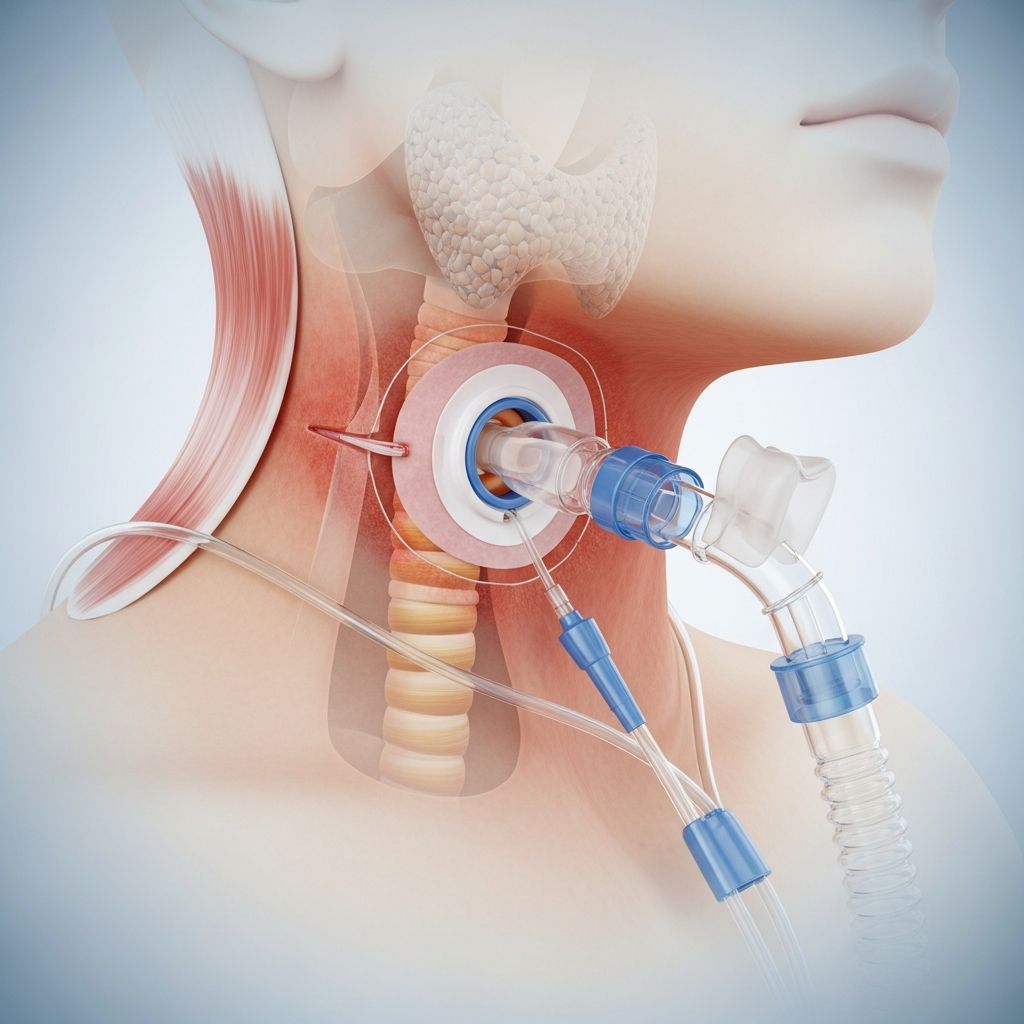
Understanding Tracheostomy: A Comprehensive Guide
A tracheostomy is a surgical procedure in which a surgeon creates an opening through your neck and into your trachea, commonly known as your windpipe. During this procedure, a tracheostomy tube (often called a trach) is inserted through the opening to help you breathe. This opening bypasses your nose, mouth, and throat, providing an alternative airway when normal breathing is compromised or not possible. The procedure can be life-saving in emergency situations and beneficial for long-term respiratory management in various medical conditions.
The term “tracheostomy” refers to the actual opening created in the neck, while “tracheotomy” is the name of the surgical operation itself. These terms are often used interchangeably in medical settings. Whether temporary or permanent, a tracheostomy can significantly improve quality of life for individuals who struggle with breathing or require long-term mechanical ventilation.
What Is a Tracheostomy?
At its core, a tracheostomy is a surgically created hole in your neck that provides direct access to your trachea. The opening, called a stoma, connects directly to your lungs, allowing air to enter your respiratory system without passing through your nose, mouth, or throat. A plastic tracheostomy tube is placed through this opening and secured with a collar or ties that wrap around your neck. The tube remains in place to keep the airway open and functioning properly.
The tracheostomy tube itself consists of several important components: an outer cannula (the main shaft), an inner cannula (when present), a neckplate or flange that rests on your neck over the stoma, and securing ties. Trach tubes come in various sizes and materials, with the specific type chosen based on your individual condition, neck shape and size, and the intended purpose of the tracheostomy.
Why Is a Tracheostomy Needed?
Healthcare providers recommend tracheostomy for several important reasons. The procedure is often necessary when a patient requires mechanical ventilation (a respirator or ventilator) for an extended period. If a regular endotracheal tube—a breathing tube inserted through the mouth or nose—is needed for more than a few days or is expected to be required for weeks, doctors typically recommend transitioning to a tracheostomy to prevent long-term damage to the mouth, throat, and voice box.
In emergency situations, a tracheostomy may be performed when someone cannot breathe due to facial injuries, severe throat blockages, or other acute airway obstructions. The procedure allows immediate access to the airway when traditional methods are not viable.
Additional reasons for tracheostomy include:
- Difficulty removing secretions from the lungs independently
- Need for long-term mechanical ventilation support
- Inability to breathe through the nose and mouth
- Facilitating the weaning process from ventilator dependence
- Providing more comfortable long-term airway management compared to oral intubation
- Improving safety in oxygen delivery to the lungs
Advantages of Tracheostomy
Compared to traditional endotracheal intubation, a tracheostomy offers several significant advantages. Most importantly, it is considerably more comfortable for patients, as it eliminates the need for a tube in the mouth. This increased comfort allows patients to potentially communicate more effectively and feel less restricted.
Related Stories



A tracheostomy also helps many individuals transition from being dependent on a ventilator to breathing independently. Because the tube bypasses the mouth and throat, these areas can heal and remain undamaged during extended respiratory support. Additionally, tracheostomies allow healthcare providers to more easily and safely deliver oxygen to the lungs while efficiently clearing secretions from breathing passages. The procedure can accelerate the weaning process, helping patients regain independence from mechanical ventilation more quickly.
Preparing for Your Tracheostomy
If you’re scheduled for an elective tracheostomy, your healthcare provider will give you specific preparation instructions. These preparations are crucial for ensuring the procedure goes smoothly and your recovery is as successful as possible.
For procedures under general anesthesia, you may need to fast (avoid eating and drinking) for several hours before your appointment. Your provider may also instruct you to stop taking certain medications in the days or hours leading up to surgery. It’s essential to follow these instructions carefully, as they help minimize complications during the procedure.
You should plan to stay in the hospital for several days to a few weeks following surgery, depending on your specific condition and circumstances. Pack a suitcase with personal items you’ll need during your hospital stay. Your healthcare team will provide you with a detailed list of what to bring and any additional preparations specific to your situation.
The Tracheostomy Procedure: Step-by-Step
Open Tracheotomy Surgery
Open tracheotomy surgery is the traditional surgical approach and typically takes place in an operating room. The procedure usually takes less than an hour to complete, though emergency tracheostomies can be performed in just minutes if necessary.
The process begins with general anesthesia, which puts you into a deep sleep so you don’t feel pain or discomfort during surgery. Once you’re fully anesthetized and comfortable, your surgeon will make a surgical incision (cut) in your neck, positioned just below your Adam’s apple. This incision cuts through the skin and tissue to access the trachea.
Next, the surgeon makes another small incision directly into the wall of your windpipe. The surgeon then gently widens this opening in the trachea to create enough space to fit the tracheostomy tube. Once the opening is properly sized, the tracheostomy tube is carefully positioned and inserted through the hole and into your windpipe.
After the tube is securely in place, your surgeon will fasten it with a tracheostomy collar that goes around your neck, similar to a medical necklace. The surgeon may also place temporary stitches to help keep the tube in its proper position during the initial recovery period. If you’re unable to breathe independently, the surgeon will connect the tracheostomy tube to a ventilator to provide mechanical breathing support.
Percutaneous Tracheostomy
Percutaneous tracheostomy is a newer surgical technique that offers an alternative to traditional open surgery. This procedure often takes place at the patient’s bedside in the hospital intensive care unit rather than in a formal operating room, making it more convenient for patients already hospitalized.
Instead of making incisions to directly access the trachea, a surgeon uses a needle to create an opening in both your neck and windpipe. A wire is then threaded through this needle to serve as a guide for the next step. A small plastic tube called a catheter is inserted along the wire and used to gradually widen the opening to the appropriate size. Once the opening is sufficiently enlarged, the tracheostomy tube is carefully inserted into place.
This minimally invasive approach can be advantageous for certain patients and may result in faster recovery times compared to traditional open surgery.
What to Expect During Recovery
Immediately after your tracheostomy surgery, you’ll need to remain in the hospital for close monitoring and care. Hospital stays typically last from several days to a few weeks, depending on your overall health, the reason for the tracheostomy, and how well you’re recovering.
In the immediate post-operative period, the area around your tracheostomy will be monitored closely by your healthcare team for signs of infection and to evaluate how well the surgical site is healing. It’s normal to see some bloody secretions or mucus from the trach tube for the first few days after surgery—this is an expected part of the healing process.
Your nurses and respiratory therapists will regularly remove secretions from your trach tube using a suction procedure. This keeps your breathing passages clear and prevents complications. As you begin to heal, you’ll learn how to care for your tracheostomy at home, including how to clean the tube, manage secretions, and recognize signs of potential problems.
Communication and Nutrition After Tracheostomy
Many patients wonder how they’ll communicate and eat with a tracheostomy tube in place. Initially, most patients cannot speak normally with the tube in place. However, communication remains possible through several methods. Most patients communicate by writing, using gestures, shaking or nodding their head in response to yes-or-no questions, or using communication boards.
Feeding is typically accomplished through a small feeding tube that delivers nutrition directly into your stomach, bypassing your mouth entirely. This ensures you receive adequate nutrition while your airway is protected. In some cases, as you progress through recovery, your healthcare team may determine that you can attempt oral feeding with proper precautions.
Special valves and caps exist that can cover the opening of the trach tube, potentially allowing you to speak. Your healthcare team will determine when and if you might be a candidate for these communication aids.
Tracheostomy Tube Care and Maintenance
Proper care of your tracheostomy tube is essential for preventing infections and maintaining optimal function. Daily care includes several important steps:
- Washing your hands thoroughly with soap and water before handling the tracheostomy tube and supplies
- Putting on sterile gloves before beginning any care procedures
- Suctioning the tracheostomy tube as directed by your healthcare provider to remove excess mucus
- If your tube has an inner cannula, carefully removing and cleaning it daily
- Cleaning the inner cannula with a specialized brush after soaking it in hydrogen peroxide
- Rinsing the inner cannula thoroughly with saline or distilled water
- Drying all surfaces with clean gauze before reinserting the inner cannula
- Removing soiled gauze pads from around your neck stoma and replacing them with clean ones
Inner cannulas should be replaced at least daily or whenever they become soiled. Your healthcare team will provide detailed instructions tailored to your specific tube type and your individual needs.
Tracheostomy Suctioning
Tracheostomy suctioning is a procedure that clears mucus and secretions from your trach tube when normal coughing is insufficient. While a strong cough is ideally the best way to clear secretions, there are times when you may need assistance removing mucus from your airway.
To suction your tracheostomy safely, gather all necessary supplies in advance. Wash your hands thoroughly, sit or lie down comfortably, and turn on your suction machine, setting the pressure to low or medium as directed. Put on sterile gloves and follow your healthcare provider’s specific instructions for the suctioning technique. Once you observe no more mucus near the trach opening, the suctioning is complete, though you may need to repeat the process multiple times.
Potential Risks and Complications
While tracheostomy is considered a relatively safe, low-risk surgical procedure with major complications being rare, some risks do exist. Possible complications include bleeding and infection at the incision site. The risk of injury to surrounding organs is minimal but theoretically possible.
Other potential issues include tube obstruction, accidental tube displacement, difficulty with tube changes, and scarring of the trachea if the tracheostomy is long-term. Your healthcare team will monitor you closely for these complications and take steps to prevent them.
Is Your Tracheostomy Permanent?
Whether your tracheostomy is temporary or permanent depends on your individual circumstances and the underlying reason for the procedure. Many tracheostomies are temporary, performed to support patients through acute illness or extended mechanical ventilation. Once you regain the ability to breathe well without ventilator support, the tracheostomy tube can be removed.
If your tracheostomy is no longer needed, surgery can be performed to close the hole. The stoma typically closes naturally with time once the tube is removed, though surgical closure may be necessary in some cases. For patients who require permanent tracheostomies due to ongoing airway issues or chronic conditions, the tube will remain in place long-term with appropriate care and maintenance.
When Is a Tracheostomy Necessary?
Healthcare providers may recommend transitioning from endotracheal intubation to tracheostomy in several situations. If a patient is expected to require mechanical ventilation for extended periods, typically more than a few days, a tracheostomy becomes the preferred option. The procedure prevents potential damage to the mouth, throat, and larynx that can occur with prolonged endotracheal tube placement.
In certain emergency scenarios where the airway is severely traumatized or obstructed in a way that prevents safe endotracheal intubation, a tracheostomy may be the safest and most effective solution for restoring breathing.
Frequently Asked Questions
Q: Is a tracheostomy procedure considered surgery?
A: Yes, tracheostomy is a surgical procedure, though it is relatively quick and considered low-risk. Open tracheotomy typically takes less than an hour, while emergency procedures can be completed in minutes.
Q: Can I speak with a tracheostomy tube in place?
A: Initially, speaking is not possible with a standard tracheostomy tube. However, special valves and caps can cover the tube opening to allow some speech capability as you heal and progress in recovery.
Q: How long do I need to stay in the hospital after a tracheostomy?
A: Most patients require hospitalization for several days to a few weeks following tracheostomy surgery, depending on their overall health, the reason for the procedure, and recovery progress.
Q: Can a tracheostomy be reversed?
A: Many tracheostomies are temporary and can be removed once you regain independent breathing ability. Surgery can close the opening if needed, though it often closes naturally after tube removal.
Q: What are the main differences between temporary and permanent tracheostomies?
A: Temporary tracheostomies are removed once you can breathe independently, while permanent ones remain in place for ongoing airway management in patients with chronic conditions or permanent breathing difficulties.
Q: How often should I clean my tracheostomy tube?
A: Inner cannulas should be replaced and cleaned at least daily or whenever they become soiled. Your healthcare provider will give you specific care instructions for your tube type.
References
- Tracheostomy: What It Is, Purpose & Procedure — Cleveland Clinic. 2024. https://my.clevelandclinic.org/health/procedures/tracheostomy
- Tracheostomy Suctioning: Purpose, Steps & Care — Cleveland Clinic. 2024. https://my.clevelandclinic.org/health/procedures/tracheostomy-suctioning
- Endotracheal Intubation: Procedure, Risks & Recovery — Cleveland Clinic. 2024. https://my.clevelandclinic.org/health/articles/22160-intubation
- Tracheostomy Care Guidelines and Procedures — Haven Health Arizona. 2024. https://www.havenhealthaz.com/blog/tracheostomy-care-guidelines-and-procedures
- How To Do Trach Care at Home — Cleveland Clinic Health. 2024. https://health.clevelandclinic.org/trach-care
- Tracheostomy: Information for Families — Cleveland Clinic. 2024. https://www.tracheostomia.com/Information%20for%20Families.htm
Similar Articles








Read full bio of medha deb