Transient Acantholytic Dermatosis: 10 Risk Factors & Treatments
Understanding Grover's disease: symptoms, causes, diagnosis, and treatment options.
Transient Acantholytic Dermatosis: Clinical Overview
Transient acantholytic dermatosis, commonly known as Grover’s disease, is a benign skin condition characterized by the sudden onset of small, itchy bumps typically appearing on the trunk. First described by dermatologist Ralph Grover in 1970, this condition affects primarily middle-aged and older individuals, with a distinct predilection for men. Despite its designation as “transient,” the condition can persist for extended periods, ranging from several weeks to months or even years in some cases.
Definition and Nomenclature
Transient acantholytic dermatosis is a papulovesicular eruption of the upper trunk characterized by focal acantholysis on histological examination. The condition is also referred to as Grover’s disease, named after the physician who first documented this distinct dermatological entity. The International Classification of Diseases code for this condition is L11.1, reflecting its classification within the realm of acantholytic disorders.
Epidemiology and Risk Factors
This condition predominantly affects middle-aged and older individuals, with the greatest prevalence observed in men over 50 years of age. The disease shows a significant seasonal variation, with one large retrospective study demonstrating a fourfold higher diagnosis rate during winter months compared to summer, primarily attributed to dry skin conditions.
Multiple risk factors have been identified that may trigger or exacerbate transient acantholytic dermatosis:
- Heat and excessive sweating
- Prolonged bed rest, particularly in hospitalized patients
- Dry skin, especially during winter months
- Ultraviolet light and sunlight exposure
- Ionizing radiation from medical procedures such as X-rays or CT scans
- Certain medications, including some chemotherapy agents
- Atopic dermatitis and other eczematous conditions
- Renal failure (both acute and chronic)
- Organ transplantation
- Underlying malignancies, including hematologic and solid tumors
While the exact etiology remains unknown, heat and sweating represent the most commonly implicated triggers, with numerous cases documented in individuals using hot tubs, steam rooms, and electric blankets.
Clinical Presentation
Patients with transient acantholytic dermatosis typically present with characteristic clinical features that may vary in intensity and distribution:
Characteristic Lesions
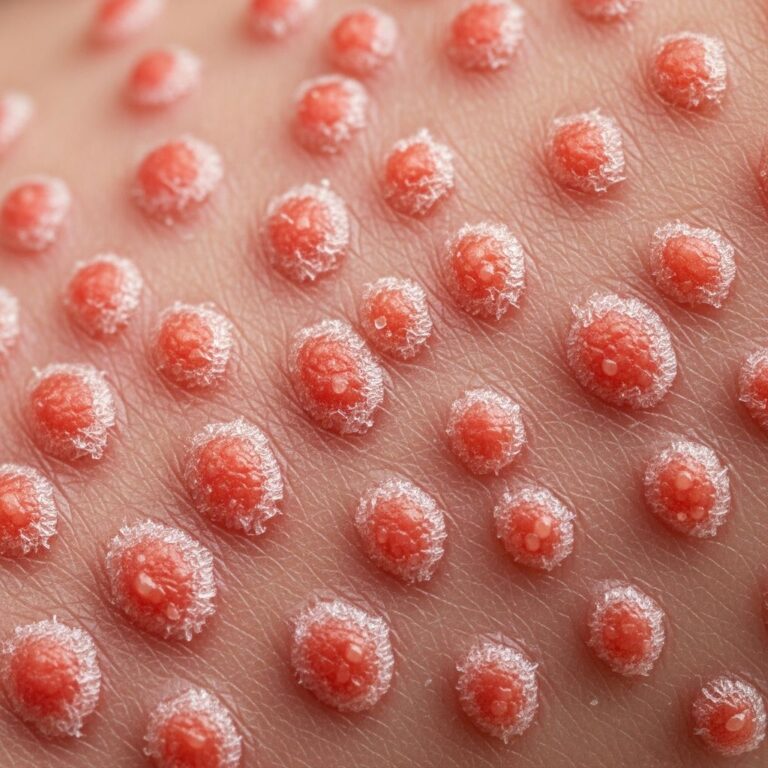
The condition manifests as red scaly papules and papulovesicles predominantly distributed over the trunk, particularly affecting the central back, chest, and upper arms. Individual lesions are typically small, raised, and may appear slightly flesh-colored to darker in tone. Within many lesions, a central hair follicle can be identified, and small blisters containing thin, watery liquid may develop.
Lesions frequently appear in clustered groups surrounded by erythematous (red) and swollen borders, creating a distinctive appearance that aids in clinical recognition. The rash may extend to involve the arms and legs, though the trunk remains the primary site of involvement.
Pruritus and Associated Symptoms
A defining characteristic of transient acantholytic dermatosis is its intense pruritus, or itching sensation. The itching can be severe enough to significantly impact sleep quality and daily functioning. However, it is important to note that some individuals may present with asymptomatic forms of the condition, despite similar clinical and histological findings. During disease flares, patients typically experience increased pruritus accompanied by greater surrounding erythema, vesicles, and erosions.
Related Stories



Course and Duration
The temporal course of transient acantholytic dermatosis is highly variable. While some patients experience complete resolution within 2 to 4 weeks, the condition typically persists for 6 to 12 months. In some cases, the rash demonstrates a waxing and waning pattern, with periods of improvement followed by recurrence. Despite its “transient” nomenclature, some patients experience persistent disease lasting months or years, and recurrence is common even after apparent resolution.
Pathophysiology and Histopathology
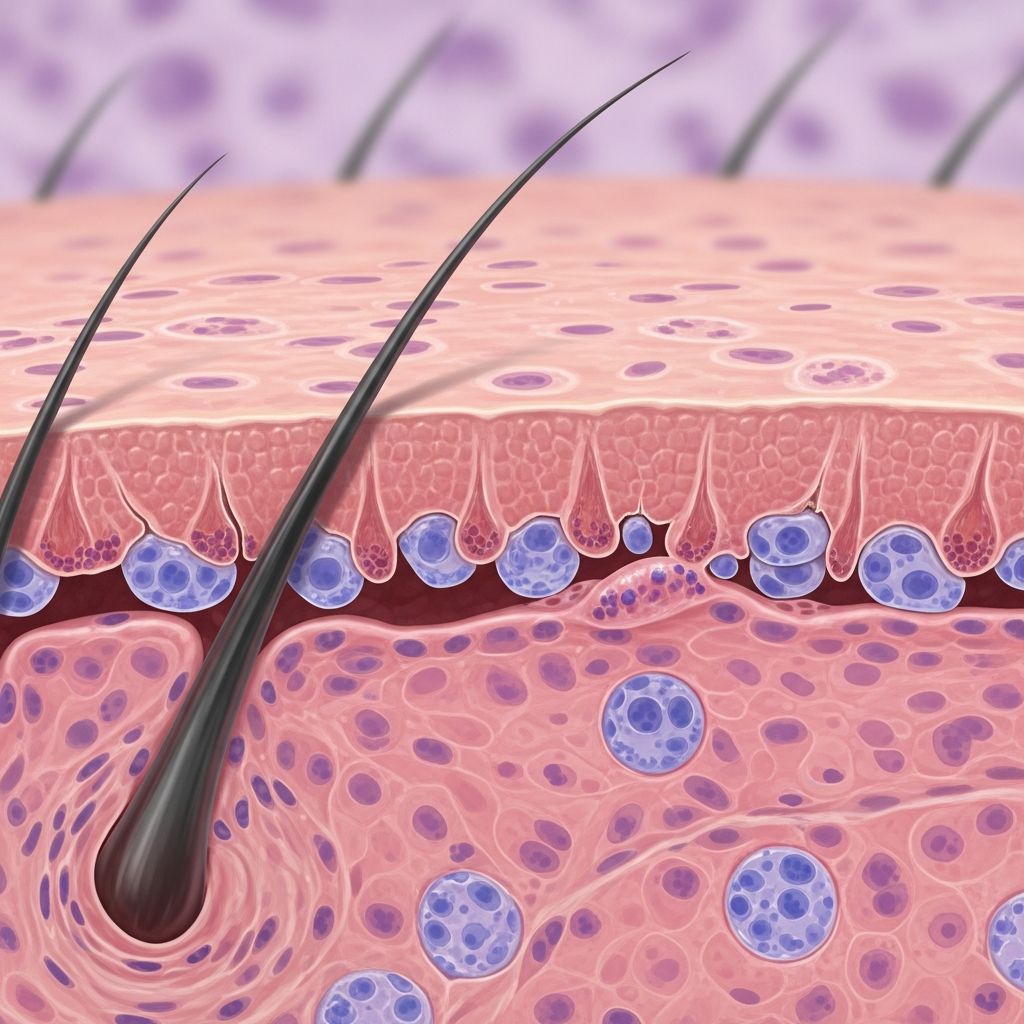
The key histopathological finding in transient acantholytic dermatosis is focal acantholysis, representing a loss of cell-to-cell adhesion within the epidermis. However, the condition is characterized by significant histological variability, with four distinct acantholytic patterns having been identified:
- Pemphigus vulgaris-like pattern
- Darier disease-like pattern
- Hailey-Hailey disease-like pattern
- Pemphigus foliaceus-like pattern
This histopathological diversity reflects the complex and incompletely understood nature of the disease mechanism. The presence of multiple acantholytic patterns within the same patient or even within different lesions underscores the heterogeneous nature of transient acantholytic dermatosis.
The underlying pathogenesis remains elusive despite extensive investigation. While the exact cause is unknown, the condition appears to result from dysfunction in keratinocyte adhesion, potentially triggered or exacerbated by the various environmental and systemic factors previously mentioned. The association with atopic dermatitis and other pre-existing skin conditions suggests that baseline skin barrier dysfunction may predispose individuals to developing acantholytic lesions.
Diagnosis
Diagnosis of transient acantholytic dermatosis is primarily clinical, based on characteristic presentation and patient history. However, confirmation typically requires histopathological examination through skin biopsy.
Clinical Assessment
A thorough clinical evaluation should include detailed history regarding symptom onset, temporal pattern of lesions, potential triggering factors, and associated systemic symptoms. The examiner should assess the distribution, morphology, and extent of lesions, as well as the severity of associated pruritus.
Histopathological Examination
Skin biopsy revealing focal acantholysis confirms the diagnosis. The pathologist plays an essential role not only in confirming acantholysis but also in excluding other concomitant disorders, particularly hematopoietic malignancies that may be associated with the condition. The biopsy should be performed on a representative lesion, typically selecting an intact papule or vesicle.
Differential Diagnosis
Several conditions share clinical or histopathological features with transient acantholytic dermatosis and must be excluded:
- Pemphigus vulgaris and pemphigus foliaceus
- Darier disease
- Hailey-Hailey disease
- Atopic dermatitis
- Contact dermatitis
- Psoriasis
- Pityriasis rubra pilaris
Associated Conditions and Malignancy Screening
Transient acantholytic dermatosis has been associated with various systemic and cutaneous conditions that warrant investigation:
- Atopic dermatitis
- Acute and chronic renal failure
- Organ transplantation (post-transplant status)
- Hematologic malignancies
- Solid organ malignancies
While the condition itself is benign, the association with underlying malignancies necessitates appropriate clinical vigilance and screening when indicated by patient history and examination findings.
Treatment Approach
Since transient acantholytic dermatosis is benign, the primary therapeutic goal is symptom control rather than achieving definitive cure. There is no cure for Grover’s disease, but multiple therapeutic options can effectively manage symptoms and reduce the frequency and severity of flares.
Topical Treatments
For mild to moderate symptoms, topical therapies are typically first-line interventions:
- Topical corticosteroids: Creams and ointments containing potent corticosteroids effectively reduce inflammation and pruritus
- Vitamin D analogs: Prescribed vitamin D preparations may help control symptoms
- Menthol cream: Cooling agents provide symptomatic relief and soothing effects on inflamed skin
- Emollients: Regular use of moisturizing agents helps prevent xerosis and barrier dysfunction
Systemic Medications
For severe or persistent symptoms unresponsive to topical therapy, systemic pharmacological interventions may be considered:
- Oral antihistamines: Help control pruritus and may improve sleep
- Oral retinoids: Isotretinoin and acitretin have demonstrated efficacy in persistent cases, though they require careful monitoring due to potential teratogenicity and other serious side effects
- Oral corticosteroids: May be used for severe flares, though prolonged use is generally avoided
Phototherapy
Phototherapy represents an important option for patients with extensive involvement or inadequate response to topical treatments. Various phototherapeutic modalities have been employed, including narrow-band ultraviolet B (NB-UVB) therapy and other wavelength-specific treatments.
Lifestyle Modifications and Trigger Avoidance
Patient education regarding trigger avoidance represents a crucial component of disease management:
- Maintain cool skin temperatures and avoid excessive heat exposure
- Minimize activities that promote excessive sweating
- Avoid prolonged use of hot baths and showers
- Limit sun exposure and use appropriate photoprotection
- Avoid hot tubs, steam rooms, and electric blankets
- Use gentle, non-irritating skincare products
- Maintain adequate skin hydration, particularly during winter months
- Avoid unnecessary medication exposures when possible
Frequently Asked Questions
Q: Is transient acantholytic dermatosis hereditary?
A: No, transient acantholytic dermatosis is not hereditary. It is an acquired condition that develops sporadically and does not run in families or follow hereditary inheritance patterns.
Q: Can transient acantholytic dermatosis be cured permanently?
A: There is no cure for transient acantholytic dermatosis. However, the condition is benign and treatment focuses on symptom management. Many patients experience spontaneous remission, though recurrence is common.
Q: How long does transient acantholytic dermatosis typically last?
A: The duration is highly variable. While some cases resolve within 2-4 weeks, most persist for 6-12 months. Some patients experience persistent disease lasting months or years with a waxing and waning course.
Q: What is the relationship between transient acantholytic dermatosis and malignancy?
A: While transient acantholytic dermatosis itself is benign, it has been associated with various malignancies including hematologic and solid organ cancers. Appropriate clinical assessment and screening may be warranted based on individual patient risk factors and clinical presentation.
Q: Can stress trigger transient acantholytic dermatosis?
A: While stress is not established as a direct trigger, stress-related behaviors such as increased sweating and heat exposure may exacerbate symptoms in susceptible individuals.
Q: Are there any age restrictions for treatment options like retinoids?
A: Oral retinoids are effective for severe cases but require careful patient selection due to potential teratogenicity, requiring effective contraception in women of reproductive age. Age itself is not a restriction, but individual patient factors guide treatment selection.
References
- Transient Acantholytic Dermatosis — VisualDx. Accessed January 28, 2026. https://www.visualdx.com/visualdx/diagnosis/?moduleId=101&diagnosisId=52420
- Grover’s Disease, Transient Acantholytic Dermatosis — Yale School of Medicine. Accessed January 28, 2026. https://www.yalemedicine.org/clinical-keywords/grovers-disease-transient-acantholytic-dermatosis
- Grover’s Disease (Syn. Transient Acantholytic Dermatosis) — Primary Care Dermatology Society (PCDS). Last Updated May 02, 2024. https://www.pcds.org.uk/clinical-guidance/grovers-disease-syn-transient-acantholytic-dermatosis1
- Grover’s Disease: Symptoms, Causes, Diagnosis, Treatment — WebMD. Accessed January 28, 2026. https://www.webmd.com/skin-problems-and-treatments/grover-disease
- Grover Disease (Transient Acantholytic Dermatosis) — PubMed/National Institutes of Health. Accessed January 28, 2026. https://pubmed.ncbi.nlm.nih.gov/19722762/
- Grover Disease — British Association of Dermatologists (BAD) Patient Hub – Skin Health Info. Accessed January 28, 2026. https://www.skinhealthinfo.org.uk/condition/grover-disease/
Similar Articles








Read full bio of medha deb