Transient Neonatal Pustular Melanosis: Signs, Diagnosis, Care
Understanding benign neonatal pustular eruptions: Symptoms, diagnosis, and management.
Introduction
Transient neonatal pustular melanosis (TNPM) is an uncommon benign pustular condition that presents in newborn infants. Also known as transient neonatal pustular dermatosis or transient neonatal pustulosis, this condition is characterized by a self-limited vesiculopustular rash that appears in otherwise healthy newborns. Despite its potentially alarming appearance, TNPM requires no active treatment and resolves spontaneously, making early recognition crucial for avoiding unnecessary investigations and parental anxiety.
Demographics and Epidemiology
TNPM affects a significant proportion of newborn infants, with prevalence rates ranging from 0.2% to 4% in the first few days of life. There is a notable ethnic predisposition, with the condition being substantially more common in African American babies than white American babies, affecting approximately 4.4% of African American newborns. This demographic variation suggests genetic or constitutional factors may play a role in the development of this condition.
Etiology and Causes
The exact cause of transient neonatal pustular melanosis remains unknown. Some authors have suggested that TNPM may represent a variant of toxic erythema of the newborn, though this theory requires further investigation. The unknown etiology has not hindered clinical recognition and management, as the diagnosis is primarily clinical and does not depend on understanding the underlying pathophysiology.
Clinical Features
The key clinical feature of TNPM is the presence of pustules that occur on an unaffected, non-erythematous base. Understanding the clinical presentation is essential for accurate diagnosis and differentiation from more serious conditions.
Appearance and Distribution
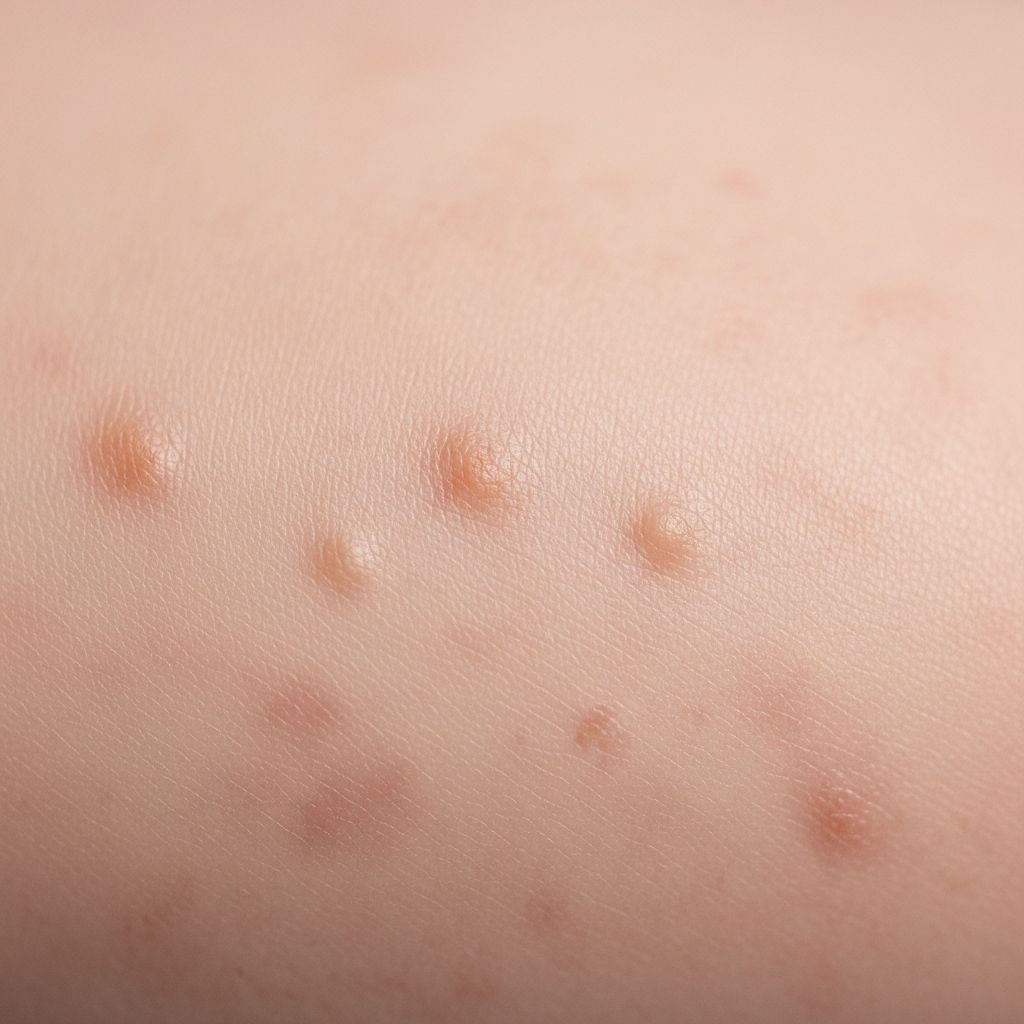
Transient neonatal pustular melanosis presents as a vesiculopustular rash composed of 1–3 mm fluid-filled lesions that are fragile and rupture easily. The lesions are characterized by their clarity and the absence of surrounding erythema, appearing on otherwise healthy skin. When lesions rupture, they leave behind a distinctive collarette of scale and a brown or hyperpigmented macule.
The rash has a predilection for specific anatomical locations. The areas most frequently affected include the forehead, temporal regions, cheeks, neck, back, and buttocks. Involvement of the palms and soles is very rare, with most sources noting that these areas are often spared. The lesions can range from 1 to 5 mm in diameter, though some cases may present with larger vesicles and bullae.
Timing and Course
TNPM typically appears a few days after birth, though pigmented macules may sometimes be present at birth. The initial pustular lesions usually disappear spontaneously within the first 2 weeks of life. The rash typically fades over three to four weeks but may linger for up to three months after birth. The residual hyperpigmented macules with collarette scaling persist for several weeks to months after the pustules have resolved.
Associated Features
TNPM is not associated with any systemic manifestations. Affected infants remain systemically well, without fever or signs of malaise. The skin between the lesions remains visually healthy and non-erythematous, which is an important diagnostic feature. This benign systemic presentation helps distinguish TNPM from infectious or more serious dermatologic conditions.
Related Stories



Diagnosis
The diagnosis of transient neonatal pustular melanosis is predominantly clinical and requires no investigations in typical cases. Healthcare providers should recognize the characteristic clinical presentation to avoid unnecessary testing and interventions.
Clinical Diagnosis
The diagnosis is based on the typical features of a generalized pustular eruption in an otherwise healthy term neonate with no systemic malaise. The presence of pustules on a non-erythematous background, combined with their typical distribution and the infant’s good health status, strongly suggests TNPM.
Cytological Examination
If cytological examination is performed, it demonstrates an abundance of neutrophils and occasional eosinophils, with occasional macrophages and keratinocytes. Importantly, there are no viral cytopathic changes, bacterial elements, or fungal elements present. Bacterial cultures of pustular fluid are consistently negative, helping to rule out infectious causes. This distinguishes TNPM from erythema toxicum neonatorum, where infiltrates are predominantly eosinophilic.
Histopathological Findings
Although a skin biopsy is not usually necessary for diagnosis, histopathological examination would demonstrate subcorneal or intraepidermal pustules or vesicles. The skin biopsy shows a neutrophilic infiltrate in the epidermis or dermis, commonly with subcorneal pustules and occasional eosinophils. The pigmented macules show basal and suprabasal increase in pigmentation without pigmentary incontinence.
Additional Testing
Before diagnosing TNPM, serious conditions including skin infections should be excluded. Initial blood cultures should be negative, and swabs of pustular fluid should be sterile. Varicella zoster PCR should be negative to exclude viral causes. These tests help confirm the benign nature of the condition and rule out potentially serious infectious etiologies.
Differential Diagnosis
Several conditions should be considered in the differential diagnosis of TNPM to ensure accurate diagnosis and appropriate management:
- Erythema toxicum neonatorum: A similar benign neonatal condition with predominantly eosinophilic infiltrates rather than the neutrophilic predominance seen in TNPM
- Staphylococcal or streptococcal skin infection: Serious bacterial infections that require antibiotic treatment; distinguished from TNPM by positive bacterial cultures and systemic signs
- Herpes simplex infection: A potentially serious viral infection that requires antiviral therapy; excluded by negative varicella zoster PCR and absence of viral cytopathic changes
- Other neonatal blistering disorders: Genetic or autoimmune conditions that may present similarly but have different long-term implications
Treatment and Management
No specific treatment is necessary for transient neonatal pustular melanosis, as it is self-resolving and has no long-term complications. The condition requires only supportive care and parental reassurance.
General Management Approach
Management focuses on confirming the diagnosis, excluding serious conditions, and providing appropriate reassurance to parents. Topical emollients may be applied to support skin healing and comfort. The emphasis is on avoiding unnecessary investigations and overtreatment while providing due parental reassurance.
Avoiding Unnecessary Intervention
Early recognition of TNPM is crucial for avoiding unnecessary antibiotics and hospitalization. Once the diagnosis is confirmed and serious conditions have been excluded, broad-spectrum antibiotics should be discontinued if they were initially started pending diagnosis. This reduces the risk of adverse effects and unnecessary antibiotic exposure in newborns.
Prognosis and Resolution
The prognosis for TNPM is excellent. Initial skin lesions usually disappear spontaneously within the first 2 weeks. The residual hyperpigmented macules gradually fade over several weeks to months, with complete resolution typically occurring within a few months of birth. There are no long-term complications or sequelae from this condition.
Clinical Case Considerations
While most cases of TNPM present with the typical pustular eruption, some cases may present with atypical features. For example, cases with predominant vesicles and bullae rather than simple pustules can still represent TNPM if the clinical context is appropriate. In such atypical presentations, careful evaluation to exclude other conditions is particularly important, but the underlying diagnosis and benign nature of the condition remain unchanged.
Maternal Factors
Increased frequency of placental squamous metaplasia has been reported in the mothers of some infants with TNPM. However, this maternal finding is not required for diagnosis and its clinical significance remains unclear. Most cases of TNPM occur in infants born to mothers with no specific risk factors or maternal pathology.
Frequently Asked Questions
Q: Is transient neonatal pustular melanosis contagious?
A: No, TNPM is not contagious. It is a benign, non-infectious dermatologic condition that does not spread to other infants or require isolation precautions.
Q: Will my baby’s skin return to normal?
A: Yes, TNPM resolves completely with no permanent scarring or long-term complications. Pustules resolve within 2 weeks, and hyperpigmented macules typically fade completely within several months.
Q: Does TNPM require antibiotics?
A: No, TNPM does not require antibiotic treatment. If antibiotics were started pending diagnosis, they can be discontinued once the diagnosis is confirmed and serious conditions are excluded.
Q: How can I care for my baby’s skin during this condition?
A: Apply gentle emollients to keep the skin moisturized and comfortable. Avoid aggressive scrubbing or manipulation of the lesions. Most importantly, avoid unnecessary treatments and allow the condition to resolve naturally.
Q: Will TNPM recur in future pregnancies?
A: TNPM is a benign, self-limited condition of the neonatal period that does not recur. However, subsequent siblings may potentially develop TNPM independently, though this is not guaranteed.
Q: When should I be concerned about my baby’s rash?
A: Most pustular rashes in newborns are benign, but you should seek medical evaluation if your baby develops fever, appears ill, has pustules with surrounding erythema, or if lesions do not improve as expected.
Summary
Transient neonatal pustular melanosis is a benign, self-limiting skin condition that affects a small percentage of newborn infants, with higher prevalence in African American populations. Characterized by vesiculopustular lesions that appear on healthy, non-erythematous skin and resolve spontaneously within weeks, TNPM requires only clinical diagnosis and parental reassurance. Early recognition prevents unnecessary investigations, antibiotic therapy, and parental anxiety. Understanding the typical clinical presentation, differential diagnoses, and benign natural history of TNPM enables healthcare providers to manage affected infants appropriately and provide evidence-based, compassionate care to families.
References
- Transient neonatal pustular melanosis: An unusual and challenging diagnosis — National Center for Biotechnology Information (NCBI). 2023. https://pmc.ncbi.nlm.nih.gov/articles/PMC10600353/
- Transient neonatal pustular melanosis — DermNet. https://dermnetnz.org/topics/transient-neonatal-pustular-melanosis
- Transient Neonatal Pustular Melanosis — Actas Dermo-Sifiliográficas. 2012. https://www.actasdermo.org/en-transient-neonatal-pustular-melanosis-articulo-S1578219012003654
- Transient Neonatal Pustular Melanosis — JAMA Dermatology. https://jamanetwork.com/journals/jamadermatology/fullarticle/540056
- Transient neonatal dermatosis — European Academy of Dermatology and Venereology (EADV). 2023. https://eadv.org/wp-content/uploads/2023/04/EADV-Paediatric-Dermatology-3-Transient-Neonatal-Dermatosis.pdf
Similar Articles








Read full bio of Sneha Tete