Transposition of the Great Arteries (TGA): Causes, Symptoms, and Treatment
Understanding TGA: A rare congenital heart defect requiring urgent surgical intervention.
Understanding Transposition of the Great Arteries (TGA)
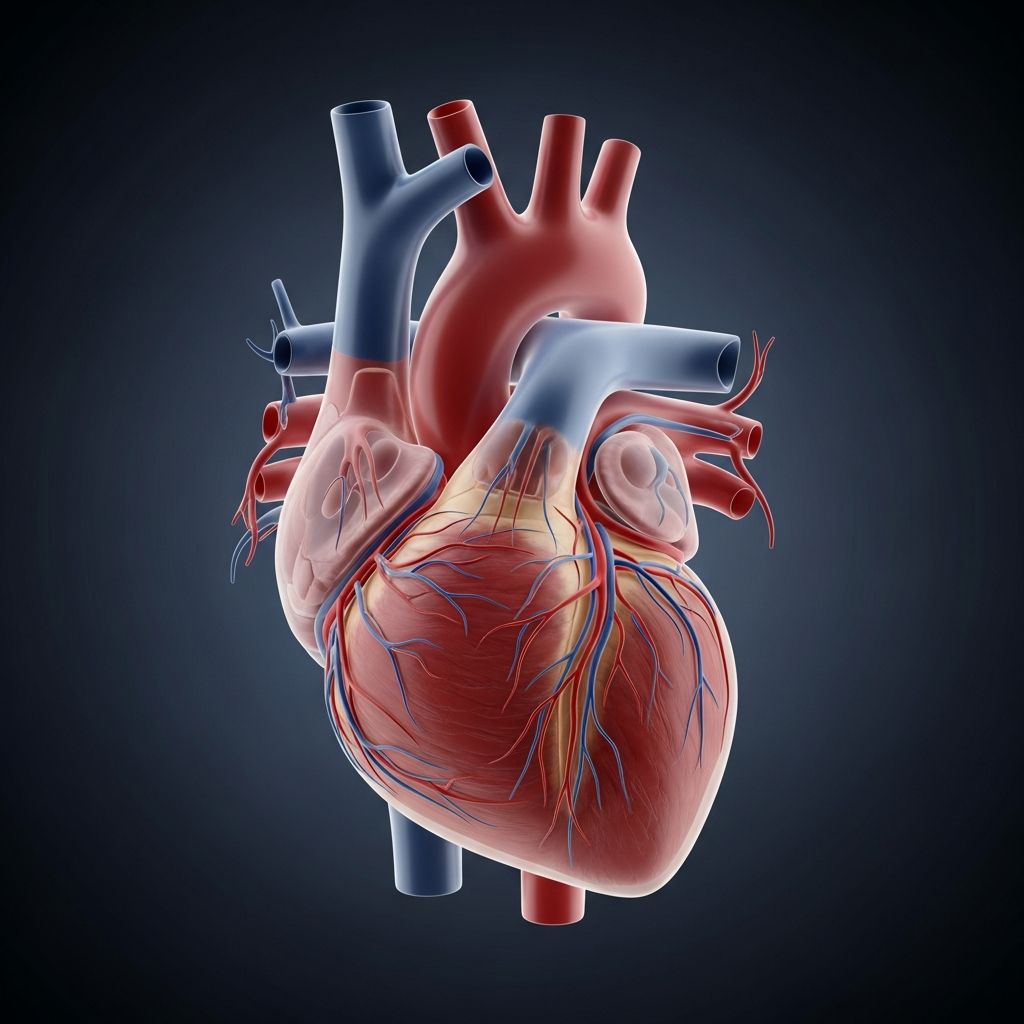
Transposition of the great arteries (TGA) is a serious and rare congenital heart condition in which the two main arteries leaving the heart are switched from their normal positions. This life-threatening defect occurs during fetal development when the heart’s major blood vessels fail to form in their correct anatomical locations. In this condition, the aorta—which normally carries oxygen-rich blood from the left ventricle to the body—arises from the right ventricle instead. Simultaneously, the pulmonary artery, which should carry oxygen-poor blood from the right ventricle to the lungs, arises from the left ventricle. This reversal creates two separate, parallel circuits that are incompatible with life unless there is some way for blood to mix between the two circuits.
TGA accounts for approximately 5 to 7 percent of all congenital heart defects and represents one of the most common cyanotic heart defects presenting in newborns. Without prompt diagnosis and treatment, this condition is fatal, making it one of the most critical cardiac emergencies in newborn medicine. The good news is that with modern surgical techniques and immediate medical intervention, survival rates have improved dramatically, and many children with TGA now go on to lead relatively normal lives.
Types of Transposition of the Great Arteries
There are two distinct types of transposition of the great arteries, each with different presentations and treatment considerations:
Dextro-Transposition of the Great Arteries (d-TGA)
Dextro-transposition, also called simple transposition, is the most common type of TGA. In this variant, the aorta is positioned to the right of the pulmonary artery. The condition results in severely reduced oxygen-rich blood reaching the body’s tissues. Symptoms typically appear immediately after birth or within the first few hours of life. Newborns with d-TGA display signs of cyanosis, characterized by a bluish or grayish discoloration of the skin, lips, and nail beds due to low oxygen levels. Without treatment, serious complications develop rapidly, potentially leading to death within days or weeks. However, this type responds well to surgical intervention, and the arterial switch operation has become the standard corrective procedure.
Congenitally Corrected Transposition (l-TGA or ccTGA)
Congenitally corrected transposition is a less common variant of TGA. In this type, additional cardiac abnormalities allow some degree of blood mixing, which may provide sufficient oxygen to the body. As a result, symptoms may not appear immediately after birth or may be absent for many years. Some individuals with ccTGA may not require surgery during infancy and could live for years without symptoms. However, over time, this type can lead to complications including heart rhythm problems, valve disease, and progressive heart failure. The specific treatment approach for ccTGA depends on the individual’s cardiac anatomy and the presence of associated heart conditions.
Causes and Risk Factors
The exact cause of transposition of the great arteries remains incompletely understood, but medical research has identified several contributing factors. TGA results from abnormal embryological development during the first eight weeks of pregnancy when the heart is forming. Specifically, the condition occurs when the aorticopulmonary septum fails to spiral correctly. This failure can arise from defects in the maturation of the right superior and left inferior truncus swellings, improper fusion of the conus swellings with the aorticopulmonary septum, or abnormalities in neural crest development or migration.
Genetic and chromosomal factors play a role in TGA development. The condition has been associated with various genetic syndromes and chromosomal abnormalities. Maternal factors during pregnancy, including maternal diabetes, maternal infections, and certain medications taken during the first trimester, may increase the risk of TGA. Additionally, some studies suggest that paternal age and maternal age may influence the risk of developing this defect, though the evidence for these associations is not definitive.
Related Stories



Symptoms and Presentation
The symptoms of transposition of the great arteries vary depending on the type and the degree of blood mixing occurring within the heart. However, most infants with d-TGA present with obvious symptoms within the first few hours to days of life:
Key Clinical Symptoms
- Cyanosis: Blue or gray discoloration of the skin, lips, and nail beds due to insufficient oxygen in the blood. The appearance of cyanosis varies depending on skin pigmentation and may be more or less visible in different infants.
- Rapid or labored breathing: Tachypnea occurs as the baby’s respiratory system attempts to compensate for low oxygen levels.
- Feeding difficulties: Poor feeding and lack of appetite are common as the infant lacks sufficient energy due to low oxygen levels.
- Poor weight gain: Inadequate caloric intake and poor feeding lead to failure to thrive.
- Weak pulse: Reduced cardiac output results in diminished peripheral pulses.
- Pounding heartbeat: Tachycardia develops as the heart works harder to pump blood and compensate for low oxygen saturation.
- Lethargy: Affected infants may appear unusually sleepy or unresponsive.
- Irritability: Some babies may be inconsolable or cry weakly.
In contrast, infants with congenitally corrected transposition may not display any symptoms at birth or during infancy. Some individuals with ccTGA may go undiagnosed until later in childhood or even adulthood when complications develop.
Hemodynamic Changes and Pathophysiology
Understanding the hemodynamic consequences of TGA is essential for appreciating why this condition is so life-threatening. In normal heart physiology, oxygen-poor blood returns from the body to the right atrium, flows into the right ventricle, and is then pumped through the pulmonary artery to the lungs for oxygenation. After becoming oxygenated in the lungs, the blood returns to the left atrium, flows into the left ventricle, and is pumped through the aorta to supply the entire body with oxygen-rich blood.
In d-TGA, this normal circulation is disrupted. Oxygen-poor blood that returns from the body enters the right atrium and right ventricle but is then pumped directly back to the body through the aorta without first going to the lungs for oxygenation. Meanwhile, oxygen-rich blood returning from the lungs enters the left atrium and left ventricle but is then recirculated back to the lungs through the pulmonary artery. This creates two completely separate, non-communicating circuits—one carrying deoxygenated blood to the body and another recirculating oxygenated blood through the lungs. Unless there is some opening or shunt that allows blood to mix between these two circuits, the body receives essentially no oxygen-rich blood, making this condition immediately and completely incompatible with life.
Diagnosis of Transposition of the Great Arteries
Early diagnosis of TGA is critical for survival. Modern diagnostic techniques allow for detection both before birth and immediately after delivery. Prenatal diagnosis through fetal echocardiography during pregnancy can identify TGA and allow for appropriate planning and preparation at a hospital equipped with pediatric cardiac surgery capabilities. However, many cases are diagnosed postnatally based on clinical presentation and diagnostic imaging.
Diagnostic Methods
Chest X-Ray: A chest radiograph may reveal an abnormal cardiac silhouette, sometimes described as resembling an “egg on string” appearance due to the narrow mediastinum and enlarged heart. Pulmonary vascular markings may also appear abnormal.
Electrocardiography (ECG): An ECG may show right axis deviation and right ventricular hypertrophy, as the right ventricle works under increased pressure. However, ECG findings can be relatively nonspecific in newborns.
Echocardiography: Transthoracic echocardiography is the primary diagnostic tool for confirming TGA. This ultrasound imaging technique clearly visualizes the abnormal positioning of the aorta and pulmonary artery and assesses the degree of any existing septal defects or other associated cardiac abnormalities. Echocardiography also evaluates cardiac function and identifies potential complications.
Cardiac Catheterization: While less commonly used for diagnosis given the high sensitivity of echocardiography, cardiac catheterization may be performed to gather additional hemodynamic information or to perform a balloon atrial septostomy procedure in critically ill infants.
Immediate Management and Emergency Interventions
Once TGA is suspected or confirmed, immediate medical interventions are necessary to maintain adequate oxygenation until surgical correction can be performed. The primary goal is to increase blood mixing between the pulmonary and systemic circuits.
Prostaglandin E1 (PGE1) Infusion
Immediately upon diagnosis, infants with d-TGA are started on intravenous prostaglandin E1 (also called alprostadil). This medication works by keeping the ductus arteriosus—a blood vessel that normally closes after birth—open. By maintaining ductal patency, PGE1 allows blood to mix between the pulmonary and systemic circulation, improving oxygen delivery to the body. Infants on PGE1 require continuous monitoring in an intensive care unit setting and may experience side effects including fever, seizures, apnea, and hypotension.
Balloon Atrial Septostomy (Rashkind Procedure)
About one-third of infants with TGA have extremely low oxygen levels that do not respond adequately to PGE1 alone and require an emergency intervention called balloon atrial septostomy (BAS), also known as the Rashkind procedure. This life-saving technique was developed at Children’s Hospital of Philadelphia and remains a critical intervention for critically ill newborns with TGA.
During this procedure, a special catheter with an inflatable balloon at its tip is passed through the umbilical vein or femoral vein into the right atrium and then into the left atrium through the foramen ovale (a normal opening between the upper chambers of the fetal heart). The balloon is then inflated and forcefully pulled back into the right atrium, creating or enlarging a hole between the upper chambers. This artificially created or enlarged opening, called an atrial septal defect, allows oxygen-rich blood returning from the lungs to mix with oxygen-poor blood returning from the body. This mixing improves systemic oxygenation and provides a temporary solution while the infant is prepared for definitive surgical repair.
Surgical Treatment
While medical management provides temporary stabilization, all infants with TGA require open-heart surgery for permanent correction. Surgery is typically performed within days of birth, usually before the infant is one week old. Without surgical repair, most babies with TGA do not survive their first year of life.
Arterial Switch Operation (ASO)
The arterial switch operation (ASO) is the gold standard surgical procedure for correcting d-TGA without significant left ventricular outflow tract obstruction. During this complex operation, the surgeon makes an incision in the infant’s chest and carefully transects (cuts) the aorta and the pulmonary artery just above where they exit the heart. The surgeon then switches the two arteries, reattaching the aorta to the left ventricle (where it normally belongs) and the pulmonary artery to the right ventricle (where it normally belongs).
One of the most technically challenging aspects of the ASO is the reimplantation of the coronary arteries. The coronary arteries are the blood vessels that supply oxygen-rich blood to the heart muscle itself. In TGA, these arteries arise from the aorta in abnormal locations. During the ASO, the surgeon must carefully identify, disconnect, and reimplant these coronary arteries into their correct positions on the relocated aorta. Proper coronary artery reimplantation is essential for long-term survival and cardiac function.
The ASO has proven to be a highly successful procedure with excellent long-term outcomes when performed by experienced cardiac surgeons. Survival rates exceed 90 percent, and most children who undergo ASO in the modern era have good cardiac function and can participate in normal childhood activities.
Alternative Surgical Approaches
In cases where significant left ventricular outflow tract obstruction is present, the standard ASO cannot be performed due to the narrowing preventing adequate blood flow from the left ventricle into the pulmonary artery. In these cases, two operations are usually required. The first stage may involve a procedure such as a Blalock-Taussig shunt or pulmonary artery banding to improve systemic circulation, followed later by a more complex repair. In some cases, if the obstruction can be relieved, a modified ASO may become possible.
Complications of Transposition of the Great Arteries
Both untreated TGA and complications arising after surgical repair represent serious concerns that require ongoing medical management and monitoring.
Complications of Untreated TGA
- Severe hypoxemia: Inadequate oxygen delivery to body tissues causes organ damage, particularly affecting the brain, heart, liver, and kidneys.
- Metabolic acidosis: Tissue hypoxia leads to anaerobic metabolism and accumulation of lactic acid, causing dangerous changes in blood chemistry.
- Sudden death: Without treatment, death typically occurs within days to weeks of birth.
- Organ damage: Prolonged hypoxemia causes irreversible damage to vital organs, particularly the central nervous system.
Complications Associated with ccTGA
Infants and children with congenitally corrected transposition may develop several long-term complications:
- Complete heart block: The abnormal anatomy in ccTGA can damage the heart’s electrical conduction system, potentially causing complete heart block where no electrical signals reach the lower chambers, requiring permanent pacemaker insertion.
- Tricuspid valve regurgitation: The tricuspid valve (which separates the right atrium from the right ventricle in ccTGA, but functions as the systemic valve) may not close completely, allowing blood to flow backward. This progressive valve insufficiency can worsen over time.
- Progressive systemic ventricular dysfunction: Because the anatomical right ventricle must pump blood to the entire body at systemic pressures in ccTGA, it gradually fails under this excessive workload, leading to progressive heart failure.
- Atrial arrhythmias: Abnormal heart rhythms including atrial flutter and atrial fibrillation can develop.
- Heart failure: Progressive deterioration of cardiac function may eventually necessitate heart transplantation.
Long-Term Complications After ASO
While the ASO is generally successful, some long-term complications can occur:
- Coronary artery complications: Narrowing or other problems with the reimplanted coronary arteries can develop, potentially causing myocardial ischemia.
- Supravalvular aortic or pulmonary stenosis: Narrowing can develop at the sites where the arteries were reattached.
- Aortic root dilatation: The aorta may gradually enlarge, potentially leading to aortic regurgitation.
- Ventricular dysfunction: The left ventricle may gradually weaken over time, though this is relatively uncommon with modern surgical techniques.
Long-Term Outcomes and Follow-Up Care
The prognosis for infants with TGA who receive prompt diagnosis and appropriate surgical treatment has improved dramatically over the past several decades. Today, most children who undergo ASO survive to adulthood and many live relatively normal lives with good cardiac function. However, lifelong medical follow-up is essential.
Survivors of TGA require regular evaluations by a pediatric cardiologist throughout childhood and transition to adult cardiology care in adulthood. Regular echocardiography assessments monitor cardiac function and screen for progressive valve disease or coronary artery complications. Stress testing and coronary angiography may be performed periodically to assess coronary artery function and detect potential ischemia. Activity restrictions may apply to some patients, though most children with uncomplicated post-ASO TGA can participate in normal childhood activities and sports.
It is important to note that while surgical repair corrects the anatomical abnormality and dramatically improves survival, it is not considered a complete cure. The altered cardiac anatomy and surgical modifications mean that these patients require ongoing monitoring and may develop complications years after surgery. Nevertheless, the quality of life for most post-ASO TGA patients is excellent, and many go on to attend school, develop careers, establish relationships, and have families of their own.
Frequently Asked Questions
Q: Can TGA be detected before birth?
A: Yes, transposition of the great arteries can often be detected during prenatal ultrasound screening, particularly during the detailed fetal anatomy scan around 18-20 weeks of gestation. Fetal echocardiography by a specialist can confirm the diagnosis. Prenatal diagnosis allows for appropriate planning and ensures the baby is delivered at a hospital equipped with pediatric cardiac surgery capabilities.
Q: What is the survival rate for TGA?
A: Without treatment, most babies with d-TGA do not survive beyond the first year of life. However, with prompt diagnosis and the arterial switch operation, survival rates now exceed 90 percent. Most of these children grow up to be healthy adolescents and adults with normal cardiac function.
Q: How long is the recovery period after ASO surgery?
A: The immediate postoperative period typically involves 1-2 weeks in the pediatric intensive care unit. Most infants are discharged from the hospital 2-4 weeks after surgery. Complete healing of the surgical incision takes several weeks, but infants generally return to normal activities within 2-3 months.
Q: Will my child need additional surgeries after the initial ASO?
A: Most children who undergo an uncomplicated ASO for simple d-TGA do not require additional heart surgeries. However, some patients may develop complications requiring intervention. Regular cardiac follow-up helps identify any problems early.
Q: Can children with TGA participate in sports and normal activities?
A: Most children who have undergone successful ASO repair can participate in normal childhood activities and many can participate in sports. However, activity recommendations should be individualized based on the child’s cardiac status and discussed with the cardiologist.
Q: Is TGA hereditary?
A: While most cases of TGA are sporadic, genetic factors do play a role in its development. The recurrence risk for siblings is generally low but slightly higher than the general population. Genetic counseling is recommended for families with multiple affected members.
References
- Transposition of the Great Arteries (TGA) — Mayo Clinic. Last updated 2024. https://www.mayoclinic.org/diseases-conditions/transposition-of-the-great-arteries/symptoms-causes/syc-20350589
- About Dextro-Transposition of the Great Arteries (d-TGA) — Centers for Disease Control and Prevention. https://www.cdc.gov/heart-defects/about/d-tga.html
- Transposition of the Great Arteries — National Center for Biotechnology Information, StatPearls. https://www.ncbi.nlm.nih.gov/books/NBK538434/
- Transposition of the Great Arteries (TGA) — Cleveland Clinic. https://my.clevelandclinic.org/health/diseases/23387-transposition-of-the-great-arteries
- Transposition of the Great Arteries — Children’s Hospital of Philadelphia. https://www.chop.edu/conditions-diseases/transposition-great-arteries
- Transposition of the Great Arteries | University of Michigan Health — University of Michigan Health. https://www.uofmhealth.org/our-care/specialties-services/transposition-great-arteries
- Pediatric Transposition of the Great Arteries (TGA) — Children’s National Hospital. https://www.childrensnational.org/get-care/health-library/transposition-of-the-great-arteries-tga
Similar Articles








Read full bio of Sneha Tete