Transurethral Resection of the Prostate (TURP)
Minimally invasive surgical procedure to relieve enlarged prostate symptoms.
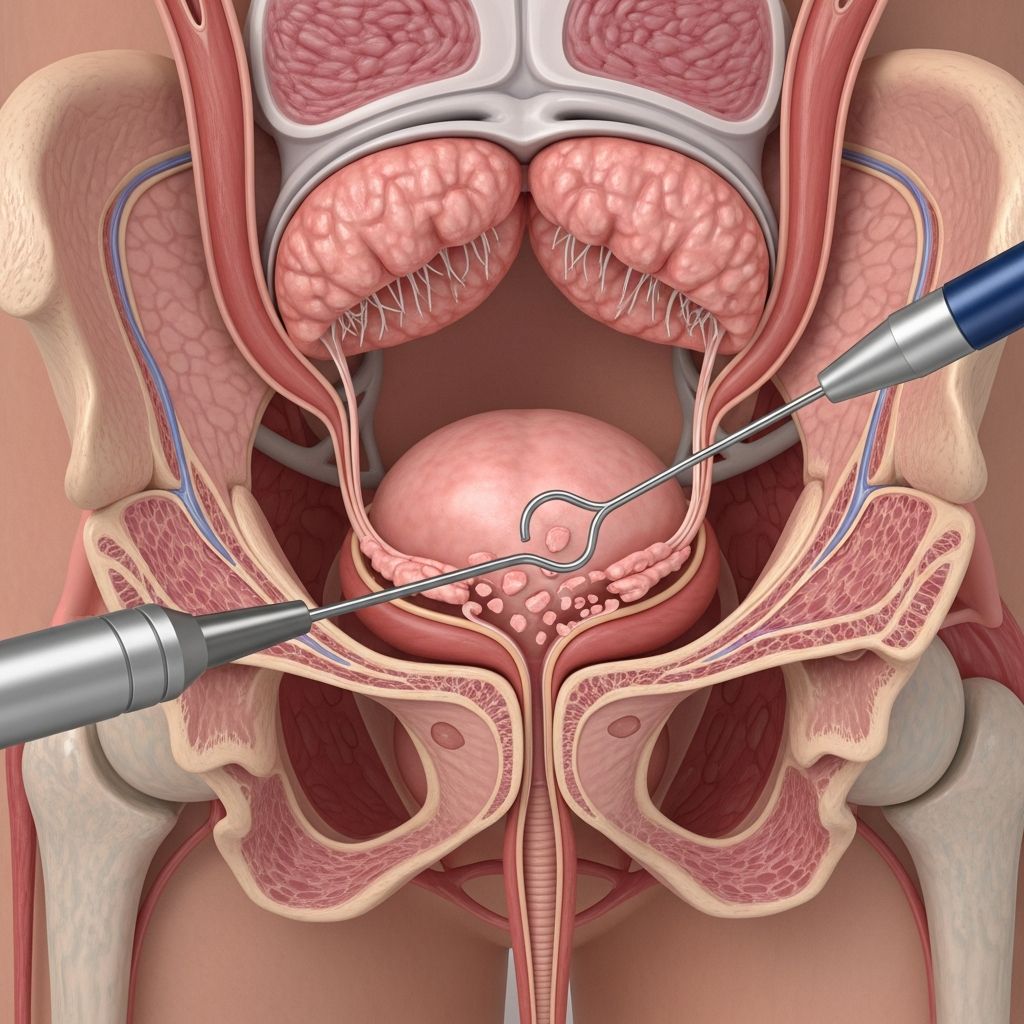
Transurethral resection of the prostate, commonly referred to as TURP, is a minimally invasive surgical procedure designed to remove excess tissue from the prostate gland. This procedure is primarily used to treat benign prostatic hyperplasia (BPH), a condition in which the prostate becomes enlarged and causes urinary symptoms. TURP was the first major minimally invasive surgical procedure of the modern era and remains the gold standard surgical treatment for bladder outlet obstruction caused by benign prostate disease.
The procedure involves inserting specialized instruments through the urethra—the tube that carries urine from the bladder—to access and remove prostate tissue. Because TURP requires no external incisions, it offers significant advantages over traditional open surgery, including reduced recovery time, less pain, and fewer complications.
Understanding the Prostate and Benign Prostatic Hyperplasia
The prostate is a walnut-sized gland located at the base of the bladder in men, where it wraps around the urethra. As men age, the prostate often becomes enlarged—a condition called benign prostatic hyperplasia or BPH. This enlargement can obstruct the flow of urine, leading to a variety of bothersome symptoms that significantly impact quality of life.
Common symptoms of an enlarged prostate include difficulty starting urination, weak urinary stream, frequent urination (especially at night), urgency to urinate, incomplete bladder emptying, and urinary retention. When these symptoms become problematic and do not respond adequately to medication, surgical intervention like TURP may be recommended.
When TURP is Recommended
TURP is typically recommended for patients who experience moderate to severe lower urinary tract symptoms due to benign prostate enlargement and who have not responded satisfactorily to medical management. The procedure is the most common surgical treatment for BPH, accounting for approximately 95 percent of all surgical procedures performed for this condition.
Your urologist may suggest TURP if you:
- Have moderate to severe lower urinary tract symptoms affecting quality of life
- Have failed or prefer not to continue medical therapy
- Experience recurrent urinary tract infections related to incomplete bladder emptying
- Have chronic urinary retention requiring catheterization
- Have recurrent hematuria (blood in urine) due to benign prostatic hyperplasia
- Have bladder stones secondary to urinary obstruction
Pre-Operative Evaluation
Before undergoing TURP, your healthcare team will conduct a thorough evaluation to ensure you are a suitable candidate for the procedure. This evaluation typically includes a detailed medical history, physical examination, and various diagnostic tests.
Your doctor will review your current medications and medical conditions, as certain conditions may affect your suitability for surgery or require special precautions. Blood tests may be ordered to assess kidney function and check blood clotting ability. A urinalysis helps identify any urinary tract infections that should be treated before surgery. Imaging studies such as ultrasound or cystoscopy may be performed to visualize the prostate and bladder.
Related Stories



Your physician will also discuss the benefits and risks of TURP with you and explain what to expect before, during, and after the procedure. You will receive instructions regarding pre-operative preparation, including guidelines about eating and drinking before surgery, which medications to continue or discontinue, and arrangements for transportation home after the procedure.
The TURP Procedure Explained
TURP is performed under either spinal or general anesthesia, depending on your specific situation and your surgeon’s recommendation. The procedure typically takes between one to two hours, though this can vary based on the amount of prostate tissue that needs to be removed.
During the procedure, your surgeon begins by inserting a specialized instrument called a cystoscope through the opening of the urethra. The cystoscope is a small, lighted tube that allows the surgeon to visualize the inside of the urethra, prostate gland, and bladder. A sterile irrigating solution is instilled through the cystoscope to provide better visibility of the surgical area.
Once adequate visualization is achieved, the surgeon carefully passes a resectoscope—an instrument consisting of a small wire loop that carries an electric current—through the cystoscope. This specialized tool is used to precisely shave away layers of prostate tissue that are obstructing the urinary tract. The removed tissue pieces are washed into the bladder and continuously removed through a special port in the cystoscope.
The surgeon carefully removes only the inner portion of the prostate gland, leaving the outer capsule intact. This selective approach preserves the external urinary sphincter muscle, which is critical for maintaining continence after surgery. The procedure continues until an optimal amount of tissue has been removed to relieve the urinary obstruction.
Once the resection is complete, the surgeon removes the resectoscope and cystoscope. A triple-lumen catheter is then placed into the bladder to facilitate drainage and irrigation. This catheter typically remains in place for one to two days following surgery to allow the bladder and surgical site to begin healing while monitoring for bleeding.
Post-Operative Recovery
After TURP is completed, you will be taken to the recovery area for monitoring. Pain medication will be provided to manage any discomfort. Most patients experience only mild to moderate pain following the procedure, as the minimally invasive nature of TURP results in less tissue trauma compared to open surgery.
The average hospital stay following TURP is typically one to four days, depending on your individual circumstances and the extent of tissue removed. Some patients may be discharged the same day or within 24 hours if there are no complications.
During your hospital stay, nursing staff will monitor your vital signs, fluid intake and output, and watch for any signs of complications. The catheter will remain in place to ensure proper bladder drainage, and you will receive antibiotics to prevent infection. You may experience some blood-tinged urine or discomfort with urination initially—these are normal post-operative effects.
Once you return home, it is important to follow your surgeon’s specific instructions regarding activity restrictions, fluid intake, and medication use. Most patients can gradually return to normal activities within two to four weeks, though strenuous exercise and heavy lifting should be avoided for a longer period as advised by your surgeon.
Expected Outcomes and Benefits
TURP provides excellent outcomes for the vast majority of patients. Approximately 80 to 90 percent of men experience significant improvement in urinary symptoms following the procedure. Most patients report better urinary flow, decreased frequency and urgency of urination, and elimination of nocturia (nighttime urination).
The benefits of TURP are often immediately noticeable, with many patients experiencing improvement in symptoms within the first few weeks after surgery as swelling subsides and the urethra remains properly opened. Quality of life improvements are substantial for men who had been significantly bothered by severe urinary symptoms.
Potential Complications and Risks
While TURP is generally a safe procedure with a favorable risk profile, like all surgical procedures, it carries some potential risks and complications that you should understand before proceeding.
TURP Syndrome: This is a specific complication related to fluid absorption during the procedure. It can occur when excessive irrigation fluid is absorbed through open prostatic blood vessels and sinuses. This can lead to hyponatremia (low sodium levels) and fluid overload, causing symptoms such as confusion, restlessness, nausea, vomiting, high blood pressure, and in severe cases, seizures or coma. To minimize this risk, surgeons typically limit procedure time to less than one hour and keep irrigation fluid pressure to a minimum.
Bleeding: Moderate bleeding can occur during or after the procedure. Small amounts of blood in the urine are expected and normal for several weeks following TURP. Significant bleeding is uncommon but may require blood transfusion or additional intervention.
Infection: Urinary tract or bladder infections can occur after TURP. Antibiotics are typically administered perioperatively to reduce this risk.
Urinary Incontinence: Temporary urinary incontinence is relatively common in the immediate post-operative period. Permanent incontinence is rare when the procedure is performed carefully to preserve the external urinary sphincter.
Retrograde Ejaculation: This is a moderate-risk complication where semen enters the bladder during ejaculation rather than being expelled through the urethra. This is not harmful but results in “dry” ejaculation and may affect fertility in some men.
Erectile Dysfunction: TURP carries minimal risk for erectile dysfunction compared to other prostate surgeries, as the procedure does not typically damage nerves critical for erectile function.
Stricture Formation: Scarring can occasionally occur at the urethral opening, potentially causing difficulty urinating. This complication is usually manageable with additional procedures if necessary.
Alternative Treatment Options
While TURP remains the gold standard for surgical management of BPH, several alternative minimally invasive procedures have been developed in recent years. These options may be appropriate for select patients.
Transurethral Incision of the Prostate (TUIP): Similar to TURP, this procedure involves making one to three small cuts in the prostate near the bladder neck to relieve obstruction. It is useful for men with smaller prostates who may not require extensive tissue removal. TUIP has fewer complications and better preserves sexual function compared to TURP but is suitable only for certain anatomical situations.
UroLift: This minimally invasive technique involves placing small staples to separate the lobes of the prostate and enlarge the urethral opening. It is useful for men whose prostates are not severely enlarged and has minimal side effects while preserving ejaculatory and erectile function.
Medical Management: For men with mild to moderate symptoms, medications such as alpha-blockers or 5-alpha reductase inhibitors can effectively reduce symptoms and delay or prevent the need for surgery in many cases.
Frequently Asked Questions
Q: How long does TURP surgery take?
A: TURP typically takes one to two hours, depending on the amount of prostate tissue that needs to be removed and individual patient factors. The procedure time is often limited to less than one hour to minimize the risk of TURP syndrome.
Q: Will I need a catheter after TURP?
A: Yes, a catheter is typically placed in your bladder during surgery and remains for one to two days after the procedure. This allows proper drainage and helps monitor for bleeding while you recover.
Q: When can I return to normal activities?
A: Most patients can gradually resume normal activities within two to four weeks. Strenuous exercise and heavy lifting should be avoided for a longer period as directed by your surgeon.
Q: Will TURP affect my sexual function?
A: TURP carries minimal risk for erectile dysfunction. However, retrograde ejaculation (dry ejaculation) occurs in a significant percentage of men but does not cause harm and does not affect ability to have an erection.
Q: Is TURP a permanent solution?
A: While TURP provides long-lasting symptom relief in most patients, the prostate can continue to grow in some men, potentially requiring repeat procedures years later. However, the need for revision surgery is relatively uncommon.
Q: What type of anesthesia is used for TURP?
A: TURP is performed under either spinal or general anesthesia. Your anesthesiologist will determine the best option based on your medical history and specific circumstances.
Q: How long is the hospital stay after TURP?
A: The average hospital stay is one to four days, with some patients discharged within 24 hours if there are no complications.
Conclusion
Transurethral resection of the prostate remains a highly effective surgical treatment for men suffering from bothersome symptoms of benign prostatic hyperplasia. With excellent outcomes in 80 to 90 percent of patients and a favorable safety profile, TURP continues to be the gold standard surgical approach to bladder outlet obstruction caused by prostate enlargement. The minimally invasive nature of the procedure, combined with its proven efficacy and relatively low complication rates, makes it an attractive option for men who have not responded adequately to medical management. If you are experiencing urinary symptoms related to prostate enlargement, discuss with your urologist whether TURP or an alternative treatment option might be appropriate for you.
References
- Transurethral Resection of the Prostate — National Center for Biotechnology Information (NCBI) Bookshelf. 2024. https://www.ncbi.nlm.nih.gov/books/NBK560884/
- Transurethral Resection of the Prostate (TURP) — National Health Service (NHS). 2024. https://www.nhs.uk/tests-and-treatments/transurethral-resection-of-the-prostate-turp/
- Transurethral Resection of the Prostate (TURP) for Benign Prostate Disease — Better Health Channel, State Government of Victoria. 2024. https://www.betterhealth.vic.gov.au/health/conditionsandtreatments/transurethral-resection-of-the-prostate-turp-for-benign-prostate-disease
- Transurethral Resection of the Prostate — Cleveland Clinic. 2024. https://my.clevelandclinic.org/health/treatments/23369-transurethral-resection-of-the-prostate
- Transurethral Resection of the Prostate — Mount Sinai Health System. 2024. https://www.mountsinai.org/health-library/surgery/transurethral-resection-of-the-prostate
Similar Articles








Read full bio of medha deb