Transvaginal Ultrasound: Purpose, Procedure & Results
Complete guide to transvaginal ultrasound: understanding the procedure, benefits, and what to expect.
Understanding Transvaginal Ultrasound
A transvaginal ultrasound is a relatively quick, painless imaging procedure that provides a detailed view of your pelvic organs. This diagnostic tool is one of the most common and useful instruments healthcare providers can use to explore symptoms, diagnose conditions, or monitor pregnancy. Unlike abdominal ultrasounds that focus on external pelvic imaging, a transvaginal ultrasound allows your provider to see your uterus, cervix, fallopian tubes, and ovaries in exceptional detail.
The procedure uses sound waves to create comprehensive pictures of your internal reproductive structures. It can reveal abnormal growths, help identify the cause of pain or irregular bleeding, check for pregnancy, and monitor fetal development. The transvaginal approach offers superior image quality compared to transabdominal ultrasounds, particularly in early pregnancy when structures are still small.
Why Your Provider May Recommend a Transvaginal Ultrasound
Your healthcare provider may order a transvaginal ultrasound for several reasons. Common indications include:
Symptom Investigation: If you experience pelvic pain, unusual vaginal bleeding, or other gynecological symptoms, a transvaginal ultrasound helps determine the underlying cause. This imaging can identify conditions ranging from simple cysts to more complex abnormalities.
Abnormal Findings: When something unusual is discovered during a routine pelvic exam, your provider may recommend a transvaginal ultrasound to get a clearer picture and make a more accurate diagnosis.
Surgical Planning: Before pelvic surgery, providers often use transvaginal ultrasound to assess the anatomy and plan the most appropriate surgical approach.
Pregnancy Monitoring: Healthcare providers use transvaginal ultrasound extensively in early pregnancy. It can detect a fetal heartbeat, determine gestational age, confirm pregnancy location, assess fetal viability, and monitor early fetal development.
What a Transvaginal Ultrasound Can Reveal
A transvaginal ultrasound provides comprehensive information about your pelvic structures. This imaging procedure can identify:
Uterine Abnormalities: Fibroids, polyps, septums, and other structural variations within the uterus can be clearly visualized, allowing providers to assess their size, location, and potential impact on fertility or menstrual health.
Ovarian Conditions: Cysts, tumors, and other ovarian abnormalities are easily detected. The ultrasound can help differentiate between simple, functional cysts and more concerning lesions that may require further investigation.
Endometrial Changes: Thickening of the uterine lining, polyps, and other endometrial abnormalities are visible on transvaginal ultrasound, which is important for investigating abnormal bleeding.
Ectopic Pregnancies: In early pregnancy, transvaginal ultrasound can confirm that pregnancy is located within the uterus, ruling out the dangerous possibility of an ectopic pregnancy.
Miscarriage Status: The ultrasound can determine whether a pregnancy is viable by detecting fetal cardiac activity and measuring appropriate growth for gestational age.
Related Stories



How Transvaginal Ultrasound Works
Understanding the mechanics of transvaginal ultrasound helps demystify the procedure. The technology relies on fundamental sound wave physics to create images of your internal structures.
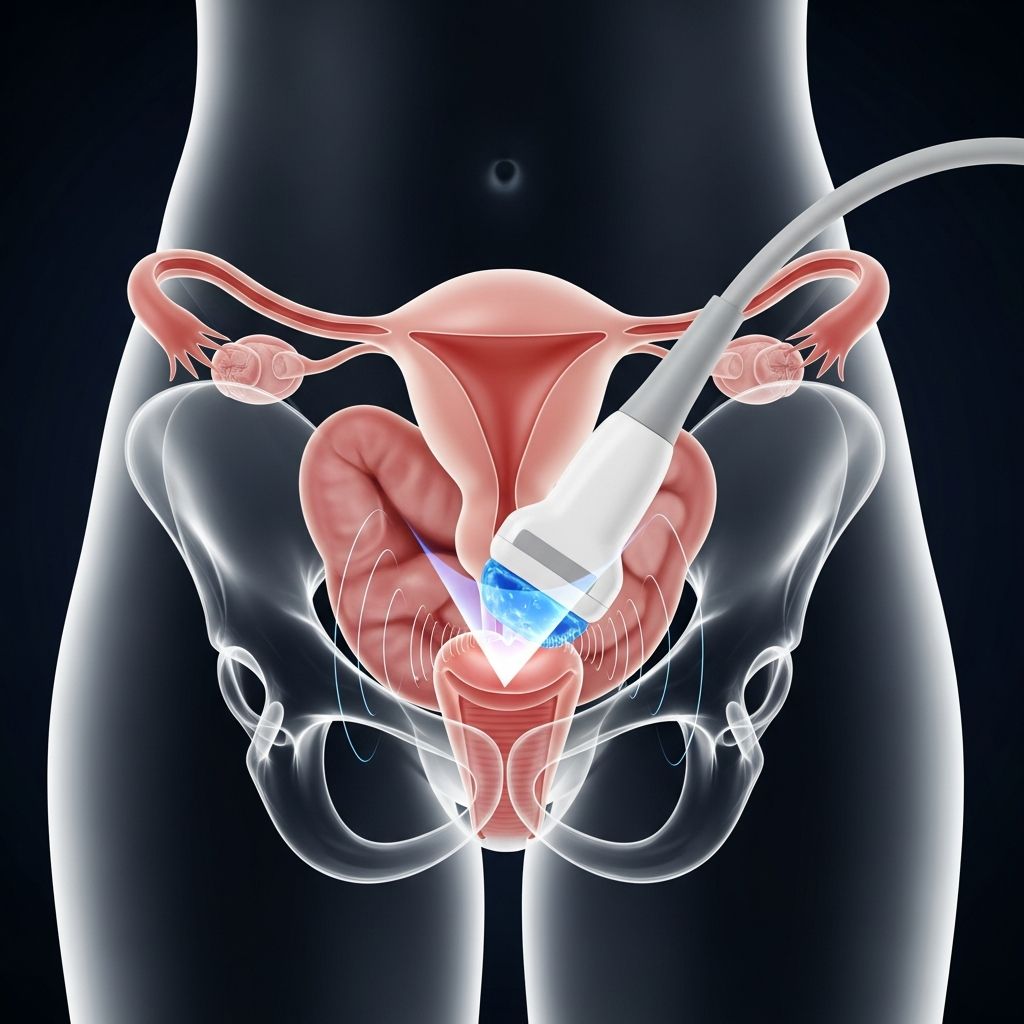
A transvaginal ultrasound uses sound waves to create images of your pelvic organs. An ultrasound technician or healthcare provider inserts a wand-like instrument called a transducer into your vagina. The wand releases high-frequency sound waves that bounce off the various structures inside your pelvis. These sound waves travel back to the transducer, where they’re converted into electrical signals. These signals project real-time images onto a screen that your provider can view, analyze, and record.
The Transducer Probe: The ultrasound wand is specifically designed for vaginal insertion. It’s round at the top and quite thin—less than 1.5 inches in diameter. Your provider covers it with a protective plastic sheath and lubricating gel, which makes it slide in comfortably. The sensation has been compared to inserting a larger-than-normal tampon.
Sound Wave Technology: The transducer emits sound waves at frequencies too high for human hearing. These waves penetrate through different tissue densities at different rates, creating contrast in the resulting images. Dense structures like bone reflect more sound waves and appear white on the monitor, while fluid-filled structures like cysts appear dark, and soft tissues display in varying shades of gray.
Preparation for Your Transvaginal Ultrasound
Transvaginal ultrasounds require minimal preparation, making them convenient and accessible. Here’s what you need to know to prepare:
Empty Your Bladder: Unlike transabdominal ultrasounds that require a full bladder, you should empty your bladder before a transvaginal ultrasound. This makes the procedure more comfortable and allows better visualization of your pelvic structures.
Clothing: You’ll be asked to remove your clothes from the waist down and will be given privacy to do so. You’ll have a large sheet to cover yourself during the examination.
Timing Considerations: If you’re menstruating, the ultrasound can still be performed without any issues. There’s no need to reschedule based on your menstrual cycle.
Communication: The sonographer will explain the entire procedure in detail before beginning and will answer any questions to ensure you understand what to expect and provide informed consent.
What to Expect During the Procedure
Knowing what happens during your transvaginal ultrasound can reduce anxiety and help you prepare mentally for the experience.
Positioning: You’ll be positioned on an examination table, typically lying on your back or in a position similar to a gynecological exam. Your feet may be placed in stirrups to provide proper access and comfort.
Gel Application: The sonographer will apply warm, lubricating gel to the transducer probe. This gel serves multiple purposes: it conducts sound waves efficiently, allows the probe to glide smoothly, and makes the procedure more comfortable.
Probe Insertion: The covered, lubricated transducer will be gently inserted into your vagina. Depending on your preference and facility protocol, you may be given the option to insert the transducer yourself, or the sonographer may do it for you. The insertion depth is only a few inches.
Image Capture: Once the transducer is in position, the sonographer will move it at various angles to capture comprehensive images of your reproductive organs. You may experience mild to moderate pressure as the images are taken, but the exam should not be painful.
Duration: A transvaginal ultrasound typically takes between 15 to 30 minutes, depending on what your provider is looking for and how easily your structures can be visualized. Some specialized transvaginal ultrasounds, such as those for endometriosis evaluation, may take up to an hour.
Comfort Level: While the procedure may feel uncomfortable or create mild pressure, it shouldn’t be painful. The transducer is shaped to fit the curve of your vagina to make the procedure as comfortable as possible. If you experience any pain or wish to discontinue the exam at any time, notify the sonographer immediately.
Comfort and Safety Considerations
Many women worry about discomfort during transvaginal ultrasound. Understanding what’s normal can help ease concerns.
Expected Sensations: You may feel slight discomfort or pressure from the transducer, but this is entirely normal and temporary. The protective sheath and lubricating gel minimize friction and enhance comfort. You might also experience discharge from the lubricating gel used during the procedure, which should disappear after 24 hours.
Safety Profile: Transvaginal ultrasounds are safe, even during pregnancy. Unlike X-rays, ultrasound uses sound waves rather than radiation, so there’s no risk of radiation exposure. The procedure has been used safely for decades in obstetrics and gynecology.
No Harmful Effects: Transvaginal ultrasounds don’t require much preparation, involve quick procedure time, and carry little risk of side effects. They’re non-invasive and don’t introduce any substances into your body that could cause harm.
After Your Transvaginal Ultrasound
Recovery after a transvaginal ultrasound is straightforward, with minimal disruption to your day.
Immediate Aftermath: You can go about your day as normal immediately after the test. Some women may experience slight discomfort, mild bleeding, or light cramping following the procedure. This is temporary and uncommon. You may also notice some residual vaginal discharge from the ultrasound gel, which should resolve within 24 hours.
When to Contact Your Provider: While minor discomfort and light bleeding are normal, contact your provider if you experience significant pain, heavy bleeding, or other concerning symptoms after the procedure.
Understanding Your Results
Getting your transvaginal ultrasound results involves several steps and timelines.
Immediate Discussion: If your provider performs the procedure, they may discuss your results with you that same day. However, detailed analysis typically takes longer.
Report Timeline: A full radiologist report usually takes a few hours to a few days, depending on how quickly the images are read and analyzed. Your provider will contact you once they have all the results and discuss what they mean for your health.
Result Interpretation: Sometimes the results are enough to diagnose a condition or determine the cause of your symptoms. Other times, your provider may need to order additional tests, such as an MRI, to get closer to a definitive diagnosis.
Next Steps: Your provider will explain your results clearly and discuss any recommended treatment plans or additional diagnostic procedures. The transvaginal ultrasound findings often guide important treatment decisions and help create a personalized care plan.
Transvaginal Ultrasound in Pregnancy
Transvaginal ultrasound plays a crucial role in early pregnancy care and monitoring.
In early pregnancy, a transvaginal ultrasound helps detect a fetal heartbeat, determine how far along you are in your pregnancy (gestational age), and assess overall fetal development. Images from a transvaginal ultrasound are significantly clearer in early pregnancy compared to abdominal ultrasound, making it the preferred imaging method during the first trimester.
Early Detection: The transvaginal approach allows providers to identify pregnancy very early, sometimes even before a positive urine pregnancy test.
Viability Assessment: Your pregnancy care provider can detect fetal cardiac activity and confirm that the pregnancy is developing appropriately for the gestational age.
Location Confirmation: The ultrasound confirms that the pregnancy is located within the uterus, not in the fallopian tubes or elsewhere (ectopic pregnancy).
Frequently Asked Questions
Q: Is a transvaginal ultrasound painful?
A: No, a transvaginal ultrasound should not be painful. While you may experience mild discomfort or pressure, the procedure is generally well-tolerated. The transducer is specifically designed to fit your anatomy, and the protective sheath and lubricating gel enhance comfort. If you experience any pain, notify the sonographer immediately.
Q: Can I have a transvaginal ultrasound during my period?
A: Yes, absolutely. You can have a transvaginal ultrasound even if you’re menstruating. There’s no need to reschedule your appointment based on your menstrual cycle.
Q: How long does a transvaginal ultrasound take?
A: A typical transvaginal ultrasound takes between 15 to 30 minutes. The duration depends on what your provider is looking for and how easily your structures can be visualized. Some specialized transvaginal ultrasounds may take up to an hour.
Q: Is transvaginal ultrasound safe during pregnancy?
A: Yes, transvaginal ultrasound is safe during pregnancy. The procedure uses sound waves rather than radiation, so there’s no risk of radiation exposure to you or your developing baby. It’s been safely used in obstetrics for decades.
Q: What should I do to prepare for a transvaginal ultrasound?
A: Preparation is minimal. Empty your bladder before the procedure, remove your clothes from the waist down, and discuss any questions or concerns with the sonographer before the exam begins. There’s no need for fasting or special diet restrictions.
Q: When will I get my results?
A: Your provider may discuss initial findings with you the same day. A full radiologist report typically takes a few hours to a few days. Your provider will contact you once complete results are available to discuss what they mean for your health.
Q: What can transvaginal ultrasound detect?
A: Transvaginal ultrasound can detect uterine fibroids, ovarian cysts, endometrial polyps, structural abnormalities, ectopic pregnancies, pregnancy viability, gestational age, and various other pelvic conditions. It provides detailed visualization of your uterus, cervix, fallopian tubes, and ovaries.
Q: Will I have any side effects after the procedure?
A: Most women experience no side effects. Some may notice mild discomfort, light bleeding, or light cramping, which typically resolves quickly. Residual vaginal discharge from the ultrasound gel should disappear within 24 hours. You can return to your normal activities immediately after the procedure.
Why Choose Transvaginal Ultrasound
Transvaginal ultrasound represents one of the most valuable diagnostic tools available in modern healthcare. The procedure combines safety, comfort, and diagnostic accuracy. It requires minimal preparation, takes only 15-30 minutes, and provides exceptionally clear images of your pelvic organs. Whether you’re investigating gynecological symptoms, confirming pregnancy, or monitoring fetal development, a transvaginal ultrasound offers your healthcare provider the detailed information needed to make accurate diagnoses and guide appropriate treatment decisions.
If you’re feeling unsure or anxious about your upcoming transvaginal ultrasound, that’s completely normal. Talk with your provider about what to expect and what they hope to learn from the test. Understanding the procedure helps you approach it with confidence and contributes to a more comfortable experience.
References
- Transvaginal Ultrasound: Purpose, Procedure & Results — Cleveland Clinic. 2025-09-09. https://my.clevelandclinic.org/health/diagnostics/4993-transvaginal-ultrasound
- When Would I Need a Transvaginal Ultrasound? — Radiological Society of Canada. 2024. https://www.radiology.ca/article/when-would-i-need-a-transvaginal-ultrasound/
- Pelvic Ultrasound: What Is It, Conditions & How It Is Done — Cleveland Clinic. 2025. https://my.clevelandclinic.org/health/diagnostics/4997-pelvic-ultrasound
- Endometriosis Ultrasound: Procedure, Results & Types — Cleveland Clinic. 2025. https://my.clevelandclinic.org/health/diagnostics/21814-endometriosis-ultrasound
- Ultrasound — Cleveland Clinic Abu Dhabi. 2024. https://www.clevelandclinicabudhabi.ae/en/health-hub/health-resource/diagnostics-and-testing/ultrasound
- Ultrasound In Pregnancy: What To Expect, Purpose & Results — Cleveland Clinic. 2025. https://my.clevelandclinic.org/health/diagnostics/9704-ultrasound-in-pregnancy
Similar Articles








Read full bio of medha deb