Treadmill vs. Elliptical: Complete Cardio Comparison for 2025
Compare treadmills and ellipticals: benefits, calorie burn, joint impact, and which cardio machine suits your fitness goals best.
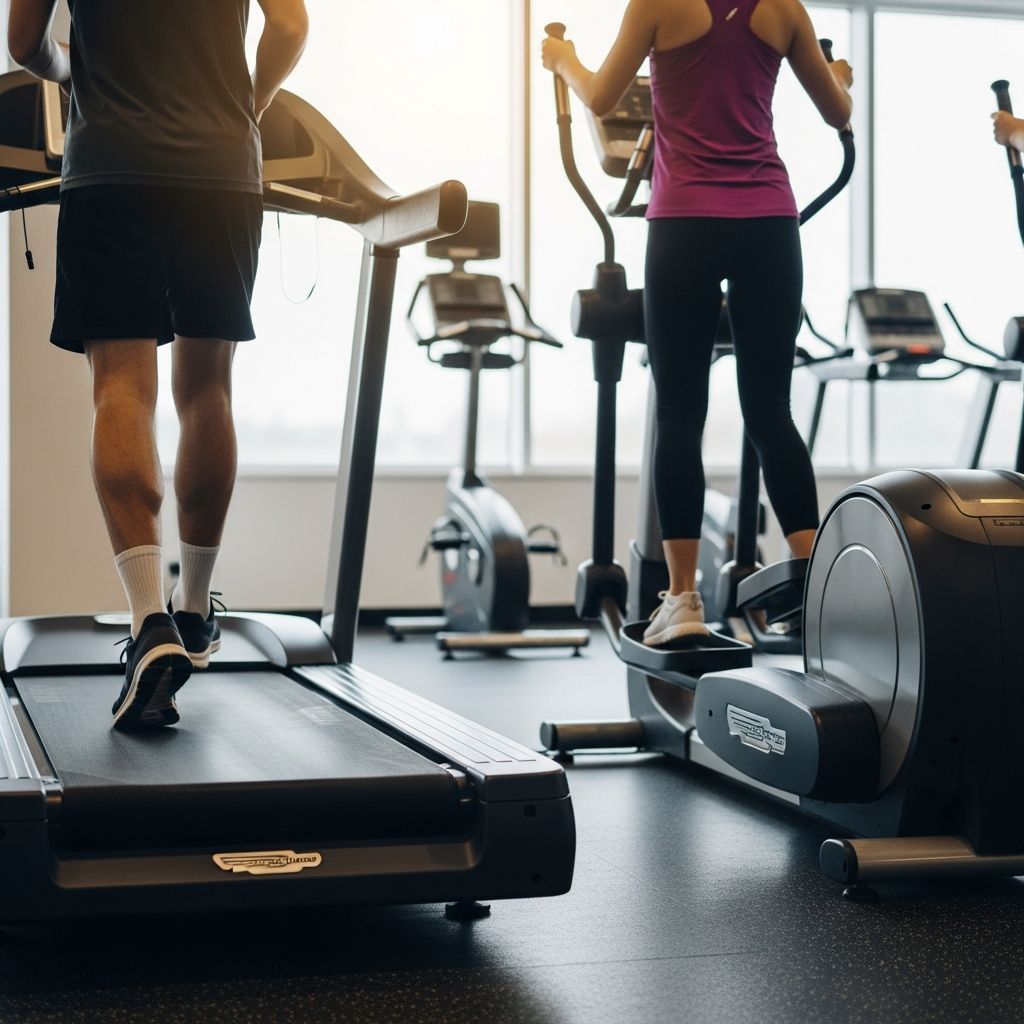
Choosing between a treadmill and an elliptical machine is a common dilemma for anyone looking to boost their cardio fitness at the gym or home. Both deliver effective cardiovascular exercise, but they differ in muscle engagement, impact on joints, calorie burn potential, and suitability for various fitness levels. Treadmills mimic natural running or walking with adjustable speed and incline, while ellipticals provide a smooth, gliding motion that recruits both upper and lower body muscles with minimal joint stress.
This comprehensive comparison draws from research and expert analysis to help you decide based on your goals, whether it’s weight loss, injury recovery, endurance training, or low-impact cardio. Factors like body weight, workout intensity, and personal preferences play key roles in effectiveness.
What Are Treadmills and Ellipticals?
Treadmills feature a moving belt where you walk, jog, or run. You control speed (typically 0.5–12+ mph) and incline (0–15% or more), allowing versatile workouts from gentle strolls to high-intensity interval training (HIIT). They closely replicate outdoor running, building leg strength in glutes, calves, hamstrings, and quads while improving bone density through impact.
Ellipticals (or cross-trainers) have foot pedals that trace an oval path, simulating running without foot lift-off. Most models include movable handlebars for upper-body involvement, targeting arms, shoulders, chest, back, and core alongside lower-body muscles. Resistance and incline adjustments vary effort levels.
Key distinction: Treadmills emphasize lower-body power and impact; ellipticals offer total-body, low-impact motion.
Treadmill vs. Elliptical: Muscles Worked
Ellipticals engage more muscle groups due to handlebars, activating upper body (biceps, triceps, rhomboids, shoulders) plus lower body (quads, glutes, hamstrings, calves, hip flexors). Research shows greater quadriceps activation and coactivation with hamstrings on ellipticals compared to treadmills or cycling. Reversing pedal direction targets different muscles, enhancing variety.
Treadmills primarily work lower body: glutes and calves more intensely than ellipticals, with solid quad and hamstring engagement during running or inclines. They build hip flexor strength but skip significant upper-body work unless you add arm swings.
| Machine | Primary Muscles | Secondary Muscles |
|---|---|---|
| Treadmill | Glutes, calves, quads, hamstrings | Hip flexors, core |
| Elliptical | Quads, glutes, hamstrings, calves | Arms, shoulders, chest, back, core |
Ellipticals win for total-body workouts; treadmills excel in lower-body power.
Calories Burned: Treadmill vs. Elliptical
Calorie burn varies by intensity, duration, body weight, and effort, but studies show similar energy expenditure and VO2 max gains with consistent use. A 30-minute elliptical session burns 270–378 calories (depending on weight), while brisk treadmill walking burns less, but running or inclines match or exceed it.
Running on a curved treadmill at 7 mph hits 11 METs (metabolic equivalents); vigorous elliptical effort reaches 9 METs. Treadmills edge out for higher burns via speed/incline versatility, targeting large muscles like quads and glutes. A 2010 study found nearly identical calories, heart rate, and oxygen use between machines.
- Beginners/low-impact: Elliptical often burns more due to full-body engagement.
- Advanced/runners: Treadmill surpasses with sprints or hills.
Treadmill vs. Elliptical for Weight Loss
Neither is inherently superior; success depends on consistency and intensity. Both improve cardiovascular fitness similarly, but treadmills may yield faster results for weight loss via higher max calorie burn potential (e.g., HIIT running). Ellipticals suit longer sessions without fatigue from impact, ideal for beginners or higher body weights.
Related Stories



Combine with diet for best results. Track via METs or wearables, aiming for 300–500 calorie deficits per session.
Impact on Joints: Treadmill vs. Elliptical
Ellipticals are gentler, with no foot strike—pedals support continuous motion, reducing knee/hip stress. Ideal for arthritis, injury recovery, or heavier individuals. Treadmills create impact (even walking), benefiting bone density but risking strain on joints, especially running.
| Aspect | Treadmill | Elliptical |
|---|---|---|
| Joint Impact | Moderate to high | Low |
| Bone Density | Improves via loading | Minimal |
| Injury Risk | Higher for prone users | Lower |
Choose elliptical for joint protection; treadmill if durable.
Which Is Better for Cardio?
Both elevate heart rate effectively. Ellipticals often elicit higher heart rates at same perceived effort, challenging cardio more. A Journal of Strength and Conditioning Research study confirmed equivalent heart rate, oxygen consumption, and calorie burn.
Treadmills build running-specific endurance; ellipticals enhance overall stamina with less fatigue.
Treadmill vs. Elliptical: Pros and Cons
Treadmill Pros:
- Versatile (walk/run/incline/sprints)
- Builds running endurance/bone density
- Higher max calorie burn
Treadmill Cons:
- Higher joint impact
- Less upper-body work
- Requires balance/coordination
Elliptical Pros:
- Low-impact, joint-friendly
- Total-body workout
- Smooth, beginner-friendly
Elliptical Cons:
- Less bone-loading benefits
- Monotonous motion
- Potentially lower max intensity
Who Should Use a Treadmill?
- Runners training for races (5K/10K)
- Those building glute/leg strength
- Injury-free users seeking high-impact cardio
- Preferring outdoor simulation
Who Should Use an Elliptical?
- Joint issues, arthritis, or injury recovery
- Beginners or heavier individuals
- Seeking upper/lower body combo
- Low-impact endurance
Treadmill vs. Elliptical: Price and Space
Treadmills cost $500–$3,000+ (foldable models save space); ellipticals $300–$2,500 (compact but fixed footprint). Consider maintenance: treadmills need belt lubrication; ellipticals fewer parts. Gym access eliminates upfront costs.
Sample Workouts
Treadmill HIIT (30 min): 5-min warm-up walk, 1-min sprint/2-min recover (x8), cool-down.
Elliptical Steady-State (30 min): Moderate pace, alternate forward/reverse every 5 min, increase resistance.
Frequently Asked Questions
Is the elliptical better than a treadmill for weight loss?
No clear winner—treadmills may burn more at high intensities, but ellipticals suit longer low-impact sessions.
Are treadmills harder on joints?
Yes, due to impact; ellipticals minimize stress.
Which burns more calories?
Treadmills edge out with running/inclines, but similar at moderate efforts.
Can ellipticals replace running?
Yes for cardio maintenance, especially post-injury.
Best for beginners?
Elliptical—low impact, full-body.
References
- Ellipticals vs. Treadmills: How to Decide Which One Is Best — NordicTrack. 2023. https://www.nordictrack.com/learn/ellipticals-vs-treadmills/
- Elliptical vs. Treadmill: Which Cardio Machine Is Better? — Healthline. 2023-05-12. https://www.healthline.com/health/fitness-exercise/elliptical-vs-treadmill
- Elliptical Machine vs. the Treadmill – Best for Cardio Workouts — Men’s Health. 2024-10-15. https://www.menshealth.com/fitness/a65540645/elliptical-machine-vs-treadmill/
- Ellipticals vs. Treadmill: The Pros and Cons — GoodRx. 2024. https://www.goodrx.com/well-being/movement-exercise/elliptical-vs-treadmill
- Elliptical vs Treadmill vs Running Outside: What’s Better? — Nike. 2024. https://www.nike.com/a/elliptical-treadmill-running
- Comparison of elliptical training, stationary cycling, treadmill walking — PMC (NCBI). 2012-03-15. https://pmc.ncbi.nlm.nih.gov/articles/PMC3299003/
- Treadmill or Elliptical? Which Is Better for You? — Cleveland Clinic. 2023. https://health.clevelandclinic.org/treadmill-or-elliptical-how-to-decide-whats-your-best-workout
Similar Articles








Read full bio of Sneha Tete