Treating Pain with Spinal Cord Stimulators
Discover how spinal cord stimulation offers effective chronic pain relief for patients.
Understanding Spinal Cord Stimulation
Spinal cord stimulation (SCS) is a minimally invasive therapeutic approach designed to help manage chronic pain that has not responded adequately to other treatment methods. This innovative technology has emerged as a beacon of hope for patients suffering from persistent pain conditions that traditional therapies, including medications and other interventions, have failed to address effectively. SCS works by delivering electrical impulses directly to the spinal cord, effectively interrupting pain signals before they reach the brain.
The fundamental principle behind spinal cord stimulation involves the modulation of pain pathways through low-voltage electrical currents. When these electrical impulses are delivered to specific areas of the spinal cord, they create a competing signal that essentially blocks or reduces the perception of pain. This mechanism offers patients a non-pharmacological alternative that bypasses the systemic side effects commonly associated with oral pain medications, particularly opioids.
How Spinal Cord Stimulators Work
The mechanism of action for spinal cord stimulators is grounded in established neuroscientific principles. Conventional SCS operates by activating dorsal column Aβ fibers within the spinal cord, which results in variable effects on sensory and pain thresholds. This activation creates measurable alterations in higher-order cortical processing, essentially retraining how the brain perceives and processes pain signals.
The electrical impulses generated by the stimulator create a mild tingling sensation, traditionally known as paresthesia, which replaces the perception of pain. This substitution effect is one of the hallmark characteristics of conventional spinal cord stimulation. The device sends controlled electrical signals along the spinal cord to disrupt the transmission of pain messages before they reach the brain, providing significant relief for many patients.
Recent technological advances have introduced new stimulation paradigms. For example, newer technologies like BurstDR utilize pulses or bursts of mild electrical energy without causing the traditional paresthesia sensation. This innovation represents a significant evolution in SCS technology, offering patients an alternative experience during treatment.
The Spinal Cord Stimulator System
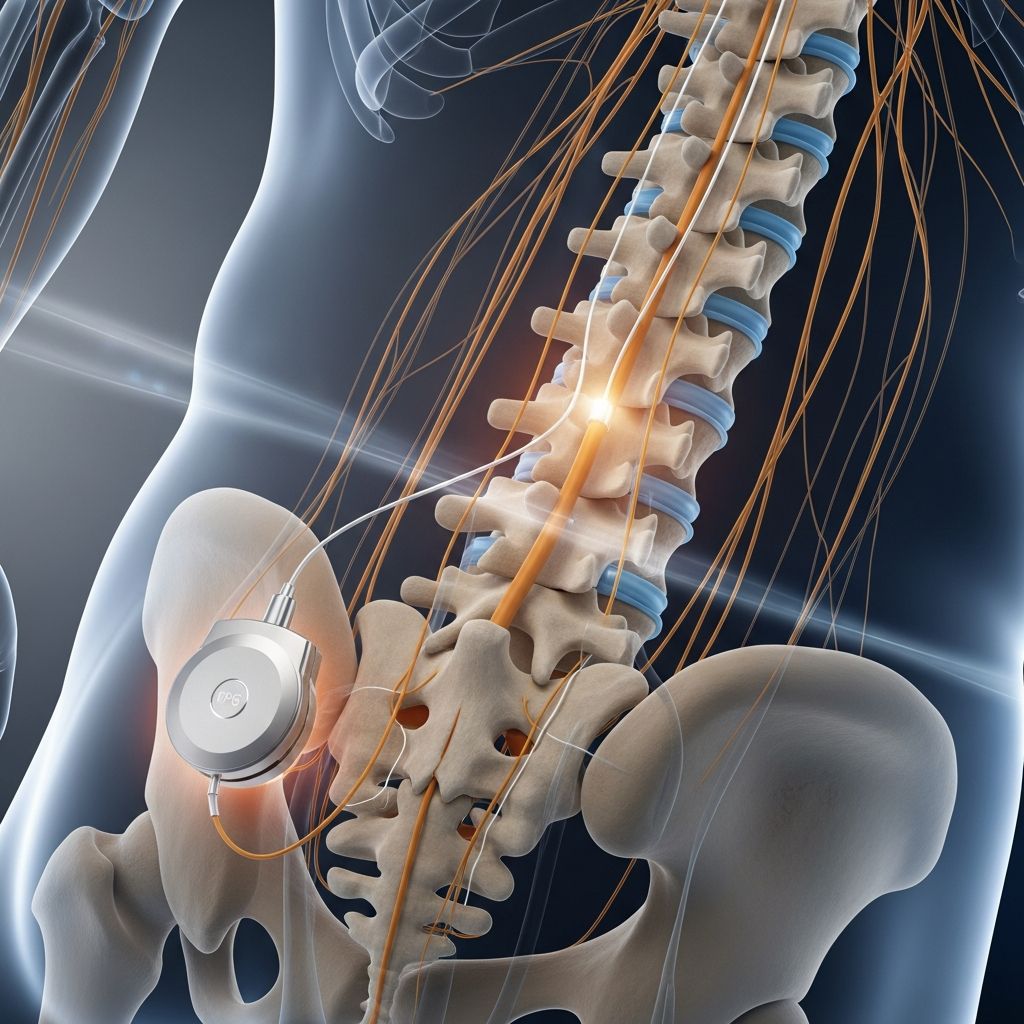
A complete spinal cord stimulator system typically consists of several key components that work together to deliver therapeutic electrical stimulation. The system includes an implantable neurostimulator (the primary device), leads that are positioned near the spinal cord, and a power source that may be rechargeable or battery-operated depending on the specific system.
The leads are thin wires that are carefully placed in the epidural space near the spinal cord during a surgical procedure. These leads transmit the electrical signals from the neurostimulator to the target areas of the spinal cord. The neurostimulator itself is typically implanted under the skin in the lower back, buttocks, or abdomen, depending on the patient’s anatomy and the specific treatment requirements.
Modern SCS devices often include programmable features that allow healthcare providers to adjust the intensity, frequency, and pattern of stimulation to optimize pain relief for each individual patient. Some systems even feature remote control capabilities that enable patients to adjust their stimulation settings within predetermined parameters set by their physician.
Related Stories



Conditions Treated with Spinal Cord Stimulation
Spinal cord stimulation has demonstrated efficacy in treating a wide range of chronic pain conditions, particularly those that have proven resistant to conventional treatment approaches. The versatility of SCS makes it applicable to multiple pain syndromes affecting different parts of the body.
Among the most common indications for SCS is failed back surgery syndrome, a condition affecting patients who have undergone spinal surgery but continue to experience chronic pain. The effectiveness of SCS for this condition has been well-documented in multiple randomized controlled studies. Additionally, SCS has shown promise in managing chronic neuropathic pain conditions, including diabetic neuropathy and cancer-related neuropathy, which cause significant suffering in millions of patients worldwide.
Other conditions that may benefit from spinal cord stimulation include:
- Complex regional pain syndrome
- Phantom limb pain following amputation
- Chronic angina and heart-related pain
- Post-herpetic neuralgia
- Spinal cord injury-related pain
- Peripheral vascular disease pain
- Visceral pain conditions
For patients with spinal cord injuries, the treatment of chronic pain remains a largely unmet clinical need. SCS represents a potentially valuable approach to managing the debilitating pain that often accompanies spinal cord injury, in addition to efforts directed at restoring bladder, bowel, and motor functions.
The Trial Period and Implantation Process
Before committing to permanent implantation, patients typically undergo a trial period with a temporary spinal cord stimulator. This trial phase is crucial for determining whether the individual will experience adequate pain relief and can tolerate the stimulation without significant side effects.
During the trial period, a temporary SCS device is implanted, usually for a duration of one to two weeks. This allows patients and their healthcare team to assess the effectiveness of the treatment in their specific pain condition. Many patients experience substantial reductions in pain during this trial phase. For instance, some patients have reported dramatic improvements, with pain scores dropping from severe levels (such as 8 out of 10 on visual analog pain scales) to minimal levels (such as 2 out of 10) within the trial period.
If the trial proves successful and the patient experiences meaningful pain relief without prohibitive side effects, the decision is made to proceed with permanent implantation. The permanent device offers long-term pain management benefits and is typically more durable than temporary systems. Post-implantation, patients often report sustained decreases in pain scores, enhanced mobility, and significantly reduced reliance on opioid medications, which carry substantial risks of addiction and adverse effects.
Benefits and Advantages of SCS
Spinal cord stimulation offers numerous advantages as a pain management strategy, particularly for patients whose chronic pain has failed to respond to conventional treatments. The primary benefit is effective pain relief without the systemic side effects associated with systemic medications.
One of the most significant advantages is the reduction or elimination of opioid dependence. Given the well-documented risks of opioid addiction, overdose, and other adverse effects, any treatment that reduces opioid use represents a major public health benefit. Many patients receiving SCS experience marked reductions in their opioid consumption, improving their overall safety and quality of life.
SCS is considered a safe and effective alternative to medications, with a safety profile that compares favorably to pharmacological pain management. The minimally invasive nature of SCS also means fewer complications and faster recovery compared to more extensive surgical procedures. Additionally, the adjustability of modern SCS systems allows for ongoing optimization of treatment effects, and if needed, the system can be discontinued or removed without permanent changes to the spinal cord or surrounding tissues.
The improvement in quality of life extends beyond pain relief. Patients often report enhanced ability to perform daily activities, improved emotional well-being, better sleep quality, and increased engagement in social and recreational activities. These functional improvements translate into better overall health outcomes and greater life satisfaction.
Advances in Stimulation Technology
The field of spinal cord stimulation has witnessed significant technological innovations in recent years. Traditional stimulation paradigms have been supplemented by newer approaches that offer alternative mechanisms of action and improved patient experiences.
One notable advancement is the development of stimulation technologies that do not produce paresthesia, offering patients pain relief without the tingling sensation. These newer modalities may provide more natural pain relief experiences and improved patient satisfaction. Research on these advanced technologies, such as BurstDR, has demonstrated impressive clinical outcomes, with studies showing that approximately nine out of ten patients experienced significant improvement, including average pain reductions of 70% at the 12-month follow-up.
Another significant area of advancement involves dynamic stimulation, which adjusts the level and characteristics of electrical stimulation in response to changes in the patient’s body and nervous system. This includes adaptation to short-term changes such as postural shifts and long-term neural adaptations. Algorithms are being developed to automatically modulate stimulation parameters, matching the decision-making patterns of experienced clinicians and optimizing therapeutic outcomes.
These technological advancements suggest that future iterations of SCS systems will become increasingly sophisticated and personalized, offering even greater efficacy and patient satisfaction.
Considerations and Questions Regarding Effectiveness
While spinal cord stimulation has demonstrated significant promise and efficacy in many clinical scenarios, it is important to acknowledge that questions remain regarding its universal effectiveness and long-term outcomes. The clinical evidence base, while substantial, shows variable results across different patient populations and pain conditions.
Some systematic reviews have raised concerns about the long-term sustainability of pain relief with SCS. A Cochrane Review examining data from multiple clinical trials suggested that the long-term effectiveness of SCS for certain pain conditions, particularly low back pain, may be more limited than initially thought in some instances. Some analyses have concluded that SCS may not provide superior long-term relief compared to placebo in certain contexts.
Additionally, while generally considered safe, SCS is not without potential complications. Some patients may experience device-related adverse effects, including lead migration, infection, or inadequate pain control requiring device adjustment or removal. One study of over 1,200 patients who received permanent SCS implants found that approximately 20% experienced severe complications that required intervention.
These considerations underscore the importance of careful patient selection, thorough trial periods, and individualized treatment planning. Not all patients are suitable candidates for SCS, and the decision to pursue implantation should be made collaboratively between the patient and their healthcare team, weighing potential benefits against individual risk factors.
A Multidisciplinary Approach to Chronic Pain Management
The most effective management of chronic pain typically requires a multidisciplinary approach that integrates multiple treatment modalities. Rather than viewing SCS as a standalone solution, it is most appropriately considered as one component within a comprehensive pain management strategy.
An effective chronic pain management program may include physical therapy and rehabilitation to improve function and strength, psychological interventions such as cognitive behavioral therapy to address pain-related mood and behaviors, pharmacological management optimized for the individual patient, interventional procedures when appropriate, and lifestyle modifications including exercise, sleep optimization, and stress management.
Spinal cord stimulation fits within this framework as a particularly valuable option for patients in whom other conservative treatments have proven insufficient. The integration of innovative techniques like SCS into the broader spectrum of pain management strategies, combined with individualized treatment planning tailored to each patient’s specific condition, needs, and risks, represents the current best practice in chronic pain management.
Future Perspectives and Research Directions
The field of spinal cord stimulation continues to evolve, with ongoing research aimed at improving efficacy, understanding mechanisms of action, and expanding applications. Future research priorities include clarifying optimal patient selection criteria, developing more sophisticated stimulation algorithms, and exploring SCS applications for additional pain conditions.
Particularly promising is research into spinal cord epidural stimulation for spinal cord injury recovery and pain management. While current technologies show efficacy for pain relief, advancing the underlying software and algorithms that control stimulation delivery represents a key frontier. As these technologies become more sophisticated and responsive to patient physiology, outcomes are likely to improve substantially.
Frequently Asked Questions
What is the success rate of spinal cord stimulation?
Success rates vary depending on the specific condition being treated and the definition of success used. Many patients experience significant pain reduction during trial periods, with studies showing that patients often report 50-70% pain relief. However, individual results vary, which is why the trial period is important for determining personal suitability.
Is spinal cord stimulation reversible?
Yes, spinal cord stimulation is reversible. The permanent system can be removed if patients experience inadequate pain control, intolerable side effects, or if they simply wish to discontinue treatment. Removal does not cause permanent damage to the spinal cord or surrounding tissues.
How long does a spinal cord stimulator battery last?
Battery longevity depends on the specific device and stimulation parameters used. Some devices use replaceable batteries lasting 3-5 years, while others are rechargeable and can function for 10+ years before requiring replacement of the neurostimulator unit.
Can I use imaging tests like MRI with an implanted spinal cord stimulator?
MRI compatibility depends on the specific SCS device. Some newer devices are MRI-compatible with specific restrictions, while older devices may not be. Patients should discuss MRI compatibility with their healthcare provider and carry identification regarding their specific device.
What are the risks and potential complications of spinal cord stimulation?
While generally safe, potential complications include lead migration, infection at the implant site, inadequate pain control, device malfunction, and allergic reactions to device materials. Most complications can be managed through device adjustment or revision surgery.
How much does a spinal cord stimulator cost?
The cost varies widely but typically ranges from $20,000 to $100,000+ depending on the device type, implantation complexity, and geographic location. Most insurance plans cover SCS when properly indicated, though coverage criteria may apply.
References
- Spinal Cord Stimulation: Clinical Efficacy and Potential Mechanisms — Johns Hopkins University School of Medicine. Retrieved from https://pure.johnshopkins.edu/en/publications/spinal-cord-stimulation-clinical-efficacy-and-potential-mechanism
- Efficacious Management of Severe Chronic Back Pain Using a Spinal Cord Stimulator — HCA Healthcare. Retrieved from https://scholarlycommons.hcahealthcare.com/cgi/viewcontent.cgi?article=1010&context=westflorida2024
- Spinal Cord Stimulation for Pain Treatment After Spinal Cord Injury — National Center for Biotechnology Information, Johns Hopkins University. Retrieved from https://pubmed.ncbi.nlm.nih.gov/30560438/
- Spinal Cord Stimulators: New Uses in Pain Management — U.S. Pain Foundation. Retrieved from https://www.aitkenlaw.com/spinal-cord-stimulators-new-uses/
- A Stimulating Option for Spinal Cord Injury Relief — Johns Hopkins Applied Physics Laboratory. 2023. Retrieved from https://www.jhuapl.edu/news/news-releases/230621-spinal-cord-stimulation
- Web-Based Information on Spinal Cord Stimulation — JMIR Public Health and Surveillance. 2024. Retrieved from https://publichealth.jmir.org/2024/1/e50031/PDF
Similar Articles








Read full bio of medha deb