Treatment for Human Bites: Medical Guidelines
Comprehensive guide to treating human bite wounds and preventing serious infections.
Understanding Human Bite Wounds
Human bites represent a significant medical concern that is frequently underdiagnosed in emergency settings. Unlike animal bites, human bites carry unique risks due to the polymicrobial nature of human saliva and the potential for serious infections. The human oral cavity contains numerous bacteria and microorganisms that can cause significant complications when introduced into a wound through a bite. Understanding the proper treatment approach is essential for preventing serious complications and ensuring optimal healing outcomes.
Human bites can occur in various contexts, from accidental bites during sports or play to intentional bites resulting from altercations. Particularly concerning are “fight bites,” which are puncture wounds on the hand or knuckles sustained when the victim strikes an assailant’s teeth. These injuries are especially dangerous because they occur over joints and tendons, placing them at higher risk for deep tissue infection.
Initial Assessment and Diagnosis
Proper diagnosis of human bite wounds begins with thorough examination under adequate lighting conditions. Emergency physicians must carefully assess several critical factors to determine the appropriate course of treatment.
Examination Procedures
The wound should be irrigated to facilitate thorough examination and cleansing. During assessment, the following elements must be carefully evaluated:
- Extent and depth of soft tissue damage
- Depth of the bite penetration
- Involvement of tendons or deeper structures
- Presence of infection or signs of infection
- Presence of foreign bodies, such as tooth fragments
- Involvement of joints or bone
Special attention must be paid to fight bites, which require examination with the hand in a closed fist position to passively flex the fingers. This positioning allows for proper assessment of damage to the extensor tendons and underlying structures. All injuries located dorsal to the metacarpophalangeal (MCP) joint should be considered potential fight bites until proven otherwise.
Patient History
Obtaining a comprehensive patient history is crucial for appropriate management. Healthcare providers should document:
- Time of injury
- Mechanism of injury
- Patient’s allergy status
- Time of last tetanus immunization
- Known medical illnesses or immunocompromised conditions
- Information about the person who bit the patient
Understanding Microbial Contamination
Human bite wounds carry a diverse range of microorganisms that can lead to serious infections. The polymicrobial nature of these wounds makes them particularly challenging to treat.
Common Pathogens in Human Bites
The most frequently encountered organisms in human bite wounds include:
- Eikenella corrodens: A gram-negative rod commonly found in human oral flora
- Streptococcus species: Particularly Streptococcus anginosus, found in all bite types
- Staphylococcus aureus: Present in 30-50% of bite wounds
- Anaerobic bacteria: Accounting for 50-70% of all bite wounds, including Prevotella species
- Viruses: Rare but documented cases of viral transmission through human bites
The presence of anaerobic bacteria is particularly significant, as these organisms are often difficult to detect with standard culture methods yet can cause serious deep tissue infections.
Related Stories



Immediate Wound Care
Proper initial wound care is critical for preventing infection and promoting healing. Immediate management should include thorough cleaning and appropriate wound management strategies.
Cleaning and Irrigation
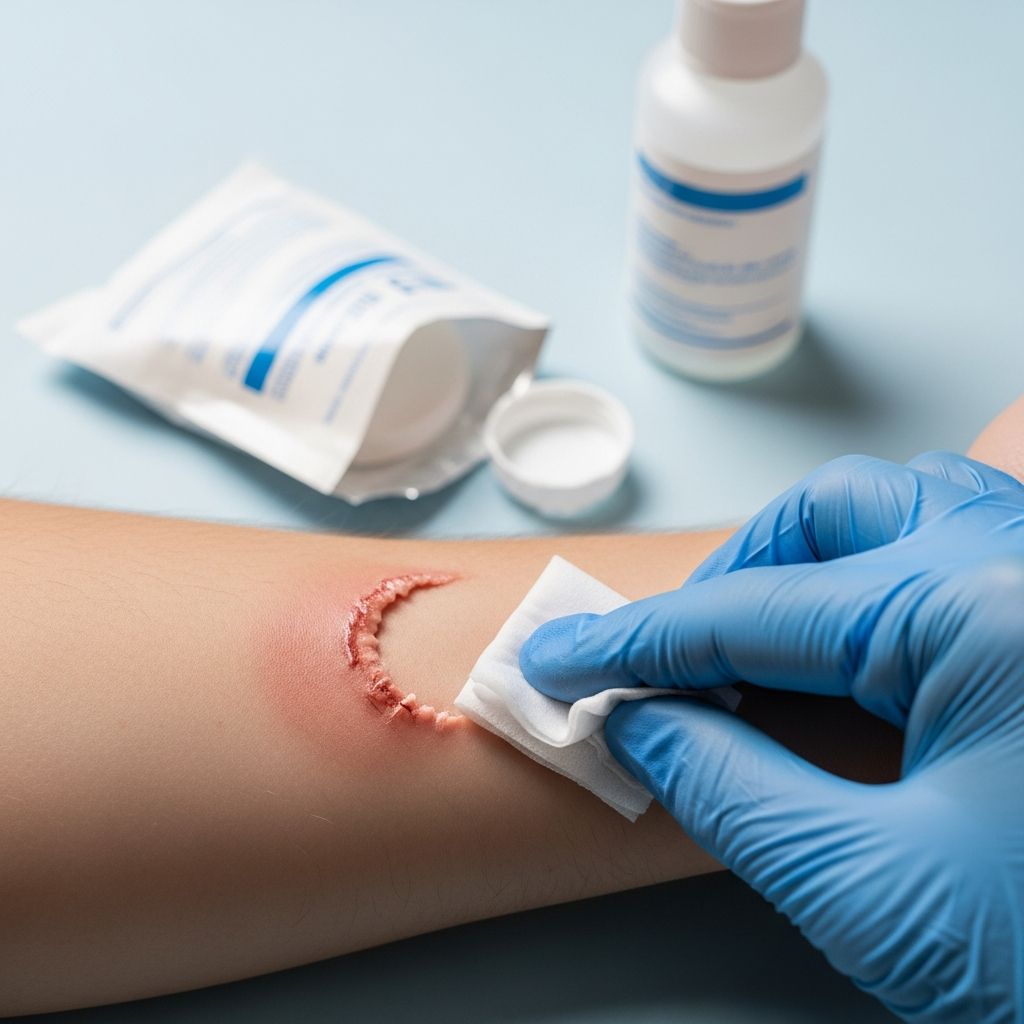
The wound should be immediately washed with soap and water as soon as possible after the injury occurs. Following soap cleansing, the wound should be irrigated with either alcohol or iodine solution to reduce bacterial contamination. Copious irrigation helps remove debris, saliva, and potential contaminants from the wound.
Wound Exploration
After cleansing, the wound must be thoroughly explored to identify any complications or foreign bodies. The exploration should determine whether the injury has penetrated deeper structures, affected tendons, or left tooth fragments or other debris within the wound.
Antibiotic Prophylaxis and Treatment
Antibiotic therapy plays a crucial role in preventing and treating infections associated with human bites. The polymicrobial nature of these wounds requires broad-spectrum coverage.
Prophylactic Antibiotics
Appropriate oral antibiotics should be administered as prophylaxis and continued for 3-5 days. The selection of antibiotics should consider the spectrum of organisms commonly found in human saliva and the individual patient’s allergies and medical conditions. Because resistance patterns are increasingly common, physicians should remain aware of local antibiotic resistance trends.
Treatment of Infected Wounds
For wounds that show signs of infection, more aggressive antibiotic therapy may be necessary. Treatment decisions should be based on culture results when available, but empiric therapy covering the common pathogens is often initiated before culture results are available.
Surgical Management
Surgical evaluation and management are essential components of human bite treatment, particularly for wounds involving specific anatomical structures or showing signs of serious complications.
Indications for Surgical Intervention
Surgical management should be considered when the following conditions are present:
- Severe soft tissue infection or abscess formation
- Joint space penetration
- Underlying fractures
- Tendon rupture or damage
- Osteomyelitis or septic arthritis
- Tenosynovitis (infection of tendon sheaths)
- Neurovascular compromise
- Presence of foreign bodies such as tooth fragments
Children and individuals with cognitive impairments may require exploration under anesthesia to facilitate adequate examination and assessment of wound depth and damage.
Surgical Closure Techniques
The decision regarding wound closure depends on several factors, including location, time since injury, and presence of infection. Different anatomical regions have different recommendations:
Facial Wounds: Primary closure of uninfected facial wounds is indicated, as faces have better blood supply and lower infection risk. Thorough debridement followed by primary closure, direct suturing, local flap reconstruction, or skin grafting on the day of presentation can achieve 90% complete wound healing. Wounds closed with a standard percutaneous closure technique using non-absorbable suture material, such as monofilament nylon or polypropylene, provide optimal results. Multiple-layer closures and subcutaneous sutures should be avoided unless absolutely necessary. For late-presenting face bites with significant edema, locally injected hyaluronidase may help decrease swelling and increase perfusion, allowing for tension-free wound closure.
Hand and Other Wounds: Surgical closure of non-facial wounds, particularly deep punctures, wounds more than 24 hours old, bites to the hand, and clinically infected wounds, is generally not recommended due to increased infection risk. Instead, debridement with delayed surgical closure or adhesive strips may be employed. Hand injuries require consultation with a hand surgeon due to their higher infection rates and the potential for significant functional impairment.
Post-Closure Follow-Up
When wound closure is performed, patients should be called for follow-up evaluation 48-72 hours after closure to assess for developing infections or other complications. Fight bite injuries and wounds involving tendons or deeper structures require consultation with a surgeon. A surgeon should also be consulted when complications such as infection develop after initial treatment.
Special Considerations for Hand Injuries
Hand injuries from human bites present particular challenges due to the hand’s complex anatomy and high functional demands. Infections in hand wounds can quickly spread to tendons, joints, and surrounding tissues, potentially causing permanent disability.
When hand wounds become infected, physical therapy is typically initiated 3-5 days after the infection has resolved to help restore function to the affected hand. Hand surgeon consultation is mandatory for all significant hand bites and for wounds showing signs of complications. Inpatient therapy is advised for patients with associated fractures, septic arthritis, or involvement of joint capsules and tendons.
Discharge Instructions and Follow-Up Care
Proper patient education at discharge is as important as initial care. Patients should receive clear instructions on several critical points:
- Proper wound care and dressing changes
- Signs and symptoms of infection to watch for
- Importance of completing the full course of antibiotics
- Instructions to seek immediate medical attention if infection develops
- Tetanus status and any necessary immunization
- Follow-up appointment scheduling
Patients must understand that infections can develop days or even weeks after the initial bite and should know when to seek emergency care if concerning symptoms develop.
Complications and When to Seek Help
Human bite wounds can lead to serious complications if not properly managed. Patients should be aware of warning signs that require immediate medical attention:
- Increasing redness, warmth, or swelling around the wound
- Pus or drainage from the wound
- Red streaking extending from the wound
- Fever or chills
- Increasing pain despite pain management
- Difficulty moving the affected area
- Numbness or tingling
Early recognition and treatment of these complications are essential for preventing serious morbidity and potential permanent damage.
Frequently Asked Questions
Q: How quickly should a human bite wound be treated?
A: Human bite wounds should be cleaned and evaluated as soon as possible after the injury occurs. The sooner appropriate care is initiated, the better the chances of preventing serious infection and complications.
Q: Do all human bites require antibiotics?
A: Most human bite wounds benefit from antibiotic prophylaxis due to the high risk of polymicrobial infection. Your healthcare provider can determine whether prophylactic antibiotics are appropriate for your specific wound.
Q: How long should antibiotic treatment continue?
A: Prophylactic antibiotics for human bites are typically continued for 3-5 days. Treatment duration for infected wounds may be longer and depends on the severity of infection and response to therapy.
Q: What makes fight bites especially dangerous?
A: Fight bites are particularly concerning because they occur over joints and involve puncture wounds that can introduce bacteria deep into tissue, affecting tendons and joint structures. These wounds have a higher risk of serious deep tissue infections.
Q: When should I see a hand surgeon for a human bite?
A: Hand surgeon consultation is recommended for all significant hand bites, wounds showing signs of complications, or injuries to the hand that may affect tendons or joint structures.
References
- Managing human bites — National Center for Biotechnology Information (NCBI), National Library of Medicine. 2009. https://pmc.ncbi.nlm.nih.gov/articles/PMC2776367/
- Bite Wounds — Johns Hopkins ABX Guide, The Johns Hopkins University. 2023-01-23. https://www.hopkinsguides.com/hopkins/view/Johns_Hopkins_ABX_Guide/540058/all/Bite_Wounds
Similar Articles








Read full bio of Sneha Tete