Treatment Of Psoriasis: A Comprehensive Guide For Patients
Comprehensive overview of psoriasis treatments from topical therapies to systemic and biologic options.
Treatment of Psoriasis: A Comprehensive Guide
Psoriasis is a chronic inflammatory skin condition that requires long-term management. While there is currently no cure for psoriasis, various treatment options can effectively reduce symptoms, minimize plaques, and improve quality of life. Treatment selection depends on multiple factors including disease severity, affected body areas, patient preferences, and previous treatment responses. This guide provides an overview of all available psoriasis treatments, from topical therapies to advanced systemic and biologic agents.
Understanding Treatment Decisions
Successful psoriasis management requires a personalized approach. Several treatments may need to be tried before establishing the most suitable treatment regimen, and different therapies may be used concurrently or in rotation to optimize effectiveness while minimizing side effects. Approximately 80% of patients with chronic plaque psoriasis can be managed in primary care using topical treatments alone. Treatment choice depends on factors such as the type and extent of psoriasis, affected body areas, disease severity, patient skin type, and individual preferences.
Topical Treatments for Psoriasis
Emollients and Moisturizers
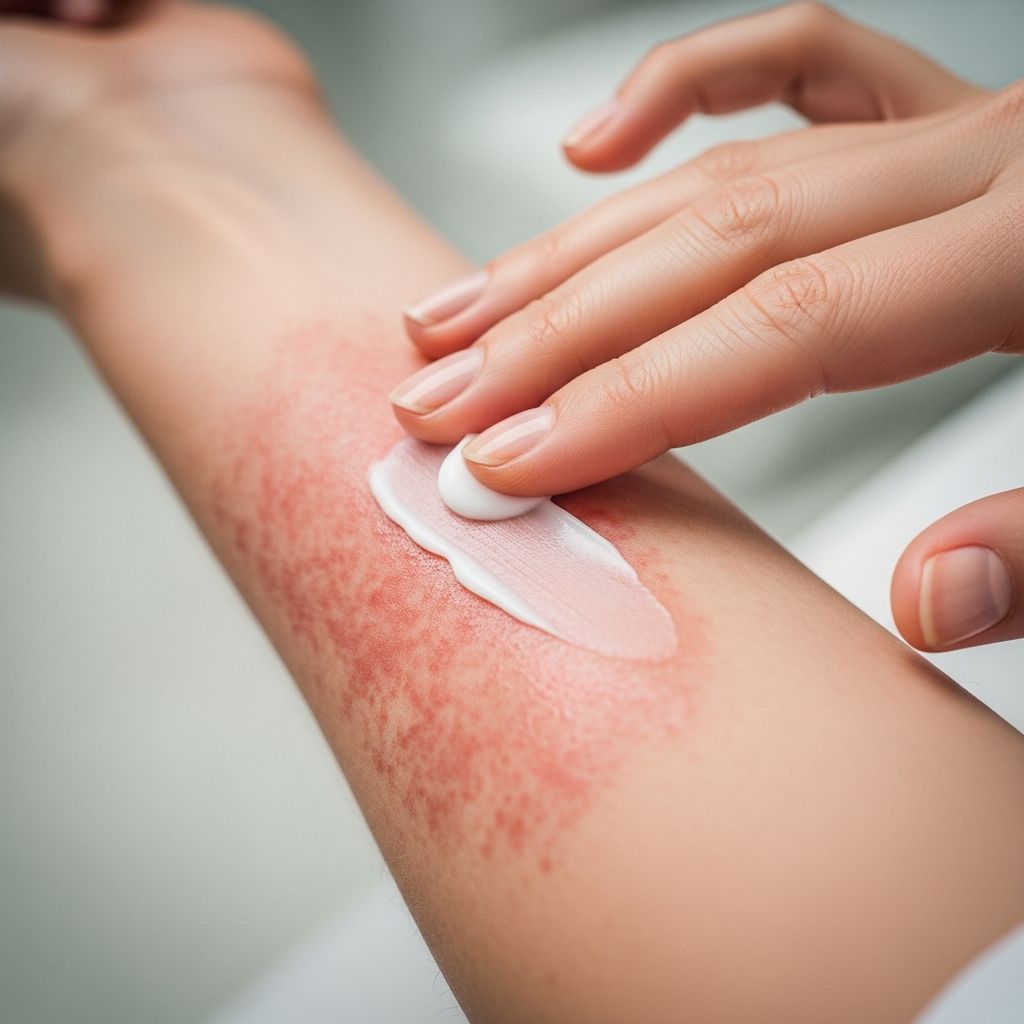
Regular use of emollients and moisturizers is a foundational component of psoriasis treatment. These products soften psoriatic plaques and restore moisture to the skin, improving dryness, scaling, and irritation. Ointments are generally preferred over lotions and creams as they are less likely to cause skin irritation. When applying emollients to the feet, be aware of slipping hazards in the bath and avoid using highly flammable products near heat sources.
Keratolytic Agents
Keratolytic agents are useful for reducing thick scale associated with psoriasis. These products typically contain urea (5–40%), salicylic acid (0.5–10%), or propylene glycol (for example, propylene glycol 20% in aqueous cream). They may be incorporated into shampoos, lotions, creams, ointments, and pastes. Salicylic acid at concentrations of 2–5% is commonly used as a second-line topical treatment for mild chronic plaque psoriasis.
Topical Corticosteroids
Topical corticosteroids are safe and relatively easy to use for treating plaque psoriasis, scalp psoriasis, flexural psoriasis, sebopsoriasis, and psoriasis affecting the palms and soles. They work by decreasing inflammation and are highly effective for these applications. However, they are not very effective for nail psoriasis. Potent or very potent corticosteroids should not be used on the face, flexures, or genitals. For these sensitive areas, mild or moderate potency corticosteroids applied once or twice daily for a maximum of 2 weeks are recommended.
Intralesional Steroid Injections
Intralesional steroid injections may be used for treating a small number of thickened psoriatic plaques and in nail psoriasis where topical steroids have proven insufficient. This targeted approach delivers medication directly to affected areas.
Vitamin D-Like Compounds
Vitamin D analogs are effective topical treatments that work by regulating skin cell production and proliferation. Available options include calcipotriol, calcitriol, and tacalcitol. Calcipotriol is used for chronic plaque psoriasis and scalp psoriasis, while calcitriol ointment is often preferred for flexural psoriasis or genital psoriasis because it is less irritating than calcipotriol. Fixed-dose combinations of calcipotriol with betamethasone dipropionate are available as ointments, gels, and aerosol foams, offering combined efficacy of vitamin D analogs and corticosteroids.
Related Stories



Coal Tar
Coal tar has anti-inflammatory properties and reduces redness and itching associated with psoriasis. It may be applied as solutions, lotions, creams, ointments, gels, and shampoos. Care must be taken following application of coal tar treatments. The Goeckerman regime, which combines crude coal tar in an emollient base with daily ultraviolet radiation exposure, has been used in hospitalized patients with chronic plaque psoriasis, though crude coal tar is rarely used nowadays due to its black color, unpleasant odor, and messy application.
Dithranol (Anthralin)
Dithranol, also called anthralin, is occasionally recommended for chronic plaque psoriasis and is one of the most effective preparations available. However, dithranol treatment has several practical drawbacks limiting its use. The method of application is complex, typically given as ‘short contact’ therapy. The Ingram regime involved applying dithranol twice daily in Lassar’s paste under tube gauze dressings, often preceded by a tar bath and ultraviolet radiation exposure. This treatment is rarely used in current clinical practice.
Calcineurin Inhibitors
The calcineurin inhibitors tacrolimus ointment and pimecrolimus cream are effective alternatives for treating psoriasis, particularly in sensitive areas. These agents can be offered in specialist settings when other topical treatments have proven ineffective or are poorly tolerated.
Tazarotene
Tazarotene is a topical retinoid that may be applied once daily to plaque psoriasis as a 0.05% or 0.1% cream. The most common side effect is skin pain and local irritation. This medication was not available in New Zealand as of July 2018.
Newer Topical Agents
Recent advances in topical psoriasis treatment include innovative agents targeting specific inflammatory pathways. Topical roflumilast 0.3% cream (Zorvye™) was approved by the FDA in 2022 for treating plaque psoriasis in patients aged 12 years and older, making it the first topical PDE4 inhibitor approved for psoriasis use. Tapinarof 1% cream (VTAMA®) is another once-daily novel topical agent approved by the US Food and Drug Administration in May 2022 for patients with mild, moderate, and severe plaque psoriasis. Off-label use of the phosphodiesterase-4 topical inhibitor crisaborole has shown effectiveness for flexural and facial psoriasis.
Occlusive Dressings
Relatively small, localized patches of psoriasis may improve with occlusion using waterproof adhesive dressings. This method helps enhance the penetration and effectiveness of topical medications.
Phototherapy for Psoriasis
Phototherapy is the use of ultraviolet radiation to treat skin disorders and can be very effective in managing psoriasis. This treatment approach is generally reserved for cases where topical therapy has proven ineffective or when too much of the skin surface is involved to treat effectively with topical agents alone. Phototherapy appears to slow keratinization and reduce the activity of T cells implicated in psoriatic plaque formation.
Phototherapy is administered in specialized treatment cabinets at dermatology centers. A typical treatment course for psoriasis consists of 2–3 treatments per week for 20–30 total treatments. This systematic approach allows for gradual improvement while minimizing potential side effects.
Systemic Therapy for Psoriasis
Moderate to severe psoriasis that has not responded adequately to topical treatments warrants systemic therapy and/or phototherapy. Systemic therapy should be initiated in a specialist setting, though monitoring and supervision can occur in non-specialist settings when formal arrangements have been established. All patients using non-biologic systemic therapy require close monitoring for adverse effects according to local protocols.
Methotrexate
Methotrexate is the first-line treatment for chronic plaque psoriasis. It is given as a once-weekly oral dose in both adults and children. This immunosuppressant has a well-established track record in managing severe psoriasis and requires regular monitoring for potential side effects.
Ciclosporin
Ciclosporin is an immunosuppressant used short-term to treat severe psoriasis, including atopic eczema and psoriasis. It has a rapid onset of action, making it particularly useful in severe plaque psoriasis or pustular psoriasis when quick results are needed. Important side effects include hypertension, renal failure, susceptibility to infection, and increased risk of skin cancer. Due to these significant adverse effects, this medication requires careful patient selection and monitoring.
Acitretin
Acitretin is a systemic retinoid used for treating moderate to severe psoriasis. This medication is part of the non-biologic systemic therapy options available for patients who have not responded adequately to topical treatments.
Apremilast
Apremilast is a phosphodiesterase-4 inhibitor available as systemic therapy for psoriasis and psoriatic arthritis. It represents another option in the non-biologic systemic therapy arsenal for managing moderate to severe disease.
Systemic Corticosteroids
Systemic corticosteroids are best avoided in psoriasis treatment due to the significant risk of severe withdrawal flare and other adverse effects. While they may provide short-term improvement, the potential complications make them unsuitable for long-term psoriasis management.
Biologic Therapy for Psoriasis
Biologic or biological therapy is reserved for severe psoriasis and psoriatic arthritis that have failed to respond to conventional systemic therapy. The use of biologics has increased substantially with the development of novel therapies targeting key inflammatory pathways such as TNF-alpha and IL-17. These agents are highly effective in treating moderate to severe chronic plaque psoriasis, with studies demonstrating excellent short and long-term results and generally good tolerability. However, biologics are often more expensive than non-biologic systemic therapies, and their long-term risks remain largely unknown, which limits their use in clinical practice.
Treatment Response and Monitoring
An acceptable treatment response is defined as either body surface area (BSA) ≤ 3% involvement or an improvement in BSA ≥ 75% from baseline, measured 3 months after treatment initiation. Treatment rarely results in complete clearance of psoriasis, but effectively reduces the severity and extent of the disease. Non-biologic systemic therapy outcomes can be optimized through the concurrent use of adjunctive topical therapy, combining different treatment modalities for enhanced efficacy.
Special Considerations
Successful psoriasis management depends on patients understanding the chronic nature of the condition and the therapeutic options available to them. Because psoriasis requires lifelong treatment, patient education and realistic expectations are crucial. Additionally, patients with psoriasis are at increased risk of cardiovascular disease, depression, inflammatory bowel disease, and diabetes, making comprehensive healthcare management important beyond skin treatment alone.
Frequently Asked Questions
Q: Is there a cure for psoriasis?
A: While psoriasis is treatable, there is currently no cure. However, various treatment options can effectively reduce symptoms and manage the condition long-term.
Q: Can 80% of psoriasis cases be managed with topical treatments?
A: Yes, approximately 80% of patients with chronic plaque psoriasis can be successfully managed in primary care using topical treatments alone.
Q: When should phototherapy be considered?
A: Phototherapy is generally recommended when topical therapy has been ineffective or when too much of the skin surface is involved to treat effectively with topical agents alone.
Q: What is the first-line systemic treatment for psoriasis?
A: Methotrexate is the first-line systemic treatment for chronic plaque psoriasis, given as a once-weekly oral dose.
Q: Are biologic therapies always recommended for severe psoriasis?
A: Biologic therapy is reserved for severe psoriasis and psoriatic arthritis that have failed to respond to conventional systemic therapy. They are not typically first-line treatments due to cost and unknown long-term risks.
Q: How long does a typical phototherapy course take?
A: A standard phototherapy course consists of 2–3 treatments per week for approximately 20–30 total treatments, administered at specialized dermatology centers.
References
- Treatment of Psoriasis — DermNet. Accessed January 29, 2026. https://dermnetnz.org/topics/treatment-of-psoriasis
- Topical Therapy for Psoriasis — DermNet. Accessed January 29, 2026. https://dermnetnz.org/cme/scaly-rashes/topical-therapy-for-psoriasis
- Guidelines for the Management of Psoriasis — DermNet. Accessed January 29, 2026. https://dermnetnz.org/topics/guidelines-for-the-treatment-of-psoriasis
- Chronic Plaque Psoriasis: An Overview of Treatment in Primary Care — BPAC. 2017. https://bpac.org.nz/2017/psoriasis-1.aspx
- Psoriasis Overview — DermNet. Accessed January 29, 2026. https://dermnetnz.org/cme/scaly-rashes/psoriasis-overview
Similar Articles








Read full bio of medha deb