Trendelenburg Position: Purpose, Benefits, and Risks
Understanding the Trendelenburg position: a critical surgical technique for optimal patient positioning.
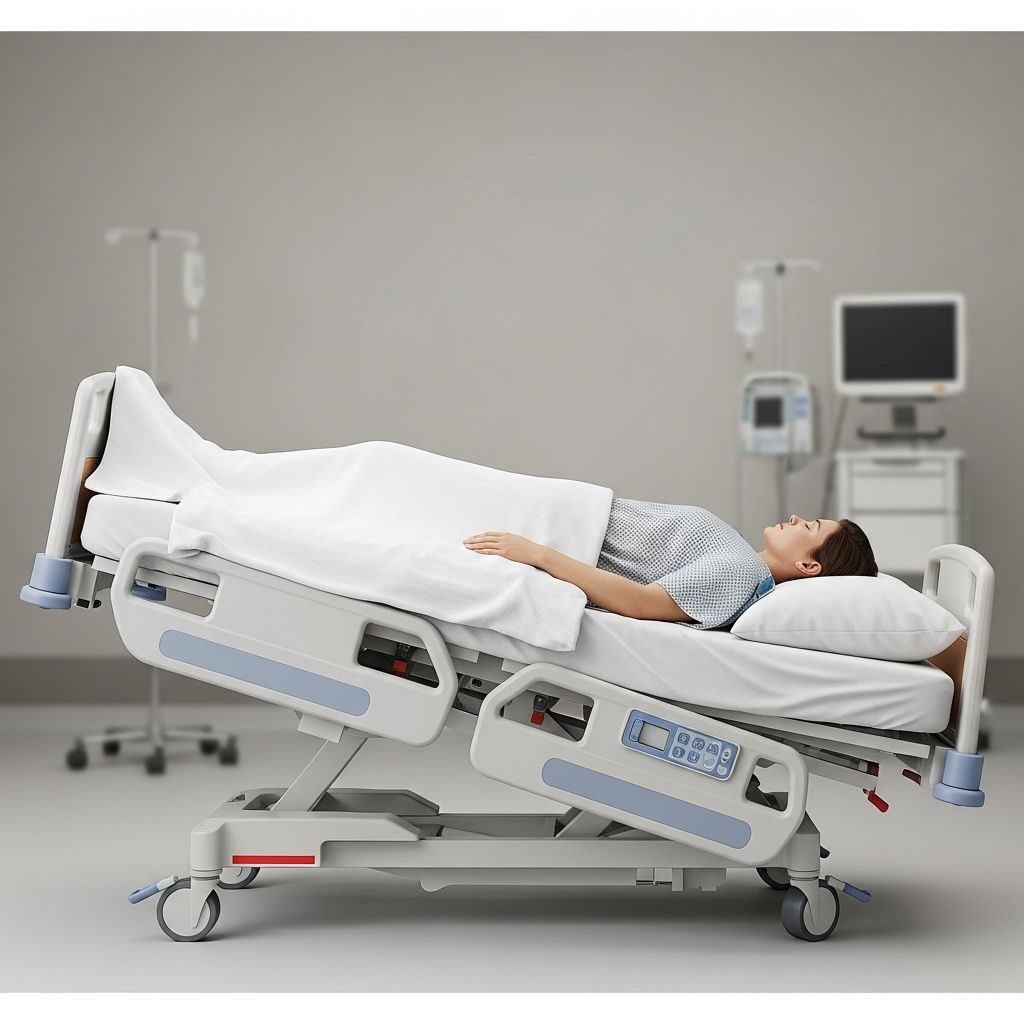
Understanding the Trendelenburg Position
The Trendelenburg position is a fundamental surgical positioning technique used extensively in modern operating rooms and clinical settings. This specialized positioning method involves laying a patient flat on their back, or supine, with the head tilted downward and the feet elevated higher than the head at an angle typically ranging from 15 to 30 degrees. The position was named after Friedrich Trendelenburg, a renowned German surgeon who lived from 1844 to 1924 and pioneered its use in surgical practice.
Understanding this positioning technique is essential for healthcare professionals, surgical staff, and patients who may undergo procedures requiring this positioning. The Trendelenburg position represents more than just a simple adjustment of the surgical table; it is a carefully calculated positioning strategy designed to optimize surgical access, improve hemodynamic function, and enhance patient safety during critical procedures.
What Exactly Is the Trendelenburg Position?
The Trendelenburg position is characterized by a specific body orientation on the operating table. When a patient is positioned in Trendelenburg, they remain in a supine position, meaning they lie flat on their back, but the entire surgical table is tilted downward at the head end. This creates an incline where the patient’s feet remain elevated while their head is lowered relative to the rest of their body.
The standard Trendelenburg angle typically measures approximately 15 to 30 degrees, though variations exist depending on the specific procedure and clinical requirements. Some surgical applications utilize a steeper variation known as steep Trendelenburg positioning, which ranges from 30 to 40 degrees and is particularly common in robotic pelvic procedures.
A related positioning technique called the Modified Trendelenburg position offers an alternative approach. In this variation, the patient’s head and body remain level while the legs are slightly elevated. This modified approach aims to provide some of the benefits of standard Trendelenburg while reducing certain associated risks.
Primary Uses and Clinical Applications
The Trendelenburg position serves several critical functions in surgical practice. One of its primary advantages is improving surgical access to the pelvic and lower abdominal regions. By utilizing gravity to shift intra-abdominal organs toward the head and away from the pelvis, surgeons gain enhanced visibility and easier access to organs that require manipulation or repair.
Surgical Procedures Utilizing Trendelenburg Positioning
Healthcare professionals employ Trendelenburg positioning across a variety of surgical procedures. Common applications include:
– Colorectal surgery procedures requiring lower abdominal access
– Gynecological surgeries involving pelvic organs
– Genitourinary procedures addressing urological conditions
– Direct anterior hip procedures requiring optimal pelvic orientation
– Laparoscopic pelvic surgeries, particularly robotic-assisted procedures
– Central venous catheter placement in the internal jugular or subclavian vein
Specialized Clinical Applications
Beyond routine surgical procedures, the Trendelenburg position has specific applications in emergency and obstetric medicine. In cases of venous air embolism, the Trendelenburg position helps position the right ventricular outflow tract to facilitate air migration away from potential embolic sites. Additionally, in obstetric emergencies involving umbilical cord prolapse when patients cannot achieve a knee-to-chest position, Trendelenburg positioning serves as a temporary measure until cesarean section can be performed.
Related Stories



Central venous catheter placement represents another important application. The position utilizes gravity to assist in filling and distending the upper central veins, including the external jugular vein, which facilitates successful catheter placement. However, it should be noted that Trendelenburg positioning plays no role in femoral central venous catheter placement.
Hemodynamic Benefits and Physiological Effects
When a patient assumes the Trendelenburg position, significant hemodynamic changes occur. The gravitational shift of blood toward the thoracic cavity increases venous return to the heart, which subsequently improves cardiac output. These hemodynamic improvements are particularly valuable during surgical procedures performed under general anesthesia, where maintaining adequate blood pressure and tissue perfusion becomes critical.
However, these hemodynamic benefits are temporary in nature. Research indicates that most hemodynamic variables return to baseline levels within approximately ten minutes of assuming the position. This temporary enhancement of cardiovascular function must be understood by surgical teams when planning procedure duration and patient management strategies.
Important Risks and Considerations
While the Trendelenburg position offers significant surgical advantages, healthcare professionals must carefully consider associated risks before positioning patients. Awareness of these potential complications is essential for patient safety and appropriate decision-making.
Respiratory and Pulmonary Risks
One of the primary concerns with Trendelenburg positioning involves respiratory function. Patients positioned in Trendelenburg experience diminished lung capacity, reduced tidal volume, and decreased pulmonary compliance. These changes occur because the head-down position allows abdominal organs to press upward against the diaphragm, restricting normal breathing mechanics. In steep Trendelenburg positioning (30-40 degrees), these pulmonary effects become even more pronounced and concerning.
Cerebral and Ocular Pressure Changes
The head-down positioning characteristic of Trendelenburg creates increased intracranial pressure and intraocular pressure within the skull. For certain patient populations, particularly those with compromised cerebral perfusion or pre-existing intracranial conditions, these pressure increases can pose significant risks. Steep Trendelenburg positioning further exacerbates these concerns.
Airway and Soft Tissue Complications
Extended positioning in Trendelenburg can result in airway edema, swelling of tissues in the airway that may compromise breathing and ventilation. Additionally, venous pooling toward the patient’s head occurs as blood preferentially distributes to upper body structures due to gravitational effects.
Nerve Injury and Tissue Damage
Nerve injury represents another important risk associated with Trendelenburg positioning, particularly in steep variations. The positioning can place stress on peripheral nerves, especially those in the lower extremities and pelvis. Additionally, sliding and shearing forces acting on the patient’s skin and soft tissues can create pressure-related injuries, particularly over bony prominences like the posterior calcaneus (heel bone).
Patient Population Considerations
Certain patient populations face elevated risks with Trendelenburg positioning. Extremely obese patients should generally avoid this positioning due to the compounded effects on respiratory function and cardiovascular hemodynamics. Patients with compromised pulmonary function, elevated intracranial pressure, or significant obesity require careful risk-benefit analysis before positioning decisions are made.
Minimizing Risks Through Proper Positioning Practices
Healthcare professionals have developed evidence-based strategies to minimize risks associated with Trendelenburg positioning. A fundamental principle involves minimizing the degree of Trendelenburg angle whenever clinically possible. When the surgical procedure allows, patients should be repositioned into supine or reverse Trendelenburg positions at regular intervals to reduce cumulative exposure to positioning risks.
Before positioning a patient in Trendelenburg, surgical staff should conduct comprehensive risk assessments considering individual patient factors, potential for injury, and clinical recommendations for repositioning intervals. Equipment considerations are also important; medical facilities must maintain stretchers and surgical tables specifically designed to perform this positioning maneuver safely and ergonomically.
Trendelenburg Versus Reverse Trendelenburg Positioning
The Reverse Trendelenburg position represents an alternative positioning technique with distinct characteristics and applications. In this position, the head of the surgical bed is tilted upward so that the head becomes the highest point of the trunk. This positioning facilitates upper abdominal surgery by utilizing gravity to move organs away from the surgical site in the upper abdomen.
| Positioning Aspect | Trendelenburg Position | Reverse Trendelenburg Position |
|---|---|---|
| Head Position | Lower than feet | Higher than feet |
| Primary Surgical Use | Lower abdominal and pelvic procedures | Upper abdominal procedures |
| Venous Return | Increased venous return to heart | Decreased venous return |
| Blood Pressure Effect | Improves blood pressure | May result in hypotension |
| Cerebral Perfusion | Generally maintained | May result in decreased cerebral perfusion |
| Primary Risks | Increased intracranial pressure, reduced lung function | Hypotension, reduced cerebral perfusion |
Reverse Trendelenburg positioning creates distinct hemodynamic changes, including decreased venous return, which can result in hypotension (low blood pressure). The gravitational changes accompanying reverse Trendelenburg can result in decreased cerebral perfusion, necessitating careful monitoring and potentially invasive arterial monitoring during such procedures. Furthermore, sliding and shifting a patient in reverse Trendelenburg positioning increases pressure over the posterior calcaneus, heightening the risk of pressure injury to this vulnerable area.
Special Considerations and Patient Safety
Positioning a patient for any surgical procedure involves more than simply adjusting the surgical table; it requires reducing risk of injury while simultaneously increasing comfort and optimizing surgical access. When healthcare professionals consider positioning a patient in Trendelenburg, they must evaluate multiple factors including patient risk factors, potential for specific injuries, clinical recommendations for repositioning, and the duration the patient will remain in this position.
For patients who have sunk too far down into their bed while in Fowler’s position or semi-Fowler’s position (sitting positions), temporary Trendelenburg positioning may be utilized to provide mechanical advantage while staff reposition them. This application does not provide direct therapeutic action but rather facilitates practical repositioning needs.
Frequently Asked Questions About Trendelenburg Position
Q: What is the standard angle for Trendelenburg positioning?
A: The standard Trendelenburg angle typically measures approximately 15 to 30 degrees. Steep Trendelenburg positioning, used for robotic pelvic procedures, ranges from 30 to 40 degrees. The specific angle chosen depends on the surgical procedure, patient factors, and clinical requirements.
Q: Why is Trendelenburg positioning used in surgery?
A: Trendelenburg positioning is used to improve surgical access to pelvic and lower abdominal organs by utilizing gravity to shift internal organs away from the surgical site. It also temporarily increases venous return to the heart, improving cardiac output and blood pressure during surgery.
Q: What are the main risks associated with Trendelenburg positioning?
A: Primary risks include diminished lung capacity, increased intracranial and intraocular pressure, airway edema, venous pooling toward the head, sliding and shearing forces on skin, and potential nerve injury. Patients with compromised pulmonary function or extreme obesity face elevated risks.
Q: How long does the hemodynamic benefit of Trendelenburg positioning last?
A: The hemodynamic benefits of Trendelenburg positioning are temporary. Most hemodynamic variables return to baseline levels within approximately ten minutes of assuming the position.
Q: What procedures commonly use Trendelenburg positioning?
A: Common procedures include colorectal surgery, gynecological procedures, genitourinary surgery, direct anterior hip procedures, robotic-assisted pelvic surgeries, and central venous catheter placement in the internal jugular or subclavian vein.
Q: How does Reverse Trendelenburg positioning differ from standard Trendelenburg?
A: Reverse Trendelenburg positions the head higher than the feet and is used for upper abdominal procedures. It decreases venous return and may result in hypotension, unlike standard Trendelenburg which increases venous return and blood pressure.
Q: Should patients remain in Trendelenburg positioning throughout entire surgical procedures?
A: No. Healthcare professionals should minimize the degree of Trendelenburg whenever clinically possible and should reposition patients into supine or reverse Trendelenburg positions at established intervals to reduce cumulative risks.
References
- Trendelenburg position — Wikipedia. Accessed 2025-12-01. https://en.wikipedia.org/wiki/Trendelenburg_position
- Trendelenburg Position: Benefits and Applications — STERIS. Accessed 2025-12-01. https://www.steris.com/healthcare/knowledge-center/surgical-equipment/trendelenburg-position
- Anatomy, Patient Positioning — StatPearls, National Center for Biotechnology Information (NCBI). Accessed 2025-12-01. https://www.ncbi.nlm.nih.gov/books/NBK513320/
- Benefits of Trendelenburg Positioning in Surgical Procedures — BoneFoam. Accessed 2025-12-01. https://www.bonefoam.com/blog/benefits-of-trendelenburg-position-surgery
- Trendelenburg vs Reverse Trendelenburg: Patient Positioning — Ibiom. Accessed 2025-12-01. https://ibiom.com/en/trendelenburg-vs-reverse-trendelenburg/
- Trendelenburg Position: What Is It, Uses, and More — Osmosis. Accessed 2025-12-01. https://www.osmosis.org/answers/trendelenburg-position
- What is the Trendelenburg Position? Benefits, Risks, & Uses — Broda Seating. Accessed 2025-12-01. https://brodaseating.com/blog/what-is-trendelenburg-position
Similar Articles








Read full bio of medha deb