Triamcinolone Nasal Spray: Uses, Dosage, Side Effects Guide
Effective relief from hay fever and allergy symptoms with triamcinolone nasal spray (Nasacort). Learn usage, dosage, and safety tips.
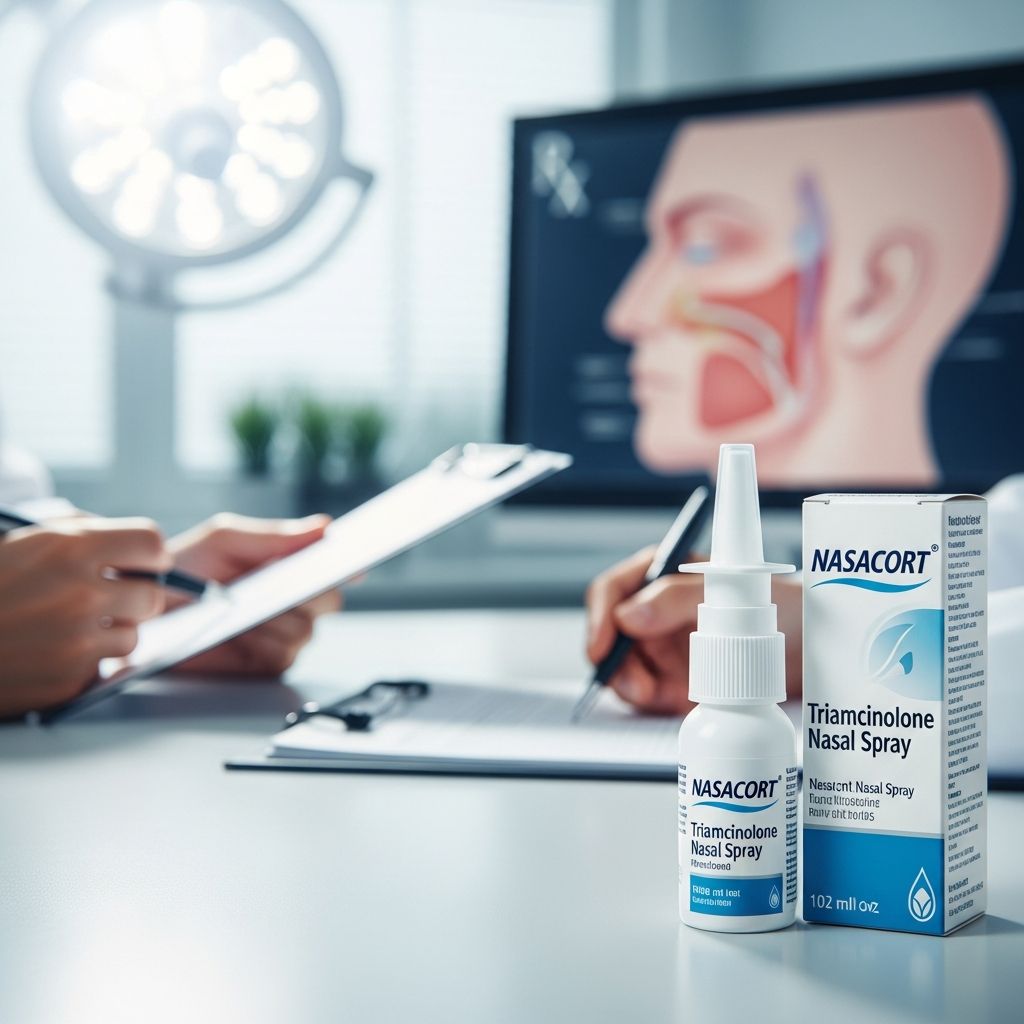
Triamcinolone nasal spray, commonly known by the brand name
Nasacort
, is a corticosteroid medication designed to alleviate symptoms of allergic rhinitis, such as a stuffy, runny, or itchy nose caused by hay fever or other allergies. It works by reducing inflammation in the nasal passages, providing relief from sneezing, congestion, and nasal discharge. This over-the-counter treatment is suitable for adults and children aged 2 years and older, offering up to 24-hour symptom control with once-daily use.About triamcinolone nasal spray
**Triamcinolone nasal spray** belongs to a group of medicines called corticosteroids. When allergens like pollen, dust, or pet dander trigger an overreaction in your immune system, it causes inflammation in the nasal lining, leading to uncomfortable symptoms. Triamcinolone acts locally in the nose to decrease this inflammation, blocking the release of substances that cause swelling, itching, and mucus production. Unlike oral steroids, it has minimal systemic absorption, reducing the risk of widespread side effects.
Clinical studies have demonstrated its efficacy in treating both seasonal and perennial allergic rhinitis. For instance, in trials with adults and children over 12, a daily dose of 220 mcg (two sprays per nostril) significantly improved symptoms like sneezing, stuffiness, discharge, and itching compared to placebo. Relief may begin within the first day, but maximum benefits typically occur after one week of consistent use.
Nasacort is available as a metered-dose nasal spray, with each spray delivering 55 mcg of triamcinolone acetonide. It is non-drowsy and does not interact with common allergy medications like antihistamines, making it versatile for combination therapy.
Before using triamcinolone nasal spray
While generally safe for short-term use, consult a healthcare provider before starting if you have certain conditions. Avoid use if you have untreated nasal infections, recent nasal surgery, ulcers, or injury that hasn’t healed, as the spray may delay healing or cause irritation.
**Key precautions include:**
- Active or quiescent tuberculosis of the respiratory tract.
- Untreated fungal, bacterial, viral infections, or ocular herpes simplex.
- Recent exposure to chickenpox or measles, as corticosteroids can suppress immunity.
Pregnant or breastfeeding individuals should discuss risks with a doctor, though studies suggest low systemic exposure. Inform your provider of any glaucoma, cataracts, or immune disorders. Long-term use (beyond 3 months) requires monitoring for potential effects like growth suppression in children or nasal changes.
How to use triamcinolone nasal spray
Follow package instructions precisely for optimal results and safety. Shake the bottle well before each use. Prime the pump if new or unused for over a week by spraying into the air until a fine mist appears (typically 5-10 sprays). Blow your nose gently beforehand to clear passages.
Steps for proper administration:
- Wash hands thoroughly.
- Tilt head slightly forward.
- Close one nostril by pressing with finger.
- Insert nozzle into open nostril, aiming away from the nasal septum (center wall).
- Spray once while inhaling gently through the nose.
- Repeat for the other nostril.
- Wipe nozzle and replace cap.
Related Stories



Avoid blowing nose immediately after spraying to allow medication absorption. Clean the nozzle weekly with a soft cloth; do not use water or sharp objects.
Dosage
Dosage varies by age and symptom severity. Use the lowest effective dose to minimize side effects.
| Age Group | Starting Dose | Maximum Dose |
|---|---|---|
| Adults and children 12+ | 2 sprays/nostril once daily (220 mcg/day) | 2 sprays/nostril once daily |
| Children 6-11 years | 1 spray/nostril once daily (110 mcg/day) | 2 sprays/nostril once daily (220 mcg/day) |
| Children 2-5 years | 1 spray/nostril once daily (110 mcg/day) | Consult doctor |
Once symptoms are controlled, reduce to 1 spray per nostril daily. If no improvement after 3 weeks, discontinue and seek medical advice. Do not exceed recommended doses or use more frequently than once daily.
Getting the most out of your treatment
For best results, use regularly even on symptom-free days during allergy season. Combine with non-drug measures like avoiding triggers (e.g., staying indoors on high-pollen days), using air purifiers, or saline rinses. Track symptoms to assess effectiveness; full benefits may take up to 7 days. If combining with oral antihistamines, Nasacort targets congestion better while antihistamines handle itching and sneezing.
Side effects
Most side effects are mild and local to the nose/throat, resolving with continued use or dose adjustment.
| Common Side Effects | Management |
|---|---|
| Dryness/irritation of nose/throat, cough, cold-like symptoms, mild nosebleeds | Speak to pharmacist/doctor; alternative may help |
| Headache | Use suitable painkiller |
| Indigestion | Usually passes quickly |
Rare but serious effects include severe nosebleeds, whistling when breathing (nasal septum perforation), fungal infections (pain/soreness in nose/throat), or vision changes. Stop use and contact a doctor immediately. Long-term use may increase infection risk or affect growth in children; monitor closely.
In clinical trials, events in children 6-12 included asthma, epistaxis, headache, infection, otitis media, sinusitis, and vomiting. Adults reported similar issues.
If you forget a dose
Use as soon as remembered unless near the next dose. Do not double up. Consistent daily use is key for sustained relief.
If you use too much
Overdose is unlikely to cause acute issues due to topical action, but may heighten local side effects like nosebleeds. Rinse nose if accidental ingestion occurs and seek medical help if concerned.
Stopping treatment
Treatment can be stopped abruptly once symptoms resolve; no tapering needed for nasal corticosteroids unlike systemic ones. Resume if allergies return.
Precautions
- Avoid spraying eyes or swallowing.
- Do not share bottles to prevent infection spread.
- Monitor children for growth; consult after 2 months continuous use.
- Immunosuppressed patients: heightened infection risk.
Frequently Asked Questions (FAQs)
Q: How quickly does Nasacort work?
A: Some relief in 12-24 hours; full effect in 3-7 days.
Q: Can I use it with other allergy meds?
A: Yes, safe with antihistamines; complements decongestants.
Q: Is it safe for long-term use?
A: Short-term preferred; doctor supervision for >3 months.
Q: What if I get nosebleeds?
A: Mild ones common; stop if frequent/severe and consult doctor.
Q: Suitable for children under 2?
A: No; not recommended without pediatrician advice.
References
- Nasacort (Triamcinolone acetonide nasal spray) – GoodRx — GoodRx. 2023. https://www.goodrx.com/nasacort-allergy/what-is
- Nasacort (Triamcinolone): Uses & Side Effects – Cleveland Clinic — Cleveland Clinic. 2024-01-15. https://my.clevelandclinic.org/health/drugs/20728-triamcinolone-nasal-spray
- Nasacort® AQ (triamcinolone acetonide) Nasal Spray Label — FDA. 2004-08-26. https://www.accessdata.fda.gov/drugsatfda_docs/label/2004/20468slr013_nasacort_lbl.pdf
- Triamcinolone nasal spray – Patient.info — Patient.info. 2023. https://patient.info/medicine/triamcinolone-nasal-spray-nasacort
- Triamcinolone (nasal route) – Mayo Clinic — Mayo Clinic. 2024. https://www.mayoclinic.org/drugs-supplements/triamcinolone-nasal-route/description/drg-20061212
Similar Articles








Read full bio of Sneha Tete