Triamcinolone with Chlortetracycline Ointment
Comprehensive guide to using triamcinolone with chlortetracycline ointment for infected inflammatory skin conditions.
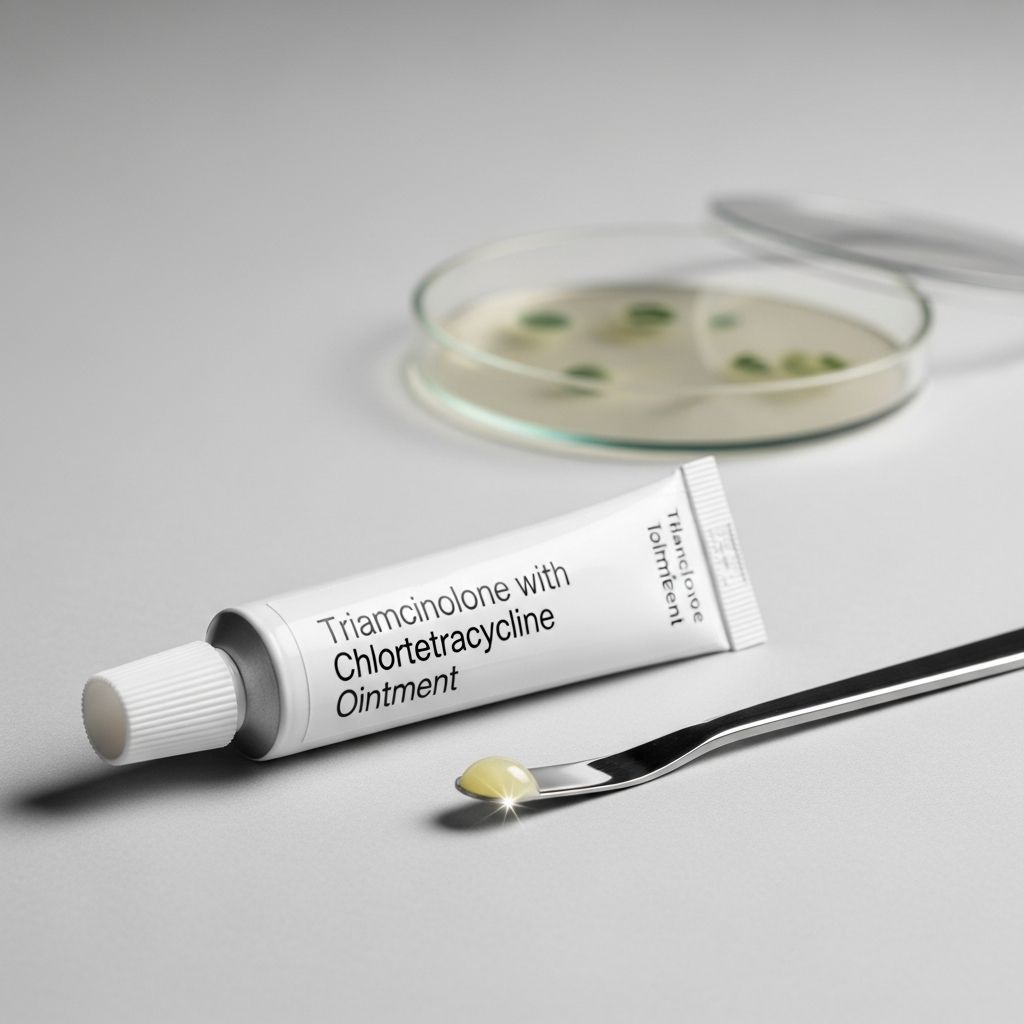
Triamcinolone with chlortetracycline ointment is a combination medication designed to treat inflammatory skin conditions complicated by bacterial infection. It contains
triamcinolone acetonide
, a potent topical corticosteroid that reduces inflammation, redness, itching, and swelling, andchlortetracycline hydrochloride
, a broad-spectrum antibiotic that combats susceptible bacterial infections. This dual-action ointment is particularly useful for conditions like eczema, dermatitis, and psoriasis where secondary bacterial infection is present.About triamcinolone with chlortetracycline ointment
Triamcinolone is a synthetic glucocorticoid corticosteroid that works by mimicking the effects of natural hormones produced by the adrenal glands. It suppresses the immune response and inflammatory processes in the skin, alleviating symptoms such as erythema, pruritus, and edema associated with corticosteroid-responsive dermatoses. Chlortetracycline, a tetracycline-class antibiotic, inhibits bacterial protein synthesis by binding to the 30S ribosomal subunit, effectively treating infections caused by Staphylococcus aureus, Streptococcus species, and other susceptible organisms common in skin infections.
The ointment formulation provides an occlusive base that enhances penetration into the skin layers, making it ideal for dry, thickened, or infected lesions. It is available by prescription only and should be used strictly under medical supervision to avoid complications from prolonged steroid use or antibiotic resistance. Unlike plain triamcinolone preparations, this combination addresses both the inflammatory and infectious components simultaneously, reducing the need for multiple treatments.
Clinical indications include atopic dermatitis, seborrheic dermatitis, nummular dermatitis, contact dermatitis, psoriasis (excluding widespread plaque psoriasis), and intertrigo when complicated by bacterial overgrowth. It is not suitable for viral infections (e.g., herpes simplex, chickenpox), fungal infections, or tuberculosis of the skin.
Before using triamcinolone with chlortetracycline ointment
Allergy
Do not use this ointment if you have a known hypersensitivity to triamcinolone, chlortetracycline, other tetracyclines, or any excipients in the formulation. Allergic reactions may manifest as rash, urticaria, angioedema, or anaphylaxis. Cross-sensitivity with other tetracyclines is possible.
Pregnancy and breastfeeding
This ointment is categorized under topical corticosteroids with minimal systemic absorption when used as directed. However, caution is advised during pregnancy due to potential fetal risks from corticosteroids, including intrauterine growth restriction or cleft palate with high-dose systemic exposure. Use only if benefits outweigh risks, preferably avoiding application over large areas or under occlusion.
During breastfeeding, avoid application to the breasts or nipples to prevent ingestion by the infant, as tetracyclines can cause dental staining and affect bone growth. Consult a healthcare provider for alternatives if needed.
Babies and children
Use in infants and children requires caution due to greater percutaneous absorption relative to body size, increasing risks of hypothalamic-pituitary-adrenal (HPA) axis suppression, Cushing’s syndrome, and growth retardation. Apply sparingly to small areas for short durations (e.g., up to 7 days). Avoid use in the diaper area unless directed, as occlusion enhances absorption.
Other medicines
- Other corticosteroids: Concurrent use may increase systemic effects.
- Antibiotics: May alter gut flora or increase resistance risks.
- Topical preparations: Avoid combining with other topicals unless advised.
Related Stories



How and when to use triamcinolone with chlortetracycline ointment
Key facts
- Usually used 2-3 times daily for up to 7-10 days.
- Apply a thin film to affected areas only.
- Course length depends on response; do not exceed 2 weeks without review.
- Improvement typically seen within 3-7 days.
1. Clean the affected area
Wash hands and the affected skin gently with mild soap and lukewarm water. Pat dry thoroughly to ensure optimal absorption and prevent maceration.
2. Put on a small amount
Apply a thin layer sufficient to cover the lesion (pea-sized for a 5cm x 5cm area). Rub in gently without excessive friction. Use fingertip or applicator for hygiene.
3. Wash your hands afterwards
Always wash hands post-application unless treating hands, to avoid spreading to eyes, mouth, or unaffected skin.
4. Use a dressing or not?
Do not occlude unless prescribed, as this increases steroid absorption and side effect risks. If using, ensure non-airtight dressings.
Dosage
| Age Group | Frequency | Duration | Amount |
|---|---|---|---|
| Adults | 2-3 times daily | Up to 10 days | Thin film |
| Children (>1 year) | 1-2 times daily | Up to 7 days | Very thin film |
| Infants | As directed | <5 days | Minimal |
Adjust based on severity and response. Discontinue if no improvement in 7 days.
Side effects of triamcinolone with chlortetracycline ointment
Side effects are usually local and dose-related. Systemic effects are rare with short-term topical use.
Common side effects
- Burning, stinging, itching at site (10-20% users).
- Dryness, erythema, folliculitis.
- Acneiform eruptions, hypopigmentation.
Serious side effects
- Skin atrophy, striae, telangiectasia (prolonged use, esp. face/flexures).
- Perioral dermatitis, rosacea-like eruption.
- Secondary infection (fungal, viral), antibiotic resistance.
- HPA suppression (rare, large areas/long term).
Report worsening symptoms, spreading infection, or systemic signs (weight gain, hypertension) immediately.
How to cope with side effects
- Burning/stinging: Apply after bathing; use moisturizer 30 min later.
- Dryness: Use emollient alongside.
- Itching: Cool compresses; oral antihistamines if severe.
- Infection signs: Stop use, seek medical advice.
Pregnancy, breastfeeding and fertility while using triamcinolone with chlortetracycline ointment
Pregnancy: Topical use generally safe; avoid large areas/occlusion (Category C equivalent).
Breastfeeding: Safe if not on breasts; tetracyclines contraindicated systemically.
Fertility: No known impact from topical use.
Other medicines, food and drink while using triamcinolone with chlortetracycline ointment
No significant interactions with food/drink. Caution with other topicals, immunosuppressants, or live vaccines.
Common questions about triamcinolone with chlortetracycline ointment
Why can’t I use triamcinolone with chlortetracycline ointment long-term?
Prolonged use risks skin thinning, HPA suppression, and antibiotic resistance. Limit to 7-14 days.
Can I use it on my face?
Avoid face unless directed; high absorption risks perioral dermatitis/skin atrophy.
What if I forget a dose?
Apply when remembered; do not double.
Does it treat fungal infections?
No; may worsen candidiasis.
Can children use it?
Yes, sparingly under supervision.
References
- Triamcinolone (topical application route) – Description & Proper Use — Mayo Clinic. 2023-05-01. https://www.mayoclinic.org/drugs-supplements/triamcinolone-topical-application-route/description/drg-20073937
- Triamcinolone: Uses, Interactions, Mechanism of Action — DrugBank. 2024-01-15. https://go.drugbank.com/drugs/DB00620
- Triamcinolone Aerosol, Cream, Lotion, Ointment — Cleveland Clinic. 2023-11-20. https://my.clevelandclinic.org/health/drugs/20405-triamcinolone-aerosol-cream-lotion-ointment
- Triamcinolone Acetonide Cream Uses and Side Effects — Baptist Health. 2024-02-10. https://www.baptisthealth.com/blog/family-medicine/triamcinolone-acetonide-cream-uses-and-side-effects
- Triamcinolone: Uses, Side Effects, Dosage & More — GoodRx. 2023-12-05. https://www.goodrx.com/triamcinolone/what-is
- Triamcinolone Topical — Memorial Sloan Kettering Cancer Center. 2023-08-15. https://www.mskcc.org/cancer-care/patient-education/medications/adult/triamcinolone-topical
- Triamcinolone Topical: MedlinePlus Drug Information — MedlinePlus (NIH). 2024-03-22. https://medlineplus.gov/druginfo/meds/a601124.html
Similar Articles








Read full bio of medha deb