Trichiasis: Comprehensive Guide To Causes, Symptoms, Treatments
Discover the causes, symptoms, and effective treatments for trichiasis, the condition where eyelashes turn inward and irritate the eye.
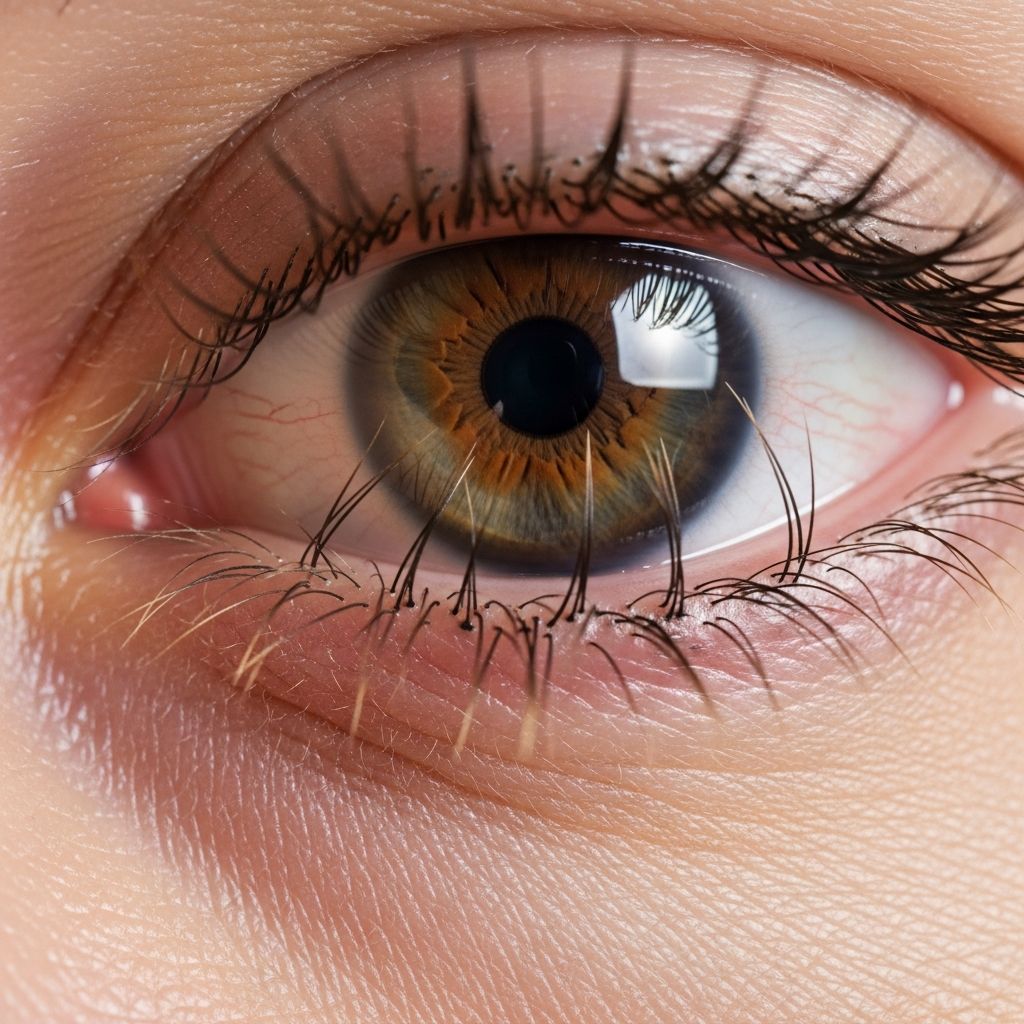
Trichiasis is a condition characterized by eyelashes that grow abnormally inward toward the eye’s surface, causing persistent irritation and potential damage to the cornea and conjunctiva. This eyelid disorder can range from mild discomfort to severe complications like corneal ulcers and vision impairment if not addressed promptly.
Understanding the Anatomy Behind Trichiasis
The eyelid consists of two main layers: the anterior lamella, which includes skin, orbicularis muscle, and eyelashes, and the posterior lamella with the tarsal plate, meibomian glands, and conjunctiva. Normally, the upper eyelid has 100-150 eyelashes, while the lower has 50-75, all directed away from the eye globe to protect it.
In trichiasis, these lashes become misdirected due to various factors, rubbing against the ocular surface. This differs from entropion, where the entire lid margin turns inward, as trichiasis specifically involves lash malposition with normal lid positioning.
Common Symptoms of Inward-Growing Eyelashes
Individuals with trichiasis often experience a range of uncomfortable symptoms stemming from the constant friction of lashes against the eye. Key signs include:
- Eye irritation and foreign body sensation: A persistent feeling as if something is in the eye.
- Redness and swelling: Inflammation due to repeated abrasion.
- Excessive tearing: Reflexive response to clear irritants.
- Photophobia: Sensitivity to light from corneal involvement.
- Blurred vision: Resulting from corneal damage or edema.
- Discharge or crusting: Indicating secondary infection.
Chronic cases may lead to corneal abrasions, keratitis, scarring, or ulceration, potentially causing permanent vision loss.
Root Causes and Risk Factors
Trichiasis arises from factors that distort eyelash follicles or lid structure. It is classified as minor (fewer than 5 misdirected lashes) or major (5 or more), with severity depending on the extent of lid involvement.
| Category | Examples |
|---|---|
| Inflammatory | Blepharitis, rosacea, atopic keratoconjunctivitis, ocular cicatricial pemphigoid (OCP), Stevens-Johnson syndrome |
| Infectious | Trachoma (Chlamydia trachomatis), the leading global cause |
| Traumatic | Eyelid lacerations, surgery, chemical burns |
| Anatomic/Other | Involutional changes, glaucoma medications (e.g., prostaglandins), distichiasis |
Trachoma affects about 10 million people worldwide, with women four times more impacted, creating a significant surgical backlog.
How Trichiasis Develops: Pathophysiology Explained
Normally, eyelashes protect the eye by directing away from the globe. Misalignment occurs from scarring or inflammation pulling follicles inward, leading to contact with the cornea or conjunctiva. This friction damages the corneal epithelium, causing superficial punctate keratopathy, abrasions, thinning, and light-scattering opacities that impair vision. Prolonged irritation promotes keratinization and risks perforation or blindness.
Unlike congenital distichiasis (extra lash row from meibomian glands), trichiasis is acquired, often in adults from chronic lid margin issues.
Diagnosis: Spotting Trichiasis in Clinical Practice
Diagnosis begins with a detailed history and slit-lamp biomicroscopy to visualize misdirected lashes, conjunctival injection, and corneal changes like abrasions or ulcers. Eyelid eversion reveals posterior lash involvement. Underlying causes are investigated via cultures for infection, biopsies for malignancy or autoimmune diseases, or fluorescein staining for epithelial defects.
Related Stories



Differentiate from entropion or malignancy, as trichiasis may signal serious pathology.
Treatment Options: From Temporary Relief to Permanent Solutions
Treatment escalates with severity, aiming to redirect or eliminate problematic lashes and address root causes.
Non-Surgical Approaches
- Epilation: Plucking with forceps for temporary relief (4-6 weeks regrowth).
- Lubricants and ointments: Artificial tears or antibiotic drops to soothe and prevent infection.
- Electrolysis or radiofrequency ablation: Permanent follicle destruction for recurrent cases.
Surgical Interventions
- Direct lash excision or follicle release: Releasing roots to redirect growth.
- Tarsal fracture or lid split: Corrects scarring in major trichiasis.
- Full-thickness grafts: For extensive cicatricial cases like trachoma.
Surgery is prioritized for vision-threatening cases, with high success rates when underlying inflammation is controlled.
Prevention Strategies for At-Risk Individuals
Prevent trichiasis by managing risk factors: treat blepharitis promptly, avoid self-plucking to prevent scarring, and seek early care for infections like trachoma in endemic areas. WHO initiatives target trachoma elimination through hygiene, antibiotics, and surgery.
Regular eye exams for those on long-term glaucoma drops or with autoimmune conditions help detect early changes.
Potential Complications and Long-Term Outlook
Untreated trichiasis risks recurrent infections, corneal opacity, neovascularization, and blindness—trachoma alone blinds millions globally. Early intervention yields excellent prognosis; post-treatment monitoring prevents recurrence.
Frequently Asked Questions (FAQs)
What does trichiasis feel like?
It feels like a constant foreign body in the eye, with redness, tearing, and light sensitivity.
Can trichiasis go away on its own?
Rarely; it typically requires intervention as lashes regrow inward.
Is trichiasis contagious?
No, but infectious causes like trachoma are.
How long does treatment last?
Epilation: weeks; surgical options: permanent with low recurrence.
Who is most at risk for trichiasis?
Those in trachoma-endemic areas, elderly with involutional changes, or with chronic lid inflammation.
Trichiasis, though common, is manageable with timely care. Consult an ophthalmologist for persistent eye irritation to safeguard vision.
References
- Trichiasis – EyeWiki — American Academy of Ophthalmology EyeWiki. 2023. https://eyewiki.org/Trichiasis
- Dealing with Trichiasis: Causes, Symptoms, and Treatments — TNO Culoplastics. 2024-09-19. https://www.tnoculoplastics.com/2024/09/19/dealing-with-trichiasis-causes-symptoms-and-treatments-available-in-nashville/
- Trichiasis – Eye Institute at Medical Center — MCC Eye Institute. Accessed 2026. https://mcceyeinstitute.com/eye-conditions/trichiasis/
- Treatment of Trichiasis by Releasing Follicle Roots of Eyelashes — PMC (NCBI). 2021. https://pmc.ncbi.nlm.nih.gov/articles/PMC8099408/
- Trichiasis Treatment In Bellevue — Kristin J. Tarbet, MD. Accessed 2026. https://www.kristintarbetmd.com/services/medical-reconstructive/trichiasis/
- Trichiasis Treatment for Saratoga & Los Gatos, CA — Laura Phan MD. Accessed 2026. https://www.lauraphanmd.com/medical/trichiasis/
Similar Articles








Read full bio of medha deb