Trichodysplasia Spinulosa: Guide To Diagnosis & Treatment
Rare skin disorder in immunocompromised patients featuring facial papules and spiny keratin protrusions linked to TSPyV virus.
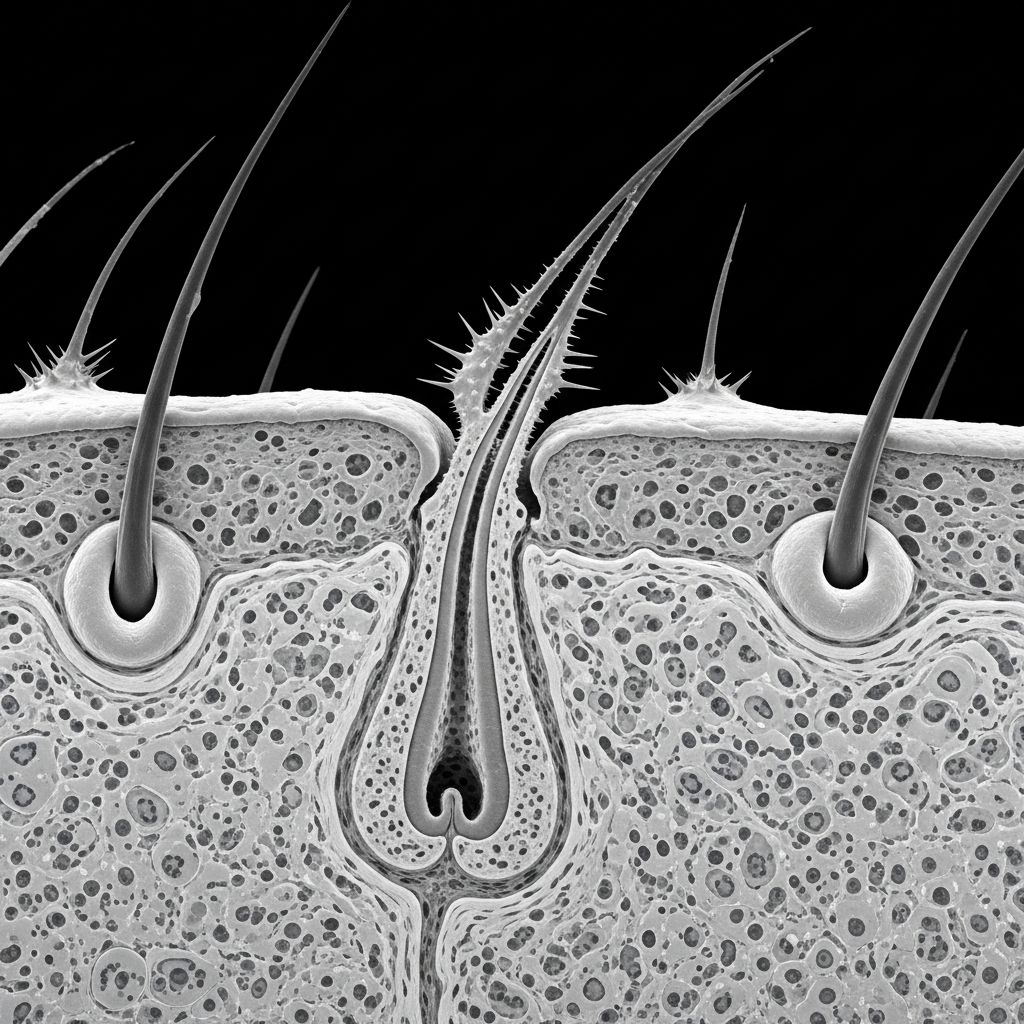
Trichodysplasia spinulosa is a rare dermatological condition characterised by the development of flesh-coloured papules topped with spiny keratin protrusions, primarily affecting the central face in immunocompromised patients.
Who gets trichodysplasia spinulosa?
Trichodysplasia spinulosa predominantly occurs in individuals with severely compromised immune systems. It is most commonly reported in solid organ transplant recipients, such as kidney, liver, or heart transplant patients on lifelong immunosuppressive therapy to prevent organ rejection. Patients undergoing treatment for haematological malignancies, including acute lymphoblastic leukaemia (ALL), chronic lymphocytic leukaemia (CLL), and multiple myeloma, are also at high risk due to chemotherapy and monoclonal antibodies like alemtuzumab and ofatumumab that suppress immunity.
The condition has been documented across all age groups, from children as young as 6 years to elderly patients up to 68 years, with no gender predilection. Solid organ transplant patients represent the largest cohort, followed by those with malignancies. Emerging reports link it to specific immunosuppressants like ruxolitinib, a Janus kinase inhibitor (JAKi) used in myelofibrosis, suggesting certain drugs may precipitate the disease by impairing antiviral immune pathways.
While seroprevalence of the causative virus is high in the general population (around 70%), clinical disease manifests almost exclusively in immunosuppression, highlighting the critical role of immune surveillance in preventing symptomatic infection.
Causes
The definitive cause of trichodysplasia spinulosa is infection with the trichodysplasia spinulosa-associated polyomavirus (TSPyV), a member of the polyomavirus family first identified in 2008 through metagenomic analysis of lesional skin. TSPyV is a ubiquitous virus with high seroprevalence in healthy adults, but in immunocompromised hosts, it proliferates unchecked, targeting hair follicle inner root sheath keratinocytes.
The virus induces dysregulated keratinocyte proliferation and abnormal keratinisation, leading to the characteristic spicules. High viral loads of TSPyV DNA are consistently detected in lesional skin via PCR, with histopathology showing viral inclusions and immunohistochemical staining positive for TSPyV large T antigen. The temporal association between initiation of potent immunosuppressants—like ruxolitinib—and disease onset supports a direct causal link, as these agents disrupt JAK-STAT pathways essential for antiviral responses.
Unlike oncogenic polyomaviruses like Merkel cell polyomavirus, TSPyV is not associated with malignancy, though its long-term potential remains unstudied due to rarity.
Clinical features
Trichodysplasia spinulosa typically presents with multiple 2–4 mm flesh-coloured to erythematous papules clustered on the nose, cheeks, forehead, and periorbital areas, often giving a ‘pineapple-like’ or ‘spiny’ appearance due to central keratin spines protruding 1–5 mm. These spicules represent malformed hair shafts from distorted follicular infundibula, packed with abnormal keratin.
Skin involvement extends to the ears, chin, and upper trunk in extensive cases, with associated alopecia of eyebrows, eyelashes, and scalp hairs in affected areas. The lesions are usually asymptomatic but may cause mild pruritus or cosmetic distress. Central facial predominance reflects high hair follicle density, with papules surrounding follicles and distorting pilosebaceous units.
Progression occurs over months, starting with erythematous desquamation around the nose and eyebrows, evolving into spiky plaques. A case of a 68-year-old woman with CLL illustrated this: five months post-immunosuppression, superficial desquamating erythema appeared on the face, progressing to spiky rash on the face, abdomen, back, and arms with eyebrow loss.
Related Stories



Diagnosis
Diagnosis relies on characteristic clinical morphology in an immunocompromised patient, confirmed by skin biopsy. Histopathology reveals dilated follicular infundibula filled with pale swollen keratinocytes exhibiting a ‘parakeratotic’ spinous layer and central keratin horn. Basophilic viral inclusions in the upper spinous layer, trichohyalin granules, and absence of matrical cells are hallmark features.
- Polymerase chain reaction (PCR) detects high TSPyV DNA loads in lesional skin.
- Immunohistochemistry stains positive for TSPyV large T antigen and replication protein 1 (VP1).
- Electron microscopy shows 40–50 nm viral polyomavirus particles.
Differential diagnoses include viral folliculitis (e.g., HIV, measles), crusted scabies, folliculotropic mycosis fungoides, and keratinaceous lesions like multiple filiform keratoses, but biopsy distinguishes TS by viral changes.
Treatment
No standardised treatment exists due to rarity, but evidence from 60+ cases supports targeted approaches reducing TSPyV replication or immunosuppression.
First-line options:
- Reduce immunosuppression: Effective in many cases (e.g., post-transplant dose adjustment or chemotherapy cessation), leading to complete resolution within 6–12 months, though often limited by rejection or disease flare risks.
- Topical cidofovir 3%: Most effective antiviral, compounded as cream/ointment applied twice daily; heals lesions in 3–14 weeks by inhibiting polyomavirus replication. Limited by availability.
- Oral valganciclovir 900 mg daily: Widely available, partial-to-complete response in weeks; mechanism unclear but reduces viral load.
Other agents: Oral leflunomide (20 mg/day), oral acitretin (systemic retinoid), showing improvement in select cases.
| Treatment | Effectiveness | Cases (n) |
|---|---|---|
| Topical cidofovir 3% | Good/Healed | 12 |
| Oral valganciclovir | Partial/Good | 8 |
| Reduce immunosuppression | Healed | 6 |
| Topical retinoids | Poor | 15 |
| Glucocorticoids | No effect | 20 |
Ineffective therapies include topical steroids, antifungals, antibiotics, imiquimod, and keratolytics.
Outcome
Trichodysplasia spinulosa is benign and non-malignant, with spontaneous resolution upon immune reconstitution. Persistent lesions occur with ongoing immunosuppression, regressing with effective treatment (cidofovir/valganciclovir). Long-term data absent, but disfiguring yet non-life-threatening; no malignant transformation reported.
Frequently Asked Questions
What causes trichodysplasia spinulosa?
TSPyV polyomavirus infection in immunocompromised patients triggers abnormal hair follicle keratinisation.
Who is at risk?
Organ transplant recipients and haematological malignancy patients on immunosuppressants.
How is it diagnosed?
Clinical features plus biopsy showing viral inclusions and TSPyV PCR.
What is the best treatment?
Topical cidofovir 3% or oral valganciclovir; reduce immunosuppression if feasible.
Is it curable?
Yes, with immune recovery or antivirals; benign prognosis.
References
- Trichodysplasia spinulosa: a comprehensive review of the disease, diagnostics and therapy — Haye K, et al. J Eur Acad Dermatol Venereol. 2021-07-01. https://pmc.ncbi.nlm.nih.gov/articles/PMC8247895/
- Trichodysplasia spinulosa — StatPearls. NCBI Bookshelf. 2023-04-23. https://www.ncbi.nlm.nih.gov/books/NBK574537/
- Trichodysplasia spinulosa — DermNet NZ. 2023. https://dermnetnz.org/topics/trichodysplasia-spinulosa
Similar Articles








Read full bio of Sneha Tete