Trichoscopy of Localised Cicatricial Hair Loss
Understanding dermoscopic findings in primary scarring alopecia disorders.
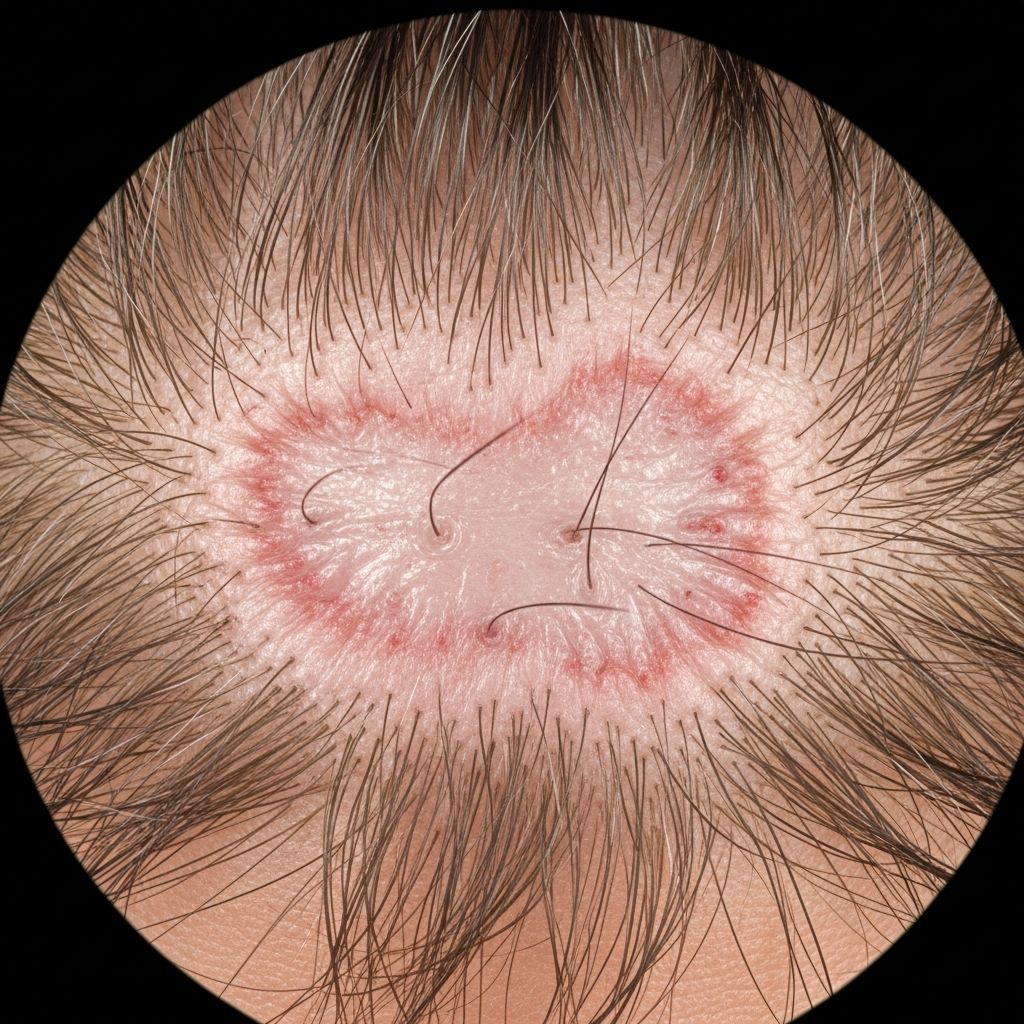
Primary cicatricial alopecias comprise a significant group of hair disorders characterized by permanent destruction of the hair follicle. These conditions result from irreversible injury to the stem-cell-rich bulge area, which is essential for the cyclic regeneration of the lower portion of the hair follicle. Understanding the trichoscopic features of these disorders is critical for accurate diagnosis and clinical management. Histopathological examination helps identify the underlying disorder through the type of infiltrate surrounding the follicles, along with other distinctive pathological characteristics.
Trichoscopy, also known as hair and scalp dermoscopy, represents a valuable non-invasive and low-cost technique that can assist in the diagnosis of most hair and scalp diseases. This method allows visualization of hair shafts at high magnification without the need to remove hair samples, enabling in vivo analysis of the epidermal portion of hair follicles and the perifollicular epidermis. The technique is particularly useful in distinguishing scarring versus non-scarring alopecia and can guide the selection of optimal biopsy sites when histopathological confirmation is necessary.
Classification of Cicatricial Alopecia
Primary cicatricial alopecias are classified based on the predominant type of inflammatory infiltrate surrounding the affected hair follicles. This classification system helps clinicians narrow the differential diagnosis and predict disease progression. The main categories include:
- Neutrophilic cicatricial alopecia
- Lymphocytic cicatricial alopecia
- Central centrifugal cicatricial alopecias (CCCA)
- Mixed infiltrate alopecia
Neutrophilic Cicatricial Alopecia
Folliculitis Decalvans
Folliculitis decalvans is a primary cicatricial alopecia with neutrophilic infiltrate predominance. This condition manifests as recurrent follicular pustules that affect mainly the vertex and occipital area of the scalp, primarily in middle-aged males. The characteristic clinical presentation includes erythema, dark yellow-gray scales, follicular hyperkeratosis, erosions, and hemorrhagic crusts, which are most prominent around the follicles.
In advanced stages of folliculitis decalvans, atrophic patches with hair tufting become evident. These late-stage manifestations represent permanent scarring and irreversible hair loss. The disease is characterized by a chronic, slowly progressive course with periodic exacerbations of inflammation.
Trichoscopic Features of Folliculitis Decalvans
Characteristic signs observed on trichoscopy include:
- Follicular hyperkeratosis
- Perifollicular erythema
- Yellow-gray scales surrounding follicles
- Pustules with follicular involvement
- Erosions and hemorrhagic crusts
Additional trichoscopic features that may be present include diffuse scaling, perifollicular inflammation, and areas of alopecia with visible hair tufts in advanced disease. These findings help distinguish folliculitis decalvans from other forms of cicatricial alopecia.
Dissecting Cellulitis
Dissecting cellulitis, also known as dissecting folliculitis or perifolliculitis capitis abscedens et suffodiens, is a neutrophilic primary cicatricial alopecia characterized by chronic, progressive inflammation. This condition occurs most commonly in dark-skinned young adults and represents a severe form of follicular disease. The primary event is occlusion of follicular openings on the scalp vertex or occiput, which leads to the accumulation of follicular contents and subsequent inflammation.
As the disease progresses, perifollicular pustules, nodules, and fluctuant abscesses with interconnecting sinus tracts develop. Seropurulent discharge, tufted hairs, and keloidal lesions may be present in late-stage disease. Dissecting cellulitis is considered one of the follicular occlusion tetrad, which includes acne conglobata, hidradenitis suppurativa, and pilonidal sinus.
Related Stories



Trichoscopic Features of Dissecting Cellulitis
In the early stages of dissecting cellulitis, trichoscopic features of non-cicatricial alopecia may be observed, including:
- Perifollicular erythema
- Follicular hyperkeratosis
- Pustules around follicular openings
Late-stage trichoscopic features that indicate progression to cicatricial disease include:
- Atrophic patches with absence of normal follicular architecture
- Tufted hairs representing disrupted follicular structure
- Keloidal scarring patterns
- Sinus tract openings
Lymphocytic Cicatricial Alopecia
Discoid Lupus Erythematosus
Discoid lupus erythematosus (DLE) is one of the most common causes of primary cicatricial alopecia with lymphocytic infiltrate predominance. This autoimmune condition is manifested by one or more erythematous atrophic plaques of alopecia with follicular plugging, adherent scales, telangiectasia, and hypo- and hyperpigmentation. The clinical appearance varies depending on disease stage and activity.
In end-stage disease, DLE presents with fibrotic, atrophic, smooth white plaques with absent follicular openings. Long-standing DLE cannot be distinguished clinically from other diseases in the spectrum of primary cicatricial alopecia without additional diagnostic testing, including direct immunofluorescence examination. This overlap in clinical presentation makes trichoscopic evaluation particularly valuable for differential diagnosis.
Trichoscopic Features of Discoid Lupus Erythematosus
Active lesions of DLE demonstrate characteristic trichoscopic features that reflect ongoing inflammation and follicular damage. The combination of these findings helps confirm the diagnosis and assess disease activity.
Lichen Planopilaris
Lichen planopilaris (LPP) is a lymphocytic cicatricial alopecia that represents a follicular variant of lichen planus affecting the scalp. Patients with classic LPP are typically around the age of 50, and women are more often affected than men. Common symptoms include itching, burning, and scalp sensitivity.
The condition is characterized by irregular atrophic patches with follicular hyperkeratosis and perifollicular erythema. These findings are distributed in a random or patchy pattern across the affected scalp areas. Graham Little syndrome represents an extension of LPP, showing lesions of classic LPP on the scalp, while axillary and pubic areas show non-scarring alopecia, with keratosis pilaris on the trunk and extremities. Alopecia of the eyebrows may be found in some cases.
Trichoscopic Features of Lichen Planopilaris
Trichoscopic features of LPP vary according to the stage of disease and the degree of inflammatory activity.
Active Stage Features:
- Perifollicular erythema surrounding individual hair follicles
- Follicular hyperkeratosis with white appearance around follicular openings
- Purple or violaceous discoloration indicating active inflammation
- Scaling around follicular units
Inactive and Late-Stage Features:
- Reduced or absent erythema
- Progressive follicular loss with widening of alopecic areas
- Atrophic appearance of remaining follicles
- Smooth scalp surface without follicular openings in advanced disease
In Graham Little syndrome, specific trichoscopic features of scalp lesions include characteristic perifollicular erythema and follicular hyperkeratosis. Eyebrow lesions demonstrate specific patterns reflecting the same disease process affecting these vellus hairs. These three feature sets are considered characteristic signs of Graham Little syndrome.
Pseudopelade of Brocq
Pseudopelade of Brocq is a primary cicatricial alopecia with lymphocytic infiltrate predominance that represents a diagnosis of exclusion. This condition primarily affects women between the ages of 30 and 50 years. It usually presents with small flesh-colored alopecic patches with irregular margins, a distinctive pattern described as “footprints in the snow.”
Unlike DLE and LPP, follicular hyperkeratosis and perifollicular or diffuse erythema are mostly absent in pseudopelade of Brocq. There is possible clinical overlap in presenting features between DLE and LPP, making comprehensive trichoscopic and histopathological evaluation essential. Clinically and dermoscopically, pseudopelade of Brocq presents mostly non-specific features, which is why it is considered a diagnosis of exclusion.
Central Centrifugal Cicatricial Alopecia
Central centrifugal cicatricial alopecia (CCCA) is a primary cicatricial alopecia that affects females of African descent. Many factors are incorporated in the pathogenesis of CCCA, including genetic factors and hair styling practices. The condition is characterized by slowly progressive thinning of hair on the vertex with follicular pustules, tenderness, and sometimes pruritus.
The disease typically begins at the vertex or crown area and progresses centrifugally, creating expanding alopecic patches. Early intervention and modification of hair care practices may help slow disease progression. Understanding the trichoscopic features of CCCA is important for early diagnosis and management in affected populations.
Erosive Pustular Dermatosis
Erosive pustular dermatosis commonly affects older individuals and represents another form of cicatricial alopecia. This condition is characterized by a pustular eruption, erosions, and crusting that heal with scarring. The disease may involve the scalp and other body areas with hair, leading to permanent hair loss in affected regions.
Trichoscopic Phases of Erosive Pustular Dermatosis
Active Phase:
- Pustules overlying the scalp
- Erosions with inflammatory halos
- Crusted lesions with surrounding erythema
- Signs of acute inflammation and tissue damage
Chronic Phase:
- Healing with fibrotic scarring
- Permanent loss of follicular architecture
- Atrophic patches replacing previously affected areas
- Absence of inflammatory infiltrates in resolved lesions
Clinical Applications of Trichoscopy in Cicatricial Alopecia
Trichoscopy serves multiple clinical purposes in the evaluation of cicatricial alopecia. It can help distinguish scarring versus non-scarring alopecia, an essential first step in establishing a diagnosis. The technique is useful in guiding the selection of the optimal site for scalp biopsy when histopathological confirmation is necessary. Additionally, trichoscopy can be used in teledermoscopy for case discussion and second opinions, expanding access to expert consultation.
Many studies describe the application of trichoscopy in randomly selected patients suffering from hair loss, not only as a diagnostic tool but also in monitoring treatment response. Serial trichoscopic examinations can document disease progression or improvement following therapeutic interventions.
Diagnostic Approach to Cicatricial Alopecia
When evaluating a patient with suspected cicatricial alopecia, a systematic approach incorporating clinical history, physical examination, and trichoscopic findings is recommended. The presence of visible scarring, permanent alopecia, and loss of follicular openings on trichoscopy confirms the cicatricial nature of the process. The pattern and distribution of alopecia, combined with specific trichoscopic and histopathological findings, helps narrow the differential diagnosis.
Trichoscopy performed with videodermoscopy at high magnification allows detailed visualization of pathological features without requiring hair removal. This non-invasive approach makes it suitable for serial monitoring and patient education regarding disease progression and treatment response.
Frequently Asked Questions
Q: What is the difference between cicatricial and non-cicatricial alopecia?
A: Cicatricial alopecia involves permanent destruction of hair follicles with scarring and irreversible hair loss, while non-cicatricial alopecia preserves follicular structure and may be reversible with appropriate treatment. Trichoscopy can help distinguish between these two categories by identifying the presence or absence of normal follicular architecture.
Q: How is trichoscopy performed in clinical practice?
A: Trichoscopy uses a videodermoscope or dermoscope to magnify the scalp and hair shafts, typically at 20-fold magnification or higher, allowing visualization of the perifollicular epidermis and hair follicle characteristics without hair removal. Images are captured for analysis and documentation of findings.
Q: Can trichoscopy alone diagnose cicatricial alopecia?
A: While trichoscopy provides valuable diagnostic information and can help identify specific cicatricial alopecia subtypes, histopathological examination remains the gold standard for confirming diagnosis and identifying the specific type of inflammatory infiltrate. Trichoscopy is an excellent auxiliary diagnostic tool that guides biopsy site selection.
Q: What are the key trichoscopic findings that indicate cicatricial alopecia?
A: Key findings include loss of normal follicular openings, perifollicular erythema and scaling, follicular hyperkeratosis, atrophic patches, and absence of viable hair follicles in severely affected areas. The specific pattern of findings varies by disease type and helps differentiate between different forms of cicatricial alopecia.
Q: Is early diagnosis of cicatricial alopecia important?
A: Yes, early diagnosis is critical because cicatricial alopecias cause permanent hair loss through irreversible destruction of hair follicles. Early intervention with appropriate medical therapy may help arrest disease progression and preserve remaining hair follicles, making prompt diagnosis and treatment initiation essential.
References
- Trichoscopy of Localised Cicatricial Hair Loss — DermNet NZ. 2025. https://dermnetnz.org/topics/trichoscopy-of-localised-cicatricial-hair-loss
- Trichoscopy of Cicatricial Alopecia — Journal of Drugs in Dermatology. 2012. https://jddonline.com/articles/trichoscopy-of-cicatricial-alopecia-S1545961612P0753X
- Trichoscopy: A Complete Overview — DermNet NZ. 2025. https://dermnetnz.org/topics/trichoscopy
- Frontal Fibrosing Alopecia — StatPearls, National Center for Biotechnology Information. 2024. https://www.ncbi.nlm.nih.gov/books/NBK519001/
- Clinical Applications of Trichoscopy in Dermatology — DermNet NZ. 2025. https://dermnetnz.org/topics/trichoscopy-of-localised-noncicatricial-hair-loss
Similar Articles








Read full bio of Sneha Tete