Trichoscopy of Localised Noncicatricial Hair Loss
Non-invasive diagnostic approach to identifying focal hair loss conditions using trichoscopy.
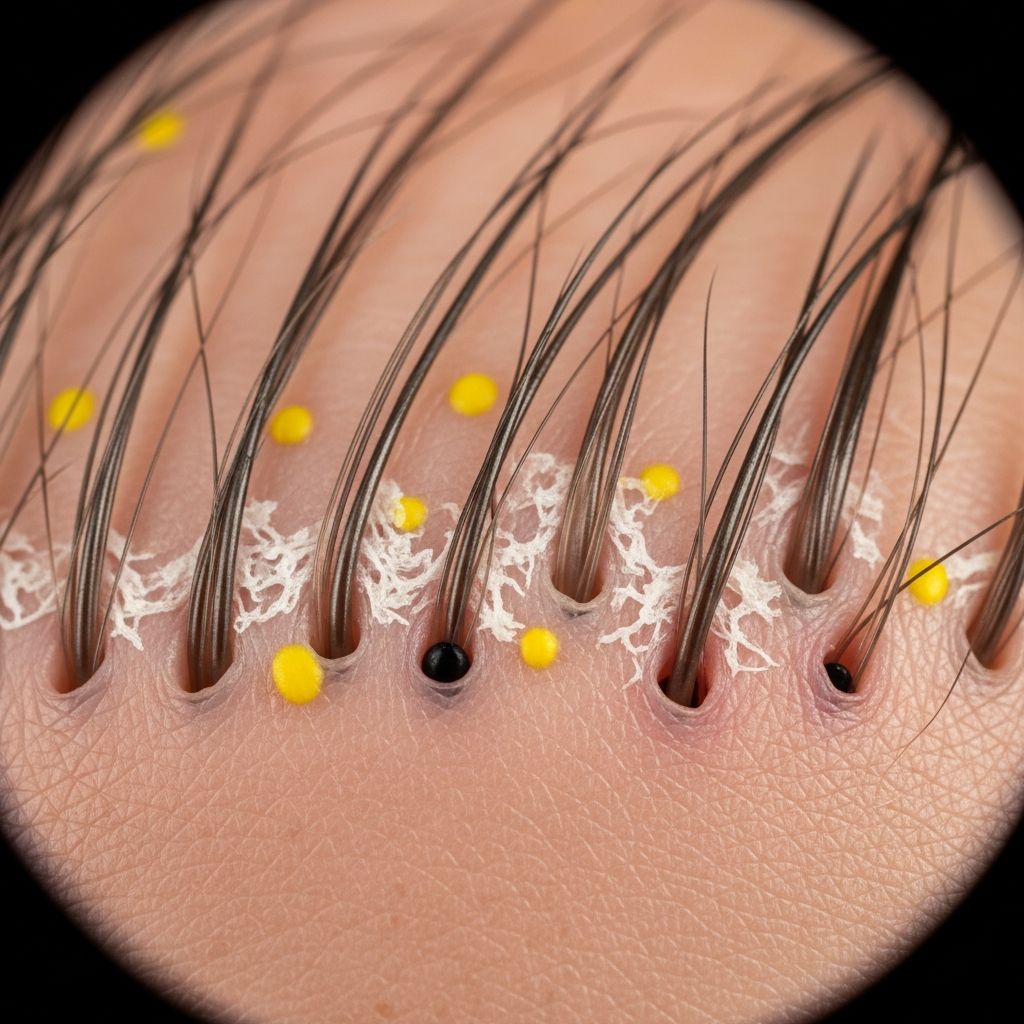
Scalp and hair disorders frequently present with focal hairless patches that require careful clinical examination to differentiate between cicatricial (scarring) and noncicatricial (non-scarring) alopecia and to identify their underlying etiology. Trichoscopy has emerged as a valuable, non-invasive diagnostic tool that enables rapid and accurate identification of different types of alopecia without the need for invasive procedures such as scalp biopsy.
The scalp contains approximately 100,000 hair follicles, and various pathological processes can affect these structures, resulting in visible hair loss. Understanding the distinct trichoscopic features of different alopecias is essential for dermatologists and primary care physicians to provide accurate diagnoses and appropriate treatment recommendations. This article explores the major causes of localized noncicatricial alopecia and their characteristic trichoscopic findings.
What is Trichoscopy?
Trichoscopy is a non-invasive dermoscopic technique that magnifies the scalp and hair structures, typically using magnification of 10x to 70x, allowing clinicians to visualize microscopic features of hair follicles, hair shafts, and surrounding scalp tissues. This imaging modality provides real-time visualization of trichoscopic patterns that are characteristic of specific hair and scalp disorders.
The advantages of trichoscopy include rapid diagnosis, elimination of patient discomfort, and cost-effectiveness compared to invasive biopsy procedures. Trichoscopy can be performed in clinical settings using handheld dermatoscopes or digital imaging systems, making it accessible to both specialists and general practitioners.
Distinguishing Cicatricial vs. Noncicatricial Alopecia
The primary distinction in alopecia classification separates conditions into two categories: cicatricial (scarring) and noncicatricial (non-scarring) alopecia. In noncicatricial alopecia, the hair follicles are structurally preserved, which means that hair loss is potentially reversible and hair regrowth is possible with appropriate treatment or resolution of the underlying cause.
Conversely, in cicatricial alopecia, permanent destruction of hair follicles occurs, resulting in irreversible hair loss. Trichoscopy helps distinguish these categories through visualization of follicular architecture and the presence or absence of inflammatory changes around hair follicles.
Main Causes of Localised Noncicatricial Alopecia
Alopecia Areata
Alopecia areata is an autoimmune condition that results from disruption of immune privilege in hair follicles, leading to lymphocytic infiltration and hair loss. It presents clinically as circular or oval patches of complete hair loss, typically appearing suddenly on the scalp, although it may affect other body areas including eyebrows, eyelashes, and body hair.
The histopathological features reveal a distinctive “bee-swarm pattern” characterized by dense lymphocytic infiltrates, primarily composed of CD8+ T cells within the follicular epithelium and CD4+ T cells surrounding hair follicles. Trichoscopic examination of alopecia areata typically reveals:
- Circular or oval patches with well-demarcated borders
- Short, broken hairs at the periphery of lesions
- “Exclamation point” hairs, which are characteristic short hairs with thicker, pigmented distal portions and thinner, depigmented proximal portions
- Absence of perifollicular erythema in most cases
- Preserved follicular architecture within affected areas
The presence of exclamation point hairs is highly suggestive of alopecia areata, particularly in early active disease. In chronic alopecia areata, follicular miniaturization may be observed. The hair-pull test, performed by gently pulling on hair at the margin of affected patches, may demonstrate anagen hairs with thick root sheaths in active disease.
Related Stories



Tinea Capitis
Tinea capitis is a superficial fungal infection of the scalp caused by dermatophytes, most commonly from the Trichophyton and Microsporum genera. This condition predominantly affects children but may present in immunosuppressed adults. The dermatophytes cause either endothrix infections (fungi within hair shafts) or ectothrix infections (fungi on the surface of hair shafts).
Clinically, tinea capitis presents with single or multiple patches of hair loss, sometimes accompanied by a distinctive “black dot” pattern where hair shafts break at the scalp surface. Associated findings may include inflammation, scaling, pustules, and pruritus.
Trichoscopic features of tinea capitis include:
- Black dot pattern (broken hair shafts at scalp level)
- Comma-shaped or corkscrew hairs
- Peripilar erythema and scaling
- Dystrophic hairs with irregular morphology
- Follicular inflammation with pustules or exudate
Definitive diagnosis requires fungal culture or KOH preparation to identify the specific dermatophyte species. Unlike alopecia areata, tinea capitis shows evidence of follicular inflammation and scaling, which aids in differential diagnosis. Systemic antifungal therapy is typically required for treatment, as topical agents alone often prove insufficient to penetrate the hair shaft.
Trichotillomania
Trichotillomania, also known as hair-pulling disorder, is a psychiatric condition characterized by recurrent, irresistible urges to pull out one’s own hair, resulting in noticeable hair loss. This condition may occur as an unconscious habit or as a conscious response to psychological stress and anxiety.
Trichoscopic examination of trichotillomania reveals distinctive features that differentiate it from other causes of localized hair loss:
- Broken hairs of varying lengths
- Short hairs with blunt or irregular tips
- Absence of follicular destruction or scarring
- Asymmetric or bizarre hair loss patterns
- Peripilar hemorrhage (bleeding around hair follicles from mechanical trauma)
- Occasional presence of hairs with root sheaths still attached
The presence of hairs with blunt or jagged broken ends, along with peripilar hemorrhage, strongly suggests trichotillomania. The hair-pull test may be negative because patients often resist pulling in clinical settings. A careful history of stress, anxiety, or the habit of hair-pulling is important for diagnosis. The condition is noncicatricial, meaning hair follicles remain intact and hair regrowth is possible with treatment of the underlying psychological condition.
Traction Alopecia
Traction alopecia results from prolonged, repeated mechanical tension applied to hair follicles through tight hairstyles such as cornrows, tight braids, extensions, or high ponytails. This condition is more common in individuals with curly or textured hair and predominantly affects women and children.
Trichoscopic findings in traction alopecia include:
- Hair loss in a linear distribution corresponding to tension pattern
- Peripilar erythema and inflammation in active phases
- Follicular inflammation with pustules or cysts
- Preserved follicles in early stages with potential for recovery
- Progressive follicular destruction and scarring if tension continues
Early recognition and cessation of tension-inducing hairstyles are crucial, as prolonged traction can lead to permanent cicatricial alopecia. The condition initially presents as noncicatricial alopecia, but if not addressed, can progress to irreversible scarring alopecia.
Temporal Triangular Alopecia
Temporal triangular alopecia, also referred to as temporal triangular alopecia of youth, is a benign, idiopathic condition characterized by triangular patches of hair loss in the temporal regions of the scalp. This condition typically presents in children or young adults and often remains unnoticed unless specifically examined.
Trichoscopic examination typically reveals:
- Well-demarcated triangular patches in temporal areas
- Preserved follicular structures
- Absence of inflammation or scaling
- Short, fine hairs within affected areas
The etiology remains unclear, but some theories suggest congenital developmental variations or early-onset androgenetic alopecia localized to temporal regions. The condition is generally asymptomatic and requires no specific treatment, although cosmetic concerns may motivate patients to seek care.
Clinical Assessment and Diagnosis
Accurate diagnosis of localized noncicatricial alopecia requires a systematic approach combining clinical history, physical examination, and trichoscopic findings. A comprehensive history should include:
- Onset and progression of hair loss (sudden vs. gradual)
- Observed pattern and distribution of hair loss
- Associated symptoms (itching, burning, tenderness, pain)
- Recent physiologic or emotional stressors
- Current medications and supplements
- Family history of alopecia or autoimmune conditions
- Recent hairstyling practices or hair treatments
- History of anxiety, stress, or psychiatric conditions
Physical examination should assess the scalp comprehensively, including evaluation of hair loss elsewhere on the body (eyebrows, eyelashes, arms, legs), presence of rashes or scaling, and signs of systemic disorders. The hair-pull test, performed by gently pulling on a group of hairs in the affected area, provides information about active shedding and the phase of hair growth. A positive hair-pull test suggests active hair loss.
Trichoscopic Features: Summary Table
| Condition | Key Trichoscopic Features | Associated Findings |
|---|---|---|
| Alopecia Areata | Exclamation point hairs, short broken hairs, well-demarcated patches | Circular/oval patches, no inflammation initially |
| Tinea Capitis | Black dot pattern, comma-shaped hairs, dystrophic hairs | Scaling, inflammation, pustules, pruritus |
| Trichotillomania | Blunt broken hairs, peripilar hemorrhage, varying hair lengths | Asymmetric loss, preserved follicles, no scarring |
| Traction Alopecia | Linear distribution, peripilar erythema, inflammation | History of tight hairstyles, follicular cysts |
| Temporal Triangular Alopecia | Triangular patches, preserved follicles, short fine hairs | Benign, asymptomatic, localized to temporal regions |
When to Perform Scalp Biopsy
While trichoscopy is a powerful diagnostic tool, there are situations where scalp biopsy may be indicated. A single biopsy typically suffices and should be taken from the edge of the lesion, avoiding sites susceptible to androgenetic alopecia when possible. Biopsy is particularly useful when:
- Trichoscopic findings are inconclusive or atypical
- Cicatricial alopecia is suspected
- Trichoscopy suggests inflammatory disorders like lichen planopilaris or frontal fibrosing alopecia
- Fungal infection is suspected but culture is negative
- Autoimmune conditions require confirmation
Histological examination during acute alopecia areata reveals dense lymphocytic infiltration of anagen hair bulbs and dermal papillae. Fungal infections can be identified through special stains such as PAS (periodic acid-Schiff).
Frequently Asked Questions (FAQs)
Q: Is trichoscopy painful or uncomfortable for patients?
A: No, trichoscopy is completely non-invasive and painless. It involves using a handheld dermatoscope or digital imaging device to magnify the scalp and hair structures. Patients experience no discomfort during the procedure, making it an ideal screening tool for hair and scalp disorders.
Q: Can trichoscopy definitively diagnose fungal infections of the scalp?
A: Trichoscopy can strongly suggest tinea capitis based on characteristic features such as black dot patterns, comma-shaped hairs, and scaling. However, definitive diagnosis requires fungal culture or KOH preparation to identify the specific dermatophyte species and confirm the diagnosis.
Q: What is the difference between alopecia areata and trichotillomania on trichoscopy?
A: Alopecia areata typically shows exclamation point hairs with preserved follicular structure and minimal inflammation, while trichotillomania presents with blunt or jagged broken hairs of varying lengths, peripilar hemorrhage, and asymmetric loss patterns. Alopecia areata has well-demarcated patches, whereas trichotillomania often shows bizarre or irregular patterns.
Q: Can traction alopecia be reversed if caught early?
A: Yes, early traction alopecia is reversible if tension-inducing hairstyles are discontinued promptly. Follicles remain intact in early stages, allowing for hair regrowth once mechanical stress is eliminated. However, if traction continues, the condition can progress to permanent cicatricial alopecia with irreversible follicular destruction.
Q: Is temporal triangular alopecia a cause for concern?
A: No, temporal triangular alopecia is a benign, idiopathic condition that typically requires no treatment. While it may be a cosmetic concern for some patients, the condition is asymptomatic and does not progress to scarring or permanent hair loss in most cases.
Q: How soon should I seek treatment for localized hair loss?
A: Early evaluation is beneficial, particularly for alopecia areata and traction alopecia, as prompt treatment may prevent progression. If you notice sudden or progressive focal hair loss, consultation with a dermatologist for trichoscopic examination and appropriate diagnosis is recommended.
Q: What is the role of the hair-pull test in diagnosis?
A: The hair-pull test helps determine whether active hair loss is occurring. A positive test (pulling easily extracts 3 or more hairs) suggests active shedding, which is helpful in differentiating conditions like telogen effluvium or active alopecia areata from stable conditions. This simple bedside test provides valuable diagnostic information.
References
- Alopecia Areata — StatPearls, National Center for Biotechnology Information (NCBI). 2024. https://www.ncbi.nlm.nih.gov/books/NBK537000/
- Alopecia (Dermatologic Disorders) — Merck Manuals Professional Edition. 2024. https://www.merckmanuals.com/professional/dermatologic-disorders/hair-disorders/alopecia
- Hair Loss: Common Causes and Treatment — American Family Physician (AAFP). 2017-09-15. https://www.aafp.org/pubs/afp/issues/2017/0915/p371.html
- Alopecia — StatPearls, National Center for Biotechnology Information (NCBI). 2024. https://www.ncbi.nlm.nih.gov/books/NBK538178/
- Alopecia — American Skin Association. 2024. https://www.americanskin.org/resource/alopecia.php
- Alopecia Areata: Symptoms, Causes, Treatment & Regrowth — Cleveland Clinic. 2024. https://my.clevelandclinic.org/health/diseases/12423-alopecia-areata
Similar Articles








Read full bio of Sneha Tete