Trichoscopy: Comprehensive Guide To Scalp And Hair Diagnostics
Non-invasive dermoscopy technique for diagnosing hair and scalp disorders with high magnification views.
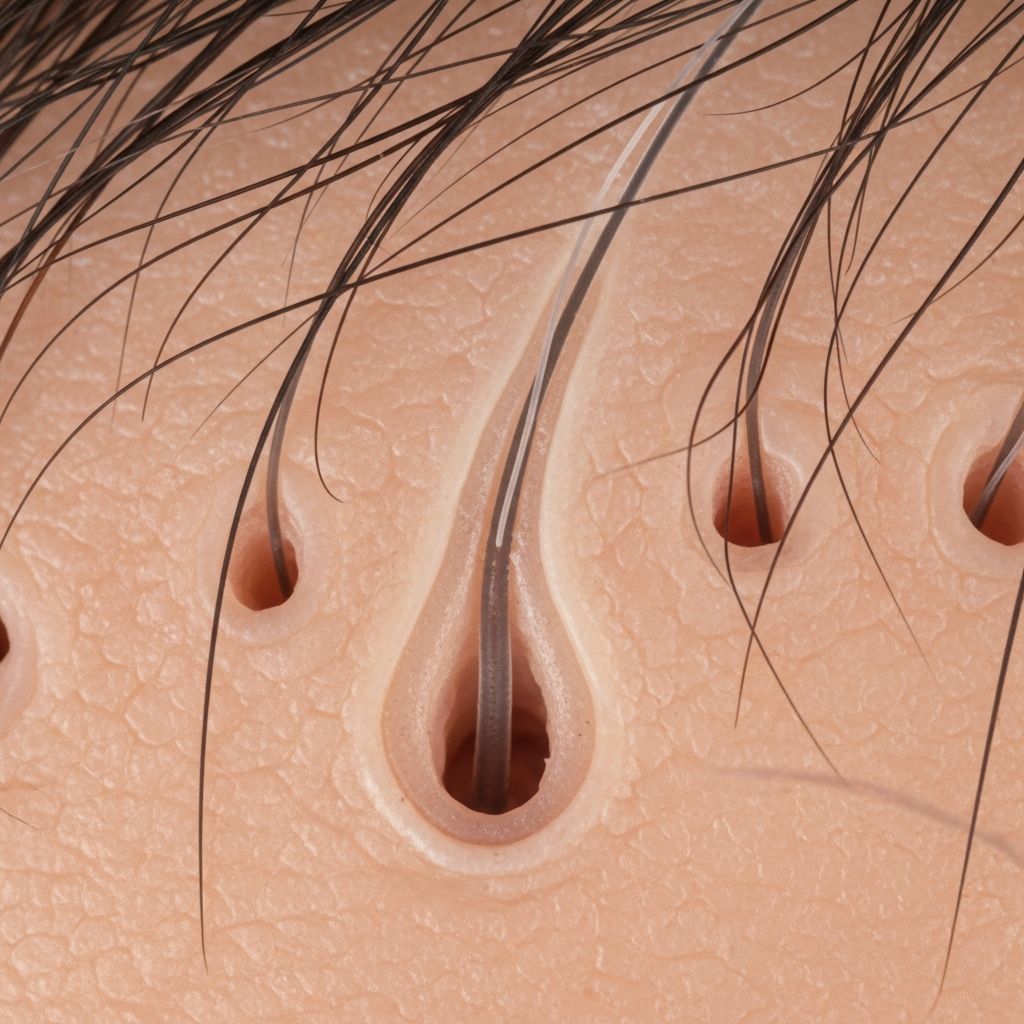
Trichoscopy is a non-invasive, low-cost dermoscopy technique that magnifies hair and scalp structures up to 160x, aiding diagnosis of most hair and scalp diseases.
Introduction
The dermatoscope, a handheld or videodermoscopy device, enhances visibility of morphologic structures invisible to the naked eye. Originally for pigmented skin lesions like melanoma, its use has expanded to non-pigmented lesions, inflammatory dermatoses, and trichoscopy for scalp, brows, and body hair evaluation.
Trichoscopy provides thorough scalp exams, reassuring patients while delivering in vivo data on pathology. Videodermoscopy uses polarized-light microscopy at 10× increments, with alcohol gel as interface, displaying real-time digital images for storage and serial assessment.
Value of trichoscopy
Trichoscopy distinguishes scarring from non-scarring alopecia, early androgenetic alopecia (AGA) from telogen effluvium, and predicts alopecia areata prognosis. It monitors treatment, guides biopsies, and supports teledermoscopy.
Research explores trichoscopy in diverse hair loss patients, enhancing diagnostic accuracy and response tracking.
Perifollicular skin
Trichoscopy examines four key structures: hair shafts, follicles, perifollicular skin, and vascular network. Thorough assessment of normal and abnormal findings ensures precise diagnosis.
Hair shafts
Hair shaft evaluation detects shape, thickness, and disorders. Abnormal shapes classify by cause:
- Uniform diameter variations: Monilethrix (beaded), pili annulati (alternating light/dark).
- Local variations: Trichorrhexis nodosa (nodes), trichoptilosis (split ends), bubble hair (air bubbles).
- Temporary variations: Tinea (comma, corkscrew hairs), trichotillomania (flame, V-sign hairs).
Thickness abnormalities like miniaturization occur in AGA. Hair casts (inner root sheath debris) appear in seborrhoeic dermatitis, psoriasis, and pogo cell hyperplasia.
Hair follicles
Follicles are assessed for:
- Multiple hairs per follicle (normal in occipital, abnormal elsewhere).
- Presence/absence.
- Size (normal, miniaturized).
- Scalp skin between follicles.
Scalp
Scalp features include interfollicular skin (honeycomb, diffuse pigmentation), hyperkeratosis (thick white scaling), and blood vessels (dotted, glomerular, comma-shaped).
Trichoscopy of generalised noncicatricial hair loss
Focuses on diffuse thinning conditions like AGA and telogen effluvium. Assess frontal midline (2cm from hairline) vs. occipital.
Androgenetic alopecia
Multifactorial, involving DHT, estrogen lack, prolactin issues. Features:
- Diagnostic: Perifollicular brown halo, thin hairs (<3 hairs/follicle unit).
- Other: Honeycomb pigmentation, arteriolar crowns.
Alopecia areata
T-cell mediated autoimmune disease. Subtypes: patchy, ophiasis, diffuse, totalis, universalis. Nail changes: pitting, ridges. Trichoscopic features vary by activity:
- Yellow dots (empty follicles), black dots (cadaver hairs), broken hairs, exclamation mark hairs, short vellus hairs (<3mm).
Meta-analysis confirms yellow dots, black dots, broken hairs, short vellus hairs, tapering hairs as characteristic; yellow dots/short vellus most sensitive, black dots/tapering most specific.
Trichoscopy of localised noncicatricial hair loss
Rapid diagnosis of focal patches:
- Alopecia areata: Yellow/black dots, exclamation marks.
- Tinea capitis: Comma/corkscrew hairs.
- Trichotillomania: Broken hairs, trichopilar casts.
- Traction alopecia: Reduced follicles, pencil hairs.
- Temporal triangular alopecia: Short vellus hairs only.
Related Stories



Trichoscopy of localised cicatricial hair loss
Primary cicatricial alopecias destroy follicles permanently. Features: absent follicular openings, fibrosis, perifollicular scaling (lichen planopilaris), perifollicular erythema.
Other applications
Trichoscopy identifies mimics of AGA, monitors treatment (e.g., increased vellus hairs in AA response), and evaluates shaft disorders like Netherton, pili annulati.
Frequently Asked Questions (FAQs)
What is trichoscopy?
A non-invasive method using dermoscopy to examine hair and scalp at 20-160x magnification.
How does trichoscopy help diagnose alopecia areata?
Detects yellow dots, black dots, broken/tapering hairs, vellus hairs; tracks treatment response.
Can trichoscopy differentiate scarring from non-scarring alopecia?
Yes, via follicular openings, fibrosis, scaling.
Is trichoscopy painful?
No, it’s non-invasive with gel interface.
What magnifications are used?
20x to 160x, often in 10x increments.
Diagnostic Table: Key Trichoscopic Features
| Condition | Key Features |
|---|---|
| Alopecia Areata | Yellow dots, black dots, exclamation marks, vellus hairs |
| Androgenetic Alopecia | Miniaturized hairs, brown halo, honeycomb pigment |
| Tinea Capitis | Comma hairs, corkscrew hairs |
| Lichen Planopilaris | Perifollicular scaling, absent ostia |
References
- Trichoscopy: A Complete Overview — DermNet NZ. 2023. https://dermnetnz.org/topics/trichoscopy
- Trichoscopy of Generalised Noncicatricial Hair Loss — DermNet NZ. 2023. https://dermnetnz.org/topics/trichoscopy-of-generalised-noncicatricial-hair-loss
- Trichoscopy pattern in alopecia areata: A systematic review — NIH/PMC. 2023-06-01. https://pmc.ncbi.nlm.nih.gov/articles/PMC10236002/
- Trichoscopy of Localised Noncicatricial Hair Loss — DermNet NZ. 2023. https://dermnetnz.org/topics/trichoscopy-of-localised-noncicatricial-hair-loss
- Trichoscopy: A New Method for Diagnosing Hair Loss — Journal of Drugs in Dermatology. 2008. https://jddonline.com/articles/trichoscopy-a-new-method-for-diagnosing-hair-loss-S1545961608P0651X
- Trichoscopy of Localised Cicatricial Hair Loss — DermNet NZ. 2023. https://dermnetnz.org/topics/trichoscopy-of-localised-cicatricial-hair-loss
Similar Articles








Read full bio of Sneha Tete