Trichostasis Spinulosa: Causes, Symptoms, and Treatments
Understanding this common follicular disorder: causes, clinical features, diagnosis, and effective treatment options.
Trichostasis Spinulosa: A Common Yet Underdiagnosed Follicular Disorder
Trichostasis spinulosa (TS) is a benign but frequently overlooked skin condition that affects the hair follicles, characterized by the accumulation and retention of multiple fine vellus hairs within a single follicle. Despite being relatively common, the condition remains underdiagnosed and underreported, often because patients experience minimal or no subjective symptoms. The disorder predominantly affects adults, with the elderly being most commonly affected, though it can occur at any age after adolescence. While rarely causing medical complications, the cosmetic appearance of the lesions typically prompts individuals to seek dermatological care.
Demographics and Distribution
Trichostasis spinulosa shows no clear sexual predilection in terms of actual occurrence; however, females are significantly more concerned about the condition and more likely to seek treatment. The onset of TS is usually observed after adolescence, with elderly individuals being most affected, potentially due to prolonged actinic damage over time. Childhood cases are exceptionally rare.
The condition preferentially involves body areas with abundant sun exposure and numerous pilosebaceous units. The most commonly affected sites include:
- Face, particularly the tip of the nose, ala nasi, and cheeks
- Neck and chest regions
- Upper arms
- Interscapular regions (upper back)
Truncal distribution of asymptomatic lesions is often attributed to continuous pressure from garments. In some cases, normal-appearing follicles are interspersed with those containing hyperkeratotic spinules, while in other cases, all follicles in the involved area become plugged.
Pathogenesis and Causes
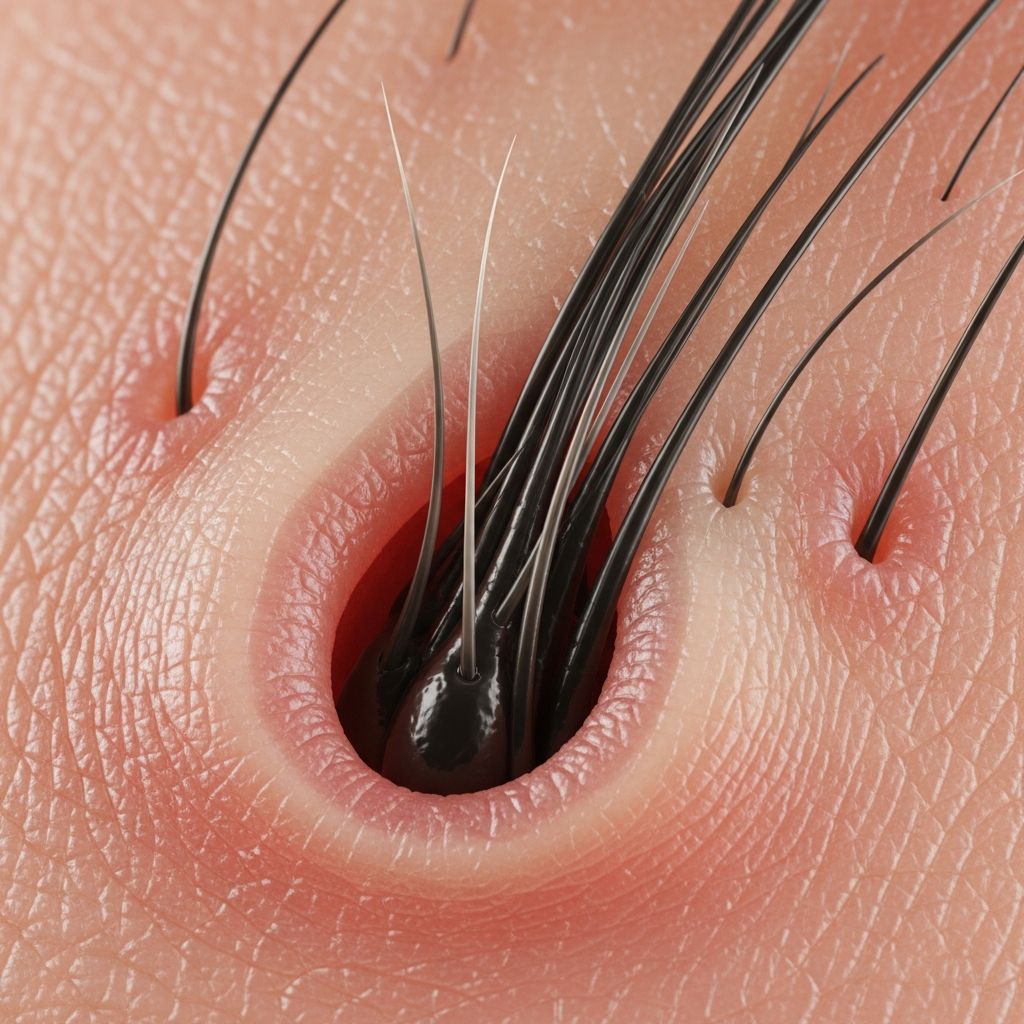
The exact pathogenesis of trichostasis spinulosa remains incompletely understood, though researchers have identified several contributing mechanisms. The chief pathological feature involves the entrapment of a bundle of tiny vellus hairs encircled by a keratinous sheath within a dilated follicular infundibulum.
One prevailing hypothesis suggests that disturbance in the dynamics of the hair papilla and subsequent exaggerated papillary cyclical activity leads to the successive production and retention of vellus telogen club hairs from a single hair matrix within the pilosebaceous follicle. This abnormal hair cycle results in the accumulation of multiple hair shafts that cannot exit the follicle normally.
Associated Conditions and Secondary Trichostasis Spinulosa
While primary TS presents as an isolated finding, sometimes discovered incidentally during dermatological examinations for unrelated conditions, secondary TS can develop in association with various cutaneous conditions. The condition has been described in association with space-occupying lesions that constrict follicle infundibulae through tumor cells or tumor-related fibrosis, including:
- Melanocytic nevi
- Collagenoma
- Seborrheic keratosis
- Syringomas
- Follicular sebaceomas (trichofolliculomas)
- Nodular basal cell carcinomas
Clinical Features and Presentation
Trichostasis spinulosa manifests with characteristic clinical findings that, while distinctive, are often confused with other common skin conditions. The lesions typically appear as minimally keratotic plugs that either project over the follicular orifices containing central dark hairs (resembling paintbrush bristles) or appear embedded within the orifices as small comedo-like dots. This appearance leads patients to frequently mistake the lesions for blackheads.
Related Stories



The clinical presentation typically includes:
- Small, dark follicular papules on the nose, cheeks, forehead, back, or chest
- Rough, spiny, or sandpapery skin texture
- Visible clusters of fine hairs emerging from a single follicle
- Absence of significant redness, swelling, or pus
- Occasional mild itching, tingling, or irritation in warm or humid conditions
The key distinguishing feature between TS and acne comedones is that these lesions contain clusters of hair shafts rather than oil and keratin debris. Patients rarely complain of roughness, scaling, or pruritus; however, erythema, edema, and secondary pustulation may develop if lesions have been manipulated to express keratotic material. Psychological distress from the appearance of the lesions is typically what prompts patients to seek care.
Clinical Variants
Two distinct clinical variants of trichostasis spinulosa have been identified:
Nonpruritic Type: This classical variant is frequently seen in elderly individuals with localized distribution, commonly affecting the tip of the nose, ala nasi, chin, cheeks, face, or interscapular region.
Pruritic Type: This variant is observed in young adults and is characterized by widespread distribution, extra-facial involvement, and association with other follicular hyperkeratotic disorders, chronic renal failure, and benign cutaneous tumors.
Pathophysiology: How the Condition Develops
The development of trichostasis spinulosa follows a gradual sequence of events within the follicle:
- Follicle blockage: Accumulation of keratin, oil, and dead skin cells obstruct the follicle opening
- Trapped hairs: Fine vellus hairs become unable to exit the follicle and begin clustering inside
- Plug formation: Over time, a dense cluster of hairs forms a visible plug resembling a dark spiny dot
- Lesion appearance: The follicle may raise slightly, creating small papules that are usually painless and non-inflammatory
Diagnosis
The diagnosis of trichostasis spinulosa is typically based on clinical presentation, dermoscopy, and occasionally histopathology. Dermoscopic examination reveals characteristic features including a bundle of vellus hairs projecting together and keratotic plugs in dilated follicles. Recent studies have identified two new dermoscopic features: dark concentric hair forming a circle under the horny layer (circle hair) and hairs rolled in spiral with peripilar casts (rolled hair).
Reflectance confocal microscopy (RCM), a high-resolution imaging technique that allows in vivo visualization of upper skin layers, shows dilated follicular openings consisting of moderate-refractive keratotic substitutes and/or hyper-refractive numerous vellus hairs. These findings correspond well to histologic horny follicular plugs and tufts of vellus hairs, respectively.
The combination of dermoscopy and RCM techniques, along with clinical findings, may provide a definitive diagnosis while potentially limiting the need for invasive skin biopsy.
Differential Diagnoses
Trichostasis spinulosa is frequently confused with other common follicular conditions due to its clinical appearance. The most common diagnostic confusion occurs with:
- Acne comedones (blackheads): While superficially similar in appearance, TS lesions contain hair bundles rather than oil and keratin
- Keratosis pilaris: A distinct follicular hyperkeratotic disorder that may coexist with TS in some patients
- Eruptive vellus hair cysts: Another follicular condition that may present alongside TS
Proper diagnosis is essential because these conditions require different treatment approaches and management strategies.
Treatment Options
Treatment of trichostasis spinulosa remains challenging due to the scarcity of high-quality evidence in the medical literature. Current therapeutic regimens have been guided largely by case reports, with the mainstay of treatment being keratolytics and topical retinoids.
Topical Treatments
Keratolytic agents work by promoting the breakdown and removal of the keratotic plugs, potentially facilitating the extrusion of trapped hairs. Common keratolytic options include salicylic acid-based products and other chemical exfoliants. Topical retinoids, such as tretinoin and adapalene, help normalize follicular keratinization and may improve the condition over extended treatment periods.
Laser and Light-Based Therapies
Recently, lasers have emerged as a promising treatment modality for trichostasis spinulosa. These light-based therapies offer a more targeted approach to treating the condition and may provide superior cosmetic results compared to topical treatments alone. The mechanism of action likely involves thermal destruction of the abnormal hair follicles and reduction of hair production.
Extraction and Manual Removal
While mechanical extraction of the keratotic plugs may provide temporary cosmetic improvement, it is generally not recommended as a primary treatment due to the high recurrence rate and potential for complications such as infection or scarring.
Complications
Trichostasis spinulosa is considered a benign condition that rarely causes significant medical complications. However, complications may arise secondary to patient manipulation of the lesions. When lesions are manipulated or aggressively expressed, erythema, edema, and secondary pustulation may develop. Additionally, repeated irritation or attempted extraction may lead to temporary inflammation or scarring.
Prevention and Outcome
While prevention of trichostasis spinulosa is not always possible due to its underlying follicular dynamics, certain practices may help minimize progression or reduce exacerbation:
- Avoid manipulation, picking, or aggressive extraction of lesions
- Maintain regular gentle skin care with appropriate cleansing
- Use non-comedogenic skincare and cosmetic products
- Apply sun protection to prevent further actinic damage, particularly in elderly individuals
- Maintain a consistent skincare regimen with keratolytic or retinoid products as recommended by a dermatologist
With appropriate skincare, topical therapies, and cosmetic treatments, most patients can achieve smooth, healthy-looking skin and reduce the cosmetic impact of the condition on their quality of life. The prognosis is generally favorable, though the chronic nature of the disorder means that ongoing management may be necessary to maintain results.
Frequently Asked Questions
Q: Is trichostasis spinulosa contagious?
A: No, trichostasis spinulosa is not contagious. It is a benign follicular disorder that results from the entrapment of vellus hairs within follicles and cannot be transmitted from person to person.
Q: Can trichostasis spinulosa be cured permanently?
A: While complete permanent cure is difficult due to the chronic nature of the condition, symptoms can be effectively managed with ongoing treatment. Laser therapies have shown promising results, but recurrence is possible and maintenance therapy may be necessary.
Q: What is the difference between trichostasis spinulosa and blackheads?
A: Trichostasis spinulosa lesions contain bundles of fine hair shafts surrounded by keratin, whereas blackheads (comedones) are filled with oil and dead skin cells. Despite similar appearance, they require different treatment approaches.
Q: Is trichostasis spinulosa dangerous or harmful to health?
A: No, trichostasis spinulosa is a benign condition that rarely causes medical complications. The primary concern is cosmetic appearance rather than health risk, unless secondary infection occurs from manipulation.
Q: Can children develop trichostasis spinulosa?
A: Childhood cases of trichostasis spinulosa are exceptionally rare. The condition typically develops after adolescence, with onset usually occurring in adulthood and more commonly in elderly individuals.
Q: Which body parts are most commonly affected by trichostasis spinulosa?
A: The nose, cheeks, forehead, and face are the most commonly affected areas. The condition can also occur on the neck, chest, upper arms, and interscapular regions, typically in areas with abundant sun exposure.
References
- Trichostasis Spinulosa Symptoms, Doctors, Treatments, Advances — MediFind. Accessed 2026-01-28. https://www.medifind.com/conditions/trichostasis-spinulosa/5270
- Trichostasis spinulosa: An entity with cosmetic concern — Cosmoderma. Accessed 2026-01-28. https://cosmoderma.org/trichostasis-spinulosa-an-entity-with-cosmetic-concern/
- Two New Dermoscopic Features of Trichostasis Spinulosa and Reflectance Confocal Microscopy Characteristics — National Institutes of Health. Accessed 2026-01-28. https://pmc.ncbi.nlm.nih.gov/articles/PMC9946116/
- Trichostasis spinulosa — Weill Cornell Medicine VIVO. Accessed 2026-01-28. https://vivo.weill.cornell.edu/display/pubid4066099
- Trichostasis Spinulosa — DermNet. Accessed 2026-01-28. https://dermnetnz.org/topics/trichostasis-spinulosa
Similar Articles








Read full bio of Sneha Tete