Tricuspid Valve: Anatomy, Function & Health
Understanding the tricuspid valve: its structure, function, and role in heart health.
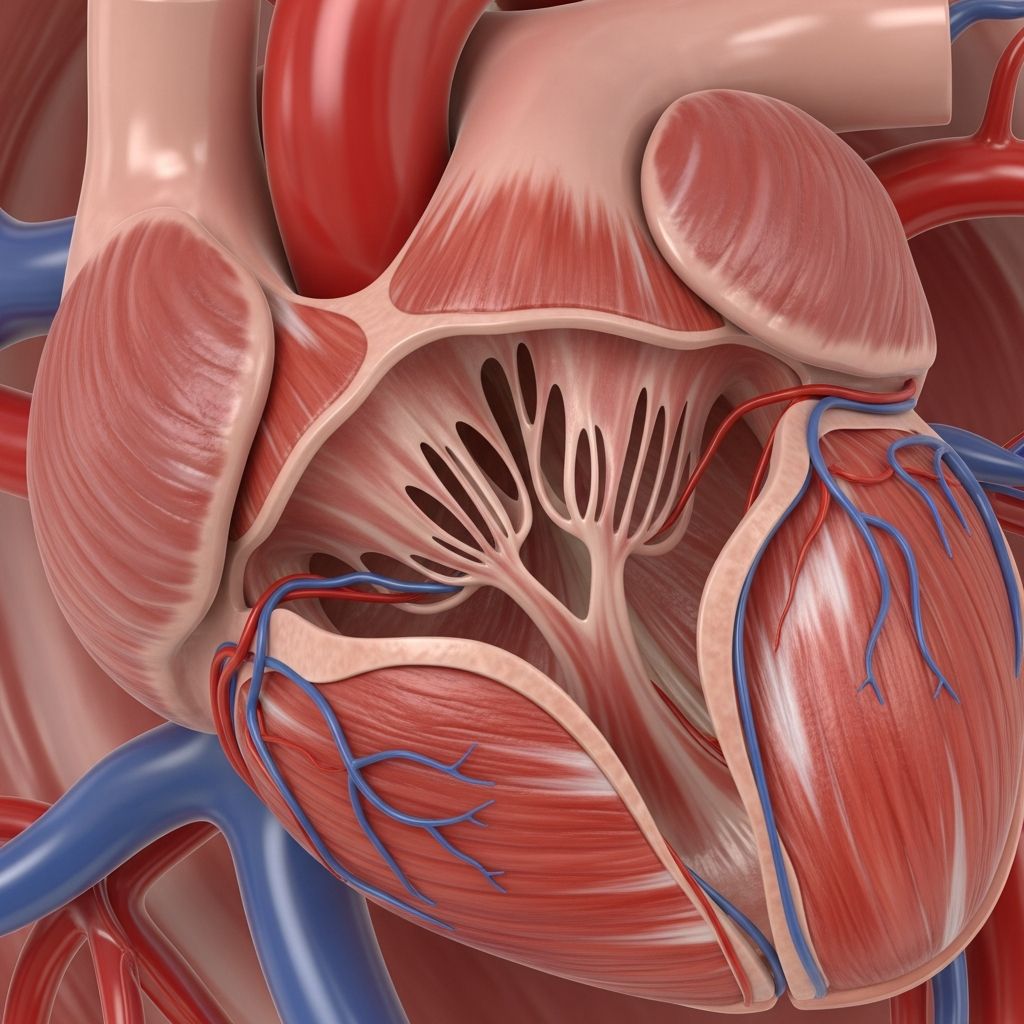
The human heart is a remarkable organ that pumps blood throughout your body, delivering oxygen and nutrients to every cell. Central to this vital function are four heart valves that ensure blood flows in the correct direction. Among these crucial structures, the tricuspid valve plays an essential role in managing blood circulation on the right side of your heart. Understanding the anatomy and function of the tricuspid valve can help you appreciate how your cardiovascular system works and recognize when problems may arise.
What Is the Tricuspid Valve?
The tricuspid valve is one of four heart valves that regulate blood flow through your heart. Located on the right side of your heart, it sits between the right atrium (upper chamber) and the right ventricle (lower chamber). The name “tricuspid” comes from its structure: it has three leaflets, or flaps, that work together to ensure unidirectional blood flow.
This valve serves a critical function in your cardiovascular system. It allows oxygen-poor blood returning from your body through the veins to flow into the right atrium and then down into the right ventricle. Once the right ventricle contracts, the tricuspid valve closes to prevent blood from flowing backward, directing it instead toward the lungs where it picks up fresh oxygen.
Anatomy of the Tricuspid Valve
To understand how the tricuspid valve works, it’s important to examine its structural components in detail.
The Annulus
The tricuspid valve is supported by a tough, fibrous ring called the annulus. This ring provides structural support and acts as an anchor point for the valve leaflets. The annulus of the tricuspid valve has a distinctive saddle shape with a bimodal pattern, featuring two high points oriented toward the right atrium and two low points oriented toward the right ventricle. In healthy individuals, the tricuspid annular area measures approximately 9.72 ± 2.08 cm on three-dimensional echocardiography. The valve annulus is positioned at approximately a 45-degree angle to the sagittal plane, facing anterolaterally and inferiorly.
The Leaflets
The tricuspid valve consists of three leaflets, or cusps, that are attached to the annulus. These leaflets are thin, flexible structures made of specialized cardiac tissue that allow for precise opening and closing movements. Each leaflet moves in coordination with the others to create a tight seal when the valve closes.
Supporting Structures
Beyond the leaflets themselves, the tricuspid valve is supported by several important structures. Strong cords of tissue called chordae tendinae connect the valve leaflets to the heart muscle, providing support and limiting their range of motion. Additionally, papillary muscles attached to the right ventricle wall help control the movement of these cords. Together, these structures ensure that the valve leaflets move smoothly and close completely with each heartbeat.
How the Tricuspid Valve Functions
Normal Valve Operation
The tricuspid valve operates through a synchronized cycle that corresponds with the heartbeat. When your heart relaxes during the filling phase, called diastole, the tricuspid valve opens, allowing blood to flow from the right atrium into the right ventricle. The valve leaflets separate, creating an opening that permits unrestricted blood flow between these two chambers.
Related Stories



As your heart contracts during the pumping phase, called systole, the tricuspid valve closes. This closure prevents blood from flowing backward into the right atrium while the right ventricle pushes blood toward the lungs through the pulmonary artery. This one-way mechanism is essential for maintaining proper circulation and preventing blood from pooling in the atrium.
Blood Flow Mechanics
The tricuspid valve manages the flow of deoxygenated blood from your body’s veins back to your heart and lungs. Your superior and inferior vena cava drain blood from your upper and lower body, respectively, into the right atrium. The tricuspid valve then allows this blood to fill the right ventricle. When the ventricle contracts, the valve closes and blood is propelled through the pulmonary valve into the pulmonary artery, which carries it to both lungs for oxygenation.
Common Tricuspid Valve Problems
Tricuspid Regurgitation
Tricuspid regurgitation occurs when the tricuspid valve doesn’t close properly, allowing blood to leak backward into the right atrium. This can range from trivial, with no effects on your body, to severe, with significant impact on heart function. When the valve leaflets fail to coapt, or come together completely, gaps remain that permit backward blood flow.
Causes of Valve Problems
Tricuspid valve problems can result from various causes. Primary tricuspid regurgitation occurs when the valve itself is anatomically abnormal due to conditions such as rheumatic heart disease, valve prolapse, congenital diseases like Ebstein anomaly, infective endocarditis, blunt trauma, or complications from procedures like endomyocardial biopsy.
Functional tricuspid regurgitation develops when the valve’s supporting structures change. As the right atrium and right ventricle enlarge, the tough ring supporting the valve leaflets, called the annulus, may grow wider in a process called annular dilation. When the annulus becomes too wide, the leaflets cannot fully come together, leading to leakage. In functional tricuspid regurgitation, the annulus becomes larger, flatter, and more circular, losing its normal saddle shape. Research shows the anteroposterior distance increases by approximately 80%, while the mediolateral distance increases by only 34%, creating asymmetric dilation.
Additionally, the strong cords of tissue connecting the leaflets to the heart muscle may become tethered, or limited in their range of motion, preventing proper valve closure.
Tricuspid Stenosis
Tricuspid stenosis occurs when the valve becomes stiff or narrow, restricting blood flow from the right atrium to the right ventricle. This condition may result from rheumatic heart disease, congenital abnormalities, or other structural changes.
Tricuspid Atresia
Tricuspid atresia is a congenital condition where the tricuspid valve doesn’t form properly at birth, preventing normal blood flow between the right atrium and ventricle. This is a serious condition that typically requires surgical intervention.
Symptoms and Health Impact
Mild tricuspid valve disease may not cause any noticeable symptoms or problems. However, when tricuspid valve disease becomes moderate to severe, it can enlarge the heart and cause permanent damage over time.
Common symptoms of significant tricuspid valve disease include fatigue, shortness of breath, and reduced exercise tolerance. If left untreated, moderate to severe backward blood flow through the tricuspid valve can make your heart work harder and take a toll on your cardiovascular system. This can eventually lead to complications such as heart failure.
Diagnosis and Imaging
Healthcare providers use several imaging techniques to assess tricuspid valve function. Real-time three-dimensional transesophageal echocardiography (3D TTE) allows visualization of all three leaflets moving during the cardiac cycle, their commissures, and their attachment to the tricuspid annulus. This imaging is particularly useful for obtaining a short-axis view of the tricuspid valve.
Computed tomography (CT) offers in-depth assessment of various dimensions relevant to the tricuspid valve, including the dimensions of the right ventricle, tricuspid valve annulus, and the annular distance from the right ventricular apex. CT imaging can also evaluate venous anatomy and guide access-site selection for potential interventions.
Treatment Options
Conservative Management
For mild tricuspid valve disease, monitoring may be the primary approach, with regular follow-up appointments and imaging studies to track any progression.
Surgical Repair and Replacement
When tricuspid valve disease causes significant symptoms or threatens heart function, surgical intervention may be necessary. Usually, repairing the tricuspid valve and preserving your own heart tissue is preferred over replacement. However, if there is too much damage to the valve and surrounding tissue, a replacement valve may be required.
Traditional tricuspid valve surgery requires open-heart surgery, though less invasive procedures may also be available.
Transcatheter Interventions
Recent advances in cardiac care have introduced transcatheter devices for tricuspid valve repair. The MitraClip in the tricuspid position (TriClip) is currently the most utilized device for tricuspid valve repair. Other devices like the TriCinch system have been developed for percutaneous tricuspid valve remodeling, using transfemoral fixation of a corkscrew into the tricuspid valve annulus connected to a self-expanding stent through a Dacron band. Transcatheter tricuspid valve interventions appear to be associated with improvement in patient quality of life.
Special Considerations
Pacemaker and ICD-Related Tricuspid Regurgitation
Tricuspid regurgitation can be caused or worsened by pacemaker or implantable cardiac defibrillator (ICD) leads. This occurs due to bulky leads and apical lead placement that can alter right ventricular geometry, leading to tricuspid regurgitation. Leaflet perforation during lead placement, lead impingement or adherence, and lead entrapment in the subvalvular apparatus of the tricuspid valve are other mechanisms that can result in regurgitation.
Associated Valve Disease
Tricuspid valve problems can occur alongside other heart valve diseases, such as mitral valve or aortic valve problems. Healthcare providers must assess all heart valves to develop a comprehensive treatment plan.
Frequently Asked Questions
Q: What is the primary function of the tricuspid valve?
A: The tricuspid valve regulates blood flow from the right atrium to the right ventricle and prevents blood from flowing backward. It ensures oxygen-poor blood from your body is properly directed to your lungs for oxygenation.
Q: Why is it called the tricuspid valve?
A: The valve is named “tricuspid” because it has three leaflets or cusps. These three flaps work together to control blood flow through the valve.
Q: What causes tricuspid valve leakage?
A: Tricuspid valve leakage can result from the annulus (supporting ring) becoming too wide, preventing the leaflets from closing properly, or from the cords of tissue supporting the leaflets becoming tethered and limited in motion. It can also result from anatomical abnormalities or trauma.
Q: Is mild tricuspid valve disease serious?
A: Mild tricuspid valve disease typically does not cause symptoms or significant problems. However, moderate to severe cases can enlarge the heart and cause permanent damage over time, potentially leading to heart failure.
Q: What imaging is used to diagnose tricuspid valve problems?
A: Healthcare providers use echocardiography, including three-dimensional imaging, and computed tomography (CT) to assess tricuspid valve structure and function. These imaging techniques help determine the severity of valve disease and guide treatment decisions.
Q: Can tricuspid valve disease be treated without surgery?
A: Mild tricuspid valve disease may be managed through monitoring and medications. However, moderate to severe disease typically requires surgical repair or replacement, though newer transcatheter interventions offer less invasive options in some cases.
Conclusion
The tricuspid valve is a sophisticated anatomical structure that plays a vital role in maintaining proper blood circulation through your heart and lungs. Its three leaflets, supported by the annulus and various cardiac structures, work in perfect synchronization to ensure blood flows in the correct direction. Understanding the anatomy and function of the tricuspid valve helps illustrate the remarkable complexity of the human cardiovascular system. When tricuspid valve disease develops, ranging from mild regurgitation to severe stenosis, modern medical imaging and treatment options can help manage the condition and prevent serious complications. If you have concerns about your heart health or tricuspid valve function, consulting with a qualified healthcare provider is essential for proper diagnosis and personalized treatment planning.
References
- Tricuspid Valve Regurgitation: Symptoms & Treatment — Cleveland Clinic. 2024. https://my.clevelandclinic.org/health/diseases/21627-tricuspid-valve-regurgitation
- Functional tricuspid regurgitation: Feasibility of transcatheter intervention — Cleveland Clinic Journal of Medicine, 2020. https://www.ccjm.org/content/87/5_suppl_1/4
- Tricuspid Valve Replacement & Repair — Cleveland Clinic. 2024. https://my.clevelandclinic.org/health/treatments/17579-tricuspid-valve-surgery
- Tricuspid Regurgitation: What You Need to Know — Cleveland Clinic. 2024. https://my.clevelandclinic.org/podcasts/love-your-heart/tricuspid-regurgitation-what-you-need-to-know
- Tricuspid Valve Disease: Causes, Symptoms and Treatment — Cleveland Clinic. 2024. https://my.clevelandclinic.org/health/diseases/17578-tricuspid-valve-disease
Similar Articles








Read full bio of Sneha Tete