Tricuspid Valve Replacement And Repair: Comprehensive Guide
Complete guide to tricuspid valve repair and replacement procedures for heart health.
Tricuspid Valve Replacement and Repair: A Comprehensive Guide
The tricuspid valve is a critical component of your heart’s circulatory system, responsible for regulating blood flow from the right atrium to the right ventricle. When this valve becomes damaged or diseased, it can impair heart function and lead to serious complications. Tricuspid valve replacement and repair are surgical procedures designed to restore proper valve function and improve overall cardiac health. Understanding these procedures, their indications, and expected outcomes can help patients make informed decisions about their treatment options.
Understanding the Tricuspid Valve
The tricuspid valve consists of three leaflets that open and close with each heartbeat. These leaflets work like one-way doors, allowing blood to flow from the right atrium into the right ventricle while preventing backflow. When the valve becomes diseased or damaged, blood may leak backward, a condition known as tricuspid regurgitation or insufficiency. This can lead to blood backing up into the venous system, causing fluid accumulation in the liver, abdomen, and legs.
The tricuspid valve can be affected by various conditions including rheumatic heart disease, endocarditis, trauma, carcinoid syndrome, and secondary tricuspid regurgitation caused by right ventricular dilation from other cardiac conditions. Prolonged tricuspid valve disease can result in right ventricular dysfunction and reduced exercise capacity.
When is Tricuspid Valve Surgery Recommended?
Tricuspid valve surgery may be recommended when medical management fails to control symptoms or when the valve disease progresses significantly. Your cardiologist or cardiac surgeon will evaluate the severity of your condition using various diagnostic tests and imaging studies.
Indications for Surgery
Surgery is typically considered for the following scenarios:
– Severe tricuspid regurgitation: When the valve leaks significantly, preventing proper blood flow regulation- Symptomatic patients: Those experiencing shortness of breath, fatigue, or fluid retention related to tricuspid valve disease- Progressive valve deterioration: When the valve shows signs of ongoing damage that may lead to right ventricular dysfunction- Concomitant cardiac surgery: During procedures on other heart valves or structures, severely diseased tricuspid valves are typically addressed simultaneously- Right ventricular dysfunction: When the valve disease has caused enlargement or weakening of the right ventricle- Failed previous repairs: When prior valve repair procedures have not provided adequate long-term results
Tricuspid Valve Repair Procedures
Valve repair is generally preferred over replacement when anatomically feasible because it preserves the patient’s native valve tissue and avoids the complications associated with prosthetic valves. Several repair techniques are available, and your surgeon will select the most appropriate approach based on the underlying pathology.
Annuloplasty
Annuloplasty is the most common repair technique for tricuspid valve disease, particularly when the valve leaflets are structurally normal but the valve annulus (the ring-shaped structure supporting the leaflets) has dilated. During this procedure, the surgeon places a rigid or semi-rigid ring around the valve annulus to reduce its diameter, bringing the leaflets into better coaptation and eliminating or reducing the leak. This technique has proven effective and is associated with good long-term outcomes when the underlying cause of dilation is addressed.
Related Stories



Leaflet Techniques
When the valve leaflets are prolapsing or have tissue defects, the surgeon may employ various leaflet-based techniques. These may include plication of prolapsing leaflets, commissurotomy to separate fused leaflet commissures, or patch repair of leaflet perforations. The specific technique depends on the pathological findings identified during surgery.
Papillary Muscle and Chordae Procedures
In some cases, papillary muscle displacement or chordae tendinae abnormalities contribute to valve insufficiency. Surgical correction of these structures can improve leaflet coaptation and restore valve competence. These specialized techniques require expertise and careful assessment during the preoperative evaluation.
Tricuspid Valve Replacement
When repair is not feasible due to severe structural damage, extensive calcification, or infection, valve replacement becomes necessary. Two main types of prosthetic valves are available, each with distinct advantages and disadvantages.
Mechanical Valves
Mechanical prosthetic valves are durable and provide excellent long-term hemodynamic performance. However, they require lifelong anticoagulation therapy with warfarin to prevent blood clots from forming on the valve. This mandatory anticoagulation increases bleeding risk and requires regular monitoring through blood test measurements (INR values). Mechanical valves produce an audible clicking sound with each heartbeat, which some patients notice but most adapt to over time.
Bioprosthetic Valves
Bioprosthetic valves, made from animal tissue or engineered materials, do not require long-term anticoagulation in most cases. However, they are subject to structural deterioration over time, typically lasting 10-15 years before requiring reoperation. Bioprosthetic valves are often preferred for elderly patients or those with contraindications to anticoagulation, though younger patients may require multiple replacements during their lifetime.
Surgical Approaches
Median Sternotomy
The traditional approach for tricuspid valve surgery involves opening the breastbone (sternum) down the middle to access the heart. This provides excellent visibility of the tricuspid valve and allows the surgeon to work effectively within the pericardium. While this approach requires a longer incision and recovery period, it remains the standard for most tricuspid valve surgeries.
Minimally Invasive Approaches
Right anterior thoracotomy or small right-sided incisions may be used in selected cases. These approaches can reduce postoperative pain and accelerate recovery compared to median sternotomy. However, minimally invasive techniques require specialized expertise and may not be suitable for all patients or valve conditions.
The Surgical Procedure
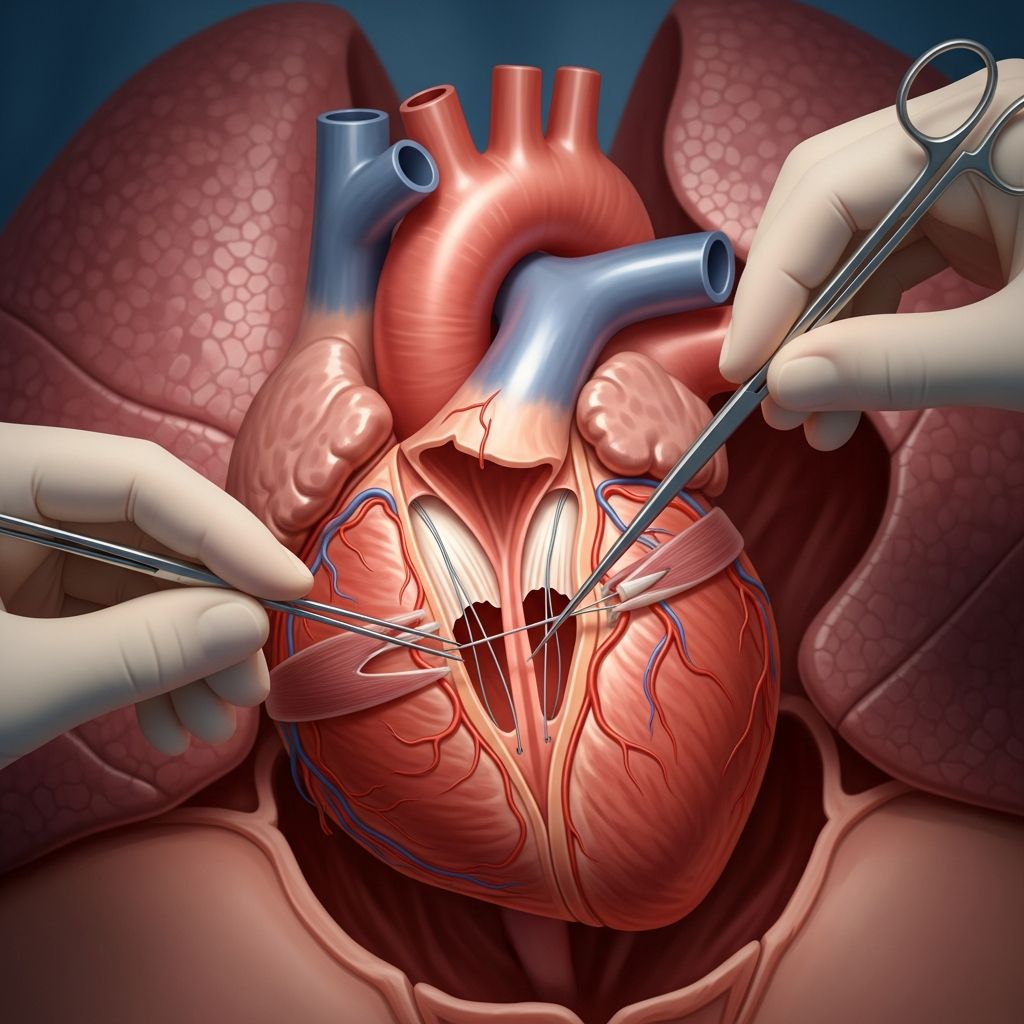
Tricuspid valve surgery typically involves placing the patient on cardiopulmonary bypass (heart-lung machine) to maintain circulation during the procedure. The surgeon makes an incision to access the tricuspid valve, carefully examines the valve structure and function, and then performs the necessary repair or replacement. The procedure takes approximately 2-3 hours, though this time may vary depending on the complexity of the valve disease and whether concomitant procedures are performed.
For repairs, the surgeon assesses the mobility and integrity of each leaflet, evaluates the annulus dimensions, and determines the most appropriate corrective technique. For replacements, the surgeon carefully removes the diseased valve and secures the prosthetic valve in the correct position with sutures.
Recovery and Postoperative Course
Patients typically spend 1-2 days in the intensive care unit following tricuspid valve surgery. The median hospital stay ranges from 5-7 days for uncomplicated cases. Full recovery usually takes 4-6 weeks, during which patients gradually increase activity levels under medical supervision.
Immediate Postoperative Period
In the hospital, patients receive pain management, antibiotics, and medications to optimize heart function. Chest tubes drain fluid around the heart and lungs, typically removed within 24-48 hours. Monitoring equipment continuously tracks heart rate, blood pressure, and oxygen levels. Most patients can begin light activity and walking by the second postoperative day.
Discharge and Home Recovery
Before discharge, patients receive detailed instructions regarding wound care, activity restrictions, medication schedules, and warning signs requiring immediate medical attention. Most patients can return to light activities within 2-3 weeks and gradually progress to normal activities over 4-6 weeks. Strenuous activities and heavy lifting should be avoided for at least 6 weeks following surgery.
Benefits of Tricuspid Valve Surgery
Tricuspid valve repair or replacement can provide significant clinical benefits:
– Symptom relief: Reduces or eliminates shortness of breath, fatigue, and exercise intolerance- Improved cardiac function: Restores normal blood flow and right ventricular performance- Prevention of complications: Prevents progression to right ventricular dysfunction and severe pulmonary hypertension- Enhanced quality of life: Allows patients to resume normal activities and improve overall functional capacity- Long-term survival: Can significantly extend survival in patients with severe tricuspid valve disease
Risks and Complications
Like all surgical procedures, tricuspid valve surgery carries potential risks. However, serious complications are relatively uncommon when surgery is performed at experienced centers.
Common Risks
– Bleeding: May require transfusion in some cases- Infection: Including endocarditis or sternotomy site infection- Arrhythmias: Particularly atrial fibrillation in the immediate postoperative period- Pacemaker requirement: Damage to the cardiac conduction system may necessitate permanent pacemaker placement- Valve-related complications: In rare cases, prosthetic valves may develop thrombus formation or structural deterioration- Right ventricular dysfunction: Persistent right heart dysfunction despite valve surgery
Early Mortality
Operative mortality for tricuspid valve surgery varies based on patient risk factors and procedure type. Isolated tricuspid valve surgery carries lower mortality rates than concomitant procedures, particularly in patients without significant comorbidities. Studies indicate operative mortality ranges from 2-11% depending on patient selection and surgical complexity.
Long-Term Outcomes
Long-term outcomes following tricuspid valve surgery are generally favorable. Research demonstrates that repair procedures offer excellent durability, with many patients experiencing sustained symptom relief and improved cardiac function years after surgery. Prosthetic valve longevity depends on valve type, with mechanical valves lasting indefinitely (but requiring lifelong anticoagulation) and bioprosthetic valves typically remaining functional for 10-15 years before requiring reoperation.
Patient survival is significantly influenced by the presence and severity of right ventricular dysfunction preoperatively. Those with well-preserved right ventricular function demonstrate superior long-term outcomes compared to patients with advanced right heart dysfunction.
Concomitant Tricuspid Valve Surgery
When patients require surgery on other heart valves (particularly the mitral valve) or other cardiac structures, the decision regarding concomitant tricuspid valve repair requires careful consideration. Current evidence suggests that significant tricuspid regurgitation should be addressed at the time of other cardiac surgery to prevent long-term complications. Studies demonstrate that failure to address moderate to severe tricuspid regurgitation during concurrent cardiac procedures results in higher rates of treatment failure and reoperation.
Frequently Asked Questions
Q: How long do tricuspid valve repairs last?
A: Most tricuspid valve repairs using annuloplasty rings demonstrate excellent durability, with many patients experiencing sustained repair integrity for 10-15 years or longer. However, some patients may develop recurrent tricuspid regurgitation over time, particularly if the underlying cause of valve dilation persists.
Q: Will I need anticoagulation after tricuspid valve replacement?
A: This depends on the valve type selected. Patients receiving mechanical valves require lifelong anticoagulation therapy with warfarin. Bioprosthetic valves do not routinely require long-term anticoagulation, though short-term anticoagulation may be recommended during the immediate postoperative period.
Q: Can tricuspid valve surgery be performed minimally invasively?
A: Yes, selected cases of tricuspid valve surgery can be performed through minimally invasive approaches using smaller incisions. However, not all patients are candidates for minimally invasive surgery, and this approach requires specialized expertise available at specialized cardiac centers.
Q: How soon can I return to work after tricuspid valve surgery?
A: Most patients can return to sedentary work within 4-6 weeks following surgery. Those with physically demanding occupations should wait 8-12 weeks before resuming full duties. Your cardiac surgeon will provide specific recommendations based on your individual recovery progress.
Q: What is the difference between repair and replacement?
A: Repair preserves your native valve tissue and avoids prosthetic valve complications, but may not be possible for all valve diseases. Replacement removes the diseased valve and implants a prosthetic valve, which is necessary when repair is not feasible but carries specific long-term considerations depending on valve type.
Q: Will I have restrictions on physical activity after surgery?
A: Initially, yes. Most patients should avoid strenuous activities and heavy lifting for 6-8 weeks. However, gradual return to normal activities is encouraged. Your cardiac rehabilitation team will provide specific guidelines for progressive activity advancement.
References
- Evaluating the Benefit of Concomitant Tricuspid Repair During Mitral Valve Surgery — Johns Hopkins Medicine. November 3, 2024. https://www.hopkinsmedicine.org
- Outcomes of Tricuspid Valve Repair and Replacement: A Propensity Analysis — Johns Hopkins University, Division of Cardiac Surgery. https://pure.johnshopkins.edu
- Uncovering the Best Approaches for Isolated Tricuspid Valve Surgery — Society of Thoracic Surgeons. January 22, 2023. https://www.sts.org
Similar Articles








Read full bio of Sneha Tete