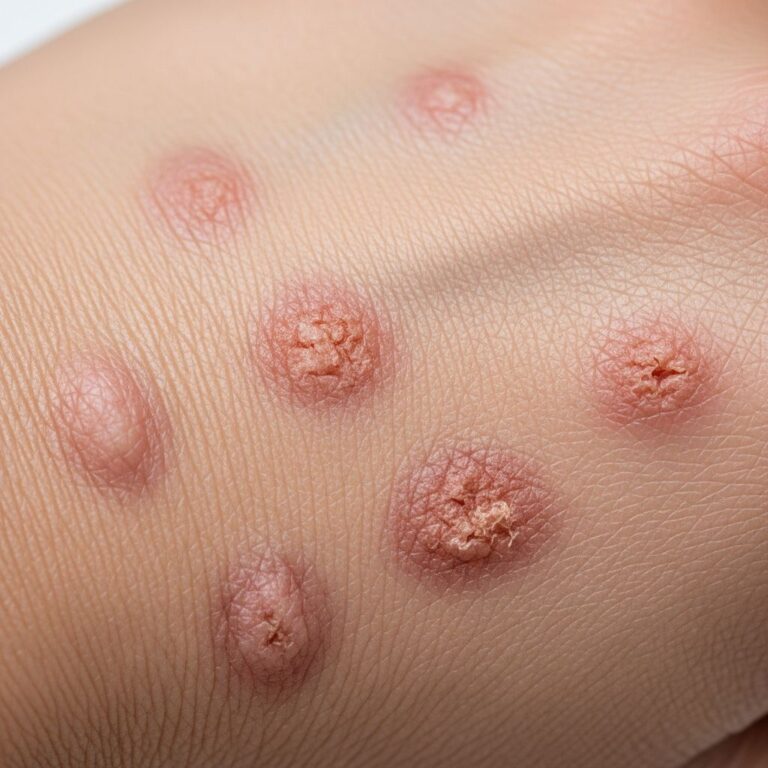
Trigeminal Trophic Syndrome: Causes, Symptoms, Treatment
Rare facial ulceration from trigeminal nerve damage: causes, diagnosis, and management strategies.
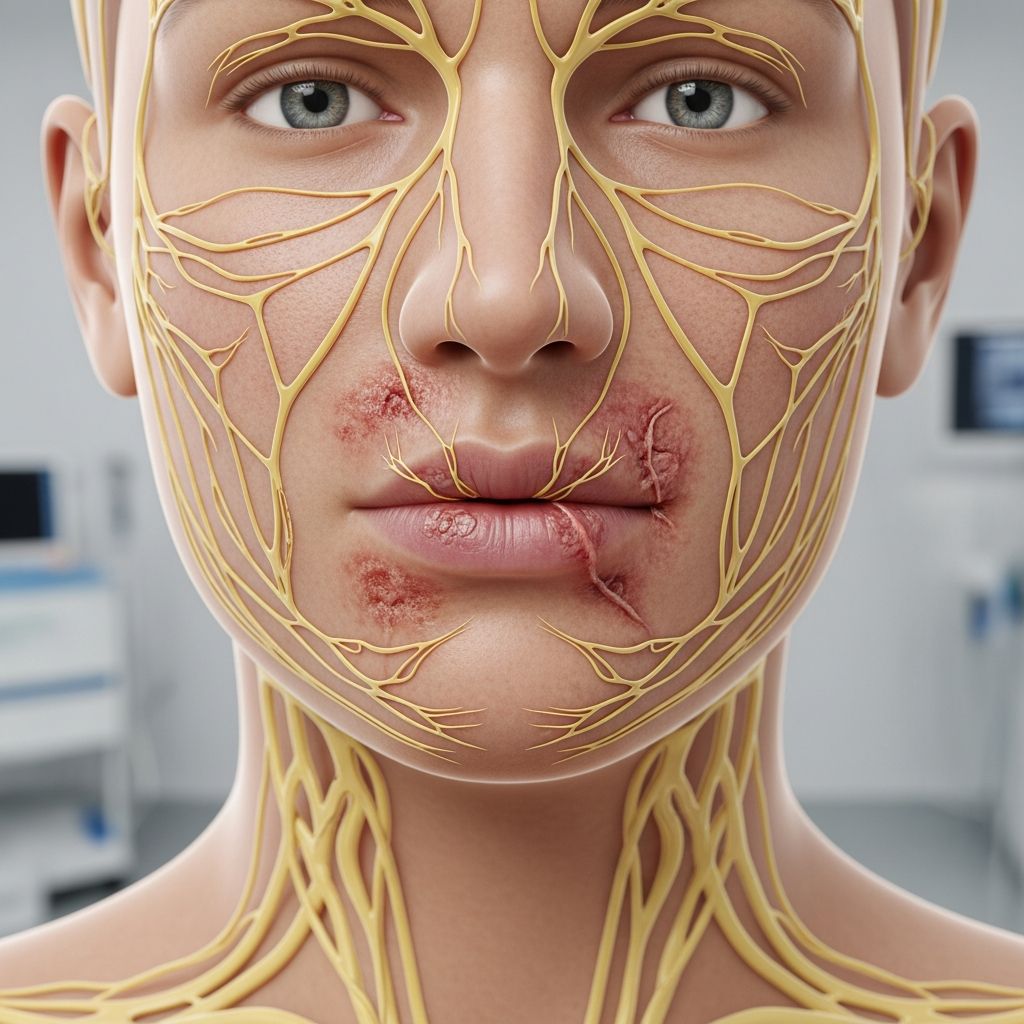
Trigeminal trophic syndrome (TTS) is a rare dermatological condition characterized by persistent ulceration of the skin in the distribution of the trigeminal nerve, primarily due to self-inflicted trauma following nerve damage.
What is Trigeminal Trophic Syndrome?
Trigeminal trophic syndrome, also known as trigeminal trophic ulceration, represents a form of cutaneous dysaesthesia resulting from injury to the trigeminal nerve or its central connections. It most commonly manifests as ulceration on the ala nasi (wing of the nose), adopting a characteristic crescent or sickle-shaped appearance. This syndrome arises weeks to decades after the initial nerve insult, with an average onset around one year, though earlier presentations can occur with multi-nerve involvement.
The condition predominantly affects women and elderly individuals, leading to sores in the sensory distribution of the trigeminal nerve (cranial nerve V). Patients experience numbness (anaesthesia) or abnormal sensations like tingling or prickling (paraesthesia), which provoke compulsive rubbing, picking, or scratching, culminating in ulceration. Unlike typical ulcers, TTS lesions are extremely persistent, healing with fibrosis and scarring that may distort facial features, such as drawing the lip into a sneer-like appearance.
Who Gets Trigeminal Trophic Syndrome (Epidemiology)?
TTS is more prevalent in females and older adults, possibly due to higher rates of trigeminal neuralgia treatments in these groups. The exact incidence remains unknown owing to its rarity, but it is frequently iatrogenic, following procedures for trigeminal neuralgia. Risk factors include prior trigeminal nerve ablation, stroke (e.g., Wallenberg syndrome), tumors, infections like herpes zoster, trauma, or even idiopathic causes.
- Demographics: Predominantly women (higher ratio than men) and elderly patients.
- Common triggers: Surgical ablation (most frequent), stroke, herpes zoster, craniotomy.
Related Conditions
TTS shares features with other neurotrophic ulcers but is distinguished by its trigeminal distribution. It may mimic factitial dermatitis or delusional parasitosis due to the self-manipulative behavior, but lacks psychiatric primary etiology. Associations include Bell’s palsy post-herpes zoster, where multiple cranial nerves amplify sensory loss.
Trigeminal Nerve Anatomy
The trigeminal nerve (CN V) provides sensory innervation to the face via three branches with sharply demarcated dermatomes.
- Ophthalmic (V1): Exits superior orbital fissure; innervates scalp, forehead, upper eyelids, conjunctiva, cornea, nose tip (ethmoidal branch). Mediates corneal reflex.
- Maxillary (V2): Exits foramen rotundum; supplies midface, cheeks, ala nasi, nares, nasal mucosa, upper lip/teeth. Most common TTS site at V1-V2 junction (ala nasi).
- Mandibular (V3): Exits foramen ovale; sensory to lower lip, chin, jaw, ear; motor to mastication muscles (masseter, temporalis, pterygoids).
The tip of the nose is often spared, innervated by V1’s ethmoidal branch.
Causes of Trigeminal Trophic Syndrome
TTS stems from peripheral or central trigeminal injury, reducing sensation and triggering dysaesthesia-driven self-trauma. Common etiologies include:
- Iatrogenic (most common): Trigeminal rhizotomy, ganglion ablation, or surgery for neuralgia.
- Vascular: Ischemic stroke (Wallenberg syndrome).
- Infectious: Herpes zoster, simplex, syphilis.
- Other: Tumors, trauma, post-encephalitic, amyloidosis, birth trauma, idiopathic.
Onset varies from weeks to years post-injury (average 2 years).
Signs and Symptoms of Trigeminal Trophic Syndrome
Initial signs include a small crust evolving into a crescent-shaped ulcer on the ala nasi, potentially extending to cheek, lip, or scalp. Symptoms:
Related Stories



- Sensory: Paraesthesia (tingling, itching, foreign body sensation), anaesthesia; patients report blocked nose sensation despite patency.
- Lesions: Unilateral, well-defined ulcers with heaped edges; persistent, prone to secondary infection.
- Complications: Scarring, fibrosis, sneer deformity; ocular: ectropion, lagophthalmos, corneal ulcers from neurotrophic keratitis.
| Branch | Common Sites | Features |
|---|---|---|
| V2 (Maxillary) | Ala nasi, cheek, upper lip | Crescent ulcer, most frequent |
| V1/V2 junction | Nasal ala | Classic presentation |
| V3 (Mandibular) | Lower lip, chin | Less common |
Diagnosis of Trigeminal Trophic Syndrome
TTS is a clinical diagnosis of exclusion, suspected in unilateral facial ulceration with trigeminal history and sensory deficit. Evaluation:
- History: Prior nerve injury, picking behavior.
- Exam: Triad: paraesthesia, anaesthesia, ulceration in trigeminal dermatome.
- Tests: Biopsy (non-specific: ulceration, lichenification, scarring, acanthosis); cultures (Gram, viral, fungal); neuroimaging if etiology unclear.
- Differentials ruled out: Infection, malignancy, vasculitis, autoimmune (e.g., Wegener’s), pyoderma gangrenosum.
Differential Diagnosis
Broad differentials for facial ulcers require exclusion of malignancies, infections, vasculitides.
- Infectious: Herpes zoster, impetigo, mucormycosis.
- Neoplastic: Basal cell carcinoma, squamous cell carcinoma.
- Autoimmune: Lupus, granulomatosis with polyangiitis.
- Other: Factitial, leishmaniasis, syphilis.
Treatment of Trigeminal Trophic Syndrome
Treatment focuses on halting self-manipulation (key prognostic factor), wound care, and sensation modulation. Success varies; behavioral therapy is cornerstone.
- Behavioral: Counseling, habit reversal, occlusive dressings, gloves, bitter ointments to deter picking.
- Topical: Antibiotics for infection, emollients; avoid steroids if unnecessary.
- Systemic: Anticonvulsants (carbamazepine, gabapentin) for dysaesthesia; antidepressants (doxepin).
- Surgical: Last resort: grafts, flaps after stabilization; high recurrence.
Multidisciplinary approach: dermatology, neurology, psychiatry, ophthalmology if ocular.
What is the Outcome for Trigeminal Trophic Syndrome?
Prognosis hinges on compliance with behavior modification; non-compliant patients risk mutilation. Healing leads to scarring; early intervention prevents progression. Recurrence common without addressing picking.
Prevention of Trigeminal Trophic Syndrome
Minimize trigeminal interventions; counsel post-procedure on dysaesthesia risks. Early recognition and behavioral support prevent chronicity.
Frequently Asked Questions
Is trigeminal trophic syndrome curable?
Complete cure is challenging due to persistent dysaesthesia, but ulcers can heal with strict behavior modification and supportive care.
What causes the nose ulcer in TTS?
Sensory loss in V2 distribution prompts unconscious picking, leading to ala nasi ulceration.
Can TTS affect the eyes?
Yes, V1 involvement may cause eyelid defects, ectropion, or neurotrophic keratitis.
How is TTS diagnosed?
Clinically via history of nerve injury, sensory changes, and exclusion of mimics via biopsy/cultures.
What is the best treatment for TTS?
Behavioral therapy to stop manipulation, combined with wound care and neuropathic agents.
References
- Trigeminal trophic syndrome – DermNet — DermNet NZ. 2023. https://dermnetnz.org/topics/trigeminal-trophic-syndrome
- Trigeminal Trophic Syndrome (TTS) – EyeWiki — American Academy of Ophthalmology. 2024-01-15. https://eyewiki.org/Trigeminal_Trophic_Syndrome_(TTS)
- Trigeminal trophic syndrome – VisualDx — VisualDx. 2024. https://www.visualdx.com/visualdx/diagnosis/trigeminal+trophic+syndrome?diagnosisId=52958&moduleId=101
- Trigeminal Trophic Syndrome – PMC — National Library of Medicine. 2014-01-01. https://pmc.ncbi.nlm.nih.gov/articles/PMC3884933/
- Trigeminal Trophic Syndrome — Southern Medical Association. 2023. https://sma.org/southern-medical-journal/article/trigeminal-trophic-syndrome/
Similar Articles








Read full bio of Sneha Tete