Trigger Finger: Symptoms, Causes & Treatments
Complete guide to trigger finger: understand symptoms, causes, and effective treatment options.
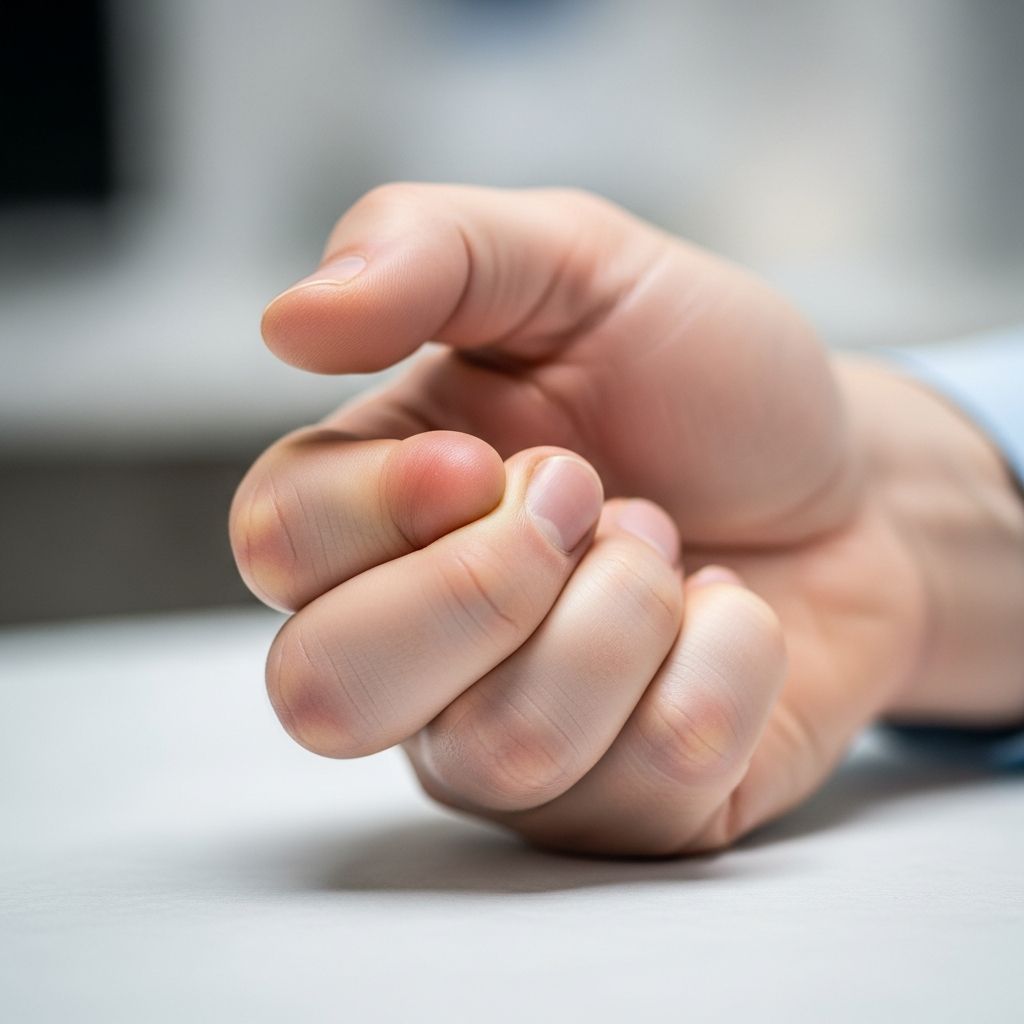
Trigger finger, medically known as stenosing tenosynovitis, is a condition that affects the tendons responsible for flexing your fingers and thumb. This common hand condition makes it difficult to move one or more fingers smoothly, often causing them to “freeze” or lock in a bent position. The problem develops when the tendon sheath or the A1 pulley—a small tunnel at the base of your finger—becomes thickened, inflamed, or narrowed, preventing the tendon from gliding smoothly. While trigger finger can affect any finger, it most commonly impacts the ring finger and thumb.
Understanding the Anatomy
Your fingers contain flexible tendons that allow movement when muscles contract. These tendons run through protective sheaths, passing under small ligament tunnels called pulleys. The first pulley, located at the base of the finger where it meets the palm, is called the A1 pulley. When this pulley becomes thickened or inflamed, it creates a bottleneck that restricts the tendon’s movement, leading to the characteristic catching and popping sensation associated with trigger finger. Over time, the tendon itself may develop a small nodule or swelling, further aggravating the condition and making smooth movement increasingly difficult.
Recognizing the Symptoms
Trigger finger symptoms typically develop gradually without an obvious injury, though they may follow periods of heavy hand use involving pinching and grasping activities. Understanding these symptoms helps with early recognition and treatment.
Primary Symptoms Include:
- A tender lump or nodule at the base of the finger or thumb on the palm side
- A catching, popping, or locking sensation when bending or straightening the digit
- Pain when flexing or extending the affected finger
- Stiffness in the finger, especially noticeable in the morning
- Difficulty straightening the finger without using your other hand
- Clicking or snapping sensations during finger movement
Many patients report that symptoms are worst immediately upon waking and improve throughout the day with gentle use. In severe cases, the finger may remain locked in a bent position and require manual assistance to straighten it.
What Causes Trigger Finger?
Trigger finger develops through a combination of mechanical and inflammatory processes. The condition occurs when one or more of the following happen: the tendon enlarges and no longer fits properly through the pulley, the tendon sheath lining increases in thickness, or the pulley itself becomes thicker, reducing the opening for the tendon.
Microtrauma from repetitive use or compression forces initiates inflammation and injury to the flexor tendon-sheath complex. The A1 pulley, bearing the most significant force during hand activities, is the most commonly affected site. This prolonged inflammation causes the tendon to adhere within its sheath, creating the characteristic locking sensation. Because the flexor tendon apparatus is stronger than the extensor apparatus, patients typically experience more difficulty extending their fingers than flexing them.
Risk Factors and Associated Conditions
While trigger finger can develop in anyone, certain factors increase your risk of developing this condition. People aged 45 and older face higher risk, as do those with specific medical conditions. Diabetes and rheumatoid arthritis significantly increase susceptibility to trigger finger.
Additional conditions associated with increased trigger finger risk include:
- Gout
- Amyloidosis
- Carpal tunnel syndrome
- Thyroid disease
- Hypothyroidism
In children, trigger finger is relatively rare and is believed to result from a developmental mismatch between the size of the tendon and its sheath, particularly affecting the thumb. In rare cases, injuries or growths such as cysts or tumors pressing on the tendon may contribute to trigger finger development.
Related Stories



Diagnosis and Evaluation
Healthcare providers typically diagnose trigger finger through clinical examination and patient history. During your visit, your doctor will examine the affected finger for tenderness, test your range of motion, and assess the clicking or catching sensation. They may ask about your work activities, hobbies, and when symptoms began. Imaging tests like X-rays are usually unnecessary unless your doctor suspects another underlying condition. In some cases, ultrasound may be used to visualize the tendon and pulley to confirm the diagnosis.
Treatment Options
Treatment for trigger finger ranges from conservative approaches to surgical intervention, depending on symptom severity and how long you’ve experienced symptoms.
Conservative Treatment Approaches
Most cases of trigger finger respond well to non-surgical treatment, especially when started early.
- Rest and Activity Modification: Reducing repetitive gripping, pinching, and grasping activities allows the tendon and sheath inflammation to decrease. Avoiding activities that aggravate symptoms accelerates healing.
- Splinting: Wearing a finger splint, particularly at night, keeps the affected digit in an extended position and prevents triggering during sleep. Splints reduce stress on the A1 pulley and allow inflammation to subside.
- Nonsteroidal Anti-Inflammatory Drugs (NSAIDs): Over-the-counter pain relievers like ibuprofen or naproxen reduce inflammation and manage pain associated with trigger finger.
- Corticosteroid Injections: Injections of corticosteroids directly into the tendon sheath around the A1 pulley reduce inflammation effectively. Many patients experience significant symptom improvement or complete resolution following injection. Multiple injections may be necessary for optimal results.
- Physical Therapy: Gentle stretching and strengthening exercises, combined with heat therapy, promote healing and restore normal finger function.
Surgical Treatment
When conservative treatments fail to provide relief after several months, or if symptoms are severe from onset, surgery may be recommended. The surgical procedure, called trigger finger release or A1 pulley release, involves creating a small incision at the base of the affected finger to open the tight pulley. This simple outpatient procedure immediately restores the tendon’s ability to glide smoothly through the sheath. Surgery is highly successful, with most patients experiencing complete resolution of symptoms. Recovery typically takes a few weeks, during which you’ll gradually return to normal activities.
Complications of Untreated Trigger Finger
While trigger finger is not life-threatening, leaving it untreated can lead to significant complications. Long-term inflammation may result in permanent digit swelling and contracture—a permanent bending of the finger that becomes difficult to straighten even after treatment. In severe cases, the flexor tendon may tear or rupture, requiring more complex surgical repair. These complications underscore the importance of seeking treatment promptly rather than tolerating symptoms indefinitely.
Prevention Strategies
While you cannot always prevent trigger finger, especially if you have associated medical conditions like diabetes, certain strategies may reduce your risk:
- Take frequent breaks from repetitive hand activities
- Use proper ergonomic techniques when working or using tools
- Maintain good grip technique to avoid unnecessary tendon strain
- Perform gentle hand stretches and exercises regularly
- Manage underlying medical conditions effectively
- Use protective equipment when engaging in activities that stress the hands
- Apply ice to your hands after intense activities to reduce inflammation
When to Seek Medical Attention
Contact a healthcare provider if you experience persistent finger pain, locking, or catching sensations that interfere with daily activities. Seek immediate attention if your finger becomes stuck in a bent position and you cannot straighten it, if you notice sudden swelling or warmth suggesting infection, or if symptoms worsen despite home treatment. Early intervention typically results in faster resolution and better outcomes.
Living with Trigger Finger
Managing trigger finger involves understanding your condition and taking an active role in treatment. Keep detailed records of activities that worsen symptoms to guide activity modification. Communicate openly with your healthcare provider about treatment effectiveness, and don’t hesitate to discuss alternative options if initial treatment doesn’t provide adequate relief. Most importantly, remain patient—many cases resolve within weeks to months with appropriate conservative treatment.
Frequently Asked Questions
Q: Is trigger finger permanent?
A: Trigger finger is not permanent, though without treatment it can lead to chronic symptoms and complications. Most cases resolve completely with conservative treatment or surgery. Early intervention provides the best chances for full recovery.
Q: Can trigger finger affect multiple fingers at once?
A: Yes, trigger finger can affect multiple fingers simultaneously or develop in different fingers over time. Treatment approaches remain similar regardless of the number of affected digits.
Q: How long does trigger finger surgery take?
A: Trigger finger release surgery typically takes 15 to 30 minutes and is performed as an outpatient procedure under local anesthesia, allowing you to return home the same day.
Q: Will trigger finger come back after surgery?
A: Recurrence is uncommon after surgery, occurring in less than 5% of cases. Once the tight pulley is released, the tendon can move freely, and symptoms rarely return.
Q: Can exercises cure trigger finger?
A: While exercises support recovery and prevent stiffness, they work best combined with rest, splinting, and sometimes injections. Surgery may be necessary if conservative treatments including exercises don’t resolve symptoms.
Q: Is trigger finger related to carpal tunnel syndrome?
A: While both are hand conditions affecting nerves or tendons, they are distinct. However, people with carpal tunnel syndrome have increased risk of developing trigger finger, and both can coexist.
Q: Can typing or computer work cause trigger finger?
A: Extended typing with poor ergonomics can contribute to trigger finger development through repetitive strain. Maintaining proper posture, taking breaks, and using ergonomic keyboards help prevent this risk.
References
- Trigger Finger — American Academy of Orthopaedic Surgeons (AAOS). 2024. https://orthoinfo.aaos.org/en/diseases–conditions/trigger-finger/
- Trigger Finger (Stenosing Tenosynovitis) — National Center for Biotechnology Information (NCBI Bookshelf). 2024. https://www.ncbi.nlm.nih.gov/books/NBK459310/
- Trigger Finger Treatment — UCI School of Medicine, Department of Orthopedic Surgery. 2024. https://www.uciortho.com/trigger-finger-orthopaedic-irvine-newportbeach-california.html
- Trigger Finger: Fact Sheets — Yale Medicine. 2024. https://www.yalemedicine.org/conditions/trigger-finger
- Trigger Finger: What is? Symptoms, Causes, & Treatment — American Society for Surgery of the Hand (ASSH). 2024. https://assh.my.site.com/handcare/condition/trigger-finger
- Treatment Options for Trigger Finger and Trigger Thumb — Hospital for Special Surgery (HSS). 2024. https://www.hss.edu/health-library/conditions-and-treatments/list/trigger-finger
- Trigger Finger: Causes and Treatment — Mayo Clinic Health System. 2024. https://www.mayoclinichealthsystem.org/hometown-health/speaking-of-health/what-triggers-trigger-finger
Similar Articles








Read full bio of Sneha Tete