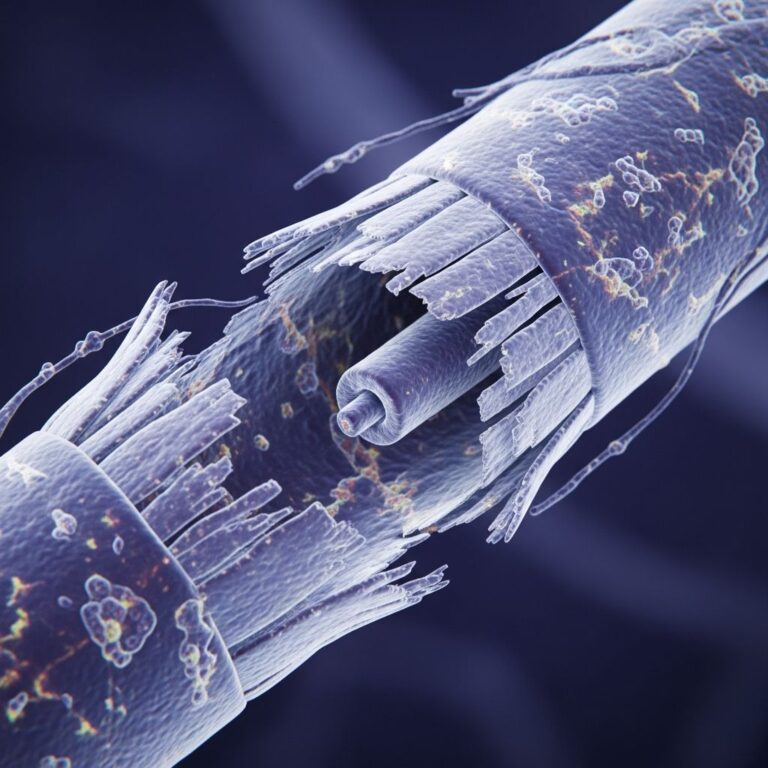
Trikafta: Breakthrough Therapy for Cystic Fibrosis
Discover how Trikafta revolutionizes cystic fibrosis management with its triple-action formula for better lung health and daily life.
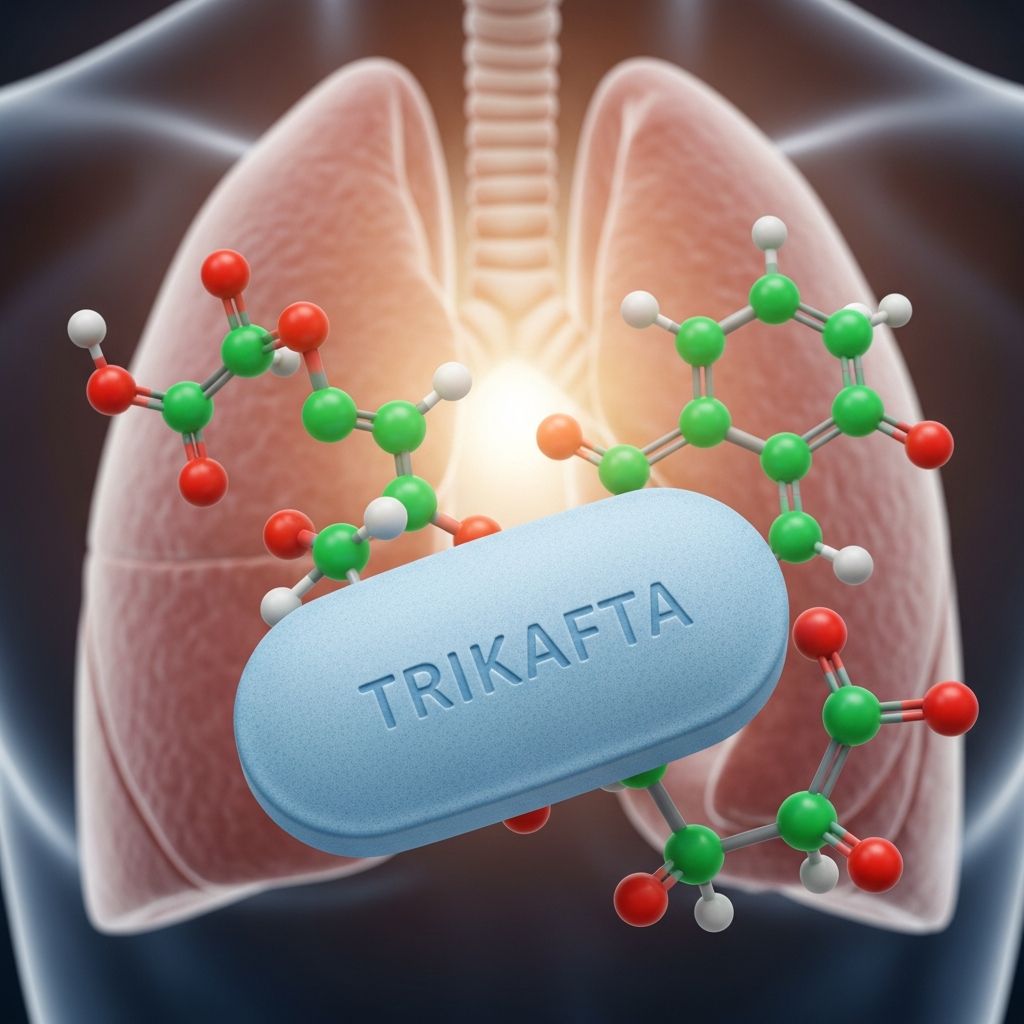
Trikafta represents a significant advancement in managing cystic fibrosis (CF), a genetic disorder affecting the lungs and other organs due to defective CFTR proteins. This combination therapy, approved for patients aged 2 years and older with at least one F508del mutation, helps restore CFTR function, leading to improved lung capacity and fewer respiratory issues.
Understanding Cystic Fibrosis and the Role of CFTR
Cystic fibrosis arises from mutations in the CFTR gene, which encodes a protein essential for chloride ion transport across cell membranes. In healthy individuals, CFTR maintains fluid balance in mucus-producing tissues, preventing thick mucus buildup in the lungs, pancreas, and intestines. Over 2,000 CFTR mutations exist, but the F508del mutation is the most common, causing misfolded proteins that fail to reach cell surfaces effectively.
This dysfunction leads to chronic lung infections, inflammation, and progressive respiratory decline. Traditional treatments focus on symptom relief through antibiotics, mucolytics, and physiotherapy, but CFTR modulators like Trikafta target the root cause by correcting protein folding and enhancing channel activity.
How Trikafta Works: The Triple Combination Mechanism
Trikafta integrates three active ingredients: elexacaftor (ELX), tezacaftor (TEZ), and ivacaftor (IVA). ELX and TEZ act as correctors, stabilizing the misfolded F508del-CFTR protein to facilitate its trafficking to the cell membrane. IVA, a potentiator, then amplifies the channel’s openness, boosting chloride transport up to 8.1% of normal levels in bronchial cells.
Clinical data show this synergy outperforms earlier dual therapies like TEZ/IVA, with superior improvements in forced expiratory volume in one second (FEV1), a key lung function metric. In trials, patients heterozygous for F508del saw ppFEV1 increases within weeks, alongside sweat chloride reductions indicating better CFTR activity.
- Correctors (ELX/TEZ): Rescue protein folding and membrane insertion.
- Potentiator (IVA): Enhances gating for ion flow.
- Combined Effect: Reduces mucus viscosity, easing clearance and infection risk.
Who Qualifies for Trikafta Treatment?
Eligibility hinges on genetic testing confirming at least one F508del allele. The FDA expanded approval to patients 6 years and older initially, later including ages 2+ based on pediatric studies showing safety and efficacy.
Not all CF patients benefit; only those with responsive mutations respond. Genetic counseling and CFTR genotyping are prerequisites. Consult a specialist to verify suitability, as Trikafta addresses about 90% of CF cases with F508del involvement.
Dosage Forms and Administration Guidelines
Trikafta is available as oral tablets for adults/teens and granule packets for young children, taken twice daily with fat-containing food to enhance absorption. Standard adult dosing: morning (2 ELX/TEZ/IVA tablets + 1 IVA) and evening (1 IVA).
| Age Group | Morning Dose | Evening Dose |
|---|---|---|
| Adults/Adolescents (≥12 years) | 2 ELX/TEZ/IVA + 1 IVA | 1 IVA |
| Children 6-11 years | 3 ELX/TEZ/IVA + 1 IVA | 1 IVA |
| Children 2-5 years | Weight-based granules | IVA granules |
Granules must be mixed with soft foods like yogurt. Avoid grapefruit juice, as it inhibits metabolism.
Related Stories



Clinical Evidence: Proven Benefits in Trials
Pivotal trials like VX-445-102 demonstrated rapid FEV1 gains: 13.8% absolute improvement vs. placebo at 4 weeks, sustained over 10 months in F/MF cohorts. Pulmonary exacerbations dropped, and quality-of-life scores rose, with patients reporting less cough, better exercise tolerance, and normalized daily activities.
Pediatric extensions confirmed similar gains without new safety signals. Long-term data (up to 96 weeks) show persistent lung function stability, potentially halving daily treatment burdens.
Patient testimonials highlight transformative changes, such as effortless phone conversations while walking and reduced nebulizer needs due to clearer airways.
Potential Side Effects and Management
Common effects include upper respiratory infections (13%), abdominal pain (11%), and rash (10%), often mild and transient. Elevated liver enzymes (AST/ALT) occur in 11-15%, necessitating baseline and periodic monitoring every 3 months initially.
- Serious Risks: Liver injury (monitor bilirubin, transaminases); rare anaphylaxis (seek emergency care for swelling/breathing issues).
- Other: Increased creatinine kinase (CK), blood pressure rises (3-4 mmHg mean), cataracts in kids (annual slit-lamp exams).
Discontinue if ALT/AST exceed 8x upper limit or bilirubin >2x with transaminases >5x. Rash may require topical steroids; most resolve without interruption.
Monitoring and Safety Protocols
Baseline assessments: LFTs, CK, blood pressure, eye exams for pediatrics. Follow-up: Monthly LFTs year 1, quarterly thereafter. Genetic confirmation and CF specialist oversight are essential.
Drug interactions abound: Strong CYP3A inhibitors (e.g., ketoconazole) demand dose reduction; inducers (rifampin) contraindicate use.
Access, Cost, and Real-World Impact
As of 2025, no generics exist, positioning Trikafta as premium-priced, though patient assistance programs aid access. It reduces hospitalization rates, potentially offsetting costs long-term.
Real-world use echoes trials: A case study noted 10% PFT improvement, vanished cough, and appetite gains within months.
Frequently Asked Questions (FAQs)
Does Trikafta cure cystic fibrosis?
No, it manages symptoms by improving CFTR function but does not eliminate the genetic defect.
How soon do benefits appear?
Lung function improvements often start in 2-4 weeks, with symptom relief by one month.
Is Trikafta safe for children under 6?
Approved for ages 2+, with weight-based granules.
What if I miss a dose?
Take as soon as possible unless near next dose; do not double up.
Can Trikafta interact with other CF therapies?
Yes, coordinate with specialists; avoid strong CYP3A modulators.
Future Directions in CFTR Modulation
Ongoing studies explore Trikafta in rarer mutations and combinations. Long-term registries track durability, with emphasis on pediatrics and equity in access. This therapy exemplifies precision medicine’s promise for CF.
References
- Trikafta (elexacaftor / tezacaftor / ivacaftor): Uses, Side Effects — GoodRx. 2025. https://www.goodrx.com/trikafta/what-is
- A Review of Trikafta: Triple Cystic Fibrosis Transmembrane Conductance Regulator Modulator Therapy — PMC (NCBI). 2021-07-07. https://pmc.ncbi.nlm.nih.gov/articles/PMC8266292/
- TRIKAFTA (elexacaftor/tezacaftor/ivacaftor) Tablets Prescribing Information — FDA. 2021. https://www.accessdata.fda.gov/drugsatfda_docs/label/2021/212273s004lbl.pdf
- TRIKAFTA Product Monograph — Vertex Pharmaceuticals (Canada). Recent. https://pi.vrtx.com/files/Canadapm_trikafta_ci_en.pdf
- Triple combination therapy Kaftrio (Trikafta in the US) — Cystic Fibrosis Trust. Recent. https://www.cysticfibrosis.org.uk/what-is-cystic-fibrosis/cystic-fibrosis-care/treatments-and-medication/modulators/kaftrio
Similar Articles








Read full bio of medha deb