Trimethylaminuria: Causes, Diagnosis, And Treatment Guide
Understanding trimethylaminuria: the rare metabolic disorder causing fish-like body odour and its management strategies.
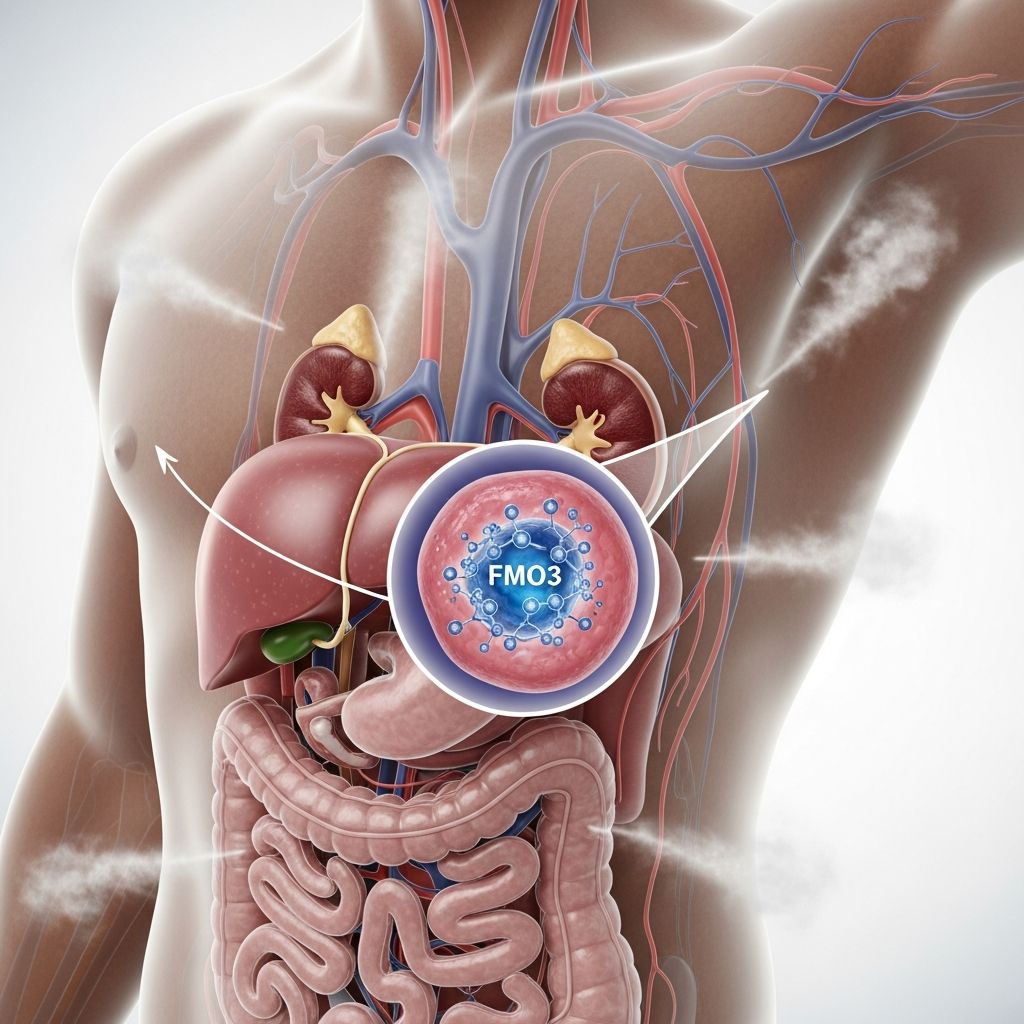
Trimethylaminuria, commonly known as fish odour syndrome or fish malodour syndrome, is a rare metabolic disorder characterised by the inability to break down trimethylamine (TMA), a compound produced during digestion of certain foods. This leads to the accumulation of TMA, which is excreted through sweat, urine, breath, and other bodily fluids, producing a pungent, rotten fish-like odour.
What is trimethylaminuria?
Trimethylaminuria (TMAU) is an inherited metabolic condition where the liver enzyme flavin-containing monooxygenase 3 (FMO3) is deficient or dysfunctional. FMO3 normally converts TMA, derived from dietary precursors like choline and carnitine, into odourless trimethylamine N-oxide (TMAO). When this process fails, TMA builds up and causes the characteristic foul smell.
The disorder affects approximately 1 in 200,000 to 1 in 1 million people worldwide, though it may be underdiagnosed due to fluctuating symptoms and social stigma. Primary TMAU is genetic, while secondary forms arise from acquired factors. Affected individuals are otherwise healthy, with no impact on life expectancy, but the odour can severely disrupt social, professional, and personal life.
Who gets trimethylaminuria?
TMAU can affect anyone but appears more common in females, possibly due to hormonal influences like estrogen and progesterone that may inhibit FMO3 activity. Symptoms often emerge or worsen at puberty, and in women, they intensify pre-menstruation, during menstrual periods, after oral contraceptives, or around menopause.
- Infants and children: Transient forms in premature babies fed choline-rich formulas.
- Adolescents: Onset or worsening during puberty.
- Adults: Acquired secondary TMAU from liver conditions or medications.
Both males and females inherit the condition autosomally recessively, requiring two mutated FMO3 genes, one from each parent. Carriers with one mutated gene may have mild or intermittent symptoms.
What causes trimethylaminuria?
Primary TMAU results from mutations in the FMO3 gene on chromosome 1, which encodes the FMO3 enzyme. Over 40 mutations have been identified, leading to reduced or absent enzyme activity. This impairs oxidation of TMA to TMAO.
Secondary TMAU occurs without FMO3 mutations due to:
- Acquired factors: Liver diseases like hepatitis, altering enzyme function long-term.
- Transient childhood TMAU: In preterm infants on choline-supplemented feeds; resolves with age or diet change.
- Precursor overload: High intake of choline-rich foods (eggs, liver, soybeans) or supplements like L-carnitine.
- Other: Menstruation, stress, or hormonal changes.
TMA precursors are found in foods like fish, eggs, beans, and cruciferous vegetables. Gut bacteria convert them to TMA, which enters the bloodstream for liver processing.
What are the clinical features of trimethylaminuria?
The hallmark is a strong, fishy body odour resembling rotten fish, garbage, or feces, emanating from sweat, urine, breath, saliva, and vaginal secretions. Intensity varies daily, worsening with:
Related Stories



- Heat, exercise, or stress.
- Hormonal fluctuations in females.
- High-TMA precursor diets.
No physical abnormalities; patients appear healthy. Psychological effects include depression, anxiety, social isolation, relationship breakdowns, job loss, and suicidal ideation due to odour-related stigma.
| Symptom | Description | Triggers |
|---|---|---|
| Fishy odour | From sweat, urine, breath | Diet, hormones, stress |
| Psychosocial impact | Isolation, depression | Social stigma |
| Fluctuating intensity | Mild to severe | Puberty, menstruation |
How is trimethylaminuria diagnosed?
Diagnosis involves:
- Clinical history: Self-reported or observed fishy odour, family history, triggers.
- Urine TMA analysis: Measures TMA/TMAO ratio. Normal <10% TMA; mild 10-20%; severe >40%. Gold standard.
- Choline challenge test: Oral choline load; elevated urinary TMA indicates carriers or affected.
- Genetic testing: FMO3 sequencing for mutations, confirming primary TMAU.
Differential diagnoses include poor hygiene, liver/kidney failure, or other malodour syndromes. Testing requires specialised labs.
What is the treatment for trimethylaminuria?
No cure exists for primary TMAU, but management reduces symptoms:
- Dietary modification: Low-choline/carnitine diet: Avoid eggs, liver, seafood, soy, peanuts, beans, brassicas. Use acid gels (e.g., 3g/day copper chlorophyllin) to bind TMA in gut.
- Supplements: Riboflavin (vitamin B2, 100-400mg/day) may boost mild FMO3 activity; charcoal/activated charcoal to adsorb TMA.
- Hygiene: Frequent washing with antibacterial soaps; avoid sweat-inducing activities.
- Probiotics: To alter gut bacteria reducing TMA production.
- Counselling: Psychological support for mental health.
For secondary TMAU, treat underlying cause (e.g., stop supplements). Monitor diet under nutritionist guidance to avoid deficiencies, especially in pregnancy.
What is the outcome for trimethylaminuria?
With management, odour can be controlled, improving quality of life. Symptoms may lessen in adulthood for some. No effect on physical health or lifespan, but untreated psychosocial issues persist. Regular follow-up recommended.
Frequently asked questions about trimethylaminuria
Q: Is trimethylaminuria curable?
A: No permanent cure, but dietary and lifestyle changes effectively manage symptoms in most cases.
Q: Does trimethylaminuria affect lifespan?
A: No, it only causes odour; affected individuals are otherwise healthy.
Q: Can carriers of FMO3 mutations have symptoms?
A: Yes, mild or intermittent odour possible with one mutated gene.
Q: Why do symptoms worsen in women?
A: Hormones like estrogen inhibit FMO3, exacerbating during menstrual cycle, puberty, or menopause.
Q: How do I get tested for TMAU?
A: Consult a metabolic specialist for urine TMA/TMAO ratio or genetic testing.
Q: Are there support groups for TMAU?
A: Yes, organisations like NORD and patient forums provide resources.
Related topics
- Body odour
- Metabolic disorders
- FMO3 deficiency
- Choline metabolism
References
- Trimethylaminuria – Symptoms, Causes, Treatment — National Organization for Rare Disorders (NORD). 2023. https://rarediseases.org/rare-diseases/trimethylaminuria/
- Trimethylaminuria — Cleveland Clinic. 2023. https://my.clevelandclinic.org/health/diseases/22356-trimethylaminuria-fish-odor-syndrome
- About Trimethylaminuria — National Human Genome Research Institute (Genome.gov). 2023. https://www.genome.gov/Genetic-Disorders/Trimethylaminuria
- Trimethylaminuria (Fish Odor Syndrome) — Monell Chemical Senses Center. 2023. https://monell.org/tmau/
- Trimethylaminuria — Metabolic Support UK. 2023. https://metabolicsupportuk.org/condition/trimethylaminuria/
Similar Articles








Read full bio of medha deb