Tropical Pyomyositis: 3 Stages, Symptoms, Diagnosis & Treatment
Understanding the stages, causes, diagnosis, and treatment of this bacterial muscle infection prevalent in tropical regions.
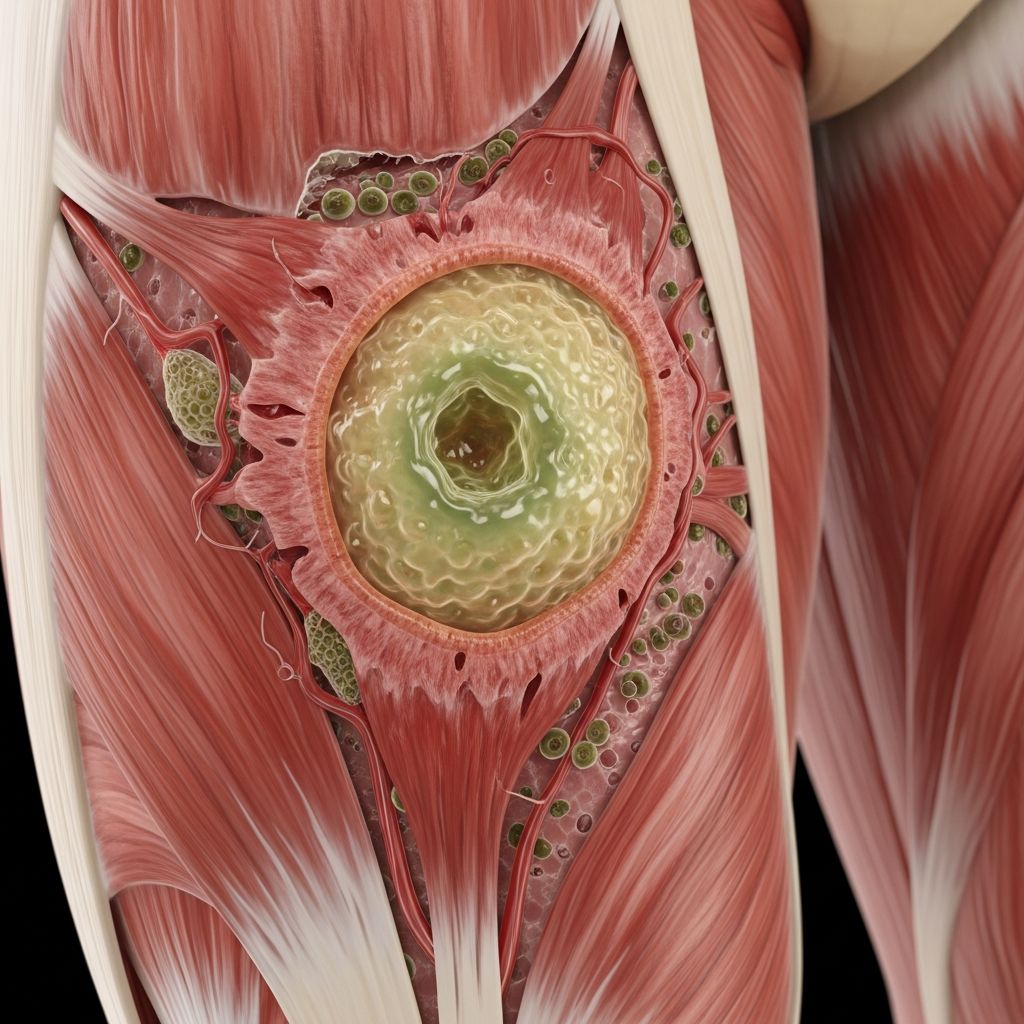
Tropical pyomyositis is a bacterial infection of the skeletal muscles that leads to abscess formation, predominantly observed in tropical and subtropical regions. It typically affects otherwise healthy individuals and progresses through three distinct stages if untreated.
What is tropical pyomyositis?
Tropical pyomyositis, also known as pyomyositis in tropical settings, involves bacterial invasion of striated muscle, resulting in suppuration and abscess development. Unlike temperate pyomyositis, which often affects immunocompromised patients, the tropical form strikes immunocompetent people, especially children and young adults in endemic areas like Africa, Asia, and the Pacific. The condition arises from hematogenous spread of bacteria, leading to intramuscular abscesses without initial skin involvement.
The disease is characterized by its insidious onset and potential for rapid progression to life-threatening complications if not addressed promptly. It accounts for up to 4% of hospital admissions for surgical conditions in some tropical regions, highlighting its public health significance.
Who gets tropical pyomyositis?
Tropical pyomyositis primarily affects children and adolescents, with males outnumbering females by a ratio of about 2:1. It is most common in tropical climates, where poor sanitation, malnutrition, and parasitic infections may predispose individuals, though many cases occur in healthy people. Risk factors include recent viral infections, trauma, intense physical activity, and close proximity to livestock. In non-tropical areas, it is rarer and often linked to immunosuppression such as HIV, diabetes, or malignancy.
Immunocompetent hosts in endemic zones are particularly susceptible due to transient bacteremia from minor skin breaches or gastrointestinal sources. Studies from India report quadriceps involvement in 50% of cases among young males presenting with fever and myalgia.
What causes tropical pyomyositis?
The primary causative agent is Staphylococcus aureus, responsible for 75-90% of cases, often methicillin-resistant strains in tropical settings. Other pathogens include Streptococcus species, Gram-negative bacilli like Klebsiella pneumoniae, and anaerobes. In HIV-positive patients, Gram-negative infections predominate. Bacteria reach muscles via bloodstream seeding, facilitated by muscle trauma or ischemia.
Minor trauma disrupts muscle integrity, allowing bacterial lodgment. In tropical pyomyositis, no clear portal of entry is often identified, distinguishing it from non-tropical forms.
What are the clinical features of tropical pyomyositis?
Tropical pyomyositis evolves through three stages:
- Invasive stage (Stage 1): Lasts 1-2 weeks with diffuse muscle pain, cramps, and possible low-grade fever. No abscess yet; mimics myositis or hematoma. Leukocytosis and elevated ESR/CRP may occur, but muscle enzymes are often normal.
- Suppurative stage (Stage 2): Abscess forms over 1-2 weeks, creating a firm, tender ‘woody’ mass. High fever, chills, nausea, and malaise develop. Common sites: quadriceps (50%), iliopsoas (25%), gluteals, pectoralis.
- Late stage (Stage 3): Untreated abscess ruptures or spreads, causing septicemia, metastatic abscesses, osteomyelitis, or shock. Mortality rises significantly.
Patients present with high fever (>102°F) and localized pain; swelling may be minimal due to deep location.
How is tropical pyomyositis diagnosed?
Diagnosis relies on clinical suspicion, imaging, and pus aspiration. Labs show leukocytosis, anemia, high ESR/CRP; CK normal. Ultrasound detects abscesses; MRI is gold standard, revealing rim-enhancing collections. CT aids in deep sites. Needle aspiration confirms pus with Gram stain/culture—S. aureus in most.
Muscle biopsy shows inflammation and necrosis if culture-negative. Differential includes osteomyelitis, cellulitis, sarcoma.
What is the treatment for tropical pyomyositis?
Treatment combines antibiotics and drainage. Early stages: IV antibiotics (vancomycin, flucloxacillin for MSSA; broad-spectrum for HIV). Abscesses >3cm require percutaneous or surgical drainage, followed by primary closure or vacuum-assisted healing.
Related Stories



Antibiotics continue 7-10 days post-afebrile, total 2-6 weeks. S. aureus: vancomycin 15mg/kg q12h or linezolid. Culture guides de-escalation. Aggressive therapy prevents complications; all patients in one series recovered fully.
What is the outcome for tropical pyomyositis?
With prompt treatment, prognosis is excellent—near 100% recovery. Delays lead to prolonged hospitalization, sepsis (mortality 1-2% tropics, 10-33% temperate/immunosuppressed). Recurrence rare if source controlled.
Prevention of tropical pyomyositis
No vaccine exists. Strategies: treat skin infections promptly, improve sanitation, avoid trauma in endemic areas. Early antibiotics for suspected cases prevent progression.
Investigations
Blood tests: Leukocytosis, elevated CRP/ESR, anemia.
Imaging:
- Ultrasound: Initial screen for fluid collections.
- MRI: Preferred—high sensitivity for early abscesses.
- CT: For iliopsoas/ deep muscles.
Microbiology: Pus aspiration for culture; biopsy if negative.
Table: Common Muscle Involvement
| Muscle Group | Frequency (%) | Example Sites |
|---|---|---|
| Quadriceps femoris | 50% | Thigh |
| Iliopsoas | 25% | Hip flexors |
| Gluteus maximus | 8-10% | Buttocks |
| Others (pectoralis, supraspinatus) | 17% | Chest, shoulder |
Frequently Asked Questions
What are the first signs of tropical pyomyositis?
Diffuse muscle pain and fever without skin changes mark the invasive stage.
Is surgery always needed?
No, early cases respond to antibiotics; drainage for abscesses >3cm.
Can it affect multiple muscles?
Yes, 8-10% cases involve multiple sites.
What if untreated?
Progresses to sepsis, shock, death.
Is MRI necessary?
Gold standard for confirmation when ultrasound inconclusive.
References
- Tropical Pyomyositis — Chippagiri S, et al. North American Journal of Medical Sciences. 2013-11-01. https://pmc.ncbi.nlm.nih.gov/articles/PMC3842701/
- Tropical pyomyositis — DermNet NZ. Accessed 2026. https://dermnetnz.org/topics/tropical-pyomyositis
- Acute pyomyositis: Diagnosis and treatment of 3 cases — Anales de Pediatría. 2021-10-01. https://www.analesdepediatria.org/en-acute-pyomyositis-diagnosis-treatment-3-articulo-S2341287921001812
- Pyomyositis; A Diagnosis Not To Miss — MedCrave Online. 2018-01-01. https://medcraveonline.com/JPNC/pyomyositis-a-diagnosis-not-to-miss.html
- Pyomyositis — Orphanet. Accessed 2026. https://www.orpha.net/pdfs/data/patho/GB/uk-pyomyositis.pdf
Similar Articles








Read full bio of Sneha Tete