Trousseau Syndrome: 5 Tumor-Driven Mechanisms & Signs
Understanding migratory thrombophlebitis linked to occult malignancy and its clinical implications.
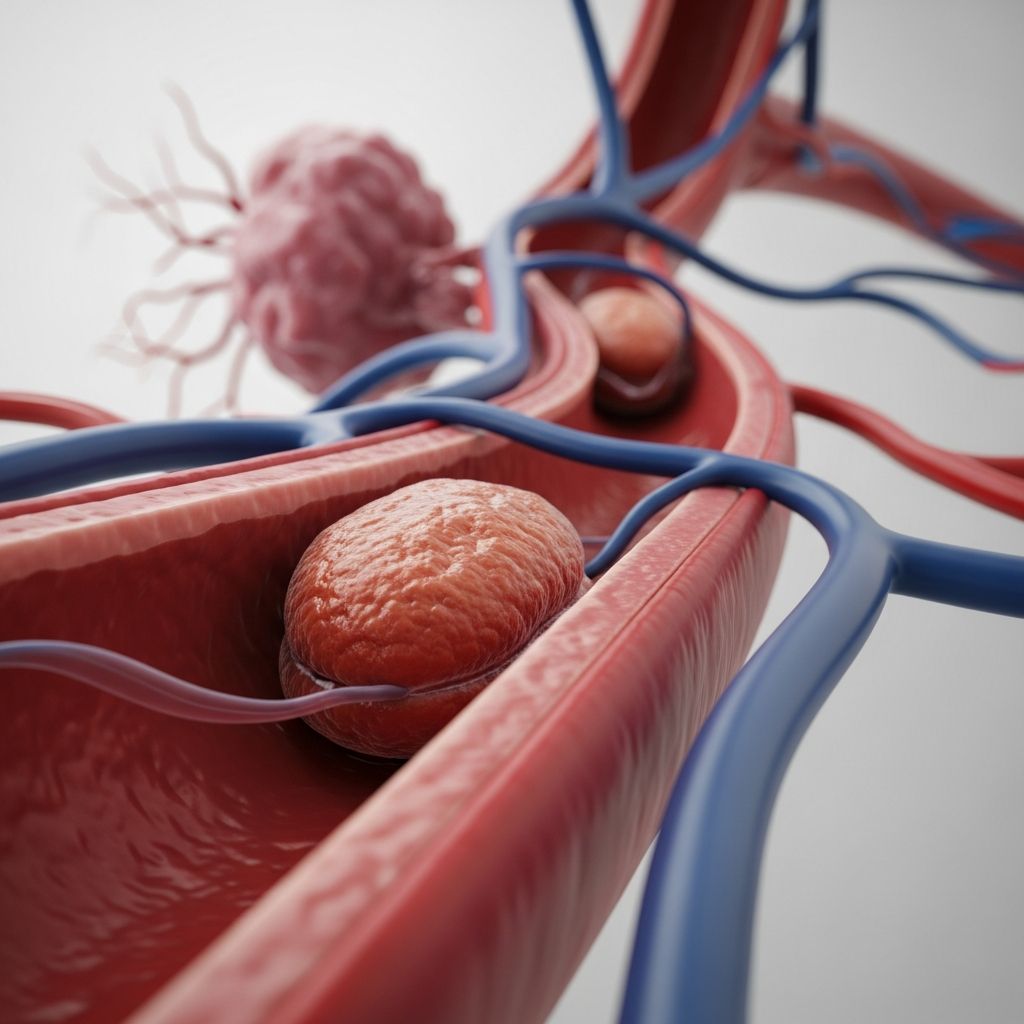
Trousseau syndrome is a rare paraneoplastic disorder characterized by recurrent, migratory superficial thrombophlebitis associated with an underlying, often occult malignancy.
This condition, first described by French physician Armand Trousseau in 1865, manifests as multiple episodes of vein inflammation due to blood clots that appear in different superficial veins over time, frequently signaling undiagnosed cancers such as pancreatic adenocarcinoma.
What is Trousseau syndrome?
Trousseau syndrome, also known as the Trousseau sign of malignancy, represents an acquired hypercoagulable state triggered by malignancy. It primarily involves migratory thrombophlebitis, where tender, inflamed cords or nodules form in superficial veins, migrating from one site to another, often on the extremities or trunk.
Unlike typical deep vein thrombosis (DVT), these events affect superficial veins and recur in unusual locations like the chest wall or arms. The syndrome extends beyond superficial events to include non-bacterial thrombotic endocarditis, arterial emboli, and disseminated intravascular coagulation (DIC) in advanced cases.
Historically, Trousseau observed this in patients with gastric cancer, noting phlegmasia alba dolens (milk leg) as a harbinger of occult visceral tumors. Modern definitions encompass a spectrum from isolated migratory thrombophlebitis to complex thromboembolic phenomena linked to mucin-producing adenocarcinomas.
Who gets Trousseau syndrome (epidemiology)?
Trousseau syndrome is uncommon, occurring in approximately 1-2% of cancer patients, though its true incidence may be underreported due to overlap with other cancer-associated thromboses. It predominantly affects adults over 50 years, with no strong gender predilection reported.
- Highest risk cancers: Pancreatic (up to 50% of cases), lung, gastric, and other mucin-producing adenocarcinomas.
- Other associations: Ovarian, prostate, breast, and colorectal cancers, though less frequently.
- Timing: Symptoms can precede cancer diagnosis by months to years, serving as a critical clue for investigation.
Pancreatic ductal adenocarcinoma shows the strongest link, likely due to high tissue factor expression and mucin secretion by tumor cells.
Pathophysiology
The hypercoagulability in Trousseau syndrome arises from multiple tumor-driven mechanisms, lacking a single pathway. Tumor cells release procoagulant factors into circulation, activating coagulation cascades.
Key mechanisms:
- Tissue factor (TF) expression: Tumor cells and associated endothelium overexpress TF, forming TF-FVIIa complexes that generate thrombin and fibrin. Oncogenes (e.g., K-ras, EGFR) and tumor suppressors (e.g., p53 loss) upregulate TF.
- Mucin production: Mucin from adenocarcinomas binds P- and L-selectins on platelets and endothelium, forming platelet-fibrin aggregates and microthrombi.
- Heparanase secretion: Degrades heparan sulfate, neutralizing endogenous anticoagulants like heparin.
- Oncogene activation and hypoxia: Upregulates TF, PAI-1, and COX-2, linking thrombosis to tumor progression and metastasis.
- Cytokines and endothelium: Tumor-derived factors activate endothelial cells, expressing selectins and VCAM-1, promoting clot formation.
These pathways converge on thrombin generation, fibrin deposition, and platelet activation, explaining the migratory and recurrent nature. Shared mechanisms with metastasis (e.g., TF, selectins) underscore why Trousseau syndrome often signals advanced, aggressive disease.
Clinical features
Patients present with recurrent episodes of painful, erythematous, cord-like swellings in superficial veins, resolving spontaneously but recurring elsewhere.
- Skin findings: Tender, red streaks or nodules in subcutaneous fat, typically 2-10 cm long, on arms, legs, chest, or abdomen.
- Migratory pattern: New lesions appear while old ones fade, distinguishing from localized phlebitis.
- Systemic signs: Possible fever, malaise; advanced cases show embolic phenomena like blue toe syndrome, stroke, or splenic infarcts.
- Associated paraneoplastic features: Hypercalcemia, weight loss, or dermatomyositis in some cancers.
Related Stories



Arterial involvement leads to digital ischemia (blue toe), while cardiac manifestations include sterile verrucous endocarditis with emboli.
Diagnosis
Diagnosis is clinical, based on recurrent migratory superficial thrombophlebitis in a patient over 50, prompting malignancy workup. No specific biomarker exists; D-dimer is often elevated but nonspecific.
Investigations:
| Test | Purpose |
|---|---|
| Age-appropriate cancer screening (mammogram, PSA, colonoscopy) | Detect occult malignancy |
| CT chest/abdomen/pelvis | Identify pancreatic, lung, or abdominal tumors |
| Upper/lower GI endoscopy | Gastric/colorectal evaluation |
| Duplex ultrasound | Confirm superficial vein thrombosis |
| Echocardiogram | Rule out non-bacterial endocarditis |
In unexplained thromboembolism, especially recurrent or superficial, pursue aggressive cancer screening. Pancreatic tumors may require MRI or EUS for detection.
Treatment
Treatment targets the underlying malignancy while managing thrombotic events. Anticoagulation is cornerstone, favoring low-molecular-weight heparin (LMWH) over warfarin due to superior efficacy in cancer-associated thrombosis.
- Acute thrombophlebitis: LMWH (e.g., enoxaparin 1 mg/kg BID) or unfractionated heparin, transitioning to long-term LMWH.
- Duration: Lifelong if malignancy persists; reassess post-cancer treatment.
- Cancer therapy: Surgery, chemotherapy, or targeted therapy based on tumor type.
- Supportive: NSAIDs for pain, compression stockings; avoid direct oral anticoagulants (DOACs) in GI malignancy due to bleeding risk.
LMWH inhibits multiple pathways (TF, selectins), explaining its benefit. Prognosis remains poor due to advanced cancer at diagnosis.
What is the outcome for Trousseau syndrome?
Prognosis correlates with underlying malignancy stage. Trousseau syndrome often heralds disseminated disease, with 5-year survival <20% for pancreatic cases. Early detection via prompted screening may improve outcomes, but most tumors are advanced. Thrombotic recurrence risk persists despite anticoagulation if cancer progresses.
Prevention
Primary prevention is challenging without known malignancy. High-risk cancer patients receive thromboprophylaxis during chemotherapy or surgery per guidelines (e.g., ASCO). Routine screening for idiopathic migratory thrombophlebitis is not standard but justified in atypical cases.
FAQ
Is Trousseau syndrome curable?
Treatment of the underlying cancer offers the best chance, but many cases involve advanced tumors with guarded prognosis.
Does Trousseau syndrome always mean cancer?
While strongly associated (90%+ cases), rare non-malignant causes like Behçet’s or antiphospholipid syndrome must be excluded.
How soon after clots does cancer appear?
From weeks to years; median 6-12 months in studies.
Can anticoagulation alone treat it?
No; it controls symptoms but does not address the malignancy source.
Related topics
- Superficial thrombophlebitis
- Deep vein thrombosis
- Paraneoplastic syndromes
- Pancreatic cancer
- Cancer-associated thrombosis
References
- Trousseau syndrome — DermNet NZ. 2023. https://dermnetnz.org/topics/trousseau-syndrome
- Trousseau sign of malignancy — National Center for Biotechnology Information (PubMed Central). 2007-09-15. https://pmc.ncbi.nlm.nih.gov/articles/PMC1976377/
- Trousseau’s syndrome — WikiDoc. Accessed 2026. https://www.wikidoc.org/index.php/Trousseau’s_syndrome
- Trousseau’s syndrome: multiple definitions and multiple mechanisms — American Society of Hematology (Blood Journal). 2007-09-15. https://ashpublications.org/blood/article/110/6/1723/24099/Trousseau-s-syndrome-multiple-definitions-and
- Eponyms in Oncology: Trousseau’s Sign of Malignancy — Cancer Therapy Advisor. 2023. https://www.cancertherapyadvisor.com/features/eponym-oncology-trousseu-malignancy-explanation-namesake/
Similar Articles








Read full bio of medha deb