Truncus Arteriosus: Causes, Symptoms, Diagnosis & Treatment
Understanding truncus arteriosus: A rare congenital heart defect requiring early surgical intervention.
What is Truncus Arteriosus?
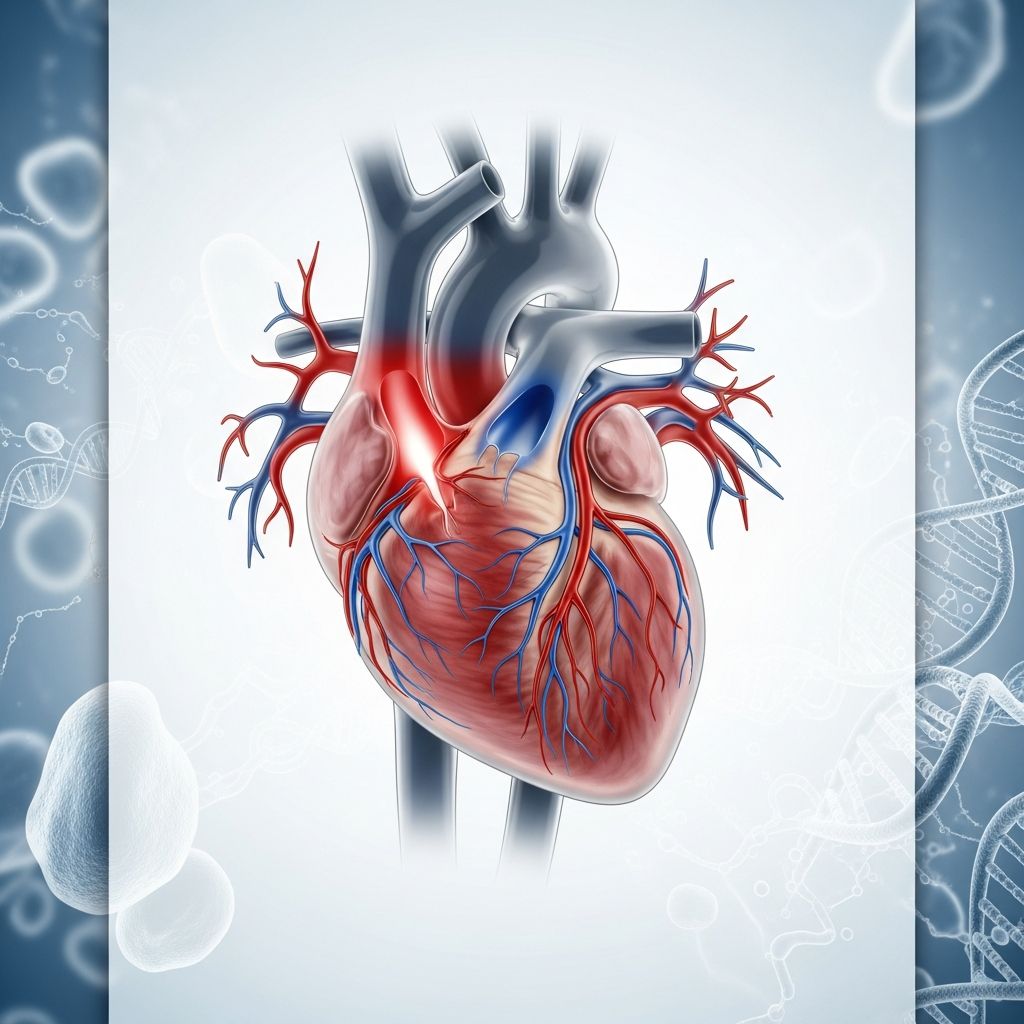
Truncus arteriosus (TA) is a rare, congenital heart defect that affects approximately 1 in 15,984 babies born in the United States. It represents about 2% of all congenital heart defects diagnosed in infants. This condition occurs during fetal development when the embryonic heart fails to divide properly, resulting in a single large arterial trunk emerging from the heart instead of the normal two separate vessels—the aorta and the pulmonary artery.
In a healthy heart, the aorta carries oxygen-rich blood to the body, while the pulmonary artery carries oxygen-poor blood to the lungs. In truncus arteriosus, one common vessel carries all blood leaving the heart, with branches leading to the systemic circulation, pulmonary circulation, and coronary arteries. This single trunk typically overrides a ventricular septal defect (VSD), which is a hole in the wall between the two lower heart chambers.
How Does Truncus Arteriosus Develop?
During normal fetal heart development, the embryologic truncus arteriosus is divided by the aorticopulmonary septum into separate pulmonary and systemic arterial systems. When this separation fails to occur properly, truncus arteriosus results. While the exact cause remains unclear, scientists have identified that the condition is associated with specific genetic factors and genetic syndromes.
Approximately one in three babies with truncus arteriosus have DiGeorge syndrome (22q11 deletion), a genetic condition that affects multiple body systems. Genetic counseling is recommended for families with affected children, as it helps parents understand the inheritance patterns and make informed reproductive decisions.
Types of Truncus Arteriosus
Medical professionals classify truncus arteriosus into several anatomical types based on how the pulmonary arteries originate from the trunk:
Type A1
In Type A1, which represents approximately 50% of all truncus arteriosus cases, a main pulmonary trunk arises from the truncal root. The aorticopulmonary septum is partially formed, making this the most common classification. The pulmonary arteries then branch from this common pulmonary trunk before supplying the lungs.
Type A2
Type A2 accounts for approximately 21% of truncus arteriosus cases. In this type, the right and left branch pulmonary arteries have separate origins directly from the trunk. The aorticopulmonary septum is completely absent, which is why this type is sometimes called the “true” form of truncus arteriosus.
Type A3
Type A3 features unilateral pulmonary branch atresia, meaning one of the pulmonary arteries is underdeveloped or absent. Blood flow to the affected lung is maintained through collateral vessels originating from the aortic arch or other systemic vessels.
Type A4
Type A4 includes an aortic arch interruption, most commonly between the left common carotid and subclavian arteries. This additional complexity increases surgical challenges and requires specialized intervention.
Symptoms and Clinical Presentation
Symptoms of truncus arteriosus typically appear within the first few days of life, making early recognition crucial for survival and management. Parents and healthcare providers should be alert for the following signs:
Related Stories



Primary Symptoms
- Blue or purple discoloration of the lips, skin, and nails (cyanosis)
- Rapid breathing or shortness of breath (tachypnea)
- Poor feeding and inadequate weight gain
- Excessive sweating, particularly during feeding
- Unusual sleepiness or lethargy
- Heart murmur detected during physical examination
- Difficulty maintaining alertness or responsiveness
Secondary Complications
If not promptly treated, truncus arteriosus leads to serious complications including congestive heart failure, pulmonary hypertension, and cardiomegaly. The excessive blood flow to the lungs causes fluid accumulation in lung tissue, resulting in respiratory distress. Without surgical intervention, pulmonary vascular disease develops, potentially leading to Eisenmenger syndrome—a permanent condition characterized by severe oxygen deprivation.
Pathophysiology and Blood Flow
Understanding how truncus arteriosus affects blood circulation is essential for comprehending the condition’s severity. In this defect, oxygen-rich blood returning from the lungs mixes with oxygen-poor blood in the left and right ventricles before being pumped into the single arterial trunk. This mixing results in blood with insufficient oxygen being distributed to the body’s organs and tissues.
The degree of cyanosis (bluish discoloration) depends on the amount of oxygen-poor blood reaching systemic circulation. Pulmonary vascular resistance (PVR) is particularly important in determining clinical severity. When PVR is high, less blood flows to the lungs, potentially causing milder cyanosis but inadequate pulmonary perfusion. As PVR decreases—normally occurring within the first week of life—pulmonary blood flow increases dramatically, overwhelming the lungs and causing congestive heart failure.
Additionally, some infants develop truncal valve insufficiency or stenosis. A leaky truncal valve allows blood to regurgitate backward, worsening heart failure, while a stenotic valve restricts blood flow, increasing cardiac workload.
Diagnostic Procedures
Accurate diagnosis of truncus arteriosus requires careful clinical evaluation and specialized imaging studies:
Initial Assessment
Physical examination may reveal cyanosis, a heart murmur, signs of respiratory distress, and hepatomegaly (enlarged liver). A chest X-ray typically shows cardiomegaly and pulmonary overcirculation patterns.
Echocardiography
Transthoracic echocardiography is the gold standard initial diagnostic modality. This non-invasive ultrasound technique clearly visualizes the single arterial trunk, demonstrates the ventricular septal defect, assesses truncal valve function, and evaluates pulmonary artery anatomy. Specialized imaging protocols can classify the anatomical type and identify associated anomalies.
Advanced Imaging
Cardiac magnetic resonance imaging (MRI) and computed tomography (CT) provide detailed three-dimensional anatomical information, particularly valuable for surgical planning. These modalities help surgeons understand complex arterial relationships and plan optimal surgical approaches.
Cardiac Catheterization
While less commonly performed now due to advanced non-invasive imaging, cardiac catheterization can measure pulmonary and systemic vascular resistances, assess oxygen saturation levels in different cardiac chambers, and provide pressure measurements to guide therapeutic decisions.
Surgical Treatment
Surgery is the only definitive treatment for truncus arteriosus and is typically performed within the first weeks of life. The primary surgical objective is to separate the pulmonary arteries from the common trunk and establish a separate pulmonary circulation pathway using a conduit.
Surgical Technique
The surgeon performs open-heart surgery with cardiopulmonary bypass support. The pulmonary arteries are carefully dissected from the truncus, and the opening at their origin is closed. The ventricular septal defect is repaired using a patch. A conduit—either a homograft (deceased donor tissue), prosthetic material, or autologous tissue—is placed between the right ventricle and the pulmonary arteries, creating a separate pathway for pulmonary blood flow.
Post-Surgical Considerations
Truncal valve function must be addressed during surgery if stenosis or significant regurgitation is present. In some cases, valve repair or replacement may be necessary. The complexity of each case depends on the anatomical type and presence of additional defects such as aortic arch interruption.
Long-Term Management and Follow-Up Care
Surviving infants require lifelong cardiac management. Unlike some congenital heart defects, truncus arteriosus typically necessitates multiple cardiac interventions throughout childhood and adulthood:
Conduit-Related Issues
The pulmonary conduit placed during initial surgery does not grow with the child. As the infant grows, the fixed-size conduit becomes relatively stenotic, restricting pulmonary blood flow. Repeat surgeries are required periodically—typically every 3 to 7 years—to replace the conduit with larger alternatives.
Valve Complications
The truncal valve may develop leakage (regurgitation) or narrowing (stenosis) over time, potentially requiring intervention. Progressive valve dysfunction affects cardiac efficiency and may necessitate surgical repair or replacement.
Arrhythmia Management
Some patients develop abnormal heart rhythms requiring medication or interventional procedures. Regular electrocardiographic monitoring helps identify and manage these complications.
Regular Follow-Up
Patients require ongoing evaluation by a pediatric cardiologist specializing in congenital heart disease. Regular clinic visits, imaging studies, and diagnostic testing monitor cardiac function, detect complications early, and plan necessary interventions. Activity restrictions may apply based on individual cardiac status.
Prognosis and Outcomes
Prognosis for truncus arteriosus has dramatically improved with modern surgical techniques and intensive care management. Without surgery, mortality is extremely high within the first year of life. With appropriate surgical intervention in the neonatal period, approximately 80-90% of infants survive to hospital discharge.
In rare cases, some individuals born with truncus arteriosus survive to adulthood without surgery, though this is exceptional. These individuals almost certainly develop severe complications including heart failure and Eisenmenger syndrome, characterized by permanent lung vessel damage and severely reduced oxygen levels.
Most children who undergo timely surgery achieve good quality of life, though they remain at risk for complications requiring additional interventions. Median survival into adulthood has steadily increased as surgical and medical management have improved.
Associated Conditions
Truncus arteriosus frequently occurs with other conditions, particularly DiGeorge syndrome (22q11 deletion), which affects approximately one-third of patients. DiGeorge syndrome involves abnormal development of the thymus, parathyroid glands, immune system, and other structures. Children with this association require evaluation and management of these additional health issues.
Other associated conditions may include cleft palate, renal anomalies, and cognitive developmental delays. Comprehensive evaluation by multiple medical specialties ensures all associated conditions receive appropriate attention.
Frequently Asked Questions
Q: How serious is truncus arteriosus?
A: Truncus arteriosus is a critical congenital heart defect requiring urgent surgical intervention. Without surgery, mortality is extremely high within the first year of life. However, with timely surgical repair and appropriate medical management, most infants survive and achieve reasonable quality of life, though they require lifelong cardiac follow-up.
Q: At what age is surgery performed?
A: Surgical repair is typically performed within the first weeks of life, ideally within the first month. Some patients may require emergency stabilization procedures before definitive surgical repair.
Q: Will my child need multiple surgeries?
A: Yes, most patients require multiple cardiac interventions throughout childhood and adulthood. The primary reason is conduit replacement, as the initial surgical conduit does not grow with the child. Additional procedures may be necessary to address valve complications or other issues.
Q: Can truncus arteriosus be detected prenatally?
A: Yes, experienced fetal echocardiographers can diagnose truncus arteriosus during prenatal screening, typically during the second and third trimester. Prenatal diagnosis allows for delivery planning at a specialized cardiac center equipped to provide immediate neonatal care.
Q: What is the connection between truncus arteriosus and DiGeorge syndrome?
A: Approximately one-third of patients with truncus arteriosus have DiGeorge syndrome, a genetic condition caused by a 22q11 deletion. This association means affected individuals may have additional health issues including immune deficiency, parathyroid abnormalities, and developmental delays requiring specialized management.
Q: Can adults survive with untreated truncus arteriosus?
A: While extremely rare, some individuals with truncus arteriosus survive to adulthood without surgery. However, they virtually always develop severe complications including congestive heart failure, pulmonary hypertension, and Eisenmenger syndrome, resulting in significant disability and reduced lifespan.
Q: What activities are permitted for children with truncus arteriosus?
A: Activity restrictions depend on individual cardiac status and physician recommendations. Most children can participate in age-appropriate activities with appropriate restrictions on strenuous exercise. Your pediatric cardiologist will provide specific recommendations based on your child’s condition and test results.
References
- Truncus Arteriosus — National Center for Biotechnology Information (NCBI). 2024. https://www.ncbi.nlm.nih.gov/books/NBK534774/
- Truncus Arteriosus (TA) — University of Rochester Medical Center. 2024. https://www.urmc.rochester.edu/encyclopedia/content?contenttypeid=90&contentid=P01826
- Truncus Arteriosus – Symptoms, Causes, Treatment — National Organization for Rare Disorders (NORD). 2024. https://rarediseases.org/rare-diseases/truncus-arteriosus/
- About Truncus Arteriosus — Centers for Disease Control and Prevention (CDC). 2024. https://www.cdc.gov/heart-defects/about/truncus-arteriosus.html
- Truncus Arteriosus: Symptoms & Treatment — Cleveland Clinic. 2024. https://my.clevelandclinic.org/health/diseases/14785-truncus-arteriosus
- Truncus Arteriosus — American Heart Association. 2024. https://www.heart.org/en/health-topics/congenital-heart-defects/about-congenital-heart-defects/truncus-arteriosus
- Truncus Arteriosus – Symptoms and Causes — Mayo Clinic. 2024. https://www.mayoclinic.org/diseases-conditions/truncus-arteriosus/symptoms-causes/syc-20364247
Similar Articles








Read full bio of medha deb