The Truth About Nutrient Deficiencies
Understanding micronutrient gaps and their impact on global health outcomes.
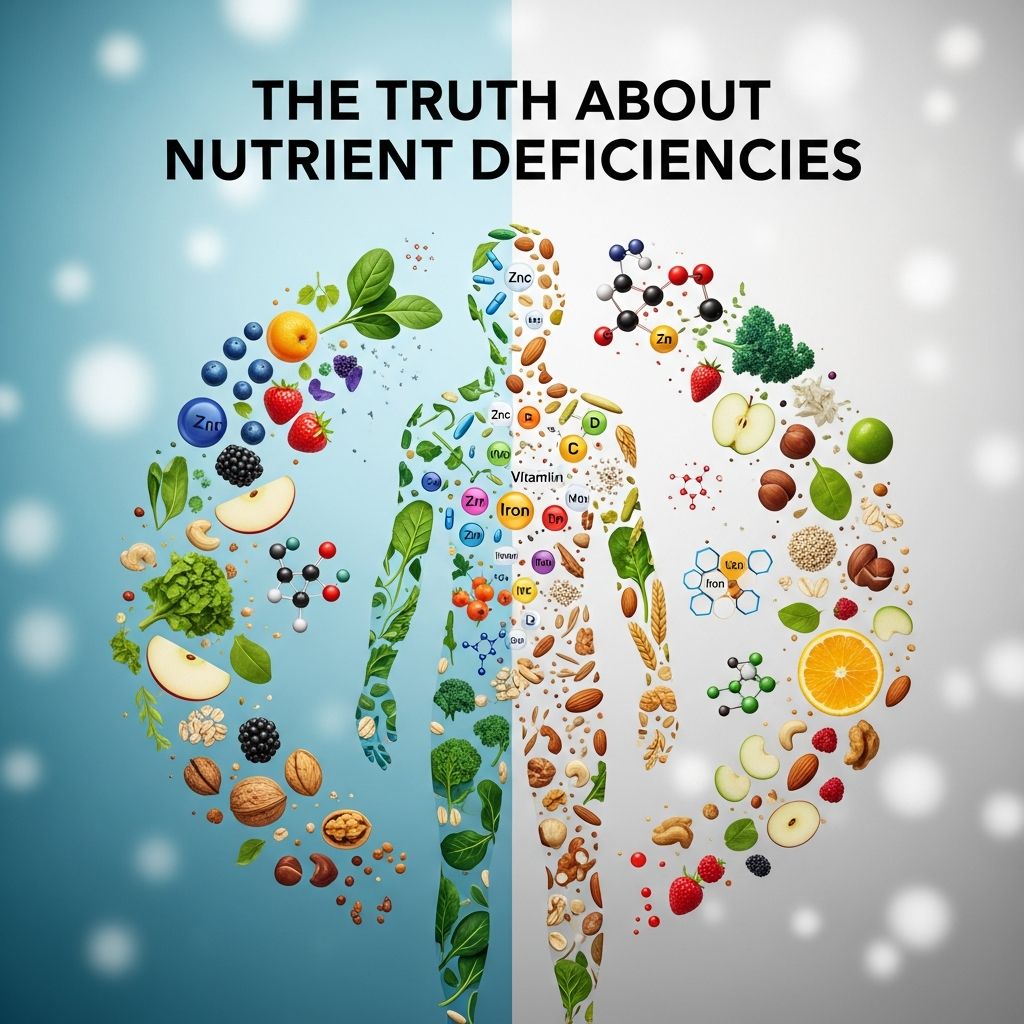
Understanding Nutrient Deficiencies: A Global Health Crisis
Nutrient deficiencies represent one of the most prevalent yet often overlooked forms of malnutrition worldwide. Unlike the visible signs of starvation, micronutrient deficiencies—the lack of essential vitamins and minerals—operate silently, undermining health across generations and income levels. Recent comprehensive research reveals a troubling reality: more than half of the global population consumes inadequate levels of critical micronutrients essential for optimal health, including calcium, iron, and vitamins C and E.
This silent epidemic affects not only developing nations but also individuals in affluent countries following popular diet plans. The widespread nature of these deficiencies underscores a fundamental gap between caloric intake and nutritional adequacy, a distinction that many people fail to recognize.
The Scope of Global Micronutrient Inadequacy
A landmark 2024 study conducted by researchers at Harvard T.H. Chan School of Public Health, UC Santa Barbara, and the Global Alliance for Improved Nutrition (GAIN) provides the first comprehensive global estimates of inadequate consumption for 15 critical micronutrients. The findings are alarming: inadequate intake is especially prevalent for iodine (68% of the global population), vitamin E (67%), calcium (66%), and iron (65%).
Beyond these most affected nutrients, the research identified significant intake inadequacies across nearly all evaluated micronutrients. More than half of the world’s population consumed inadequate levels of riboflavin, folate, and vitamins C and B6. Even niacin, which demonstrated the most sufficient intake globally, showed that 22% of people consumed inadequate levels.
The geographic and demographic patterns reveal additional complexity. Calcium intake was particularly low across North America, Europe, and Central Asia—regions typically associated with food abundance. Young people aged 10-30 showed the highest vulnerability to low calcium intake, especially in South and East Asia and sub-Saharan Africa.
Gender Differences in Micronutrient Inadequacy
The research also uncovered important sex-based differences in micronutrient consumption patterns. Women showed higher estimated inadequate intakes for iodine, vitamin B12, iron, and selenium compared to men. Conversely, men consumed inadequate levels of calcium, niacin, thiamin, zinc, magnesium, and vitamins A, C, and B6 more frequently than women.
Why Nutrient Deficiencies Matter: Health Consequences
Understanding the scope of nutrient deficiencies becomes critical when examining their health consequences. Each micronutrient deficiency carries distinct and often serious health impacts across the lifespan.
Iron Deficiency and Its Complications
Iron deficiency represents one of the most common micronutrient insufficiencies globally, affecting approximately 65% of the population. Iron plays a crucial role in oxygen transport, energy production, and immune function. Inadequate iron intake leads to anemia, characterized by fatigue, weakness, and reduced cognitive function. In children, iron deficiency impairs physical growth and cognitive development, affecting educational outcomes and lifetime earning potential.
Zinc Deficiency and Immune Function
Zinc functions as an antioxidant and anti-inflammatory agent while deeply influencing cell-mediated immunity. It participates in the activities of more than 300 enzymes and 1,000 transcription factors. Zinc deficiency, which can potentially be fatal, is associated with increased incidence of diarrheal disease, growth retardation, emotional disorders, infections, neurosensory disorders, and impaired healing.
Vitamin A Deficiency and Vision
Vitamin A deficiency remains a leading preventable cause of blindness in children worldwide. Beyond visual impairment, vitamin A inadequacy compromises immune function and increases the risk of infections and inflammation-driven anemia.
Vitamin B12 and Neurological Health
Vitamin B12 deficiencies can lead to severe neurological and hematological impairment, including peripheral neuropathy, cognitive decline, and pernicious anemia. These effects can become irreversible if deficiency persists for extended periods.
Calcium and Bone Health
Chronic calcium inadequacy contributes to osteoporosis and increased fracture risk, particularly affecting postmenopausal women and elderly individuals. The widespread calcium deficiency across developed nations suggests that access to food does not automatically translate to adequate mineral consumption.
The Diet Plan Paradox: Why Popular Plans Fall Short
A significant research finding challenges common assumptions about commercial diet plans and nutritional adequacy. Analysis of four popular diet plans revealed that each failed to provide minimum FDA Reference Daily Intake (RDI) sufficiency for all 27 micronutrients evaluated.
On average, these diet plans were RDI sufficient in only 11.75 of the 27 micronutrients analyzed and contained approximately 1,748 calories per day. To achieve sufficiency in all 27 micronutrients using only these diet plans’ food selections would require an average calorie intake of 27,575 calories daily—a physically impossible and nutritionally counterintuitive recommendation.
Six micronutrients consistently appeared absent or critically low across all four diet plans: vitamin B7, vitamin D, vitamin E, chromium, iodine, and molybdenum. These findings suggest that individuals following popular diet plans with food alone have a high likelihood of developing micronutrient deficiencies despite adequate caloric intake.
Risk Factors and Vulnerable Populations
While micronutrient deficiencies affect populations globally, certain groups face elevated risk.
Geographic and Economic Factors
Nutrient deficiencies more likely occur in developing countries where food variety is limited, malnutrition risk is higher, and legumes or whole grains dominate diets. However, inadequate intake also affects wealthy nations, suggesting that poverty alone does not explain global deficiency patterns.
Dietary Pattern Considerations
Individuals following restrictive diets, particularly vegan diets consisting primarily of seeds, nuts, legumes, and grains, face heightened risk due to the lower bioavailability of non-heme iron and zinc from plant sources. Additionally, anti-nutrients found in certain plant foods—including phytates in grains and legumes and oxalates in leafy greens—can inhibit mineral absorption when consumed in large quantities at single meals.
Population Groups at Particular Risk
Children, pregnant women, elderly individuals, and those with medical conditions affecting nutrient absorption represent particularly vulnerable populations requiring targeted nutritional attention.
Strategies for Ensuring Adequate Micronutrient Intake
Dietary Diversity and Food Selection
The most fundamental strategy for preventing nutrient deficiencies involves consuming a varied diet spanning multiple food groups. The average Western diet typically contains enough nutrients and variety to protect from true deficiency, particularly when including animal proteins such as lean pork, poultry, and shellfish—foods rich in zinc and highly absorbable heme iron.
Managing Anti-Nutrient Consumption
For those at elevated risk of mineral deficiencies, monitoring anti-nutrient consumption becomes strategically important. Practical approaches include:
- Avoiding large quantities of anti-nutrient-containing foods at single meals
- Consuming tea between meals rather than with meals to reduce iron absorption interference
- Taking calcium supplements several hours after consuming high-fiber wheat bran
Food preparation techniques significantly reduce anti-nutrient concentrations. Cooking, soaking overnight, sprouting, fermentation, and pickling break down phytic acid, allowing nutrient absorption.
Supplementation Considerations
For populations with documented deficiency risks or those following restrictive diets, targeted supplementation may prove necessary. Healthcare providers can recommend specific micronutrient supplements based on individual dietary patterns and health status.
The Connection Between Nutrient Deficiency and Obesity
A counterintuitive but well-documented relationship exists between micronutrient deficiency and overweight or obesity. Research has established a strong correlation between nutrient deficiency and obesity, with one study finding an 80.8% increased likelihood of being overweight or obese in micronutrient-deficient subjects. This paradox occurs because individuals consuming calorie-dense but nutrient-poor foods may meet or exceed caloric needs while remaining micronutrient deficient, potentially triggering increased hunger and overeating as the body seeks missing nutrients.
Frequently Asked Questions (FAQs)
Q: Can I get all necessary micronutrients from food alone?
A: While a well-planned, varied diet can provide most micronutrients, research shows that many people, even in developed nations, fall short of adequate intake for multiple nutrients. Strategic dietary choices and potential supplementation may be necessary.
Q: Are micronutrient deficiencies only a problem in developing countries?
A: No. Research reveals that more than half the global population consumes inadequate micronutrients, affecting people in all regions and income levels, including North America and Europe.
Q: How do I know if I have a nutrient deficiency?
A: Symptoms vary by nutrient but may include fatigue, weakness, poor wound healing, cognitive difficulties, or bone problems. Blood tests ordered by healthcare providers can definitively assess micronutrient status.
Q: Should everyone take micronutrient supplements?
A: Not necessarily. Those consuming varied diets with adequate protein may not need supplements. However, individuals with specific dietary restrictions, medical conditions, or documented deficiencies should consult healthcare providers about supplementation.
Q: Can anti-nutrients eliminate all mineral absorption?
A: No. Anti-nutrients inhibit absorption but don’t eliminate it entirely. Proper food preparation, dietary variety, and balanced meals throughout the day minimize their impact.
Conclusion: Moving Forward
Nutrient deficiencies represent a significant yet preventable public health challenge affecting billions worldwide. The evidence clearly demonstrates that caloric sufficiency does not ensure micronutrient adequacy, and that even individuals in wealthy nations following popular diet plans face substantial deficiency risk. Understanding individual vulnerability factors, prioritizing dietary diversity, and employing evidence-based strategies for nutrient absorption can substantially reduce deficiency risk. For those with specific risk factors or documented deficiencies, healthcare provider consultation ensures personalized, appropriate interventions that support long-term health and optimal human potential.
References
- Billions worldwide consume inadequate levels of micronutrients critical to human health — Harvard T.H. Chan School of Public Health. 2024-08-29. https://hsph.harvard.edu/news/billions-worldwide-consume-inadequate-levels-of-micronutrients-critical-to-human-health/
- Prevalence of micronutrient deficiency in popular diet plans — National Center for Biotechnology Information/PubMed Central. 2010. https://pmc.ncbi.nlm.nih.gov/articles/PMC2905334/
- Prevalence of micronutrient deficiencies across diverse populations — Frontiers in Nutrition. 2024. https://www.frontiersin.org/journals/nutrition/articles/10.3389/fnut.2024.1389080/full
- Are Anti-Nutrients Harmful? — The Nutrition Source, Harvard T.H. Chan School of Public Health. https://nutritionsource.hsph.harvard.edu/anti-nutrients/
Similar Articles







Read full bio of medha deb