Tuberculosis (TB): Understanding Causes, Symptoms, Diagnosis, and Treatment
Comprehensive overview on tuberculosis — symptoms, diagnosis, treatment options, and prevention strategies.
Tuberculosis (TB): Causes, Symptoms, Diagnosis, Treatment, and Prevention
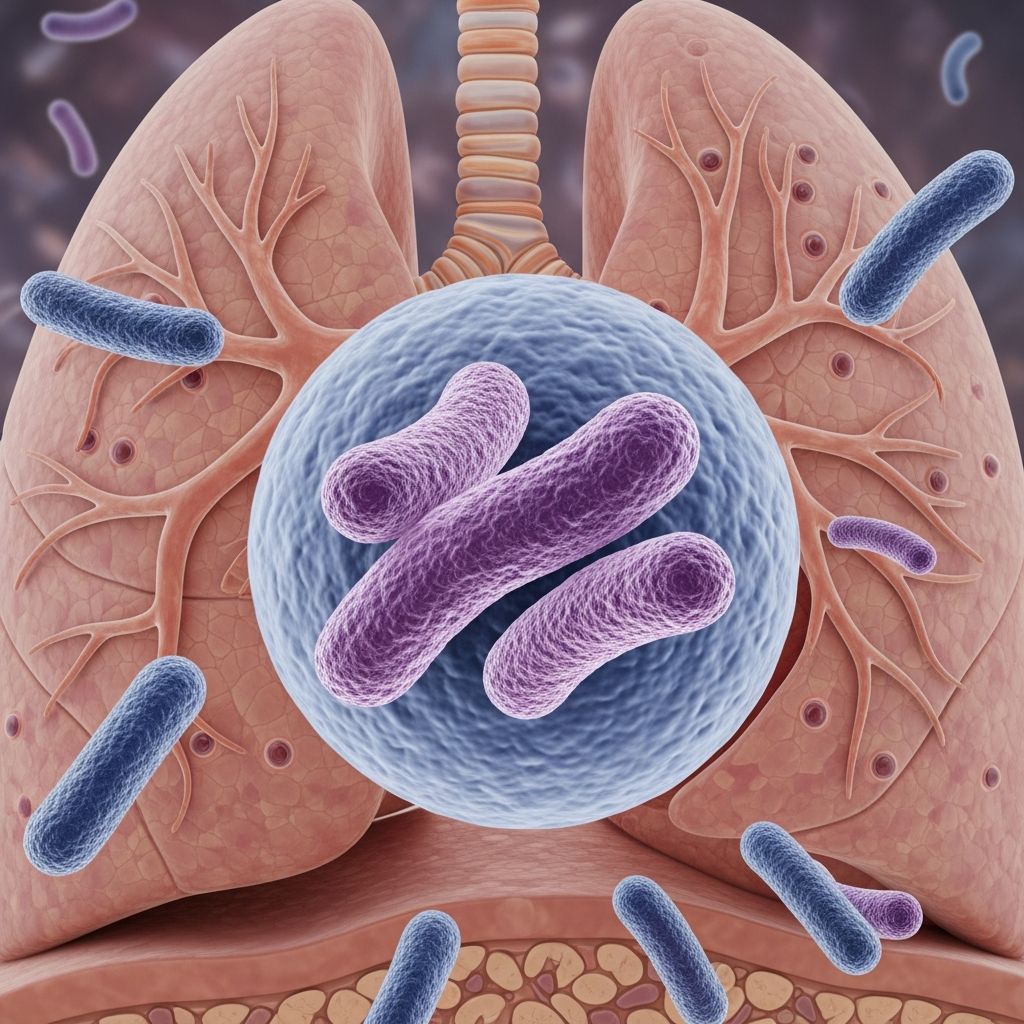
Tuberculosis (TB) is a contagious infection primarily affecting the lungs but can involve other parts of the body. It is caused by the bacterium Mycobacterium tuberculosis, which spreads through airborne droplets when an infected person coughs or sneezes. TB remains a significant global health challenge, with millions affected worldwide despite available treatments and prevention strategies.
What Is Tuberculosis?
Tuberculosis is a bacterial infection that can either remain latent in an individual without symptoms or become active, causing illness. Active TB is contagious and can spread in crowded or poorly ventilated environments, especially where healthcare access is limited.
Causes and Transmission
- Pathogen: The causative agent is Mycobacterium tuberculosis.
- Transmission: TB spreads through the air when a person with active pulmonary TB coughs, sneezes, speaks, or sings, releasing infectious droplets.
- High-risk settings: Transmission is higher in places like homeless shelters, prisons, healthcare facilities, and areas with immunocompromised populations.
- Susceptible individuals: Those with weakened immune systems, such as people with HIV, malnutrition, or certain chronic diseases, are more vulnerable.
Symptoms of Tuberculosis
The symptoms vary depending on whether TB is pulmonary (lungs) or extrapulmonary (other organs):
Pulmonary TB Symptoms
- Persistent cough lasting more than two weeks
- Coughing up blood (hemoptysis)
- Chest pain and difficulty breathing
- Unexplained weight loss
- Night sweats and fever
- Fatigue and weakness
Extrapulmonary TB Symptoms
When TB affects other organs, symptoms depend on the affected site and may include:
- Swollen lymph nodes
- Bone or joint pain (in case of skeletal TB)
- Meningitis symptoms (headaches, confusion, neck stiffness)
- Abdominal pain or urinary symptoms if TB affects those organs
Diagnosing Tuberculosis
Early and accurate diagnosis is critical to controlling TB spread and initiating treatment. Common diagnostic methods include:
1. Clinical Evaluation and History
Assessment of symptoms and risk factors such as exposure history, travel to endemic areas, and immune status.
2. Imaging Tests
A chest X-ray is often the first imaging tool used, showing abnormalities such as:
- Upper lobe infiltrates
- Cavitary lesions in the lungs
- Hilar or mediastinal lymphadenopathy
3. Microbiological Tests
- Sputum smear microscopy: Detects acid-fast bacilli (AFB) in respiratory secretions; positive smears correlate with infectiousness.
- Culture: The gold standard for confirming TB, allowing identification and drug susceptibility testing; however, cultures can take weeks for results.
- Molecular Tests (PCR): Tests like Xpert MTB/RIF detect TB DNA and rifampin resistance rapidly and with high sensitivity, especially in sputum of smear-positive patients.
- Tuberculin skin test (TST) and interferon-gamma release assays (IGRA): Indicate TB infection but do not differentiate active disease from latent infection.
Tuberculosis Treatment
TB treatment depends on whether the infection is drug-susceptible or resistant and the site of disease. Key aspects include:
Standard Drug-Susceptible TB Treatment
- Initial phase (2 months): Combination of four drugs—rifampin, isoniazid, pyrazinamide, and ethambutol (abbreviated as RIPE therapy).
- Continuation phase (usually 4 months): Typically, isoniazid and rifampin based on drug susceptibility results.
- Duration: Standard treatment length is 6 months; extensions (up to 9-12 months) may apply for cavitary disease, bone/joint TB, or meningitis.
Drug-Resistant Tuberculosis
Patients with multidrug-resistant TB (MDR-TB) or extensively drug-resistant TB (XDR-TB) require individualized regimens often involving second-line drugs and longer treatment durations. Management is complex and best done with expert consultation.
Related Stories



Special Considerations
- Co-infection with HIV: TB treatment may be complicated by drug interactions with antiretroviral therapy and immune reconstitution inflammatory syndrome (IRIS).
- Pediatric TB: Treatment dosing and duration adapted for children.
- Latent TB Infection: Preventive therapy is given to those at high risk of developing active disease.
Infection Control and Prevention
Preventing the spread of TB involves several strategies:
- Isolation: Patients with suspected or confirmed pulmonary TB should be isolated until they are non-infectious, typically after 2 weeks of treatment and negative sputum smears.
- Respiratory hygiene: Covering mouth and nose when coughing or sneezing.
- Environmental controls: Good ventilation, ultraviolet germicidal irradiation in health facilities.
- Contact tracing: Identifying and testing individuals exposed to infectious TB cases.
- Vaccination: The Bacillus Calmette-Guérin (BCG) vaccine offers some protection against severe pediatric TB but is not widely effective in preventing adult pulmonary TB.
Complications and Prognosis
If detected and treated early, TB has a good prognosis. However, untreated or inadequately treated TB can lead to severe complications such as:
- Disseminated disease affecting multiple organs
- Lung destruction and chronic respiratory impairment
- Spread of resistant strains
- Death, especially in immunocompromised patients
Frequently Asked Questions (FAQs)
Q1: How is latent TB different from active TB?
Answer: Latent TB infection means a person has the bacteria in their body but has no symptoms and is not contagious. Active TB causes symptoms and can spread to others.
Q2: Can TB be cured?
Answer: Yes, TB is curable with appropriate antibiotic treatment, which usually lasts 6 months or longer depending on the TB form.
Q3: How is TB transmitted?
Answer: TB spreads via airborne droplets when someone with active pulmonary TB coughs or sneezes.
Q4: Who is most at risk for TB?
Answer: People with weakened immune systems, close contacts of TB patients, healthcare workers, and those in crowded living conditions have higher risk.
Q5: What kind of tests are used to diagnose TB?
Answer: Diagnosis commonly involves chest X-rays, sputum smear microscopy, culture, and molecular tests like PCR (Xpert MTB/RIF).
References
- Tuberculosis, Active | Johns Hopkins ABX Guide — Johns Hopkins Medicine. 2023-10-10. https://www.hopkinsguides.com/hopkins/view/Johns_Hopkins_ABX_Guide/540370/all/Tuberculosis__Active
- What We Know about Tuberculosis Transmission: An Overview — Journal of Infectious Diseases. 2017-06-01. https://academic.oup.com/jid/article/216/S7/S629/2934707
- Johns Hopkins University Center for Tuberculosis Research — Johns Hopkins University. 2024. https://tbcenter.jhu.edu
Similar Articles








Read full bio of Sneha Tete