Tuberous Sclerosis Guide: Symptoms, Diagnosis & Treatment
Comprehensive guide to tuberous sclerosis complex: symptoms, diagnosis, genetics, and lifelong management strategies.
Revised: January 2026
What is tuberous sclerosis?
Tuberous sclerosis complex (TSC) is a rare, inherited genetic disorder characterised by the abnormal growth of harmless tumours (hamartomas) in multiple organs, most commonly the brain, skin, kidneys, heart, eyes, and lungs. These benign growths arise due to mutations in the TSC1 or TSC2 genes, which regulate cell growth and division via the mTOR pathway. TSC affects approximately 1 in 6,000 newborns and can present with highly variable severity, from mild skin lesions to severe neurological complications like epilepsy and intellectual disability. While not curable, early diagnosis and vigilant surveillance significantly improve outcomes through targeted symptom management.
The condition was first described in 1880 by French physician Désiré-Magloire Bourneville, who noted tubers (firm, white nodules) in the brains of patients with epilepsy. Modern understanding reveals TSC as a multisystem phakomatosis, with manifestations evolving across the lifespan—from prenatal cardiac rhabdomyomas to adult-onset renal angiomyolipomas. Approximately one-third of cases are familial (autosomal dominant inheritance), while two-thirds arise from de novo mutations.
Who gets tuberous sclerosis?
TSC affects all ethnicities and both sexes equally, with a birth prevalence of about 1:6,000. It is diagnosed across all age groups, though most cases are identified in infancy or early childhood due to seizures or hypomelanotic macules. Severity varies widely: some individuals live normal lives with minimal intervention, while others require lifelong multidisciplinary care for epilepsy, autism, renal failure, or lymphangioleiomyomatosis (LAM). Family history is present in 30% of cases; genetic counselling is recommended for all. Prenatal diagnosis is possible via chorionic villus sampling if parental mutations are known.
What causes tuberous sclerosis?
TSC results from pathogenic variants in TSC1 (encoding hamartin, chromosome 9q34) or TSC2 (encoding tuberin, chromosome 16p13), occurring in 85% of cases. These proteins form a complex inhibiting mTORC1, a key regulator of cell proliferation; loss of function leads to unchecked hamartoma growth. TSC2 mutations are more common (70%) and often associated with greater severity. Mosaicism explains milder or segmental presentations. Genetic testing confirms diagnosis in 95% of cases but is negative in 5-10% due to undetected variants.
What are the clinical features of tuberous sclerosis?
TSC manifestations span multiple systems and evolve over time (see Table 1). Neurological features predominate, affecting up to 90%.
Neurological features
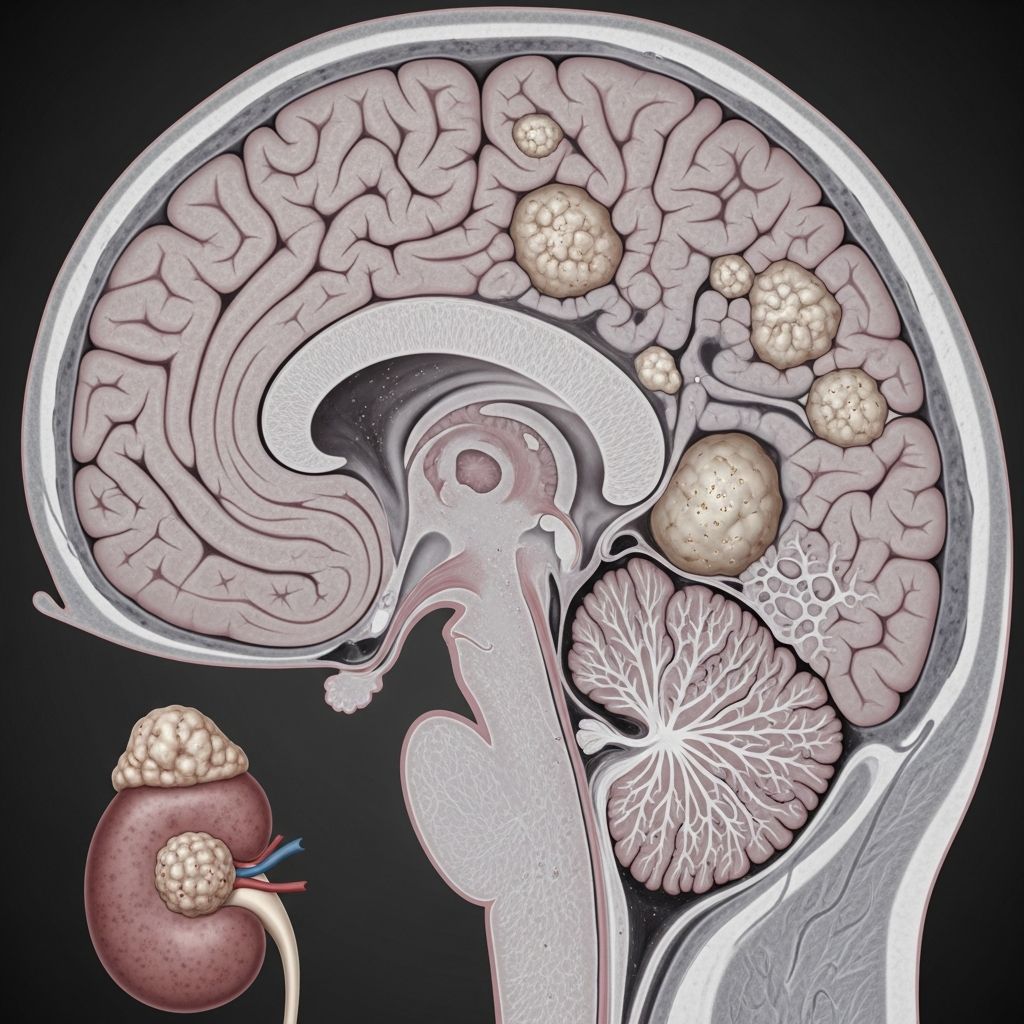
- Cortical tubers: Firm, white matter lesions causing epilepsy (80-90%, often infantile spasms before age 1) and neurodevelopmental delay.
- Subependymal nodules (SEN): Ventricular hamartomas; 50-80%, risk progressing to SEGA.
- Subependymal giant cell astrocytoma (SEGA): 10-20%, typically ages 10-20; may obstruct CSF causing hydrocephalus.
- Tuberous sclerosis-associated neuropsychiatric disorders (TAND): Autism (40-60%), ADHD (40%), anxiety (50%); screen at key developmental ages.
Skin features
Skin lesions, present in 95%, aid diagnosis.
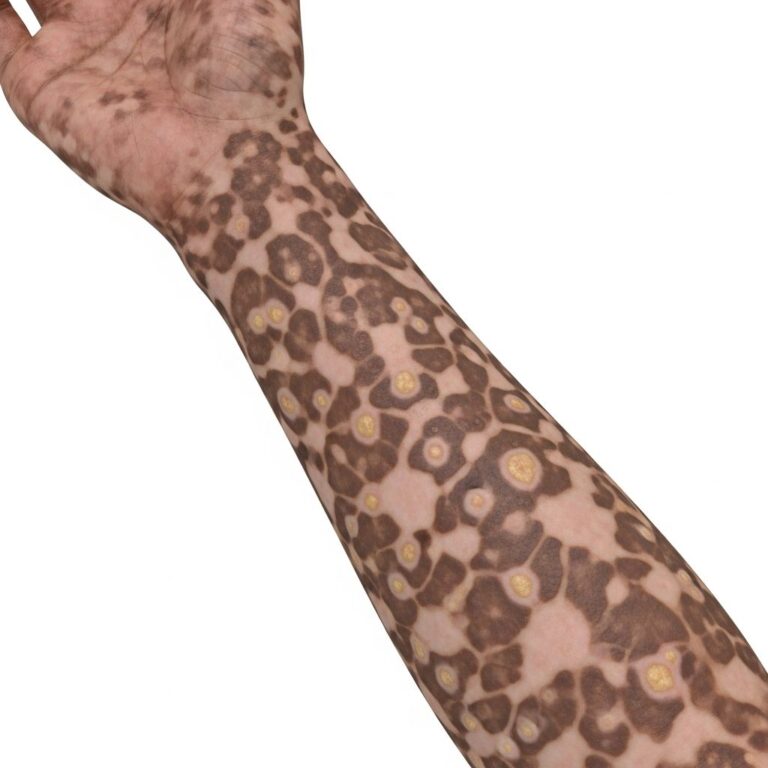
- Hypomelanotic macules: Ash-leaf spots (>3, >5mm); earliest sign, visible under Wood lamp.
- Facial angiofibromas (adenoma sebaceum): Red-brown papules on cheeks/nose; >3 post-puberty.
- Fibrous cephalic plaque: Forehead plaque; TSC2-related.
- Shagreen patches: Collagenous plaques on back/lumbar.
- Ungual fibromas: Periungual; >2 post-puberty.
Renal features
Related Stories



- Angiomyolipomas (AML): 70-80% by age 40; risk haemorrhage if >3cm.
- Renal cysts: 20-50%; may lead to polycystic kidney disease if contiguous TSC2-PKD1 mutation.
Cardiac features
- Rhabdomyomas: 50-70% fetuses; regress postnatally, rarely obstructive.
Pulmonary features
- Lymphangioleiomyomatosis (LAM): 30-40% women; cystic lung disease causing pneumothorax, respiratory failure.
Ocular features
- Retinal hamartomas: 40-50%; achromic patches.
Other
- Dental enamel pits: >3.
- Non-renal hamartomas: Liver, bone, GI.
| Manifestation | Prevalence | Typical Onset |
|---|---|---|
| Cortical tubers | 80-90% | Prenatal/infancy |
| Hypomelanotic macules | 90-95% | Birth/infancy |
| Epilepsy | 80-90% | <3 years |
| Renal AML | 70-80% | Adolescence/adulthood |
| SEGA | 10-20% | Childhood |
| LAM | 30-40% females | Adulthood |
Diagnosis of tuberous sclerosis
Diagnosis uses 2021 TSC criteria: definite (2 major or 1 major + 2 minor), possible (1 major or ≥2 minor), or genetic confirmation.
Major features: Hypomelanotic macules (≥3, ≥5mm), angiofibromas (≥3), fibrous plaque, ungual fibroma (≥2), shagreen patch, multiple retinal hamartomas, cortical dysplasia, subependymal nodules, SEGA, cardiac rhabdomyoma, LAM, renal AML (≥2).
Minor features: Confetti lesions, dental pits (≥3), intraoral fibromas, retinal achromic patch, multiple renal cysts, non-renal hamartoma.
Investigations: Brain/renal MRI, echo, eye exam, Wood lamp skin exam, genetic testing. Prenatal: Fetal cardiac rhabdomyoma on echo.
Genetic testing
Identifies TSC1/TSC2 variants in 85-95%; mosaic testing for equivocal cases. Negative test does not exclude if clinical criteria met. Offer to relatives; 50% recurrence risk if parental mutation.
What is the treatment for tuberous sclerosis?
Symptomatic and surveillance-based; mTOR inhibitors (everolimus, sirolimus) for SEGA, AML >3cm, LAM.
- Epilepsy: Vigabatrin for spasms; adjunctive cannabidiol, surgery.
- SEGA: Everolimus if >1cm or symptomatic.
- Renal AML: Embolisation for bleed; mTORi for >3cm.
- LAM: Sirolimus.
- TAND: Behavioural therapy, medications.
- Skin: Laser/topicals for angiofibromas.
Surveillance for tuberous sclerosis
Lifelong, per 2021 guidelines.
- Brain MRI: Age 0-25q1-3y; then q2y if SEGA history.
- Renal MRI: Annual BP/GFR; MRI q1-3y.
- Echo: Age 0-3y q1y; then if abnormal.
- Lung CT (females): Age 18 if symptoms.
- TAND screen: Ages 0-3,3-6,6-9,12-16y.
- Dermatology: Annual.
What is the outcome for tuberous sclerosis?
Variable; normal intellect in 50-60%, epilepsy control in 70%. Renal/brain complications cause most morbidity; early intervention improves survival/QoL.
Frequently asked questions
Is tuberous sclerosis curable?
No, but manageable with surveillance and targeted therapies.
Can TSC be detected prenatally?
Yes, via genetic testing or fetal rhabdomyoma.
Does TSC shorten life expectancy?
Not typically, with monitoring; main risks: SEGA, AML bleed, LAM.
Should family members be tested?
Yes, if index case confirmed; 50% risk to offspring.
References
- Tuberous Sclerosis Complex – StatPearls — NCBI Bookshelf, National Institutes of Health. 2023-10-01. https://www.ncbi.nlm.nih.gov/books/NBK538492/
- An introduction to tuberous sclerosis complex — Tuberous Sclerosis Association. 2019-10-01. https://tuberous-sclerosis.org/wp-content/uploads/2019/10/TSA-An-introduction-to-TSC.pdf
- Tuberous Sclerosis Complex (TSC) – Pediatrics — Merck Manuals Professional Edition. 2024-01-01. https://www.merckmanuals.com/professional/pediatrics/neurocutaneous-syndromes/tuberous-sclerosis-complex-tsc
- TSC Diagnostic Criteria, Surveillance and Management Guidelines — Tuberous Sclerosis Alliance. 2021-01-01. https://www.tscalliance.org/resources/tsc-diagnostic-criteria-surveillance-and-management-guidelines/
- An introduction to TSC (2021 edition) — TSC Alliance. 2023-12-01. https://www.tscalliance.org/wp-content/uploads/2023/12/An-introduction-to-TSC-2021.pdf
Similar Articles








Read full bio of medha deb