Turkey Vs. Chicken: Which Is Healthier And How To Choose
Comparing turkey and chicken: protein content, calories, fat, and nutrition to help you choose the best poultry for your diet.
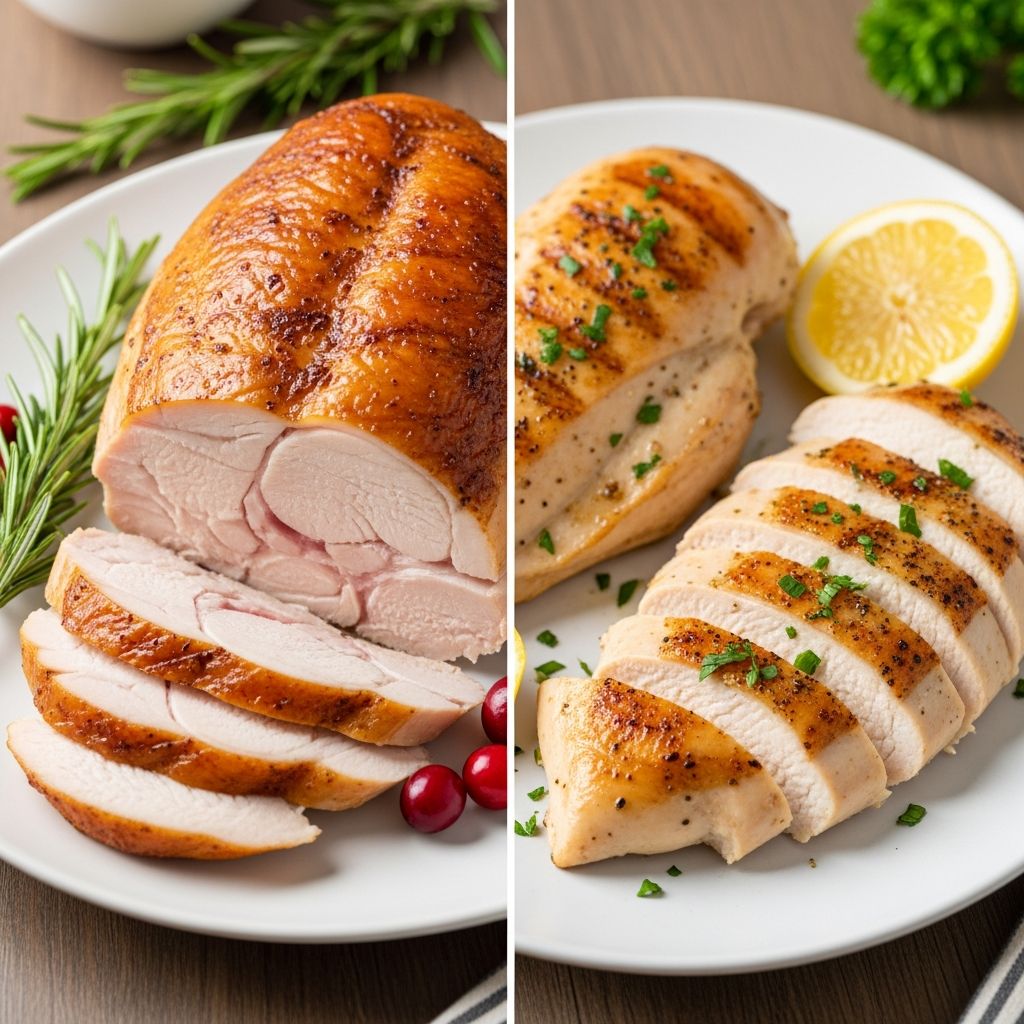
Turkey and chicken are staple proteins in many diets, prized for their lean profiles and versatility in meals. Both provide high-quality, complete proteins essential for muscle repair, immune function, and overall health. However, subtle differences in protein content across cuts—breast, wings, legs, and thighs—along with variations in calories, fat, vitamins, and minerals, can influence which is the better choice for specific goals like weight loss, muscle building, or balanced nutrition.
This comparison draws from USDA nutritional databases to break down white meat versus dark meat, evaluate overall health impacts, and guide informed decisions. Whether you’re meal prepping for fitness or seeking heart-healthy options, understanding these distinctions empowers smarter eating.
Nutrition Comparison: Turkey vs. Chicken
A side-by-side look at key macronutrients and micronutrients per 3-ounce (85g) cooked serving reveals close similarities, but turkey edges out in leanness for most white meat cuts. Data from the USDA FoodData Central shows chicken breast slightly higher in protein, while turkey thigh offers a minor advantage in dark meat.
| Nutrient (per 3 oz cooked) | Chicken Breast | Turkey Breast | Chicken Thigh | Turkey Thigh |
|---|---|---|---|---|
| Calories | 165 | 135 | 240 | 190 |
| Protein (g) | 31 | 29 | 23 | 25 |
| Total Fat (g) | 3.6 | 1.7 | 15 | 10 |
| Saturated Fat (g) | 1 | 0.5 | 4.2 | 3 |
Key takeaway: Turkey is generally lower in calories and fat, making it ideal for calorie-controlled diets, while chicken provides a protein edge in breast meat.
White Meat: Breast and Wings
White meat, primarily from the breast and wings, is favored for its mild flavor, tenderness, and low fat content. It’s a go-to for bodybuilders and dieters aiming for high protein with minimal calories.
Breast Meat
Chicken breast leads slightly in protein density. Per ounce (28g) roasted:
- Chicken breast: 9g protein, 30 calories
- Turkey breast: 8g protein, 25 calories
This 1g difference per ounce is negligible for most meals but adds up in high-volume eating like bodybuilding cuts. Turkey breast’s lower calorie count supports fat loss without sacrificing much protein. Both are rich in niacin (B3) for energy metabolism and selenium for antioxidant protection.
Wing Meat
Wings offer similar nutrition to breast meat but with slightly more fat from skin. Protein is identical:
- Both chicken and turkey wings: ~9g protein per ounce
Opt for skinless wings to mimic breast meat benefits. They’re perfect for snacks but watch portion sizes due to higher calorie density when fried.
Summary: White meat differences are minimal; choose based on calorie needs—turkey for leanness, chicken for max protein.
Dark Meat: Legs and Thighs
Dark meat from legs (drumsticks) and thighs is richer in flavor, juicier, and higher in iron and zinc due to greater myoglobin content. It’s more calorie-dense but nutrient-packed for active lifestyles.
Leg Meat (Drumsticks)
Protein parity reigns here:
- Chicken and turkey legs: 8g protein per ounce
Dark meat provides more B vitamins like B12 for nerve health and zinc for immunity, though fat is higher (5-7g per 3oz vs. 2g in white).
Thigh Meat
Turkey thighs nudge ahead:
Related Stories



- Chicken thigh: 7g protein per ounce
- Turkey thigh: 8g protein per ounce
Thighs have more monounsaturated fats (heart-healthy like olive oil) than breasts. Turkey thighs are leaner overall, with 190 calories vs. chicken’s 240 per 3oz serving.
Summary: Dark meat suits flavor lovers; turkey thighs offer better protein-to-calorie ratio.
Which Is Healthier Overall?
Neither reigns supreme—healthiness depends on context. Both deliver complete proteins with all essential amino acids, outperforming plant sources in bioavailability.
- For weight loss: Turkey white meat (lowest calories/fat).
- For muscle gain: Chicken breast (highest protein density).
- For heart health: Skinless turkey (less saturated fat).
- Moderation note: Excess red/processed meats links to risks, but lean poultry is safe in balance (up to 26oz/week per AHA).
Fat and Calorie Breakdown
Turkey consistently has less fat:
- White meat: Turkey ~1.7g fat/3oz vs. chicken 3.6g
- Dark meat: Turkey ~10g vs. chicken 15g
This makes turkey preferable for low-fat diets.
Vitamins and Minerals
Profiles overlap, but variations exist:
| High in Chicken Breast | High in Dark Meat | |
|---|---|---|
| Niacin (B3) | High | Moderate |
| Vitamin B6 | High | Moderate |
| Zinc | Low | High |
| Iron | Low | High |
Dark meat boosts minerals for anemia prevention; white excels in B vitamins for metabolism.
Both support thyroid health via selenium and phosphorus for bones. Pair with veggies for full nutrient synergy.
Practical Tips for Your Diet
Incorporate variety: Alternate cuts and birds weekly. Grill, bake, or air-fry skinless for max benefits. Turkey shines in salads/burgers; chicken in stir-fries/soups.
- Ground turkey (93% lean) swaps beef for tacos (less fat).
- Chicken tenders for kids—high protein, customizable.
Sustainability: Turkey often pasture-raised, lower environmental impact.
Frequently Asked Questions (FAQs)
What has more protein: turkey or chicken?
Chicken breast has slightly more (31g vs. 29g per 3oz), but turkey thigh edges chicken thigh. Overall, they’re comparable.
Is turkey or chicken better for weight loss?
Turkey, due to lower calories and fat across cuts.
Are turkey and chicken healthy daily?
Yes, in moderation (3-4 servings/week). Balance with plants/fish.
White meat vs. dark meat: which is healthier?
White for low-fat; dark for nutrients like iron/zinc.
Organic vs. conventional poultry?
Organic avoids antibiotics; nutrition similar. Choose based on ethics/budget.
Bottom line: Both excel as lean proteins. Prioritize whole cuts, remove skin, and diversify for optimal health.
References
- Turkey vs Chicken: Which Has More Protein? — Healthline (Ansley Hill, RD). 2018-10-30. https://www.healthline.com/nutrition/turkey-vs-chicken
- National Nutrient Database for Standard Reference — USDA FoodData Central. 2024. https://fdc.nal.usda.gov/
- Dietary Guidelines for Americans, 2020-2025 — USDA/HHS. 2020-12-01. https://www.dietaryguidelines.gov/
- Poultry Nutrition Overview — NIH Office of Dietary Supplements. 2023-05-15. https://ods.od.nih.gov/factsheets/Poultry-HealthProfessional/
- Sustainable Poultry Production — FAO (Food and Agriculture Organization). 2022-11-10. http://www.fao.org/poultry-production-products/production/en/
Similar Articles








Read full bio of medha deb