Turmeric Vs Curcumin: Expert Guide To Benefits And Use
Understand the key differences between turmeric and curcumin, their health benefits, and which one might be right for your wellness needs.
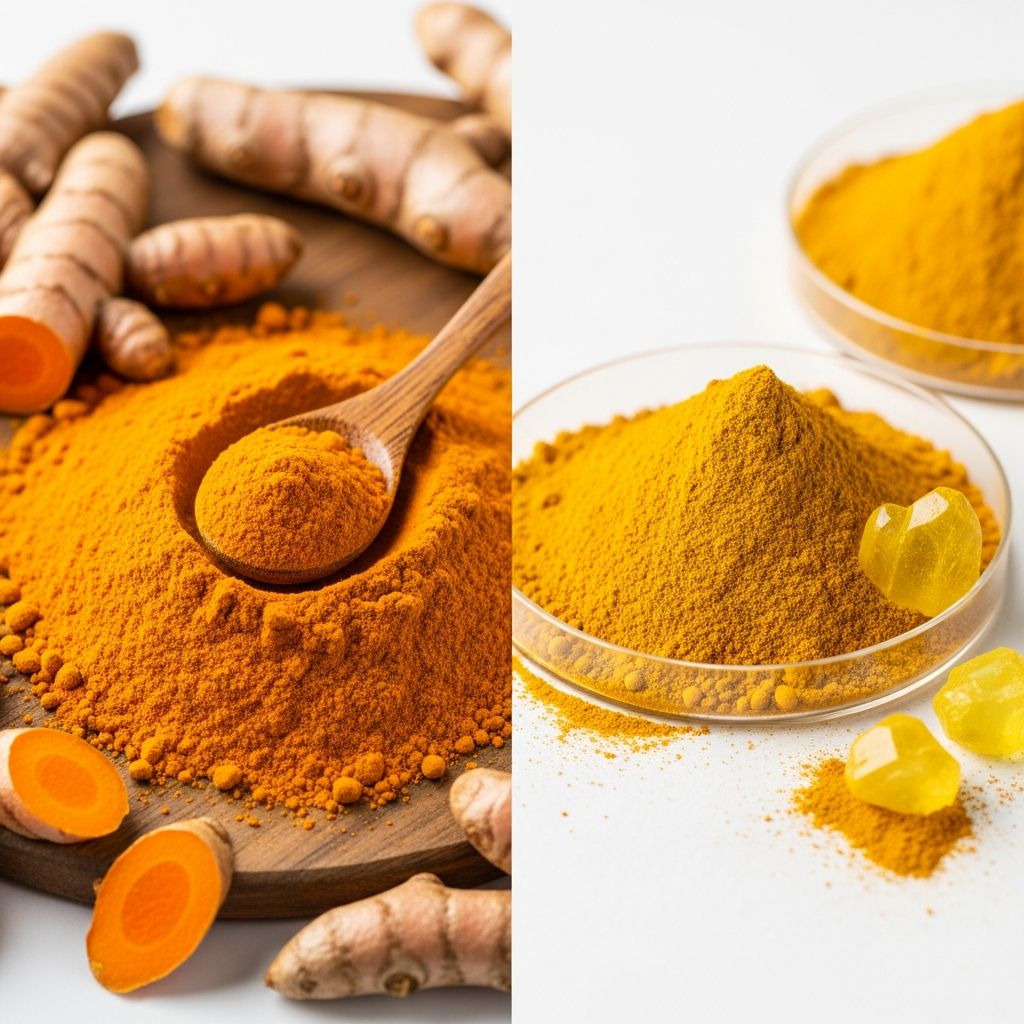
Turmeric, a vibrant golden spice used for centuries in traditional medicine, contains curcumin, its most potent active compound renowned for anti-inflammatory and antioxidant properties. While often used interchangeably, turmeric offers a full spectrum of beneficial compounds, whereas isolated curcumin provides concentrated effects for specific health concerns.
What Is Turmeric?
Turmeric (*Curcuma longa*) is a rhizomatous herbaceous perennial plant from the ginger family, native to South Asia. Its root is ground into a bright yellow powder commonly used in Indian cuisine, curries, and golden milk. Beyond flavor, turmeric has been employed in Ayurvedic and Traditional Chinese Medicine for over 4,000 years to treat digestive issues, skin conditions, and inflammation.
Turmeric comprises about 2-8% curcuminoids, including curcumin (the primary bioactive), demethoxycurcumin, and bisdemethoxycurcumin. These give turmeric its color and therapeutic potential, but it also contains over 200 other compounds like volatile oils (turmerone, atlantone), proteins, resins, and fibers contributing synergistic effects.
- Key components: Curcuminoids (2-8%), essential oils (3-7%), carbohydrates, and minerals.
- Culinary uses: Coloring agent in rice, mustard, and butter; anti-caking agent in powdered products.
- Forms: Fresh root, dried powder, extracts, teas, and supplements.
What Is Curcumin?
Curcumin is the star curcuminoid in turmeric, responsible for most studied health benefits. Isolated and standardized in supplements (often 95% curcuminoids), it targets inflammation pathways like NF-kB and COX-2 enzymes, mimicking pharmaceutical anti-inflammatories without side effects.
Pure curcumin has poor bioavailability—absorbed in tiny amounts due to rapid liver metabolism and intestinal excretion. Enhanced formulations pair it with piperine (black pepper extract, boosting absorption 2,000%), liposomes, or nanoparticles.
- Concentration: Supplements provide 500-2,000 mg curcumin vs. ~20-180 mg per teaspoon turmeric powder.
- Appearance: Orange-yellow crystalline powder.
- Sources: Extracted via solvent from turmeric rhizomes.
Turmeric vs. Curcumin: Key Differences
| Aspect | Turmeric | Curcumin |
|---|---|---|
| Composition | Whole root with 2-8% curcumin + 200+ compounds | Isolated 95% curcuminoids |
| Bioavailability | Low; synergistic compounds may aid absorption | Very low; requires enhancers like piperine |
| Dosage for Benefits | 1-3g powder daily | 500-2g with piperine |
| Best For | General wellness, digestion, culinary use | Targeted inflammation, arthritis, high-dose therapy |
| Cost | Affordable spice | More expensive extracts |
Turmeric provides a “whole food” matrix potentially amplifying effects via entourage synergy, while curcumin delivers precise dosing for clinical outcomes.
Health Benefits of Turmeric and Curcumin
Shared Benefits
Both combat oxidative stress and chronic inflammation—root causes of disease—through antioxidant activity neutralizing free radicals and modulating cytokines like TNF-alpha and IL-6.
- Anti-Inflammatory: Comparable to ibuprofen for osteoarthritis pain; reduces joint swelling.
- Antioxidant: Boosts enzymes like superoxide dismutase; protects cells from damage.
- Heart Health: Lowers LDL cholesterol, triglycerides; improves endothelial function.
- Blood Sugar Control: Enhances insulin sensitivity; lowers HbA1c in type 2 diabetes.
- Antimicrobial: Inhibits bacteria (E. coli, Staphylococcus), fungi (Candida); supports gut health.
Turmeric-Specific Benefits
Whole turmeric shines where synergy matters. Studies show turmeric outperforms isolated curcumin against fungal growth and tumor cells due to curdione and other oils disrupting membranes more effectively.
- Digestion: Stimulates bile production; alleviates IBS, ulcers.
- Liver Protection: Reduces oxidative damage in rat models of chronic injury.
- Obesity: Regulates fat metabolism via inflammatory pathways.
- Cancer Support: Suppresses colon cancer cell growth better than curcumin alone (preliminary).
Related Stories



Curcumin-Specific Benefits
High-dose curcumin targets precise pathways for superior results in isolated studies.
- Arthritis: 1g/day turmeric extract with curcumin reduces pain as effectively as NSAIDs after 8-12 weeks.
- Brain Health: Crosses blood-brain barrier; boosts BDNF, reduces depression risk.
- Cancer Prevention: Inhibits tumor growth, angiogenesis in lab models.
- Diabetes Markers: Lowers TNF, IL-6 better than turmeric in animal studies.
- Wound Healing: Antibacterial effects accelerate recovery.
How to Take Turmeric vs. Curcumin
Dosage: Turmeric: 1-3g powder/day (½-1 tsp); Curcumin: 500-2,000mg standardized extract with piperine. Divide doses with meals.
- Enhancers: Always pair with black pepper (5-10mg piperine) and fats (oil, avocado) for 20-2,000% better absorption.
- Forms: Powder in food/golden milk; capsules; liposomal liquids for max bioavailability.
- Timing: With largest meal; consistent daily use yields cumulative benefits.
Side Effects and Precautions
Both safe at culinary doses; high therapeutic amounts may cause mild GI upset (nausea, diarrhea). Rare risks include gallbladder issues or iron deficiency inhibition.
- Interactions: Blood thinners (enhances effect); diabetes meds (lowers blood sugar); avoid pre-surgery 2 weeks prior.
- Who Should Avoid: Gallbladder disease, pregnant/breastfeeding (high doses), children under 2.
- Quality: Choose organic, third-party tested; avoid adulterated imports.
Which Should You Choose: Turmeric or Curcumin?
Choose turmeric for affordable daily wellness, cooking, mild inflammation. Opt for curcumin supplements for arthritis, high-dose antioxidant support, or poor absorption concerns. Many use both: turmeric daily + boosted curcumin as needed.
Research favors enhanced curcumin for targeted therapy, but turmeric’s synergy may excel broadly. Consult a doctor for chronic conditions.
Frequently Asked Questions (FAQs)
Is turmeric better than curcumin?
No clear winner—turmeric offers synergy for general health; curcumin provides concentrated power for inflammation.
Can I take turmeric and curcumin together?
Yes, complementary; start low to assess tolerance.
How much turmeric or curcumin per day?
1-3g turmeric powder or 500-1,000mg curcumin with piperine.
Does black pepper increase absorption?
Piperine boosts curcumin bioavailability up to 2,000%.
Are there side effects?
Mild GI issues possible; safe for most at recommended doses.
References
- Turmeric vs Curcumin: Which Should You Take? — Healthline. 2023. https://www.healthline.com/nutrition/turmeric-vs-curcumin
- Turmeric and Curcumin — WebMD. 2024-01-15. https://www.webmd.com/diet/supplement-guide-turmeric
- Role of Turmeric and Curcumin in Prevention and Treatment of Chronic Diseases — PMC (NIH). 2023-04-10. https://pmc.ncbi.nlm.nih.gov/articles/PMC10111629/
- Turmeric vs Curcumin: The Difference — IPS Pharma. 2023. https://ips-pharma.com/turmeric-vs-curcumin-the-difference-between-turmeric-and-curcumin/
- Curcumin vs. Turmeric: What’s the Difference? — Gaia Herbs. 2024. https://www.gaiaherbs.com/blogs/seeds-of-knowledge/curcumin-vs-turmeric
Similar Articles








Read full bio of Sneha Tete