Turner Syndrome: Symptoms, Skin Signs, Diagnosis & Treatment
Genetic condition in females causing short stature, infertility, and distinctive dermatological features like lymphoedema and multiple naevi.

Turner syndrome is a common genetic condition that almost exclusively affects females, characterized by the partial or complete absence of one X chromosome. It leads to short stature, infertility, failure to develop secondary sexual characteristics, and various dermatological manifestations primarily driven by lymphoedema. This condition impacts approximately 1 in 2,000 to 2,500 live female births, with many features becoming evident during infancy or puberty.
Introduction
Turner syndrome, also known as gonadal dysgenesis, results from a chromosomal abnormality where one X chromosome is missing or structurally altered (45,X karyotype or mosaicism). This leads to a cascade of developmental issues, including ovarian failure, skeletal abnormalities, and distinctive skin changes. While systemic features like cardiac defects and renal anomalies are common, dermatological signs such as neonatal lymphoedema, multiple melanocytic naevi, and nail dystrophy are hallmark presentations that aid in early recognition. Patients often exhibit a characteristic facial appearance with downslanting palpebral fissures, epicanthal folds, micrognathia, and low-set ears. The condition’s dermatological aspects are particularly prominent, with lymphoedema affecting up to 80% of newborns and persisting or recurring in later life. Autoimmune associations further complicate the skin profile, increasing risks for conditions like vitiligo, alopecia areata, and psoriasis.
Demographics
Turner syndrome occurs in about 1 in 2,000 to 2,500 live female births worldwide, making it one of the most common chromosomal disorders in females. It is not inherited in a classic mendelian pattern but arises from sporadic nondisjunction events during gametogenesis. All ethnic groups are affected equally, though diagnosis rates may vary due to access to genetic testing. Approximately 50% of cases have the classic 45,X karyotype, 30% are mosaic (e.g., 45,X/46,XX), and the remainder involve structural X chromosome abnormalities like isochromosome Xq. Diagnosis is made prenatally in about 30-50% of cases via amniocentesis or chorionic villus sampling, but many are identified postnatally due to subtle features before puberty. About 10% are diagnosed in adulthood during infertility evaluations. Females with mosaic Turner syndrome may have milder phenotypes, including spontaneous puberty in up to 30%.
Clinical Features
Beyond dermatological signs, Turner syndrome presents with multisystem involvement.
Short stature
is universal, with untreated adult height averaging 143 cm (4’8″), due to growth hormone resistance and delayed bone age.Gonadal dysgenesis
causes primary amenorrhea in 90-95% and infertility from streak ovaries.Cardiovascular anomalies
like coarctation of the aorta (10-15%) and bicuspid aortic valve (30%) are common. Other features include webbed neck (pterygium colli) from resolved fetal lymphoedema, broad chest with widely spaced nipples, cubitus valgus (arms turning out at elbows), and horseshoe kidney (10%). Hearing loss affects 50-60%, often sensorineural, and thyroid autoimmunity leads to hypothyroidism in 20-30%. Metabolic issues like insulin resistance increase type 2 diabetes risk (5-10%), alongside celiac disease (4-6%) and inflammatory bowel disease.Dermatological Features
Dermatological manifestations are prominent and often the first clues to diagnosis.
Lymphoedema
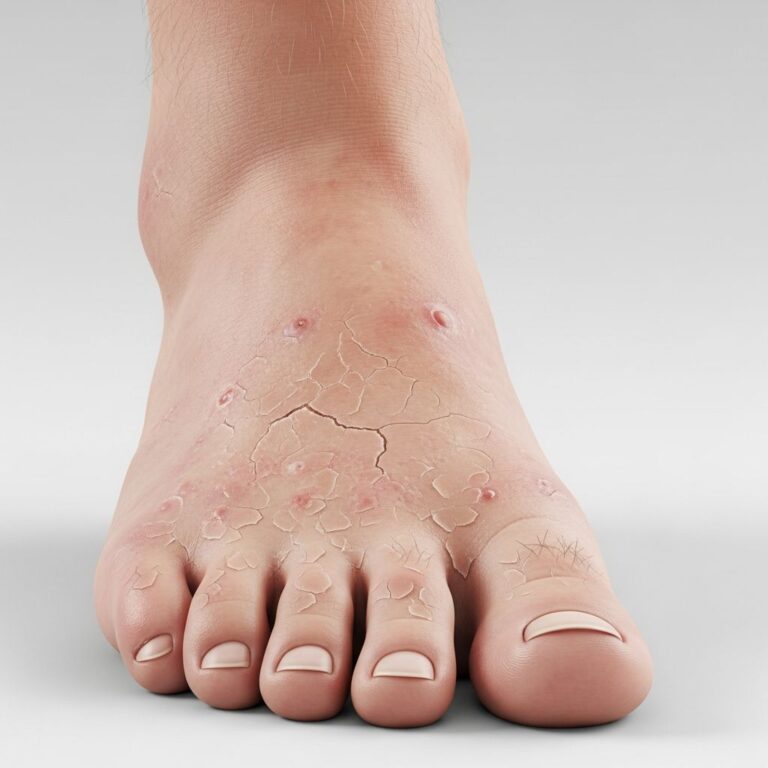
, accumulation of lymph in tissues, affects 80% of newborns, causing puffy hands, feet, and nuchal swelling that resolves by age 2 but may recur in legs later. Persistent cases contribute to nail changes and cutis verticis gyrata.Nail dystrophy
occurs in 70%, with small, dysmorphic nails: concave (koilonychia), hyperconvex, upturned edges, or deep-set, leading to paronychia or shoe discomfort. Changes improve with age.Multiple melanocytic naevi
(moles) appear in 70%, averaging far more than in the general population (especially fair skin types), small (1-5mm), on face, back, limbs; no melanoma risk increase despite numbers, unrelated to sun exposure.Halo naevi
are more frequent.Related Stories



**Xerosis cutis** (dry skin) is highly prevalent (78.7%), impacting quality of life.
Hair abnormalities
: low posterior hairline (80%), sparse axillary/pubic hair; occasional hirsutism.Oral/dental
: high-arched narrow palate, micrognathia cause crowding/small teeth.Autoimmune skin diseases
: vitiligo, alopecia areata (3x higher), psoriasis (2x higher, early onset). Other: unusual dermatoglyphics (increased whorls/ridges, 40%), pilomatricomas (2.6%), hypomelanosis of Ito in mosaics, rare neonatal cutis verticis gyrata. Notably, acne is minimal.Keloids/hypertrophic scars
reported post-surgery (e.g., neck/chest), risk ~3%; caution with elective procedures like ear piercing. A survey of 236 patients found 71.2% with >20 acquired melanocytic nevi, 27.1% lymphoedema (ongoing/resolved), emphasizing early dermatology referral needs. Dermatology Life Quality Index (DLQI) averages 3.52 (small impact), but onychodystrophy, biopsies, lymphoedema worsen it; xerosis predicts lower QoL.Diagnosis
Diagnosis combines clinical suspicion and karyotyping. Prenatal ultrasound may detect cystic hygroma, hydrops, or short femur. Postnatally, screen short stature (<3rd percentile), lymphedema, or dysmorphic features with karyotype analysis (peripheral blood lymphocytes). fish array cgh detects mosaicism. elevated fsh (>40 IU/L) post-puberty confirms ovarian failure. Echocardiogram, renal ultrasound, thyroid function, celiac serology are standard. Delayed diagnosis in 10% adults underscores subtle prepubertal signs.
Treatment
Multidisciplinary management is key.
Growth hormone (GH)
therapy from age 4-6 boosts final height by 5-10 cm; does not increase nevi malignancy risk.Estrogen replacement
at 12 years induces puberty, prevents osteoporosis; progesterone added if uterus present. Progestin-only if mosaic with menstruation.Lymphoedema
: compression garments, elevation; surgery rare.Skin/nails
: emollients for xerosis, monitoring nevi (no increased melanoma risk), avoid trauma to prevent keloids. Dermatology referral for autoimmune/persistent issues. Dental orthodontics for crowding. Cardiac/renal surveillance lifelong. Fertility via oocyte donation possible.Frequently Asked Questions (FAQs)
Q: What causes the high number of moles in Turner syndrome?
A: Genetic factors lead to multiple small melanocytic naevi in 70%, unrelated to sun exposure; no increased melanoma risk.
Q: Does lymphoedema always resolve in Turner syndrome?
A: Neonatal lymphoedema resolves by age 2 in most (80%), but recurrences in legs occur in late childhood/adulthood; manage with compression.
Q: Is Turner syndrome associated with increased cancer risk?
A: No for skin melanoma despite many nevi; monitor for gonadoblastoma in streak gonads (mosaic cases).
Q: Can women with Turner syndrome have children?
A: Rare spontaneous pregnancy in mosaics (2-5%); most require oocyte donation with hormone support.
Q: How does dry skin affect quality of life in Turner syndrome?
A: Xerosis cutis (78.7%) contributes most to DLQI impact; emollients recommended.
References
- Turner syndrome – DermNet — DermNet NZ. 2011 (updated). https://dermnetnz.org/topics/turner-syndrome
- Dermatological concerns for women and girls with Turner syndrome — PubMed. 2023-10-11. https://pubmed.ncbi.nlm.nih.gov/37780576/
- Skin and Nail Issues – Turner Syndrome Foundation — Turner Syndrome Foundation. Accessed 2026. https://turnersyndromefoundation.org/what_is_turner_syndrome/bone/skin-nails/
- Dermatological concerns for women and girls with Turner syndrome — PMC. 2023. https://pmc.ncbi.nlm.nih.gov/articles/PMC10533914/
- About Turner Syndrome — National Human Genome Research Institute (.gov). Updated 2023. https://www.genome.gov/Genetic-Disorders/Turner-Syndrome
- The basics about mosaic Turner syndrome — Mass General Hospital for Children (.org). Accessed 2026. https://www.massgeneral.org/children/turner-syndrome/the-basics-about-mosaic-turner-syndrome
Similar Articles








Read full bio of medha deb