Tympanic Membrane (Eardrum): Function & Anatomy
Understanding your eardrum: anatomy, function, and how it keeps you hearing clearly.
What Is the Tympanic Membrane?
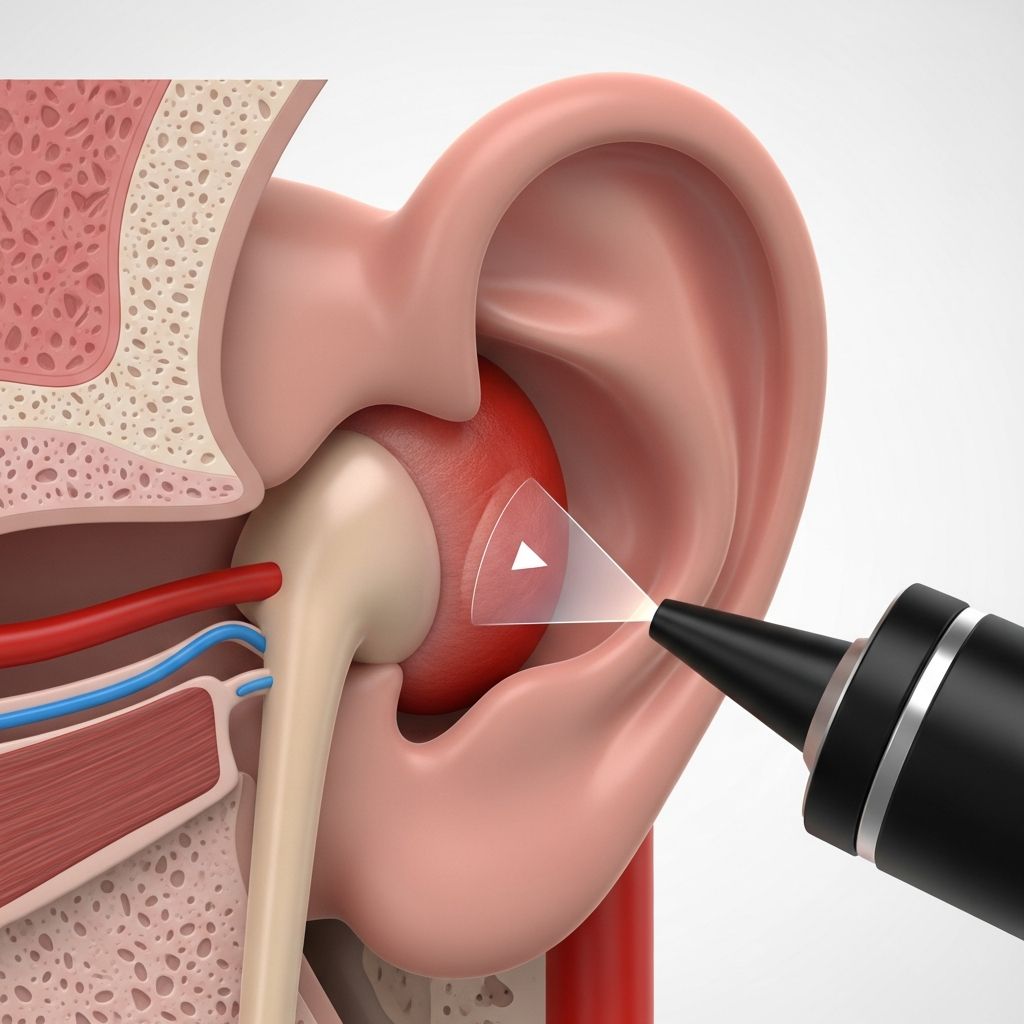
The tympanic membrane, commonly known as the eardrum, is a thin, circular layer of tissue that serves as a critical boundary between your outer ear and middle ear. This delicate structure plays an essential role not only in your ability to hear but also in protecting your middle ear from harmful substances like dirt, bacteria, and debris. Despite its importance, many people know little about this remarkable piece of anatomy or how it contributes to our auditory experience.
Your eardrum is positioned at the very end of your ear canal, making it the gateway through which sound waves must pass to reach the deeper hearing structures of your ear. This thin membrane is one of the most sensitive parts of your body, and its integrity is vital for maintaining proper hearing function and middle ear health.
Anatomy of the Tympanic Membrane
Structural Composition
The tympanic membrane consists of connective tissue arranged in three distinct layers, each with its own specific function and composition. These layers work together to create a structure that is both strong enough to withstand vibrations and sensitive enough to detect even subtle sound waves.
The tympanic membrane is a thin, semitransparent structure that stretches obliquely across the boundary between the outer ear and middle ear. Its composition allows it to be flexible while maintaining structural integrity, which is essential for its dual role of sound transmission and protection. The membrane’s attachment to the malleus (one of the three tiny bones in the middle ear) is particularly important, as this connection enables the transmission of vibrations deeper into the auditory system.
Anatomical Divisions
The tympanic membrane can be divided into four distinct quadrants for anatomical reference purposes. These quadrants are created by imaginary lines drawn vertically along the manubrium of the malleus and a perpendicular line passing through the umbo. The four quadrants are named the anterosuperior, anteroinferior, posteroinferior, and posterosuperior regions. This anatomical organization helps healthcare providers locate and describe specific areas of the membrane when examining patients or discussing pathology.
The center of the tympanic membrane is marked by the umbo, which is where the handle of the malleus attaches. This central point is particularly important because it’s often the reference point for clinical examinations and assessments of the membrane’s integrity and movement.
Function of the Tympanic Membrane
Sound Transmission and Amplification
The primary function of the tympanic membrane is to transmit and amplify sound waves. When sound waves travel through your ear canal, they strike the eardrum and cause it to vibrate. This is where the eardrum earns its common name—much like the membrane on a drum, the tympanic membrane responds to vibrations and converts them into mechanical motion.
When sound waves reach your eardrum, it vibrates in response, which then sends signals to your ossicles (the three tiny bones located in your middle ear). These bones include the malleus (hammer), incus (anvil), and stapes (stirrup). Together, they form a chain that amplifies the sound signal and transmits it further into the inner ear where your auditory nerve can process it and transmit the information to your brain.
Related Stories



The Hearing Process
Understanding how your eardrum contributes to hearing requires knowledge of the complete auditory pathway. Here’s how the process works:
Your eardrum is located at the very end of your ear canal, where it separates your outer ear from your middle ear. When sound waves enter the ear canal, they cause the tympanic membrane to vibrate. These vibrations are then transmitted to the ossicles, which amplify the signal and pass it along the ossicular chain. The ossicles don’t simply relay the vibrations passively; they actively boost the sound signal, which means that the vibrations reaching your cochlea (the hearing structure in your inner ear) are significantly larger than when they initially left your eardrum.
Inside your cochlea, these vibrations cause the fluid within to displace sensory hair cells. These hair cells then release electrical signals that your brain interprets as sound. Without this complete chain of events beginning with your eardrum’s vibration, hearing would be impossible.
Protective Function
Beyond its role in sound transmission, your eardrum serves as a protective barrier for your middle ear. The tympanic membrane prevents dirt, bacteria, and other debris from entering your middle ear cavity, where they could cause infection or damage to the sensitive ossicles and other structures. This protective function is particularly important because the middle ear is a sterile space that must be kept free of contaminating microorganisms.
The Ossicles: Your Ear’s Amplification System
The Three Tiny Bones
Your middle ear contains three ossicles that work in concert with your eardrum to facilitate hearing. These bones are the smallest in the human body, yet they play a crucial role in auditory function. The ossicles form what’s known as the ossicular chain, where each bone is an individual link in a chain reaction, with one movement leading to the next.
The malleus, also called the hammer because of its distinctive shape, consists of a head, neck, anterior and lateral processes, and a handle. The handle of the malleus attaches directly to the eardrum, and when your eardrum vibrates, it causes the entire malleus to move. The head of the malleus then connects to the incus via the incudomalleolar joint.
The incus, or anvil, receives vibrations from the malleus and transmits them to the stapes. The long process of the incus connects to the stapes through a small bony knob that forms a ligament-enclosed joint.
The stapes, the smallest bone in your body, completes the ossicular chain and transmits vibrations to the oval window, the entrance to your inner ear. This remarkable system of three interconnected bones amplifies sound vibrations by approximately 30 times as they travel from your eardrum to your inner ear.
How the Ossicular Chain Functions
The ossicular chain operates as an integrated mechanical system. Sound vibrations from your eardrum are caught by the malleus, which transmits them to the incus, which in turn passes them to the stapes. This sequential transmission, combined with the amplification provided by the lever system of the bones, ensures that sufficient vibration reaches the inner ear to stimulate the sensory hair cells.
The ossicles are suspended by ligaments that allow them to move freely while maintaining their structural integrity. Two small muscles in the middle ear, the tensor tympani and the stapedius, can modulate the ossicles’ movement and help protect the inner ear from excessively loud sounds.
Common Conditions Affecting the Tympanic Membrane
Several conditions can compromise the health and function of your tympanic membrane, potentially leading to hearing loss and other complications. Understanding these conditions can help you recognize symptoms that warrant medical attention.
Ruptured Eardrum
Ear injuries or infections can cause a hole in your eardrum, known as a ruptured eardrum or perforated tympanic membrane. A ruptured eardrum can cause hearing loss, drainage from the ear, and tinnitus (ringing in the ears).
Without an intact eardrum, everything would sound muffled. People with ruptured eardrums usually experience some degree of hearing loss until the membrane heals. The amount of hearing loss depends on the size and location of the perforation, with larger holes typically causing more significant hearing impairment.
Other Common Eardrum Conditions
Beyond perforation, several other conditions can affect the tympanic membrane. Ear infections, whether bacterial or viral, can cause inflammation and irritation of the eardrum. Otosclerosis, a condition involving abnormal bone growth in the middle ear, can affect eardrum function. Cholesteatoma, an abnormal growth of skin cells in the middle ear, can also damage the eardrum over time.
Healing and Recovery of Eardrum Damage
Natural Healing Process
The encouraging news is that many cases of eardrum damage heal on their own. In many cases, a torn or damaged eardrum heals on its own within a few weeks. This natural healing capacity is due to the eardrum’s biological composition, which allows it to regenerate tissue.
However, not all damage heals spontaneously, and healing time can vary depending on the size and severity of the perforation, the cause of the damage, and individual healing factors.
When to Seek Medical Attention
If your symptoms worsen or last more than a few weeks, you should tell a healthcare provider. While many eardrum injuries resolve without intervention, persistent symptoms may indicate a more serious underlying condition or a rupture that requires medical treatment.
Healthcare providers can assess the severity of eardrum damage and determine whether intervention is necessary. In some cases, surgical repair may be recommended, though this is typically only considered if the eardrum hasn’t healed on its own after several months.
Protecting Your Eardrum and Hearing Health
Prevention Strategies
Maintaining the health of your tympanic membrane is essential for preserving your hearing. Avoid inserting objects into your ear canal, as this can cause direct trauma to the eardrum. Be cautious with earbuds and hearing aids, ensuring they fit properly and don’t exert excessive pressure on the eardrum.
Protect your ears from loud noises, which can damage not only your eardrum but also the delicate hair cells within your inner ear. Manage middle ear infections promptly to prevent them from causing eardrum damage. Keep your ear canal dry, as moisture can promote bacterial growth and infection.
Supporting Middle Ear Health
Your eustachian tubes play an important role in maintaining the health of your middle ear and, indirectly, your eardrum. These tubes connect your middle ears to the back of your throat and help drain fluid from your middle ear while balancing air pressure inside your ears. When your eustachian tubes become blocked or inflamed, it can affect eardrum function and increase the risk of middle ear infections.
Earwax (cerumen) also plays a protective role for your eardrum. This waxy substance found in your ear canal keeps your ears hydrated and traps debris and germs that could otherwise damage your eardrum. While excessive earwax buildup should be addressed by a healthcare provider, the presence of some earwax is protective and beneficial.
Frequently Asked Questions (FAQs)
Q: What exactly is the tympanic membrane?
A: The tympanic membrane, or eardrum, is a thin circular layer of tissue that separates your outer ear from your middle ear. It consists of three layers of connective tissue and plays a critical role in hearing by vibrating in response to sound waves and transmitting those vibrations to the ossicles.
Q: How does my eardrum help me hear?
A: When sound waves reach your eardrum, they cause it to vibrate. These vibrations are then transmitted to the three tiny bones (ossicles) in your middle ear, which amplify the signal and pass it to your inner ear, where it’s converted into electrical signals that your brain interprets as sound.
Q: Can a perforated eardrum heal on its own?
A: Yes, in many cases a torn or damaged eardrum heals on its own within a few weeks. However, if your symptoms persist or worsen after a few weeks, you should consult a healthcare provider to determine if further treatment is necessary.
Q: What can damage my eardrum?
A: Your eardrum can be damaged by ear infections, direct trauma (such as inserting objects into the ear canal), sudden pressure changes, or very loud noises. It’s important to protect your ears from these hazards.
Q: Why is my eardrum important?
A: Your eardrum is essential for hearing and also acts as a protective barrier for your middle ear, preventing dirt, bacteria, and debris from entering. Without a functioning eardrum, you would experience significant hearing loss and your middle ear would be vulnerable to infection.
Q: What should I do if I suspect eardrum damage?
A: If you experience symptoms such as ear pain, drainage from your ear, hearing loss, or persistent tinnitus, contact a healthcare provider. They can examine your eardrum and recommend appropriate treatment if necessary.
References
- Tympanic Membrane (Eardrum): Function & Anatomy — Cleveland Clinic. 2024. https://my.clevelandclinic.org/health/body/24642-tympanic-membrane-eardrum
- Ossicles: Function & Anatomy — Cleveland Clinic. 2024. https://my.clevelandclinic.org/health/body/ossicles
- Human Ear – Eardrum, Ossicles, Hearing — Britannica. 2024. https://www.britannica.com/science/ear/Tympanic-membrane-and-middle-ear
- Anatomy, Head and Neck, Ear Tympanic Membrane — National Center for Biotechnology Information (NCBI). 2024. https://www.ncbi.nlm.nih.gov/books/NBK448117/
- Eustachian Tubes: Anatomy, Function & Related Disorders — Cleveland Clinic. 2024. https://my.clevelandclinic.org/health/body/22072-eustachian-tubes
- Hearing (How Auditory Process Works) — Cleveland Clinic. 2024. https://my.clevelandclinic.org/health/articles/17054-hearing
- Introduction to the Ears — OpenStax Pharmacology for Nurses. 2024. https://openstax.org/books/pharmacology/pages/39-1-introduction-to-the-ears
Similar Articles








Read full bio of medha deb