Tympanometry: Understanding Middle Ear Function Testing
Learn how tympanometry tests middle ear function and helps diagnose hearing loss conditions.
What is Tympanometry?
Tympanometry is a straightforward diagnostic test that evaluates how well your middle ear functions by measuring the movement of your eardrum in response to changes in air pressure. This simple yet effective procedure plays a crucial role in identifying hearing-related problems and understanding the underlying causes of hearing loss. The test is painless, non-invasive, and typically takes only a few minutes to complete, making it an accessible diagnostic tool for patients of all ages.
Your ear is a complex system comprising three main parts: the outer ear, middle ear, and inner ear. Sound travels through your ear canal and causes your eardrum to vibrate. These vibrations are then transmitted through a series of small bones in your middle ear and eventually reach the inner ear, where they are converted into signals your brain interprets as sound. If something disrupts this pathway, particularly in the middle ear region, you may experience hearing difficulties. Tympanometry specifically targets the middle ear portion of this pathway, helping healthcare providers identify exactly where problems may be occurring.
How Tympanometry Works
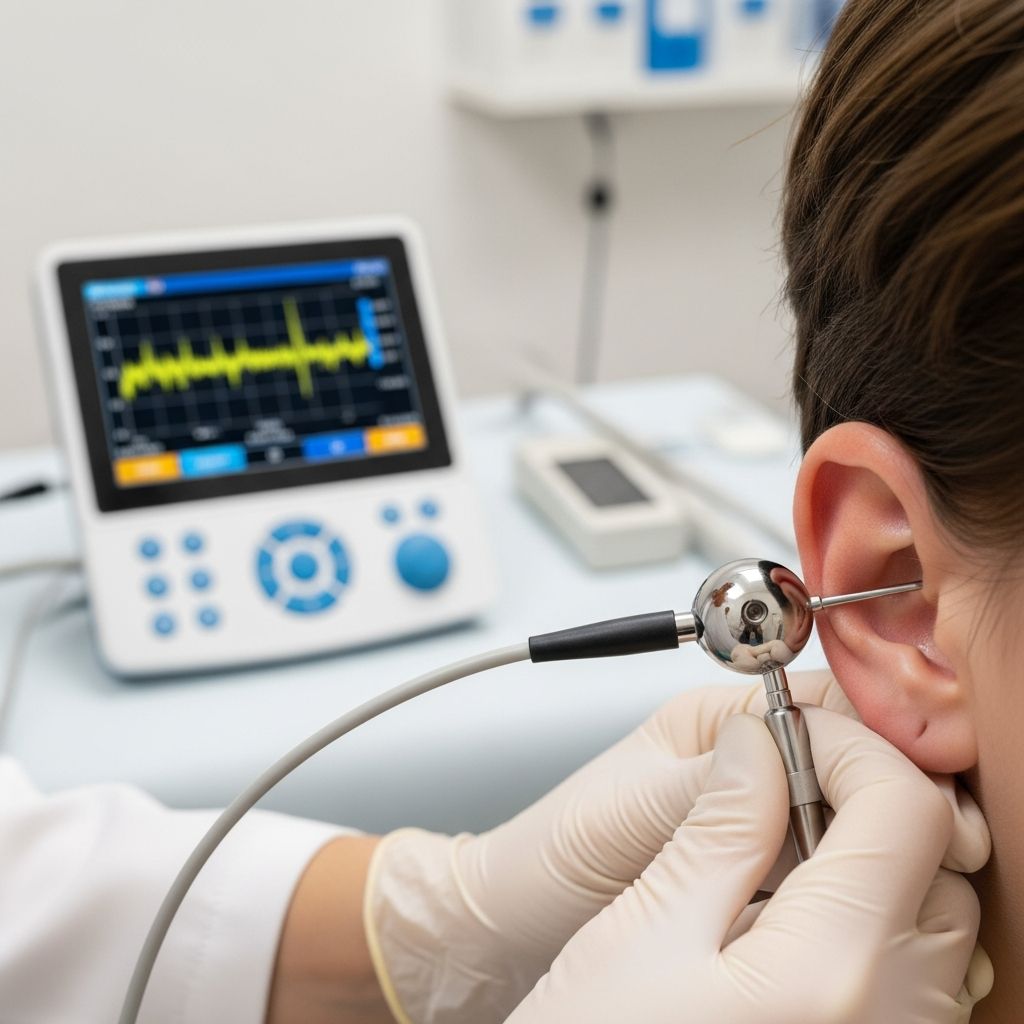
During a tympanometry procedure, an audiologist—a doctoral-level healthcare provider specializing in hearing and balance issues—uses an instrument called a tympanometer to perform the test. The tympanometer has a probe with three important ports: one that generates sound, one that introduces air pressure changes into your ear canal, and one that measures the returning sound energy.
The procedure begins with you sitting upright in a comfortable position. For young children, sitting on a parent’s or caregiver’s lap is acceptable. The audiologist gently inserts the probe into your ear canal and creates a seal. It is essential to remain still during the test, as any movement—including talking, laughing, coughing, or swallowing—can interfere with the accuracy of the results. Once the probe is positioned, the tympanometer sends a sound stimulus into your ear canal while simultaneously introducing varying levels of positive and negative air pressure. A microphone within the instrument detects the amount of sound energy that returns to it, and this information is recorded and displayed on a graph called a tympanogram.
Understanding Tympanogram Results
Normal Results
Normal tympanometry results indicate that your eardrum is functioning as expected. On the tympanogram graph, normal results appear as a curved line resembling a hill or mountain. The highest point of this curve, called the “peak,” typically occurs between -100 and +100 decapascals (daPa)—the unit used to measure air pressure inside your ear canal. When your eardrum moves appropriately, it absorbs sound energy efficiently, creating this characteristic peaked curve pattern. This normal pattern indicates that your middle ear is transmitting sound properly along the hearing pathway.
Abnormal Results
An abnormal tympanogram suggests that something is affecting your eardrum’s ability to move properly. Several conditions can produce abnormal results:
– Fluid in the middle ear: This is one of the most common findings and can occur due to infections, allergies, or other conditions. Fluid dampens eardrum movement, resulting in a flattened curve on the tympanogram.- Stiff eardrum: Various conditions can make your eardrum less flexible, reducing its ability to move with pressure changes.- Perforated eardrum: A hole or rupture in the eardrum prevents normal pressure changes from affecting eardrum movement.- Ear canal obstruction: Cerumen (earwax) buildup, improper probe placement, or other blockages can interfere with test results.- Eustachian tube dysfunction: When the tube connecting your middle ear to your throat isn’t functioning properly, pressure cannot equalize in the middle ear.
Related Stories



An experienced audiologist can often determine the specific cause of abnormal results by carefully studying the shape and characteristics of the tympanogram curve. If abnormalities are detected, the audiologist may recommend follow-up appointments with an otolaryngologist (ENT physician) for further evaluation and treatment.
Why Your Healthcare Provider Orders Tympanometry
Tympanometry serves multiple important diagnostic purposes in audiology and general healthcare:
– Routine hearing assessments: Tympanometry is often included as part of comprehensive hearing evaluations to establish a baseline of middle ear function.- Diagnosing hearing loss causes: By measuring middle ear function, tympanometry helps determine whether hearing loss originates from problems in the middle ear or elsewhere in the hearing pathway.- Identifying middle ear conditions: The test can detect conditions such as fluid accumulation, eustachian tube problems, and other middle ear issues that may benefit from treatment.- Determining treatment approaches: Results help healthcare providers decide whether hearing aids will effectively treat hearing loss or whether other interventions are necessary.- Pediatric applications: Tympanometry is particularly valuable in children, who frequently develop fluid in their ears that can cause temporary hearing problems if left untreated.
Who Performs Tympanometry
An audiologist typically performs tympanometry testing. Audiologists are highly trained doctoral-level healthcare professionals who specialize in preventing, diagnosing, and treating hearing loss and balance disorders in both children and adults. Their specialized training enables them to properly conduct the test, accurately interpret results, and recommend appropriate follow-up care or treatments based on findings. Some family physicians and other healthcare providers may also be trained to perform and interpret tympanometry tests, particularly in clinical settings where immediate diagnostic information is needed.
Tympanometry vs. Audiometry: Understanding the Difference
While both tympanometry and audiometry are hearing tests, they measure different aspects of hearing function. Audiometry tests how well you hear by measuring your ability to detect and distinguish various sound frequencies and volumes. During audiometry, you typically listen to tones at different pitches and loudness levels and indicate when you can hear them. This test provides information about your overall hearing sensitivity and the extent of any hearing loss.
Tympanometry, in contrast, specifically measures how well your middle ear works by evaluating eardrum movement in response to pressure changes. It provides objective information about middle ear function independent of your subjective hearing perception. Both tests can help diagnose hearing loss, but they accomplish this through different mechanisms. Audiometry tells your healthcare provider how much you can hear, while tympanometry reveals how well your ear’s conduction system is functioning. Often, both tests are performed together to provide a comprehensive understanding of your hearing health.
Preparation and Test Procedure
Tympanometry requires virtually no special preparation. You should simply ensure that your ears are clean and free of excessive cerumen if possible. Arrive for your appointment on time and be prepared to sit still during the brief testing period. Inform your audiologist if you have had recent ear infections, ear surgeries, or other ear-related concerns, as this information helps them properly interpret your results.
The actual test procedure is quick, typically lasting only a few minutes. After the audiologist positions the probe in your ear canal, you will feel gentle air pressure changes but should not experience any pain. Most people find the sensation mildly unusual but not uncomfortable. The key to obtaining accurate results is remaining still throughout the procedure. Children should be reminded to stay calm and not pull away from the probe. Parents can help by gently holding their child and providing reassurance.
Clinical Significance and Accuracy
Tympanometry has been extensively studied and proven to be a valuable diagnostic tool. Professional tympanometry demonstrates sensitivity (the ability to correctly identify problems when they exist) of approximately 93.8 percent and specificity (the ability to correctly identify normal function when it exists) of 94.1 percent when diagnosing middle ear fluid. These high accuracy rates make tympanometry one of the most reliable objective tests for assessing middle ear function.
When combined with clinical signs, symptoms, and other diagnostic methods such as pneumatic otoscopy, tympanometry studies have shown sensitivity of approximately 90 percent and specificity of 75 percent in diagnosing otitis media with effusion (OME). The complementary nature of different diagnostic approaches often provides more comprehensive clinical pictures than any single test alone. This is why healthcare providers frequently combine tympanometry with other diagnostic methods when the clinical situation warrants additional confirmation.
Limitations of Tympanometry
While tympanometry is a valuable diagnostic tool, it does have certain limitations. The test measures the compliance and pressure characteristics of the middle ear system but cannot definitively distinguish between sterile fluid and infected fluid in the middle ear. Additionally, tympanometry measures the overall compliance of the tympanic membrane as a function of air pressure within the ear canal and is not a true measure of middle ear space volume. These limitations mean that while tympanometry can indicate that something is wrong with middle ear function, additional clinical examination and sometimes other tests may be necessary to fully characterize the specific nature of the problem.
What Happens After Testing
Following your tympanometry test, your audiologist will review the results with you and explain what they mean for your hearing health. If your results are normal, the audiologist can provide reassurance that your middle ear is functioning appropriately. If abnormalities are detected, your audiologist may recommend additional testing, such as more comprehensive audiometry, imaging studies, or referral to an otolaryngologist for further evaluation and treatment planning.
For many common middle ear problems like fluid buildup, treatment options are straightforward and effective. Your healthcare provider will discuss the most appropriate approach based on your specific situation, which might include watchful waiting, medications, or in some cases, procedures to address the underlying issue.
Frequently Asked Questions
Q: Is tympanometry painful?
A: No, tympanometry is completely painless. You may feel mild pressure sensations as the air pressure changes during the test, but this should not cause any discomfort. The procedure is safe for patients of all ages.
Q: How long does a tympanometry test take?
A: Tympanometry is a quick test that typically takes only a few minutes to complete. The brief duration makes it convenient for patients and easily fits into regular healthcare appointments.
Q: Can tympanometry be performed on children?
A: Yes, tympanometry is frequently performed on children and is particularly valuable in pediatric populations where middle ear fluid is common. Children should remain still during the test, and parents can sit with them to provide comfort and reassurance.
Q: What does an abnormal tympanogram mean?
A: An abnormal tympanogram indicates that your eardrum is not moving as expected, which could be caused by fluid in the middle ear, a stiff eardrum, a perforated eardrum, or other middle ear problems. Your audiologist will explain what the specific abnormality suggests and recommend appropriate next steps.
Q: Can I eat or drink before tympanometry?
A: There are no dietary restrictions before tympanometry. You can eat and drink normally before your appointment. Simply ensure your ears are reasonably clean if possible.
Q: Will tympanometry results tell me if I need hearing aids?
A: Tympanometry alone cannot determine whether you need hearing aids. It measures middle ear function but not overall hearing sensitivity. Combined with audiometry and other hearing tests, however, tympanometry helps your healthcare provider determine whether hearing aids will effectively address your hearing loss or if other treatments are necessary.
References
- Tympanometry: Procedure Details & Results — Cleveland Clinic. 2024. https://my.clevelandclinic.org/health/diagnostics/24222-tympanometry
- Tympanometry — American Academy of Family Physicians. 2004. https://www.aafp.org/pubs/afp/issues/2004/1101/p1713.html
- Ultrasound Characterization of Middle Ear Effusion — National Center for Biotechnology Information, U.S. National Library of Medicine. 2012. https://pmc.ncbi.nlm.nih.gov/articles/PMC3518560/
- Hearing Loss: Types, Symptoms, Causes & Treatment — Cleveland Clinic. 2024. https://my.clevelandclinic.org/health/diseases/17673-hearing-loss
Similar Articles








Read full bio of medha deb