Tympanoplasty: Surgical Repair of Perforated Eardrums
Complete guide to tympanoplasty surgery: restoring hearing and eardrum function through advanced surgical techniques.
Understanding Tympanoplasty: Eardrum Repair Surgery
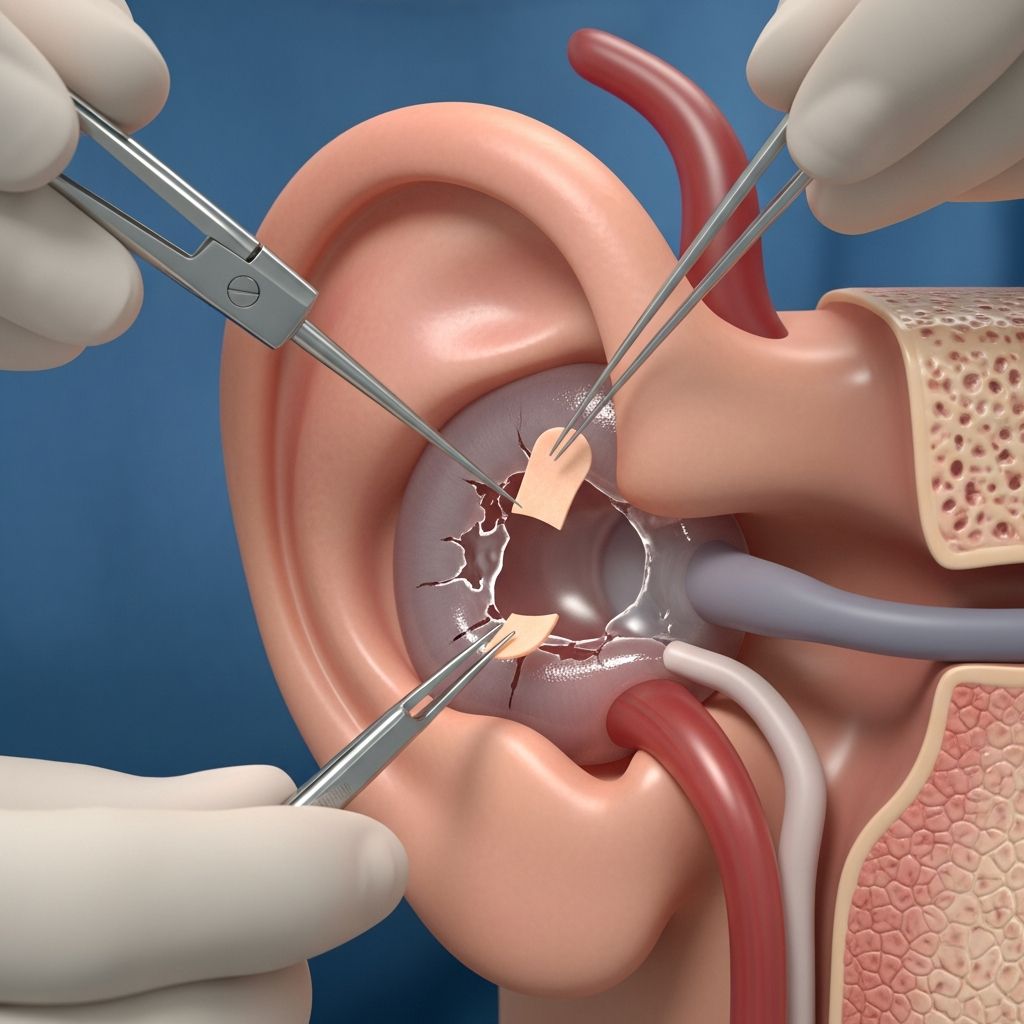
Tympanoplasty is a surgical procedure designed to repair a perforated or damaged eardrum, also known as the tympanic membrane. The eardrum is a thin, delicate membrane that vibrates when sound waves enter the ear, playing a crucial role in the transmission of sound to the middle ear. When this membrane develops a hole or perforation, it can lead to hearing loss, recurrent ear infections, and water entering the middle ear during bathing or swimming. Tympanoplasty stands as the gold-standard surgical intervention when conservative management fails or when the perforation is too large to heal naturally.
This surgical procedure has been performed successfully for many decades, with continuous refinement in techniques resulting in excellent success rates and high patient satisfaction. The procedure aims to create a permanent seal, restore normal hearing function, and prevent complications associated with eardrum perforations.
What Is a Perforated Eardrum?
A perforated eardrum occurs when there is a hole or tear in the tympanic membrane. This can result from various causes including trauma, chronic ear infections, sudden pressure changes, or complications from middle ear disease. The perforation disrupts the normal function of the ear by allowing bacteria and water to enter the middle ear space, potentially causing infection and hearing impairment.
Small perforations may heal spontaneously within a few weeks or months, but larger perforations or those resulting from chronic infections typically require surgical intervention. When the eardrum cannot heal on its own, tympanoplasty becomes necessary to restore the protective barrier of the middle ear and improve hearing function.
Indications for Tympanoplasty
Your healthcare provider may recommend tympanoplasty if you meet certain criteria:
- The eardrum has a larger hole or opening that has not closed naturally
- You have chronic ear infections with drainage that do not respond to antibiotic treatment
- There is a buildup of scar tissue or cholesteatoma around or behind the eardrum
- Water or debris regularly enters the middle ear, causing discomfort or infection
- You experience conductive hearing loss that affects your quality of life
- You have had the perforation for more than three months without spontaneous healing
Additionally, tympanoplasty may be warranted for children aged eight years and older with uncomplicated perforations of the pars tensa, as age has been identified as a statistically significant factor in surgical success rates.
Pre-operative Evaluation
Before undergoing tympanoplasty, you will undergo a comprehensive evaluation to assess your candidacy for the procedure. This evaluation includes a detailed history of your ear problems, physical examination by an otolaryngologist (ENT specialist), and audiological testing.
Audiological Assessment: Hearing tests will measure the degree of conductive hearing loss caused by the eardrum perforation. These baseline measurements help determine the expected hearing improvement after surgery and allow your surgeon to track postoperative outcomes. Frequency-specific audiometry is routinely used to assess hearing at various frequencies, providing detailed information about how the perforation affects your hearing across different sound ranges.
Imaging Studies: In some cases, imaging such as computed tomography (CT) scans may be ordered to evaluate the middle ear structures and identify any associated complications like mastoid disease or ossicular chain involvement.
Medical Optimization: You will be instructed to maintain good ear hygiene, avoid water entry into the ear, and manage any active infections before surgery to optimize healing outcomes.
The Tympanoplasty Procedure
Anesthesia Considerations
Tympanoplasty is typically performed under general anesthesia, particularly for children and anxious patients, ensuring complete comfort throughout the procedure. The anesthesiologist will carefully monitor your vital signs and maintain your safety and comfort during the operation. Local anesthesia with sedation may be an option for selected adult patients, though general anesthesia remains the preferred choice for most cases.
Related Stories



Surgical Technique
The tympanoplasty procedure follows a systematic approach to repair the eardrum perforation:
- Incision and Graft Harvesting: The surgeon makes a small incision, typically behind the ear (post-auricular), to harvest graft material. The most common graft source is temporalis fascia, a tissue that lines the temporal muscle. Alternatively, cartilage from the ear canal or synthetic materials may be used depending on the specific clinical situation.
- Microscopic Examination: The ear canal is cleaned and examined under an operating microscope to visualize the perforation and middle ear structures. The surgeon may perform canaloplasty, which involves removing bone from the anterior and inferior portions of the ear canal to provide better visualization of the entire tympanic annulus where the graft will be placed.
- Perforation Preparation: The edges of the perforation are carefully prepared, and any infected or dead tissue is removed. For total or subtotal tympanic membrane perforations, all native tympanic membrane tissue may be removed, including the fibrous tympanic annulus, to allow for complete reconstruction.
- Graft Placement: The harvested graft is carefully positioned to bridge the perforation. For a lateral graft technique, the graft is placed lateral to the remnants of the tympanic annulus. The graft is then reinforced and held in place using packing material that dissolves over several weeks.
- Closure: The ear canal is packed with antibiotic ointment or gel foam, and the post-auricular incision is closed with sutures or skin adhesive.
The entire procedure typically takes between 30 minutes and 2-3 hours, depending on the complexity of the case and whether additional procedures such as ossiculoplasty are performed.
Graft Material Options
The choice of graft material significantly influences surgical success and long-term outcomes. Common options include:
- Temporalis Fascia: This remains the gold standard graft material, offering excellent success rates and biological compatibility. It is harvested from tissue surrounding the temporal muscle through a post-auricular incision.
- Cartilage: Cartilage from the tragus or other ear cartilage provides additional structural support and may be particularly useful in revision cases or when graft failure is anticipated.
- Synthetic Materials: Biodegradable or non-biodegradable synthetic grafts offer alternatives when autologous tissue is unavailable or when additional structural reinforcement is needed.
Success Rates and Outcomes
Tympanoplasty demonstrates excellent success rates across various patient populations. Clinical data indicates closure rates typically exceed 90%, with most perforations healing within 6-12 weeks following surgery. Factors affecting success include the size and location of the perforation, patient age, presence of active infection, and surgical technique employed.
Hearing Improvement: Most patients experience improvement in conductive hearing following successful eardrum repair. However, hearing outcomes are frequency-dependent, with greater improvement typically observed at lower frequencies (250-1000 Hz) compared to higher frequencies (4000 Hz). This variation in frequency-specific hearing recovery is an important consideration when assessing postoperative hearing outcomes. Many patients achieve near-normal hearing levels after successful graft healing, though the degree of improvement varies individually.
Infection Prevention: Successful tympanoplasty eliminates the drainage of pus and reduces the risk of recurrent ear infections. The restored eardrum barrier prevents bacteria and water from entering the middle ear space, significantly improving quality of life.
Postoperative Care and Recovery
Immediate Recovery: Following tympanoplasty, you will spend time in the recovery area where nurses monitor your vital signs as anesthesia wears off. Most patients go home the same day or after an overnight stay, depending on the type of anesthesia and their individual recovery.
Activity Restrictions: You should avoid strenuous activity and heavy lifting for at least 1-2 weeks after surgery to protect the healing graft. Most patients return to normal daily activities within 1-2 weeks, though complete healing may take 4-6 weeks.
Water Precautions: Keeping water out of the ear during healing is critical. You should avoid swimming, showering without ear protection, and water sports for at least 2-4 weeks or until your surgeon confirms that healing is complete.
Ear Care: The ear canal packing will typically dissolve or be removed during a follow-up visit. You may experience mild drainage or discharge for the first few weeks, which is normal. Use prescribed antibiotic ear drops as directed to prevent infection.
Pain Management: Mild discomfort is normal after surgery and can be managed with over-the-counter pain relievers as needed. Your surgeon will provide specific instructions regarding medication use.
Follow-up Visits: Postoperative appointments allow your surgeon to monitor healing, remove packing material if needed, and assess graft take. Audiological reassessment is typically performed at 6-12 weeks to evaluate hearing improvement.
Possible Complications
While tympanoplasty is generally a safe procedure with minimal complications, potential risks include:
- Graft Failure: The graft may not take or integrate successfully, requiring revision surgery in approximately 5-10% of cases
- Infection: Postoperative ear canal infection can occur but is uncommon with proper care and antibiotic prophylaxis
- Conductive Hearing Loss: Rarely, hearing may not improve as expected or may worsen due to ossicular chain problems
- Tinnitus: Some patients may experience ringing or buzzing in the ear, usually temporary
- Vertigo: Dizziness may occur in rare cases but typically resolves quickly
- Facial Nerve Injury: This is an exceptionally rare complication as the facial nerve is identified and protected during surgery
- Sensorineural Hearing Loss: Very rarely, inner ear function may be affected, resulting in sensorineural hearing loss
Discuss these potential risks with your surgeon to ensure you have realistic expectations about the procedure.
Special Considerations for Tympanoplasty
Tympanoplasty in Children
Tympanoplasty can be performed in children, though timing is an important consideration. Research indicates that tympanoplasty for repair of uncomplicated eardrum perforations is warranted for children eight years of age and older, as age has been identified as a statistically significant factor in surgical success. Younger children have higher rates of spontaneous healing and may benefit from delayed surgery to allow natural resolution of perforations.
Role of Mastoidectomy
For uncomplicated tympanic membrane perforations without cholesteatoma, current evidence demonstrates no additional benefit to performing mastoidectomy in conjunction with tympanoplasty. However, patients with more complicated disease, such as chronic mastoid disease or cholesteatoma, may benefit from the addition of mastoidectomy to optimize outcomes and prevent disease recurrence.
Ossiculoplasty Considerations
If the small bones of the middle ear (ossicles) are damaged or displaced, your surgeon may perform ossiculoplasty concurrently with tympanoplasty. This procedure repairs or replaces the ossicular chain to optimize sound conduction and hearing restoration.
Frequently Asked Questions
Q: How long does it take for the eardrum to heal after tympanoplasty?
A: The eardrum typically heals within 4-6 weeks following tympanoplasty, though complete remodeling of the graft may continue for several months. Most patients experience functional improvement much sooner.
Q: Can I shower or swim after tympanoplasty?
A: You should avoid water entry into the ear for at least 2-4 weeks after surgery or until your surgeon confirms healing is complete. Protect your ear with cotton and petroleum jelly when showering, and avoid swimming and water sports during the initial healing phase.
Q: Will my hearing return to normal after tympanoplasty?
A: Most patients experience significant hearing improvement after successful tympanoplasty, with many achieving near-normal levels. However, hearing improvement varies individually and may be more pronounced at lower frequencies than at higher frequencies.
Q: What is the success rate of tympanoplasty?
A: Tympanoplasty has excellent success rates, with closure rates typically exceeding 90%. However, outcomes depend on various factors including perforation size, patient age, infection status, and surgical technique.
Q: Can tympanoplasty be performed on children?
A: Yes, tympanoplasty can be performed on children, though it is generally recommended for children eight years of age and older with uncomplicated perforations. Younger children often experience spontaneous healing.
Q: How long does the tympanoplasty procedure take?
A: The procedure typically takes between 30 minutes and 2-3 hours, depending on the complexity of the perforation and whether additional procedures such as ossiculoplasty are required.
Q: Will I need to take time off work after tympanoplasty?
A: Most patients can return to normal daily activities within 1-2 weeks after surgery. However, you should avoid strenuous activities, heavy lifting, and water exposure for 2-4 weeks to protect the healing graft.
References
- High-Frequency Conductive Hearing Following Total Drum Reconstruction with Temporalis Fascia — National Institutes of Health, National Center for Biotechnology Information. 2021. https://pmc.ncbi.nlm.nih.gov/articles/PMC8023041/
- Tympanoplasty for Eardrum Repair — MedlinePlus Medical Encyclopedia. U.S. National Library of Medicine. https://medlineplus.gov/ency/article/003014.htm
- The Role of Mastoidectomy in Outcomes Following Tympanic Membrane Perforation Repair — PubMed, National Center for Biotechnology Information. 2013. https://pubmed.ncbi.nlm.nih.gov/23686849/
- Tympanoplasty in Children: The Boston Children’s Hospital Experience — JAMA Otolaryngology. Archives of Otolaryngology Head & Neck Surgery. 1990. https://jamanetwork.com/journals/jamaotolaryngology/fullarticle/618409
- Tympanoplasty and Eardrum Repair Overview — Nemours KidsHealth. https://kidshealth.org/en/parents/tympanoplasty.html
Similar Articles








Read full bio of medha deb