Type 1 Diabetes Treatment: Comprehensive Guide To Therapies
Explore comprehensive strategies for managing type 1 diabetes, from insulin therapies to emerging cures and lifestyle integration.
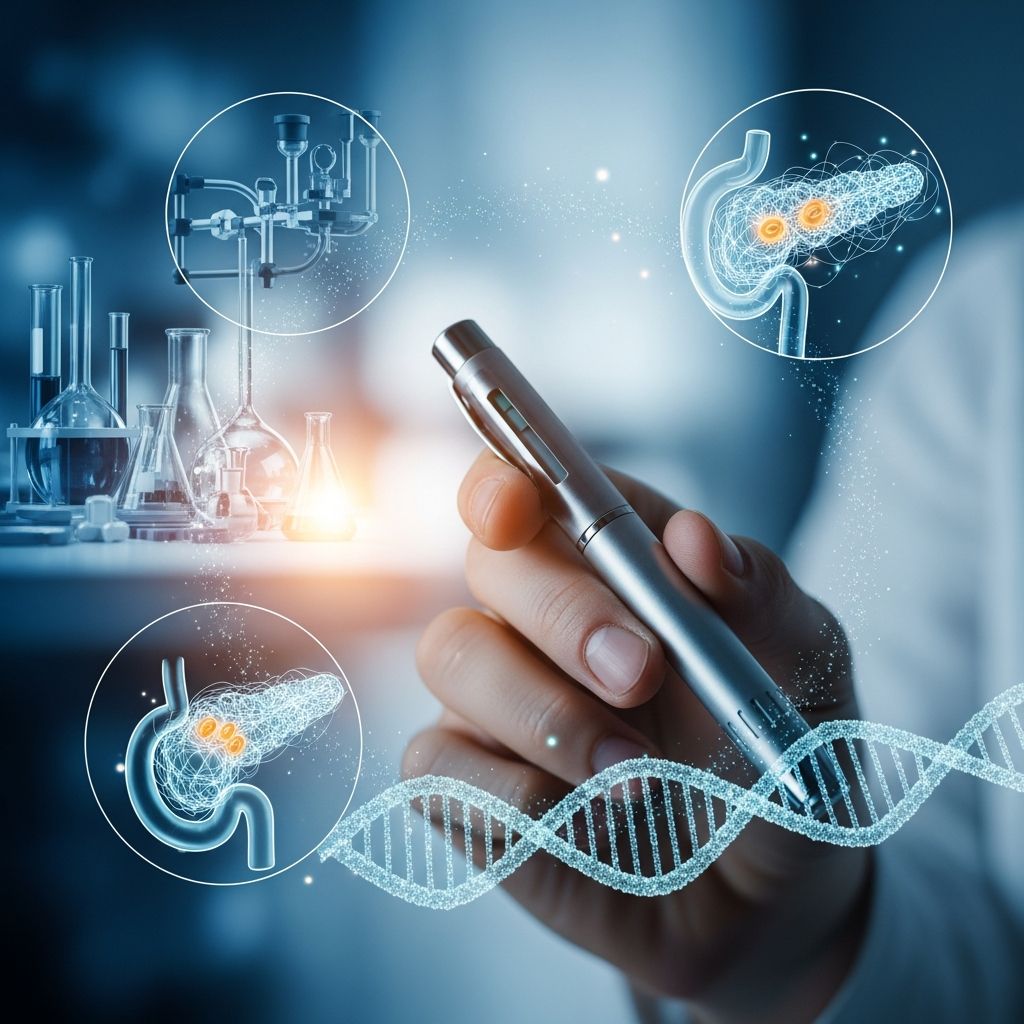
Type 1 diabetes (T1D) requires lifelong management primarily through insulin replacement therapy, alongside technological aids, lifestyle adjustments, and emerging therapies to achieve glycemic control and prevent complications.
What Is Type 1 Diabetes?
Type 1 diabetes is an autoimmune condition where the immune system destroys insulin-producing beta cells in the pancreas’s islets of Langerhans, leading to absolute insulin deficiency. Unlike type 2 diabetes, it is not linked to insulin resistance but complete beta cell loss, necessitating exogenous insulin from diagnosis. Symptoms include excessive thirst, frequent urination, unexplained weight loss, fatigue, and blurred vision, often presenting acutely in children or young adults.
The global prevalence affects millions, with about 2 million Americans diagnosed, and incidence rising. Without treatment, it leads to diabetic ketoacidosis (DKA), a life-threatening state. Early diagnosis via blood tests for autoantibodies and C-peptide levels confirms the condition.
Standard Type 1 Diabetes Treatments
The cornerstone of T1D management is intensive insulin therapy combined with glucose monitoring, nutrition, and exercise to mimic physiological insulin secretion and maintain HbA1c near non-diabetic levels (typically <7%). This approach, validated by the Diabetes Control and Complications Trial (DCCT), reduces microvascular complications like retinopathy by 75%, nephropathy by 39%, and neuropathy by 60%, with benefits persisting decades later.
Insulin Replacement Therapy
Since Banting and Best’s 1921 discovery, exogenous insulin remains essential. Modern regimens use multiple daily injections (MDI) or continuous subcutaneous insulin infusion (CSII) via insulin pumps. Basal-bolus therapy provides steady background insulin (e.g., long-acting glargine, degludec) and mealtime boluses (rapid-acting aspart, lispro).
- Insulin Types: Rapid-acting for boluses, ultra-long-acting for basal coverage, reducing hypoglycemia risk.
- Delivery Methods: Pens for MDI (3-4 injections/day); pumps deliver variable rates, improving HbA1c by 0.3% over MDI.
- Challenges: Hypoglycemia, weight gain, insulin resistance; requires carb counting and pre-bolus timing.
Intensive control targets fasting glucose 70-130 mg/dL, postprandial <180 mg/dL. Diabetes self-management education is crucial for bolus planning and adjustments.
Continuous Glucose Monitoring (CGM) and Hybrid Closed-Loop Systems
CGM devices like Dexcom or Freestyle Libre provide real-time interstitial glucose readings every 5 minutes, alerting to highs/lows. They reduce severe hypoglycemia by enabling proactive adjustments.
Hybrid closed-loop (HCL) systems, or “artificial pancreas,” automate insulin delivery based on CGM data. Pivotal trials show HCL lowers HbA1c by 0.3-0.5% and hypoglycemia rates in adults/children. Insulin pumps paired with CGM are recommended for motivated patients.
| Technology | Benefits | Evidence |
|---|---|---|
| CGM | Real-time glucose trends, <10% time above 250 mg/dL | Reduces complications |
| Insulin Pump (CSII) | Flexible dosing, lower HbA1c | 0.3% HbA1c improvement |
| HCL Systems | Automated basal insulin | Safe for pediatrics/adults |
Diabetes Self-Management Education
Structured programs teach carb counting, insulin dosing, hypoglycemia management, and sick-day rules. All patients should receive initial and ongoing education to optimize outcomes.
Adjunctive Therapies for Type 1 Diabetes
Beyond insulin, adjuncts like SGLT2 inhibitors and GLP-1 agonists improve control.
- SGLT2 Inhibitors (e.g., Dapagliflozin, Sotagliflozin): DEPICT-1/ Tandem3 trials showed 0.4-0.5% HbA1c reduction, weight loss, lower insulin needs; monitor for DKA risk.
- GLP-1 Agonists (Exenatide, Liraglutide): Reduce postprandial glucose, glucagon, gastric emptying; adjunct potential pending further approval.
- Metformin: No significant glycemic benefit in T1D trials; may mobilize stem cells.
Pramlintide (amylin analog) slows gastric emptying, reducing post-meal spikes.
Pancreas and Islet Cell Transplantation
Related Stories



For select patients with severe hypoglycemia unawareness, transplants offer insulin independence.
Pancreas Transplant: Whole organ from deceased donors; 80-90% insulin-free at 1 year, but surgical risks, immunosuppression needed lifelong.
Islet Cell Transplant: Infusion of isolated islets; less invasive, but limited by donor shortage, poor engraftment (only 10-20% viable post-procedure). Advances in encapsulation and stem-cell derived islets address these.
Success rates: 70% insulin independence at 1 year for combined kidney-pancreas; challenges include rejection, vascularization.
Emerging and Future Type 1 Diabetes Treatments
Research targets beta cell restoration and autoimmunity halt.
- Immunotherapies: Teplizumab (FDA-approved 2022) delays onset in at-risk individuals by 2-3 years via T-cell modulation.
- Stem Cell Therapy: Lab-generated beta cells from iPSCs; Vertex VX-880 trial shows insulin production. Clinical trials underway for encapsulation devices preventing immune attack.
- Gene Editing/CRISPR: Editing beta cells for immune evasion.
- Regenerative Medicine: Promoting endogenous repair via drugs like GLP-1 agonists or stem cell mobilization (e.g., metformin).
T1D impacts 2 million U.S. patients; breakthroughs like cell therapies could end insulin dependence. Screening via autoantibodies enables early intervention.
Lifestyle and Supportive Care
Nutrition emphasizes carb consistency, balanced macros; exercise improves sensitivity but requires insulin adjustments. Cardiovascular risk management includes statins for ASCVD, ACEIs/ARBs for albuminuria, aspirin for high-risk >50.
| Risk Factor | Management |
|---|---|
| Blood Pressure | <130/80 mmHg; ACEI/ARB first-line |
| Lipids | Statins if ASCVD or high risk |
| Antiplatelet | Aspirin 75-162 mg if >50 + risks |
Mental health support addresses “diabetes distress.”
Frequently Asked Questions (FAQs)
What is the main treatment for type 1 diabetes?
Insulin therapy via MDI or pumps, plus CGM for monitoring.
Can type 1 diabetes be cured?
No cure yet, but transplants and stem cells offer hope for insulin independence.
How does CGM help?
Provides real-time data, reducing hypo/hyperglycemia.
Are adjunct drugs safe for T1D?
SGLT2i/GLP-1 show benefits but require monitoring for DKA.
What are targets for HbA1c?
<7% for most, individualized.
References
- Therapies for Type 1 Diabetes: Current Scenario and Future Prospects — NIH/PMC. 2019-04-26. https://pmc.ncbi.nlm.nih.gov/articles/PMC6501476/
- Treatment of Type 1 Diabetes: 2017 ADA Standards — ACP Journals. 2018. https://www.acpjournals.org/doi/10.7326/M17-1259
- Type 1 Diabetes: Management Strategies — AAFP. 2018-08-01. https://www.aafp.org/pubs/afp/issues/2018/0801/p154.html
- Management of Type 1 Diabetes in Adults: Consensus Report — Diabetes Care. 2021-10-04. https://diabetesjournals.org/care/article/44/11/2589/138492/The-Management-of-Type-1-Diabetes-in-Adults-A
- We Are on the Verge of Breakthrough Cures for Type 1 Diabetes — JHEOR. 2024. https://jheor.org/article/124604-we-are-on-the-verge-of-breakthrough-cures-for-type-1-diabetes-but-who-are-the-2-million-americans-who-have-it
Similar Articles








Read full bio of Sneha Tete