Types of Muscular Dystrophy and Neuromuscular Diseases
Comprehensive guide to muscular dystrophy types, symptoms, and treatment options.
Understanding Muscular Dystrophy and Neuromuscular Diseases
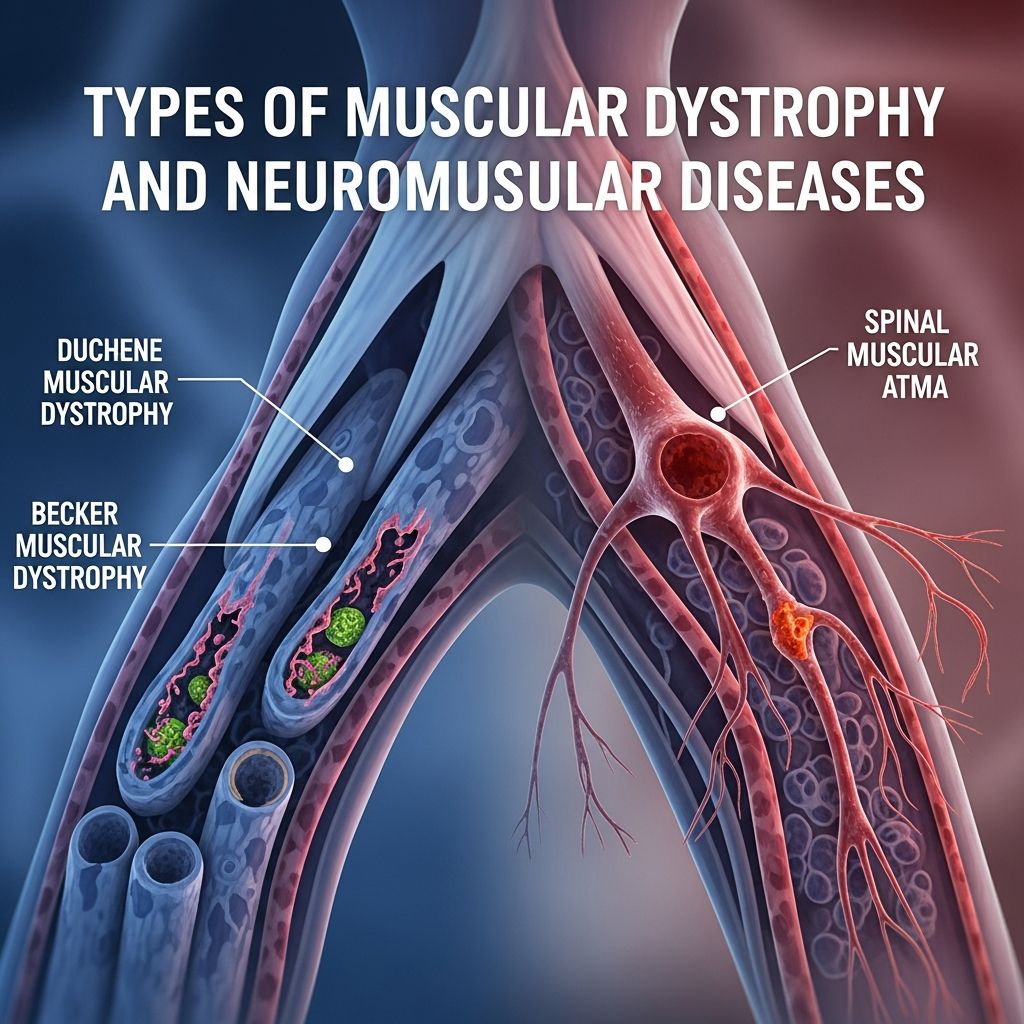
Muscular dystrophy represents a group of inherited diseases characterized by progressive muscle weakness and degeneration over time. These genetic disorders affect the muscles’ ability to function properly, leading to varying degrees of disability depending on the type and severity. Neuromuscular diseases encompass a broader category of conditions that affect the muscles and the nerves that control them, including muscular dystrophies, neuropathies, and myasthenic syndromes. Understanding the different types, their symptoms, and available treatments is essential for patients and families affected by these conditions.
What is Muscular Dystrophy?
Muscular dystrophy (MD) is a collection of genetic disorders in which abnormal genes interfere with the production of proteins needed for healthy muscle function. The muscles gradually weaken and break down over time, affecting a person’s mobility, coordination, and in severe cases, heart and respiratory function. The severity and progression of MD vary significantly depending on which gene is affected and where the mutation occurs. While there is currently no cure for muscular dystrophy, various treatments can help manage symptoms, slow disease progression, and improve quality of life.
Major Types of Muscular Dystrophy
Duchenne Muscular Dystrophy (DMD)
Duchenne muscular dystrophy is the most common and typically the most severe form of muscular dystrophy. It predominantly affects boys and usually appears in early childhood, typically between ages 3 and 5. DMD is caused by mutations in the gene that produces dystrophin, a protein essential for muscle structure and function. The condition results from an X-linked recessive inheritance pattern, meaning the defective gene is located on the X chromosome. Boys have only one X chromosome, making them more susceptible to the disease, while girls with one affected X chromosome typically become carriers.
Symptoms of DMD include delayed motor development, difficulty climbing stairs, frequent falls, muscle pain and stiffness, and progressive weakness that moves from the lower to upper body. As the disease advances, individuals may experience breathing difficulties, heart complications, and loss of ambulatory ability, often requiring wheelchair assistance by the teenage years. The disease can significantly impact cardiac and respiratory systems as muscles weaken.
Becker Muscular Dystrophy (BMD)
Becker muscular dystrophy is similar to DMD but progresses more slowly and appears later in childhood or adolescence, typically between ages 5 and 15. Also caused by mutations in the dystrophin gene, BMD affects boys predominantly. The symptoms and progression pattern mirror DMD, but individuals with BMD generally retain better muscle function for longer periods. Life expectancy and mobility outcomes are typically better than with Duchenne muscular dystrophy, though the condition still presents significant challenges throughout life.
Myotonic Muscular Dystrophy (MMD or Steinert’s Disease)
Myotonic muscular dystrophy is the most common adult-onset form of muscular dystrophy, usually appearing between ages 20 and 30. This condition is characterized by myotonia, a condition where muscles cannot relax properly after contracting. Symptoms typically begin with facial and neck muscles, gradually progressing to other muscle groups. Individuals with MMD experience muscle weakness, muscle wasting, cataracts, cardiac arrhythmias, and hormonal problems. The condition affects the central nervous system, gastrointestinal tract, heart, eyes, and endocrine glands.
Limb-Girdle Muscular Dystrophy (LGMD)
Limb-girdle muscular dystrophy begins in childhood or teenage years and primarily affects the muscles closest to the trunk—the shoulders, upper arms, hips, and thighs. Individuals with LGMD often experience difficulty lifting the front part of their foot, making tripping a common problem. The condition encompasses several subtypes, each caused by different genetic mutations. Progression varies among subtypes, from relatively mild to severe forms affecting multiple muscle groups.
Related Stories



Facioscapulohumeral Muscular Dystrophy (FSHD)
Facioscapulohumeral muscular dystrophy typically appears in adolescence and early adulthood. This condition primarily affects facial muscles, shoulder blades, and upper arms. Symptoms begin with facial weakness, difficulty closing eyes completely, impaired smile, and shoulder weakness. The progression is highly variable, with some individuals experiencing mild symptoms while others develop more severe disability affecting mobility and daily activities.
Congenital Muscular Dystrophy (CMD)
Congenital muscular dystrophy appears from birth to age 2 and affects all genders equally. This heterogeneous group of disorders presents with varying severity—some forms progress slowly with minimal disability, while others advance rapidly and cause significant functional impairment. Some types of CMD may include intellectual disability or neurological involvement, requiring comprehensive multidisciplinary management.
Oculopharyngeal Muscular Dystrophy (OPMD)
Oculopharyngeal muscular dystrophy usually appears after age 40 and initially affects the eyelids, throat, and facial muscles. As the disease progresses, weakness extends to the shoulders and pelvis. Individuals may experience drooping eyelids (ptosis), difficulty swallowing (dysphagia), and generalized muscle weakness. This form typically progresses slowly compared to other muscular dystrophies.
Emery-Dreifuss Muscular Dystrophy (EDMD)
Emery-Dreifuss muscular dystrophy is a rare form typically observed in late childhood to early teenage years. EDMD primarily affects muscles of the upper arms, shoulders, and lower legs. Individuals experience muscle wasting, weakness, and joint deformities. Cardiac complications, including arrhythmias and potential cardiac arrest in severe cases, represent significant concerns with this type of muscular dystrophy.
Distal Muscular Dystrophy (DD)
Distal muscular dystrophy is a rare form affecting the hands, feet, and lower legs. Symptoms vary depending on the specific genetic mutation present and may include muscle weakness, cramping, twitching, joint contractures, unusual fatigue, and difficulty with fine motor skills. The progression of DD is generally slower than more common forms, though functional limitations in hands and feet can significantly impact daily activities.
Progressive Symptoms and Complications
As muscular dystrophy progresses, individuals commonly experience several complications that require ongoing medical attention and management. The inability to walk may develop gradually or relatively suddenly depending on disease type and severity. Muscles and tendons often shorten over time, a condition called contractures, which further restricts movement and flexibility. Breathing problems emerge as respiratory muscles weaken, potentially requiring assisted breathing devices or ventilators in advanced stages. Spinal curvature (scoliosis) may develop when back muscles cannot adequately support the spine’s structure. Heart muscle weakness can lead to cardiac problems including arrhythmias, heart failure, and other cardiovascular complications. Difficulty swallowing increases the risk of aspiration pneumonia, a serious respiratory infection.
Treatment and Management Options
Medications
Various medications help manage muscular dystrophy symptoms and slow disease progression. Corticosteroids such as prednisone and deflazacort strengthen muscles and slow deterioration in some types of MD. Long-term corticosteroid use may cause weight gain and bone weakness, increasing fracture risk. Anticonvulsant medications help manage certain symptoms, while immunosuppressants address inflammation in some cases. For individuals with DMD and specific gene mutations, targeted medicines and gene therapies offer newer treatment options. These include eteplirsen (Exondys 51), golodirsen (Vyondys 53), viltolarsen (Viltepso), casimersen (Amondys 45), and delandistrogene moxeparvovec-rokl (Elevidys), which target specific genetic mutations to halt or slow muscle loss. Medications for myotonic muscular dystrophy include sodium channel blockers such as phenytoin, procainamide, and mexiletine to manage muscle rigidity and associated pain.
Physical and Occupational Therapy
Physical therapy plays a crucial role in muscular dystrophy management. Mobility and stretching exercises combat muscle and tendon tightening, maintaining flexibility and reducing contractures. Low-impact aerobic exercises like walking and swimming strengthen muscles, improve cardiovascular health, and slow symptom progression. Physical therapists work with individuals to develop personalized exercise programs appropriate for their specific type and stage of MD. Occupational therapy helps individuals with muscular dystrophy maintain independence in daily activities, gain access to community services, develop improved coping skills, and enhance social engagement. Speech therapy conserves muscle strength through specific techniques including slower speech patterns, pausing between breaths, and utilizing special communication equipment when necessary.
Assistive Devices and Equipment
Various assistive devices help individuals with muscular dystrophy maintain mobility and independence. Canes, walkers, and wheelchairs enable movement as muscle weakness progresses. Braces keep muscles and tendons stretched and flexible, slowing contracture development while supporting weaker muscles to maintain function. Breathing assistance devices help individuals with weakened respiratory muscles, including continuous positive airway pressure (CPAP) machines for sleep apnea or ventilators for more severe respiratory involvement. Specialized communication equipment may assist individuals with speech difficulties.
Surgical Interventions
Surgery addresses specific complications associated with muscular dystrophy. Contracture release surgeries help maintain normal function and mobility for as long as possible. Procedures may correct joint deformities or address spinal curvature (scoliosis) when severe. Adjunct therapies like massage and heat treatments complement surgical interventions. Cardiac surgery may include pacemaker placement for arrhythmia management or valve repair. In some cases, cataract surgery improves vision when this complication develops.
Cardiac and Respiratory Management
Heart problems and breathing difficulties represent serious complications requiring specialized treatment. Medications such as ACE inhibitors and beta blockers manage cardiac symptoms, while pacemakers address rhythm abnormalities. Respiratory therapy prevents or delays breathing problems as disease progresses. Assisted ventilation becomes necessary when respiratory muscles weaken significantly, improving oxygen delivery and quality of life.
Comprehensive Treatment Table
| Treatment Type | Purpose | Examples |
|---|---|---|
| Medications | Slow progression, manage symptoms | Corticosteroids, targeted gene therapies, anticonvulsants |
| Physical Therapy | Maintain strength and flexibility | Stretching, low-impact aerobic exercise, range-of-motion training |
| Occupational Therapy | Maintain independence in daily activities | Adaptive techniques, community resource access, coping strategies |
| Assistive Devices | Maintain mobility and function | Wheelchairs, walkers, canes, braces, breathing devices |
| Surgery | Address complications and deformities | Contracture release, scoliosis correction, cardiac procedures |
| Cardiac Treatment | Manage heart complications | Pacemakers, medications (ACE inhibitors, beta blockers) |
| Respiratory Support | Assist breathing as muscles weaken | CPAP machines, ventilators, respiratory therapy |
Living with Muscular Dystrophy
While muscular dystrophy presents significant challenges, multidisciplinary medical approaches, supportive care, adaptive technologies, and psychological support enable individuals to maintain quality of life. Regular monitoring by healthcare providers specializing in neuromuscular conditions ensures optimal symptom management and early intervention when complications arise. Family involvement, peer support groups, and community resources provide emotional support and practical assistance. Advances in genetic research and emerging therapies offer hope for improved treatments and potentially disease-modifying interventions for various types of muscular dystrophy.
Frequently Asked Questions
Q: Is there a cure for muscular dystrophy?
A: Currently, there is no cure for muscular dystrophy. However, treatments focus on managing symptoms, slowing disease progression, and improving quality of life through medications, therapy, assistive devices, and surgical interventions.
Q: How is muscular dystrophy inherited?
A: Most types of muscular dystrophy follow genetic inheritance patterns. DMD and BMD are X-linked recessive, primarily affecting boys. Other types follow autosomal dominant or autosomal recessive patterns, affecting males and females equally or nearly equally.
Q: What is dystrophin and why is it important?
A: Dystrophin is a protein essential for muscle structure and function. Mutations in the gene producing dystrophin cause Duchenne and Becker muscular dystrophies. Without adequate dystrophin, muscles become damaged and gradually weaken.
Q: Can exercise worsen muscular dystrophy?
A: While certain intense exercises may be harmful, low-impact aerobic exercise like walking and swimming can strengthen muscles and slow symptom progression. Always consult healthcare professionals before beginning any exercise program.
Q: What respiratory complications can occur with muscular dystrophy?
A: As respiratory muscles weaken, individuals may experience breathing difficulties, sleep apnea, and reduced oxygen levels. Assisted breathing devices, including CPAP machines and ventilators, help manage these complications.
References
- Muscular Dystrophy: Types, Causes, and Treatment — Centers for Disease Control and Prevention. 2024. https://www.cdc.gov/muscular-dystrophy/types/index.html
- Muscular Dystrophy: Symptoms, Treatment, Types, and Causes — Medical News Today. 2023. https://www.medicalnewstoday.com/articles/187618
- Muscular Dystrophy – Diagnosis & Treatment — Mayo Clinic. 2024. https://www.mayoclinic.org/diseases-conditions/muscular-dystrophy/diagnosis-treatment/drc-20375394
- Muscular Dystrophy — National Health Service (NHS). 2024. https://www.nhs.uk/conditions/muscular-dystrophy/
- Muscular Dystrophy – StatPearls — National Center for Biotechnology Information (NCBI). 2024. https://www.ncbi.nlm.nih.gov/books/NBK560582/
- Muscular Dystrophy: What It Is, Symptoms, Types & Treatment — Cleveland Clinic. 2024. https://my.clevelandclinic.org/health/diseases/14128-muscular-dystrophy
- Muscular Dystrophy: Types, Symptoms, Causes & Treatment — Healthline. 2024. https://www.healthline.com/health/muscular-dystrophy
Similar Articles








Read full bio of medha deb