Types Of Cinnamon: 4 Varieties, Uses And Health Tips
Discover the four main types of cinnamon—Ceylon, Cassia, Korintje, and Saigon—their flavors, uses, and health benefits for everyday cooking.
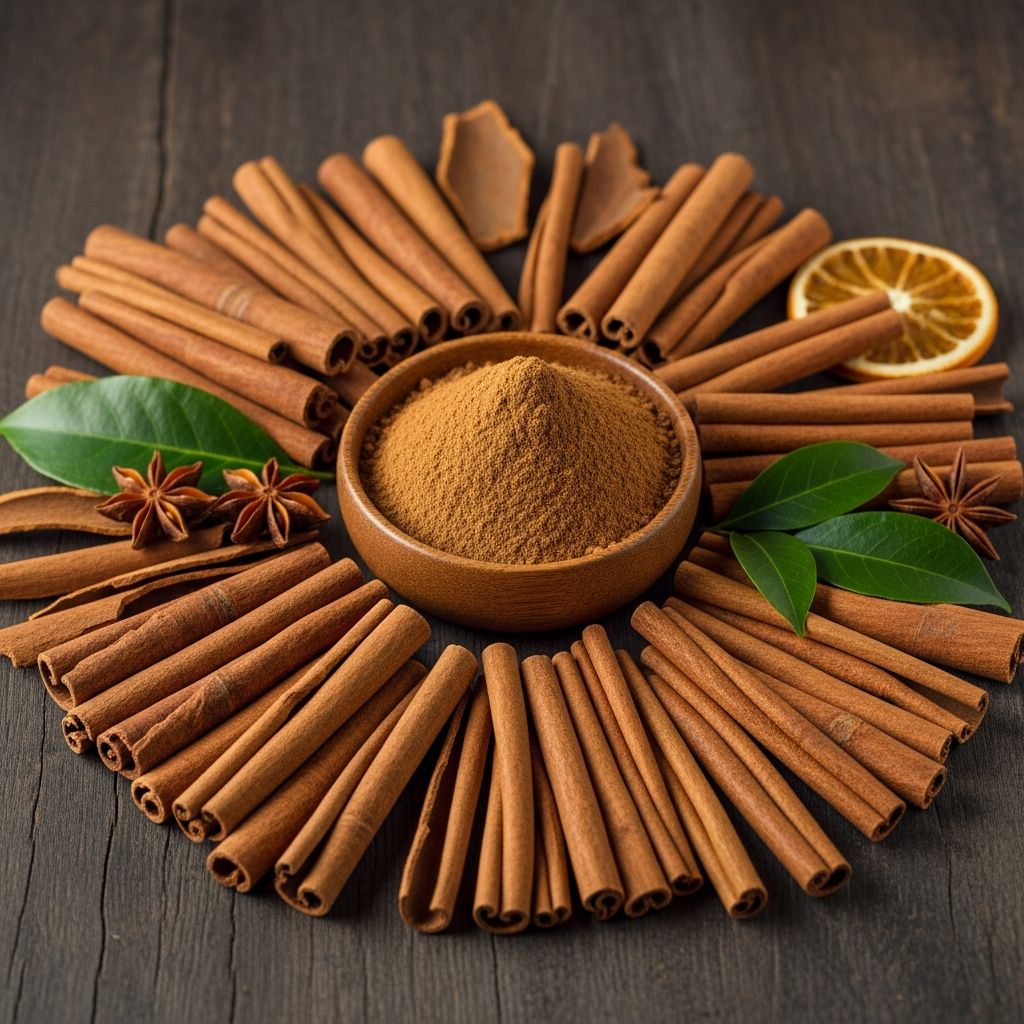
Cinnamon is a beloved spice derived from the inner bark of trees in the Cinnamomum genus, offering warm, aromatic flavors essential in both sweet and savory dishes worldwide. There are four main commercial types:
Ceylon cinnamon
(true cinnamon),Cassia cinnamon
(Chinese),Korintje cinnamon
(Indonesian), andSaigon cinnamon
(Vietnamese). These vary significantly in appearance, taste intensity, essential oil content, coumarin levels (a compound that can be harmful in excess), and ideal culinary applications.Understanding these differences helps consumers select the right variety for health, flavor, and quality. Ceylon is prized for its delicate profile and lower coumarin, while Cassia varieties dominate supermarkets due to affordability and bold taste. This guide covers origins, characteristics, health implications, uses, and selection tips, drawing from botanical and culinary expertise.
What Is Cinnamon?
Cinnamon originates from the dried inner bark of evergreen trees in the Lauraceae family, primarily Cinnamomum verum for Ceylon and various Cinnamomum cassia species for others. Harvesting involves scoring the bark, which curls into quills as it dries, then grinding into powder or selling as sticks.
Global production exceeds 100,000 tons annually, with Indonesia, China, Vietnam, and Sri Lanka as top producers. Cinnamon’s key compound,
cinnamaldehyde
, provides its signature aroma and potential antimicrobial, anti-inflammatory benefits. However, varieties differ in coumarin—a natural anticoagulant that may harm the liver in high doses—making moderation key, especially for Cassia types.- Botanical note: Over 100 Cinnamomum species exist, but only four are commercially dominant.
- Forms: Sticks (quills) preserve freshness; powder is convenient but prone to adulteration.
Types of Cinnamon
Ceylon Cinnamon
**Ceylon cinnamon**, or “true cinnamon” (Cinnamomum verum or C. zeylanicum), hails from Sri Lanka and southern India. Its quills are thin, tan-brown, multi-layered, and crumbly—resembling a cigar—unlike thicker Cassia sticks.
Flavor is mild, sweet, complex with citrus, floral, and woody notes; essential oil is lower (around 1%), dominated by cinnamaldehyde but balanced. It’s rarer and pricier, comprising under 10% of global supply.
Health benefits: Lowest coumarin (0.004% vs. Cassia’s 1%), safe for daily use. Studies link it to blood sugar regulation, antioxidant effects, and antimicrobial properties. Sri Lankan trees thrive in rainy tropical highlands, harvested biannually by hand-peeling bark.
Best uses: Delicate desserts, teas, light savory dishes like baked chicken or fish.
Cassia Cinnamon (Chinese Cinnamon)
**Cassia cinnamon** (Cinnamomum cassia), also called Chinese cinnamon, originates from southern China and Indonesia. Quills are thick, dark reddish-brown, single-layered, hard, and robust.
Taste is strong, spicy, with wood-clove-pepper notes; 95% essential oil is cinnamaldehyde, yielding intense heat. It’s the cheapest and most common in U.S. supermarkets (90%+ of sales).
Health aspects: Higher coumarin (up to 1%), so limit to 1 tsp/day for adults; used in traditional Chinese medicine for digestion and circulation. Trees are hardy, growing in varied climates.
Uses: Versatile for baking, savory rubs, pho; pairs with bold flavors.
Related Stories



Korintje Cinnamon (Indonesian Cinnamon)
**Korintje cinnamon** (Cinnamomum burmannii), from Indonesia’s Sumatra (Korintje region), features medium-thick, dark quills. It’s the sweetest Cassia, mild-spicy with approachable warmth.
Essential oil content is moderate (2-3%), making it bakery staple—most generic “cinnamon” labels this. Grown in high-altitude volcanic soil for superior quality.
Health: Moderate coumarin; supports similar benefits to other Cassias but milder. Indonesia produces 70%+ of world cinnamon.
Uses: Ideal for cookies, pies, oatmeal; subtle sweetness shines in sweets.
Saigon Cinnamon (Vietnamese Cinnamon)
**Saigon cinnamon** (Cinnamomum loureiroi), from Vietnam, has the thickest, darkest quills and highest essential oil (up to 7%), delivering bold, sweet-spicy, stevia-like punch—often bitter if overused.
It’s premium Cassia, thicker/larger bark for intense flavor; Vietnam’s coastal farms yield top grades.
Health: Highest coumarin among Cassias—use sparingly; potent antioxidants.
Uses: Cinnamon rolls, rubs for lamb/ribs, pho; excels where punch needed.
Cinnamon Comparison Chart
| Type | Origin | Appearance | Flavor Profile | Coumarin Level | Best For |
|---|---|---|---|---|---|
| Ceylon | Sri Lanka/India | Thin, multi-layer, tan | Mild, sweet, citrus-floral | Low | Delicate desserts, tea |
| Cassia | China/Indonesia | Thick, single-layer, dark | Strong, spicy, woody | High | Baking, savory |
| Korintje | Indonesia | Medium-thick, dark | Sweetest, mild-spicy | Moderate-High | Baked goods |
| Saigon | Vietnam | Thickest, darkest | Bold, sweet-spicy, intense | Very High | Rubs, rolls |
This table summarizes key distinctions for quick reference.
Cinnamon Health Benefits and Risks
Cinnamon aids blood sugar control (via cinnamaldehyde inhibiting enzymes), offers antioxidants (polyphenols rival superfoods), fights bacteria/viruses, and may reduce inflammation/heart disease risk.
- Benefits: Ceylon safest long-term; all types support digestion, immunity.
- Risks: Coumarin toxicity—Cassia/Saigon exceed safe limits (0.1mg/kg body weight/day) if overconsumed; pregnant/liver patients cautious. FDA deems typical U.S. intake safe.
Recent studies (post-2023) confirm Ceylon’s edge for diabetes management.
How to Choose and Store Cinnamon
Opt for Ceylon daily; check labels for origin/species. Buy whole quills from reputable suppliers, grind fresh to avoid fillers. Store airtight, cool/dark—lasts 2-3 years; powder 1 year.
- Quality signs: Strong aroma, no clumps; Ceylon crumbles easily.
Cooking and Baking with Cinnamon
Baking: Korintje for classics; Saigon elevates rolls.
Savory: Saigon/Cassia rubs; Ceylon teas/curries.
Tips: Toast to release oils; pair with vanilla, ginger.
Frequently Asked Questions (FAQs)
What is the difference between Ceylon and Cassia cinnamon?
Ceylon is milder, thinner-layered, lower-coumarin from Sri Lanka; Cassia bolder, thicker, higher-coumarin from China/Indonesia.
Which cinnamon is healthiest?
Ceylon, due to minimal coumarin for safe daily use.
Is supermarket cinnamon Cassia?
Yes, typically Korintje or generic Cassia.
Can I substitute types?
Yes, but adjust: use half Saigon for Ceylon’s mildness.
How much cinnamon daily?
1/2-1 tsp Ceylon; less Cassia to limit coumarin.
References
- The world of cinnamon: Ceylon vs. cassia — Honest & Rare. 2023. https://www.honest-rare.de/en/magazine/cinnamon-ceylon-vs-cassia/
- Ceylon vs. Cassia — Not All Cinnamon Is Created Equal — Healthline. 2024-01-15. https://www.healthline.com/nutrition/ceylon-vs-cassia-cinnamon
- The 4 Types of Cinnamon — SpicesInc.com. 2023. https://spicesinc.com/blogs/4-types-cinnamon
- The Different Types of Cinnamon — The Spice House. 2020-03-11. https://www.thespicehouse.com/blogs/news/different-types-cinnamon
- What’s the Difference Between Types of Cinnamon? — LearningHerbs. 2024. https://www.learningherbs.com/blog/types-of-cinnamon
Similar Articles








Read full bio of Sneha Tete