Types Of Eczema: 7 Key Differences, Symptoms, Diagnosis
Explore the 7 main types of eczema, their unique symptoms, causes, triggers, and effective treatment strategies for better skin health.
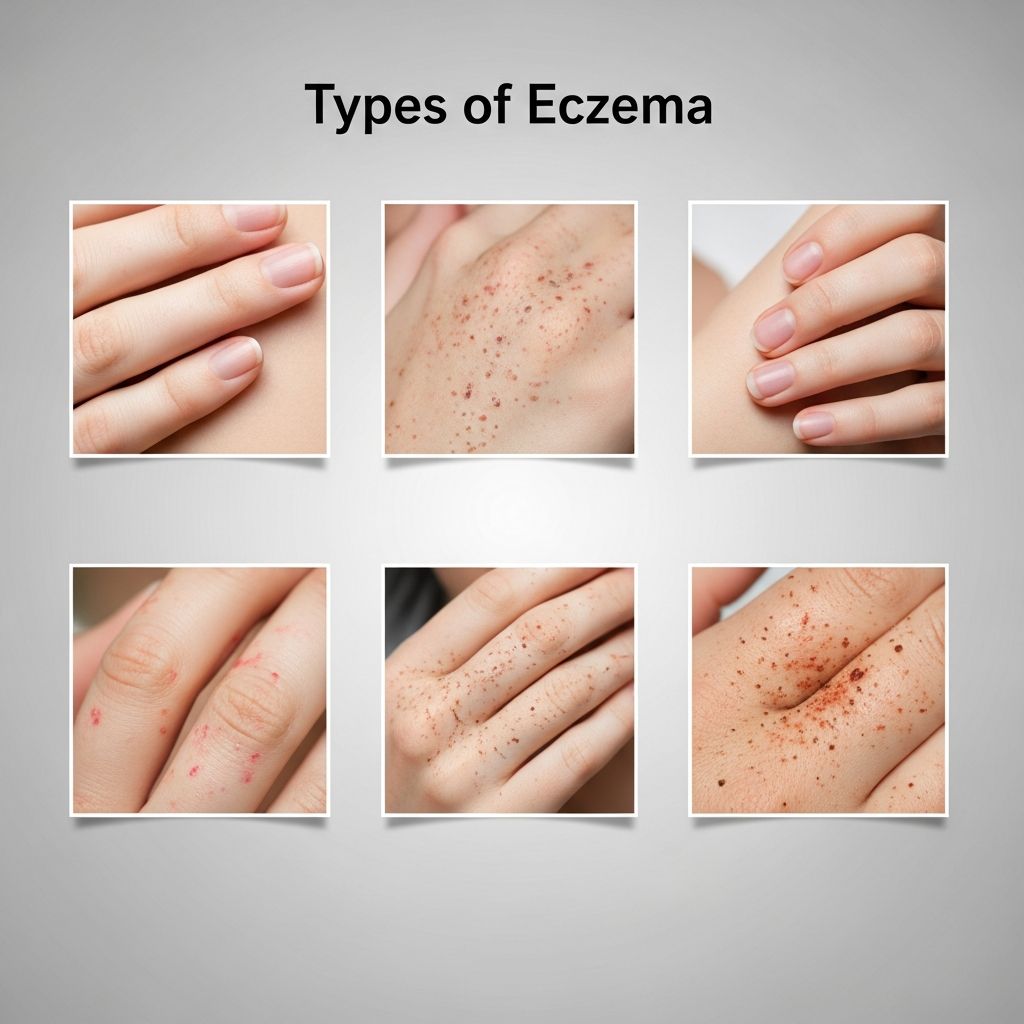
Eczema refers to a group of inflammatory skin conditions characterized by dry, itchy, flaky, and bumpy skin. There are
seven primary types of eczema
, each with distinct causes, symptoms, and treatment approaches. Recognizing the specific type is crucial for effective management and preventing flares.What Are the Different Types of Eczema?
The seven main types include
atopic dermatitis
,contact dermatitis
,dyshidrotic eczema
,neurodermatitis
,nummular eczema
,seborrheic dermatitis
, andstasis dermatitis
. These conditions often share symptoms like itching and redness but differ in appearance, location, and triggers. Atopic dermatitis is the most common, affecting up to 10-20% of children and 1-3% of adults worldwide. Early diagnosis by a dermatologist can lead to better outcomes through targeted therapies.Basics of Atopic Dermatitis
**Atopic dermatitis**, often simply called eczema, is the most prevalent and chronic form. It typically begins in infancy or childhood but can persist or emerge in adulthood. Key features include intensely
itchy, dry patches
that may crack, ooze, or crust over. Skin color changes vary: red on lighter tones, gray, brown, or purplish on darker tones. Common sites are the face, hands, inner elbows, and behind the knees, though it can affect the entire body.Atopic dermatitis frequently co-occurs with
asthma
andallergic rhinitis (hay fever)
, indicating an “atopic triad.” It runs in families due to genetic predispositions. The skin barrier is compromised, allowing irritants, allergens, and microbes to penetrate easily. Triggers encompass allergens (e.g., pollen, pet dander), harsh soaps, cold weather, stress, and sweat.Treatment emphasizes symptom control since there’s no cure. Daily moisturizing with emollients forms the cornerstone. Topical corticosteroids or calcineurin inhibitors reduce inflammation during flares. Antihistamines alleviate itching, while lifestyle changes like gentle skincare and trigger avoidance help. In severe cases, biologics like dupilumab target immune pathways. Phototherapy or systemic immunosuppressants may be used for refractory cases.
Basics of Contact Dermatitis
**Contact dermatitis** arises from direct skin exposure to irritants or allergens.
Irritant contact dermatitis
results from non-immune damage by substances like soaps, detergents, or acids, comprising 80% of cases.Allergic contact dermatitis
involves an immune response to allergens such as nickel in jewelry, fragrances, latex, or poison ivy.Symptoms appear within hours to days:
redness, swelling, itching, burning
, and blisters in the contact area. Occupational exposure is common in healthcare workers, hairdressers, or cleaners. Patch testing identifies allergens for avoidance, the primary prevention strategy.Management includes removing the trigger, cool compresses, and topical steroids. Barrier creams protect skin in high-risk jobs. Chronic exposure can lead to lichenification (thickened skin). Unlike atopic dermatitis, it resolves fully upon avoidance.
Related Stories



Basics of Dyshidrotic Eczema
**Dyshidrotic eczema** (pompholyx) features sudden
small, itchy blisters
on fingers, toes, palms, or soles. Blisters are fluid-filled, deep-seated, and intensely pruritic, leading to pain and impaired function. Over time, skin cracks, peels, or thickens. Flares last 2-4 weeks and recur cyclically.It affects older children and adults more, linked to stress, metal allergies (nickel, cobalt), seasonal allergies, or hyperhidrosis (excessive sweating). Dysregulated sweating glands contribute. Diagnosis is clinical; biopsy is rare.
Treatment: High-potency topical steroids, compression wraps, or oral steroids for severe flares. Antihistamines and botulinum toxin injections reduce sweating. Gloves prevent moisture buildup; avoid irritants. Most cases improve with management.
Basics of Neurodermatitis
**Neurodermatitis** (lichen simplex chronicus) develops from repeated scratching of localized itchy skin, creating an itch-scratch cycle. Patches are thickened, leathery, and hyperpigmented, often on neck, scalp, ankles, wrists, or genitals. It stems from psychological stress, anxiety, or underlying eczema.
Symptoms: Severe localized itching, worsened at night. Scratching causes excoriations and secondary infections. Behavior modification breaks the cycle; habit-reversal therapy is effective.
Treatment combines potent topical steroids, occlusion, and antihistamines. Antidepressants or psychotherapy address emotional triggers. Covering patches prevents unconscious scratching. Prognosis is good with adherence.
Basics of Nummular Eczema
**Nummular eczema** (discoid eczema) presents as
coin-shaped (nummular) lesions
of itchy, oozing, or scaly patches, 1-10 cm in diameter. Often on legs or arms, it mimics fungal infections like ringworm. Dry skin and bacterial entry precipitate it post-injury.More common in older adults, triggered by winter dryness or irritants. Lesions start vesicular then become crusted.
Treatment: Moisturizers, mid-potency steroids, and oral antibiotics if infected. Wet wraps enhance absorption. Avoid baths; use soap substitutes. It clears in weeks to months.
Basics of Seborrheic Dermatitis
**Seborrheic dermatitis** targets sebaceous areas: scalp (dandruff), face (eyebrows, nose), ears, chest. Features
greasy, red, scaly plaques
with yellow-white scales. In infants, it’s cradle cap. Yeast (Malassezia), stress, cold weather, or HIV association implicated.Flares are chronic/recurrent. Gentle cleansing and antifungal shampoos (ketoconazole) control it. Topical steroids or calcineurin inhibitors for inflammation.
Basics of Stasis Dermatitis
**Stasis dermatitis** occurs in lower legs from venous insufficiency, causing blood pooling. Skin becomes
pigmented, itchy, scaly
, prone to ulcers. Edema precedes it.Compression therapy is key, plus leg elevation and venoactive drugs. Treat underlying varicosities. Moisturizers and topical steroids manage symptoms.
Diagnosis and When to See a Doctor
Diagnosis relies on history and exam; biopsy is occasional. See a doctor for persistent itch, oozing, spreading, or infection signs. Dermatologists use patch tests or cultures.
Treatment Overview
- Moisturize daily with ceramide-based creams.
- Topicals: Steroids, non-steroids.
- Wet wraps for severe flares.
- Systemics: Immunosuppressants, biologics.
- Lifestyle: Avoid triggers, gentle care.
Frequently Asked Questions (FAQs)
What is the most common type of eczema?
Atopic dermatitis is the most common, affecting millions worldwide, often starting in childhood.
Can eczema be cured?
No, but it can be effectively managed to minimize flares and improve quality of life.
Is eczema contagious?
No, eczema is not contagious; it’s driven by genetics and environment.
What triggers eczema flares?
Common triggers: stress, allergens, irritants, weather changes, infections.
How is eczema diagnosed?
Primarily by clinical exam; tests like patch testing aid specific types.
References
- Types of Eczema: Symptoms, Differences, Diagnosis — National Eczema Association. 2023. https://nationaleczema.org/types-of-eczema/
- Guidelines for the Management of Atopic Dermatitis — American Academy of Dermatology. 2024-02-15. https://www.aad.org/member/clinical-quality/guidelines/atopic-dermatitis
- Atopic Dermatitis Clinical Guideline — Joint Task Force on Practice Parameters (AAAAI/ACAAI). 2024. https://www.annallergy.org/article/S1081-1206(23)01432-3/fulltext
- Seborrheic Dermatitis Diagnosis and Treatment — Mayo Clinic. 2025-01-10. https://www.mayoclinic.org/diseases-conditions/seborrheic-dermatitis/diagnosis-treatment/drc-20352714
- Venous Stasis Dermatitis — American Venous Forum. 2024. https://www.venousforum.org/resources/guidelines/
Similar Articles








Read full bio of medha deb