Types of Hearing Aids: Styles & How They Work
Comprehensive guide to hearing aid styles: Find the perfect device for your hearing needs.
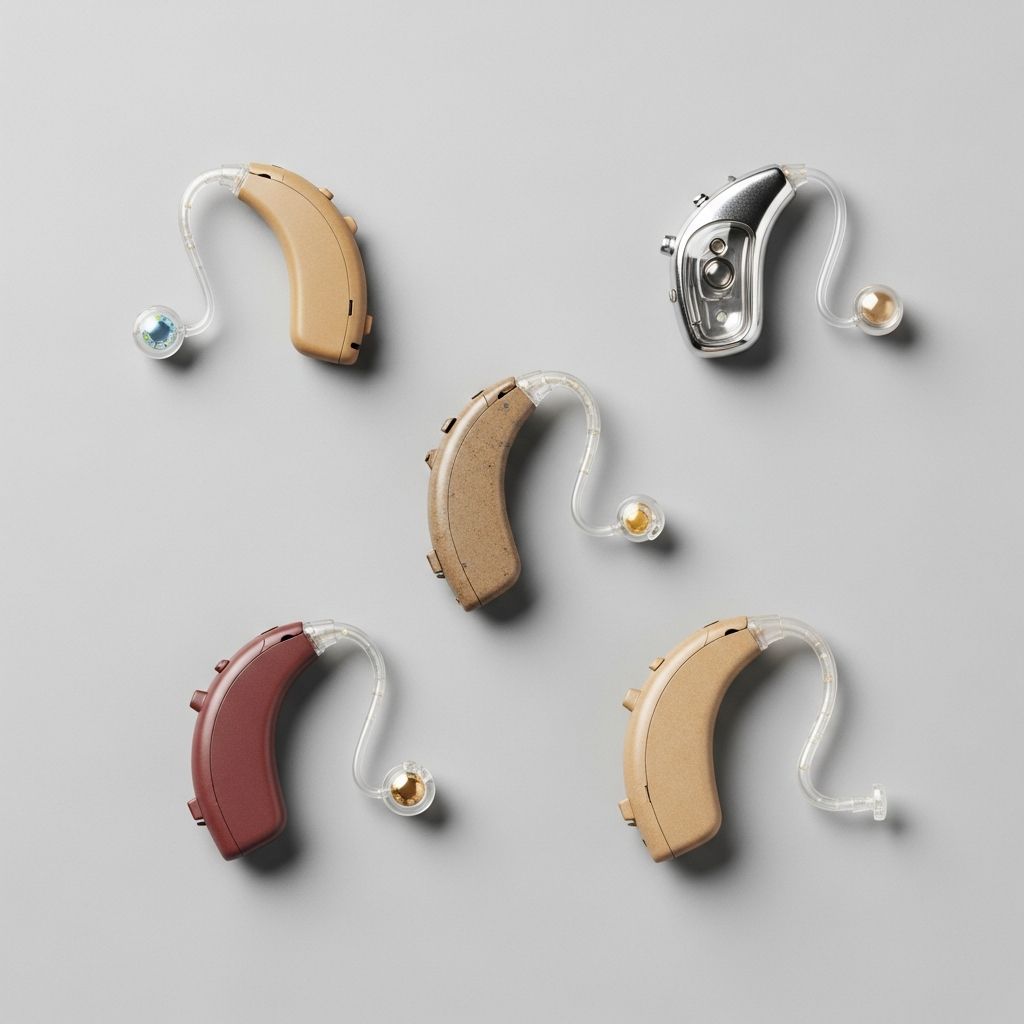
Understanding Hearing Aid Styles
Hearing loss affects millions of people worldwide, and modern hearing aids offer numerous solutions to help individuals regain their quality of life. Healthcare providers categorize hearing aids into five primary types, each designed to meet different needs, preferences, and degrees of hearing loss. Understanding the differences between these styles is essential when selecting the right device for your specific situation.
Choosing the appropriate hearing aid depends on several critical factors. These include the severity of your hearing loss, the size and shape of your ear, your personal preferences regarding visibility and comfort, your manual dexterity and ability to handle small devices, and access to new hearing aid technologies that can enhance your hearing experience. Let’s explore each hearing aid style in detail to help you make an informed decision.
Behind-the-Ear (BTE) Hearing Aids
Behind-the-ear (BTE) devices are among the most versatile and widely recommended hearing aid styles available today. These hearing aids are appropriate for people with a wide range of hearing loss, from mild to profound. The device fits neatly behind your ear, with the body of the hearing aid attaching to a custom ear mold or thin tubing.
One of the primary advantages of BTE hearing aids is their power capacity. Because this device has several parts and larger dimensions, it can accommodate more powerful amplification and larger batteries, making them ideal for individuals with severe to profound hearing loss. However, this design does require manual dexterity to ensure proper insertion and placement of the device and ear mold.
BTE devices have evolved significantly over the years, and many of the latest models now feature rechargeable batteries and Bluetooth connectivity. This allows users to stream audio directly from smartphones, televisions, and other compatible devices, creating a more seamless and integrated hearing experience.
In-the-Ear (ITE) Hearing Aids
In-the-ear (ITE) devices represent an excellent option for individuals who prioritize discretion and ease of use. These hearing aids fill either your entire ear, known as full-shell, or a portion of the bowl, known as half-shell. The entire device sits within the ear itself, making it less noticeable than behind-the-ear models.
ITE devices are particularly beneficial for people who may have dexterity issues or difficulty handling small items. The larger size compared to in-the-canal models makes them easier to insert, remove, and adjust. Additionally, many ITE devices feature external controls that are simpler to manipulate than those found on smaller hearing aid styles.
Healthcare providers often recommend ITE devices for people with moderate to severe hearing loss. These devices offer a good balance between power, visibility, and usability. Many users appreciate the cosmetic benefits of ITE hearing aids, as they are less visible than behind-the-ear models while still offering robust functionality and battery life.
Receiver-in-the-Ear (RITE) Hearing Aids
Receiver-in-the-ear (RITE) hearing aids, also known as receiver-in-the-canal (RIC) devices, represent a more modern approach to hearing aid design. These devices are similar to BTE devices in that the body of a RITE hearing aid sits behind your ear. However, the critical difference lies in the receiver placement.
Related Stories



In RITE devices, a thin receiver wire extends from the body of the hearing aid over your outer ear and into your ear canal. A soft tip sits just inside of your ear canal without sealing it completely. This design offers several distinct advantages over traditional BTE models. For many people, this configuration provides a more natural sound quality because the receiver sits directly in the ear canal, allowing for better acoustic processing.
RITE devices are appropriate for mild to severe hearing loss. Like BTE devices, they require manual dexterity for proper insertion and adjustment. However, many users find RITE devices to be more comfortable and easier to wear for extended periods due to their lightweight design and the open-fitting concept that reduces feedback and ear canal occlusion.
In-the-Canal (ITC) and Completely-in-the-Canal (CIC) Hearing Aids
In-the-canal (ITC) hearing aids fit more deeply into your ear canal than ITE hearing aids, making them significantly less visible. Because of their smaller size, ITC devices use smaller batteries and may require greater manual dexterity to handle and maintain. These devices are ideal for individuals who prioritize discretion and have the physical capability to manage the smaller components.
Depending on your specific situation, you may even qualify for completely-in-the-canal (CIC) hearing aids. These devices fit even deeper into the ear canal so they are virtually invisible to observers. CIC devices represent the pinnacle of discreet hearing aid technology, offering cosmetic benefits that appeal to many users concerned about the appearance of assistive devices.
However, the small size of ITC and CIC devices comes with trade-offs. The reduced battery size means shorter battery life between charges or replacements. Additionally, the proximity to the ear canal makes these devices more susceptible to cerumen (earwax) accumulation, requiring more frequent professional cleaning and maintenance. Managing the tiny controls and changing batteries or domes can be challenging for individuals with reduced dexterity.
CROS and BiCROS Hearing Aids
Your healthcare provider may recommend a CROS or BiCROS hearing aid if you have a specific type of hearing loss pattern. These specialized devices are designed for individuals with normal hearing or minimal hearing loss in one ear and very little or no usable hearing in the other ear, a condition known as single-sided deafness.
In a CROS system, you wear the hearing aid on the better hearing side, and you wear an additional microphone on the poorer hearing side. This configuration allows you to hear from the poorer side, even though it delivers all sounds to your better ear. These devices are especially beneficial when someone is talking on the side of the poorer ear, as the microphone captures those sounds and routes them to your functional ear.
CROS stands for “Contralateral Routing of Signals.” BiCROS stands for “Bilateral Contralateral Routing of Signals” and is used when you have some hearing loss in both ears but one ear is significantly worse. BiCROS devices provide amplification for the better ear while also routing sounds from the poorer ear to the better ear, offering a more comprehensive solution for asymmetrical hearing loss patterns.
Hearing Aid Battery Options
Hearing aid batteries come in two primary types: disposable and rechargeable. Disposable batteries, which resemble little buttons, were once the standard for hearing aids. However, technology has evolved significantly, and disposable batteries aren’t as common in modern hearing aids anymore.
Most new hearing aids now run on rechargeable batteries. Similar to smartphones and other Bluetooth devices, you simply place hearing aids with rechargeable batteries on a charger when you’re not using them. Many rechargeable hearing aids come with convenient docking stations that make the charging process simple and intuitive. This advancement eliminates the need to frequently purchase and replace small batteries, reducing long-term costs and environmental impact.
Rechargeable hearing aids typically offer substantial battery life, allowing users to wear their devices throughout the day on a single charge. Many models provide 24 to 30 hours of battery life, while some premium models may offer even longer usage periods before requiring a recharge.
Modern Hearing Aid Features
Contemporary hearing aids incorporate numerous advanced features that enhance the user experience and improve hearing outcomes. Many of the latest hearing aids are equipped with Bluetooth technology, allowing them to connect seamlessly with smartphones, tablets, laptops, and other compatible devices. This wireless connectivity enables users to stream phone calls, music, podcasts, and other audio content directly to their hearing aids.
Advanced hearing aid features also include:
- Multiple frequency channels that allow for precise tuning and feedback control
- Directional microphones that help focus on sounds in front of the wearer while reducing background noise
- Automatic environmental detection that adjusts settings based on listening situations
- Telecoil technology to facilitate telephone listening and compatibility with looped venues
- Volume control, either manual or automatic
- Multiple memories to provide different listening programs for various environments
- Remote control options for patients with manual dexterity challenges
- Smartphone apps that enable wireless adjustment and control of hearing aid settings
Choosing the Right Hearing Aid for Your Needs
Selecting the right hearing aid style requires careful consideration of multiple factors. Your audiologist or healthcare provider will assess the severity and type of your hearing loss through comprehensive audiometric testing. This evaluation determines which hearing aid styles have sufficient power for your needs.
Physical factors also play a crucial role in the selection process. The size and shape of your ear canal and external ear structure influence which devices will fit comfortably and securely. Your manual dexterity and upper arm mobility affect your ability to insert, remove, and maintain different hearing aid styles.
Your lifestyle and communication demands should also influence your choice. A patient who encounters a variety of listening situations and has high communication demands typically requires a hearing aid with more advanced options and features. Conversely, someone with limited hearing challenges and fewer communication demands may benefit from a simpler, more straightforward device.
Over-the-Counter Versus Prescription Hearing Aids
Over-the-counter (OTC) hearing aids have emerged as an accessible option for many people with mild to moderate hearing loss. These devices will be appropriate for many individuals seeking affordable hearing solutions without the need for professional fitting and customization.
However, if you have severe to profound hearing loss or complex hearing conditions, you’ll need to see a healthcare provider for appropriate testing, diagnosis, and treatment. Prescription hearing aids are custom-fitted to your specific ear canal and programmed to your unique audiometric profile, offering superior sound quality and effectiveness for more challenging hearing loss situations.
Fitting and Professional Support
When you select a hearing aid, your audiologist will schedule a fitting appointment where the device is programmed to your specific listening needs. During this appointment, the hearing aid is adjusted through a process called “real ear measurement,” which ensures optimal sound delivery based on your individual ear canal characteristics.
Professional support doesn’t end with the initial fitting. Many hearing aid providers offer extended trial periods, allowing you to wear the device in your daily life before making a final commitment. This trial period is valuable for assessing comfort, sound quality, and overall satisfaction with your chosen hearing aid style.
Frequently Asked Questions
Q: How do I know which hearing aid style is right for me?
A: The best hearing aid style depends on several factors including your degree of hearing loss, ear canal size and shape, manual dexterity, lifestyle needs, and personal preferences. Your audiologist can recommend the most suitable options based on comprehensive hearing testing and your specific situation.
Q: Are newer hearing aids compatible with my smartphone?
A: Most modern hearing aids, especially newer models from major manufacturers, feature Bluetooth connectivity. This allows direct streaming of phone calls, music, and other audio from compatible smartphones and other devices. Check with your hearing aid provider about specific compatibility features.
Q: How long do hearing aid batteries last?
A: Rechargeable hearing aid batteries typically last 24 to 30 hours per full charge. The exact duration depends on your specific model, usage patterns, and the features you use. Older disposable batteries lasted anywhere from 3 to 10 days depending on the battery size and device power consumption.
Q: Can I wear hearing aids if I have severe to profound hearing loss?
A: Yes, Behind-the-ear (BTE) and some other hearing aid styles can accommodate severe to profound hearing loss due to their larger size and greater amplification capacity. However, you’ll need to see a healthcare provider for testing and fitting to ensure you receive an appropriate device.
Q: What should I do if I’m having trouble handling small hearing aids?
A: If you have dexterity challenges, in-the-ear (ITE) and behind-the-ear (BTE) hearing aids may be better options than smaller models. These larger styles are easier to insert, remove, and adjust. Additionally, many modern hearing aids offer remote controls and smartphone apps for wireless adjustment.
References
- Types of Hearing Aids: Styles & How They Work — Cleveland Clinic. 2024. https://my.clevelandclinic.org/health/articles/5122-hearing-aid-styles
- Hearing Loss and Its Management in the Elderly — Cleveland Clinic Journal of Medicine, Vol. 71, No. 3. 2004. https://www.ccjm.org/content/ccjom/71/3/225.full.pdf
- What Are Hearing Aids? — Cleveland Clinic. 2024. https://my.clevelandclinic.org/health/treatments/24756-hearing-aids
- Hearing Loss: Types, Symptoms, Causes & Treatment — Cleveland Clinic. 2024. https://my.clevelandclinic.org/health/diseases/17673-hearing-loss
- What To Know About OTC Hearing Aids — Cleveland Clinic. 2024. https://health.clevelandclinic.org/otc-hearing-aids
- 6 Tips for Getting Used to Your New Hearing Aids — Cleveland Clinic. 2024. https://health.clevelandclinic.org/how-to-get-used-to-hearing-aids
Similar Articles








Read full bio of Sneha Tete