Mental Health Disorders: 8 Key Types, Symptoms & Treatments
Understand the main types of mental health disorders, their symptoms, causes, and treatments for better awareness and support.
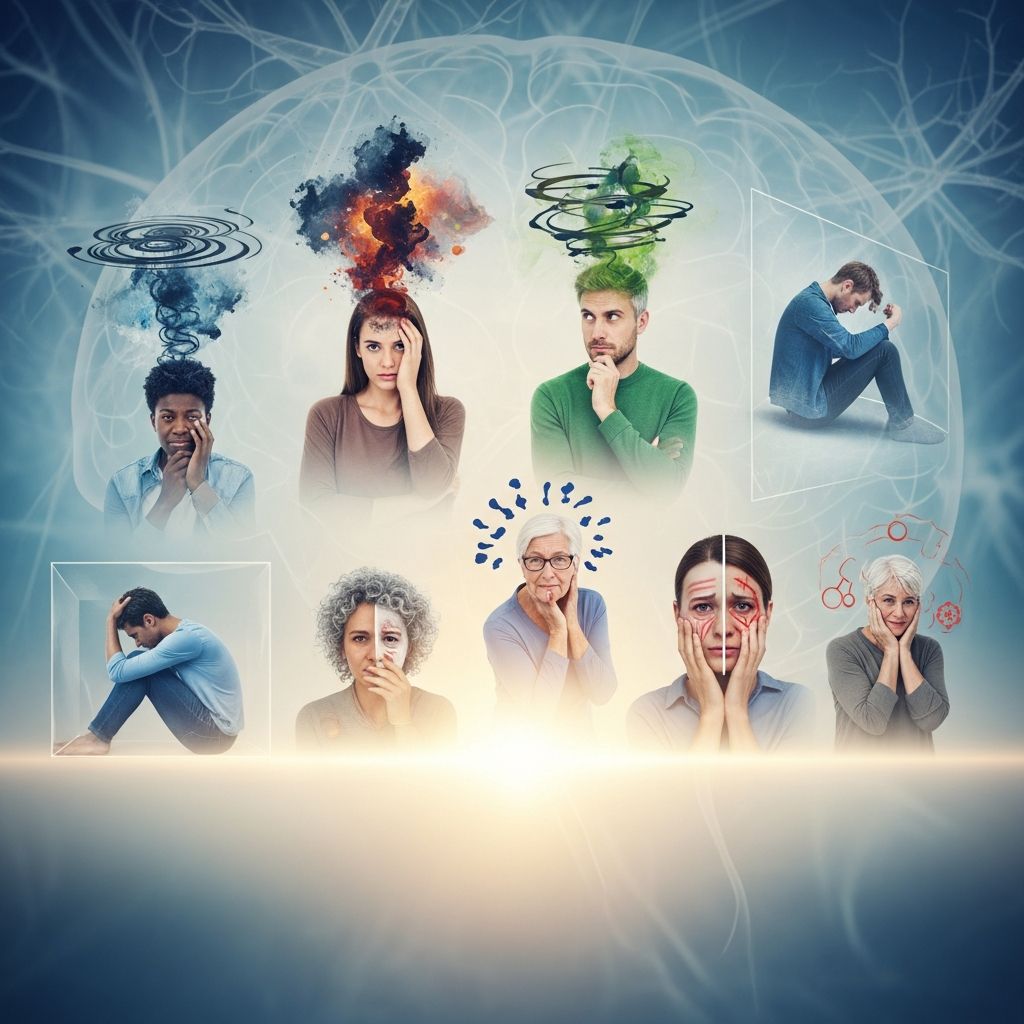
Mental health disorders impact millions worldwide, affecting thinking, emotions, behavior, and daily functioning. This comprehensive guide covers key types like depression, anxiety, bipolar disorder, schizophrenia, OCD, PTSD, eating disorders, and psychosis, drawing from authoritative sources to explain symptoms, causes, prevalence, and treatments.
Playlist: Mental Health Disorders
Mental health disorders encompass a wide range of conditions characterized by significant disturbances in cognition, emotional regulation, or behavior, often causing distress or impairment in social, occupational, or other vital activities. According to the World Health Organization (WHO), these disorders affect people across all ages, with anxiety disorders alone impacting 359 million people in 2021, including 72 million children and adolescents. The Diagnostic and Statistical Manual of Mental Disorders, Fifth Edition (DSM-5) provides standardized criteria for diagnosis, emphasizing clinically significant dysfunction. Common comorbidities include chronic pain like migraines and back pain. Early recognition and intervention are crucial for management.
What is depression?
Depression, particularly major depressive disorder (MDD), involves persistent sad, empty, or irritable mood, often with loss of interest in activities, changes in appetite, sleep disturbances, fatigue, feelings of worthlessness, and suicidal thoughts. The DSM-5 lists subtypes including persistent depressive disorder (dysthymia), premenstrual dysphoric disorder, and others differing in duration and etiology. Globally, depression contributes substantially to the burden of mental ill health. Symptoms must last at least two weeks for diagnosis, severely impairing daily life.
Risk factors include genetic predisposition, biological changes, trauma, and chronic stress. Treatments encompass psychotherapy like cognitive behavioral therapy (CBT), antidepressants, and lifestyle changes. In severe cases, electroconvulsive therapy (ECT) may be used. Untreated depression heightens suicide risk.
- Key symptoms: Persistent sadness, hopelessness, fatigue, concentration issues.
- Prevalence: A leading cause of disability worldwide.
- Treatment success: High with combined therapy and medication.
What is anxiety?
Anxiety disorders feature excessive fear, worry, and behavioral disturbances causing significant distress. Types include generalized anxiety disorder (GAD), panic disorder, social anxiety, specific phobias (e.g., agoraphobia), separation anxiety, OCD, and PTSD. GAD involves chronic excessive worry about various life aspects; panic disorder brings sudden panic attacks with heart palpitations, sweating, and fear of dying. In 2021, 359 million people lived with anxiety disorders.
Social phobias involve intense fear in social situations, while specific phobias trigger extreme reactions to objects or situations like heights or spiders. Untreated, these lead to avoidance behaviors impairing work and relationships. Causes blend genetics, brain chemistry, and environmental triggers like trauma.
| Type | Main Features | Examples |
|---|---|---|
| Generalized Anxiety | Chronic worry | Daily life concerns |
| Panic Disorder | Sudden attacks | Chest pain, dizziness |
| Social Anxiety | Fear of judgment | Public speaking |
Treatments include CBT, exposure therapy, and medications like SSRIs. Most respond well to intervention.
What is generalised anxiety disorder?
Generalised anxiety disorder (GAD) is marked by persistent, excessive anxiety about multiple everyday issues, lasting at least six months, with physical symptoms like restlessness, muscle tension, and sleep problems. It differs from normal worry by its intensity and interference with functioning. Prevalence is high among women and those with family history.
Management focuses on CBT to challenge irrational thoughts and relaxation techniques. Medications such as buspirone or benzodiazepines (short-term) help. Lifestyle adjustments like exercise and mindfulness reduce symptoms effectively.
What is bipolar disorder?
Bipolar disorder, once called manic depression, involves alternating depressive and manic episodes. Mania features elevated mood, increased energy, reduced sleep need, grandiosity, and risky behaviors; depression mirrors MDD symptoms. In 2021, 37 million people, including 3.8 million adolescents, experienced it. Types include bipolar I (full mania), bipolar II (hypomania), and cyclothymic disorder.
Genetic factors are strong, with environmental stressors triggering episodes. Treatment requires mood stabilizers like lithium, antipsychotics, psychotherapy, and monitoring to prevent relapse. Suicide risk is elevated during depressive phases.
Related Stories



- Mania: Euphoria, irritability, rapid speech.
- Depression: Sadness, lethargy, suicidal ideation.
- Management: Lifelong medication adherence.
What is schizophrenia?
Schizophrenia is a severe psychotic disorder disrupting thinking, emotions, and reality perception. Symptoms include positive (hallucinations, delusions), negative (social withdrawal, lack of motivation), and cognitive (impaired memory, attention). It typically emerges in late teens to early adulthood, with high suicide risk. Not a split personality, as commonly misconceived.
Causes involve genetics, brain structure abnormalities, and prenatal factors. Antipsychotic medications, CBT, and family support are standard treatments. Early intervention improves outcomes. Prevalence affects about 1% globally.
What is obsessive compulsive disorder?
Obsessive-compulsive disorder (OCD) features intrusive obsessions (unwanted thoughts) and compulsions (repetitive behaviors to reduce anxiety). Common obsessions: contamination fears, harm worries; compulsions: washing, checking. It consumes significant time, causing distress.
Effective treatments are CBT with exposure and response prevention (ERP), and SSRIs. Deep brain stimulation is for refractory cases. Affects all ages, often starting in childhood.
What is post-traumatic stress disorder?
PTSD follows exposure to trauma like combat, assault, or disasters, with re-experiencing (flashbacks, nightmares), avoidance, negative mood changes, and hyperarousal. Symptoms persist weeks to months, impairing functioning.
Trauma-focused CBT and EMDR therapy, plus antidepressants, are first-line treatments. Prevalence higher in veterans and abuse survivors. Prevention includes early psychological support post-trauma.
What are eating disorders?
Eating disorders like anorexia nervosa, bulimia nervosa, and binge-eating disorder involve disturbed eating habits and body image concerns, leading to serious health issues. Anorexia features extreme restriction and weight loss; bulimia cycles bingeing and purging. Affect all genders and ages.
Multidisciplinary treatment includes nutritional counseling, CBT, and family therapy. Hospitalization may be needed for medical stability. High mortality from complications like heart failure.
What is psychosis?
Psychosis involves delusions, hallucinations, and disorganized thinking, occurring in schizophrenia, bipolar, or drug-induced states. It distorts reality perception.
Antipsychotics rapidly alleviate symptoms; psychological support aids recovery. Substance-induced cases often resolve with abstinence.
Frequently Asked Questions (FAQs)
Q: How common are mental health disorders?
A: Extremely common; WHO reports hundreds of millions affected, e.g., 359 million with anxiety in 2021.
Q: Can mental disorders be treated?
A: Yes, most respond to therapy, medication, or both; early intervention key.
Q: What causes mental health disorders?
A: Mix of genetics, biology, environment, and trauma; no single cause.
Q: Are mental disorders the same as weakness?
A: No, they are medical conditions like diabetes, treatable with professional help.
Q: When to seek help?
A: If symptoms persist >2 weeks, interfere with life, or include suicidal thoughts—contact a professional immediately.
References
- Mental Health Disorders — NCBI Bookshelf, National Center for Biotechnology Information. 2023-10-25. https://www.ncbi.nlm.nih.gov/books/NBK559510/
- Types of mental health issues and illnesses — Better Health Channel, Victorian Government. 2024-05-15. https://www.betterhealth.vic.gov.au/health/servicesandsupport/types-of-mental-health-issues-and-illnesses
- Mental Disorders: Types, Causes & Symptoms — Cleveland Clinic. 2024-02-12. https://my.clevelandclinic.org/health/diseases/22295-mental-health-disorders
- Mental Health Conditions — National Alliance on Mental Illness (NAMI). 2024-08-01. https://www.nami.org/about-mental-illness/mental-health-conditions/
- Mental disorders — World Health Organization (WHO). 2022-06-09. https://www.who.int/news-room/fact-sheets/detail/mental-disorders
Similar Articles








Read full bio of medha deb