Types of Mushrooms: Nutrition and Benefits
Discover the diverse world of mushrooms, from common culinary varieties to powerful medicinal types packed with health benefits.
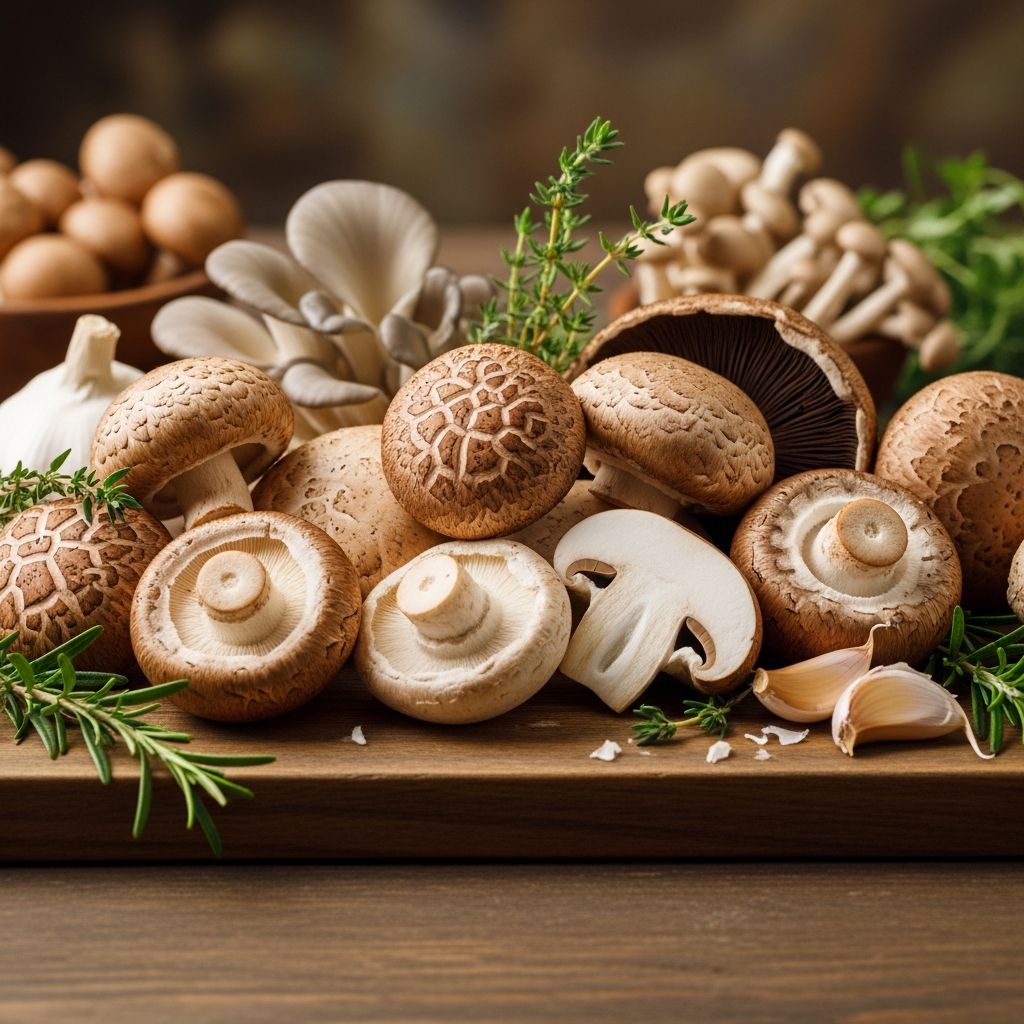
Mushrooms are versatile fungi offering low-calorie nutrition, antioxidants, vitamins, and bioactive compounds that support health from immunity to brain function. With over 2,000 edible varieties, they range from everyday culinary staples to potent medicinal types studied for disease prevention.
What Are Mushrooms?
Mushrooms are the fruiting bodies of fungi, neither plants nor animals, thriving as decomposers for billions of years. They absorb nutrients from their environment, yielding resilient bio-compounds like polysaccharides, beta-glucans, and ergothioneine that promote human health. Edible varieties number around 16,000, with 7,000 prized for taste and nutrition, including Basidiomycetes like Agaricus and Pleurotus.
Nutritionally, mushrooms are low in calories and fat, high in fiber, B vitamins, selenium, potassium, and vitamin D when UV-treated. They provide antioxidants fighting inflammation and oxidative stress. Always source from reliable suppliers to avoid toxic wild varieties.
Common Edible Mushrooms
These supermarket staples are mild-flavored, versatile for raw or cooked dishes, and offer baseline health perks like heart support and low sodium.
- Button (Agaricus bisporus): The most common U.S. mushroom (90% market share), mild and crunchy raw or sautéed. Rich in vitamin D, selenium, and antioxidants for cell protection and cardiovascular health.
- Cremini (Brown Button): Denser flavor than white buttons, ideal for stuffing or pizzas. Provides similar nutrients plus more B vitamins.
- Portobello: Mature cremini with meaty texture, perfect as burger substitutes. High in B6 for red blood cell formation.
- Shiitake (Lentinula edodes): Umbrella-shaped with fragrant umami; supports immunity via lentinan polysaccharide, liver health, and cholesterol reduction. Excellent B6 source.
- Oyster (Pleurotus ostreatus): Fan-shaped, velvety caps great stir-fried. Boosts heart and metabolic health with protein, niacin, and low calories.
- Enoki: Long, thin stems for salads or soups; crisp texture with antioxidants.
- Wood Ear (Auricularia polytricha): Jelly-like, used in Asian soups for blood pressure control.
- Porcini: Earthy, meaty; rich in flavor for risottos.
Medicinal Mushrooms
Functional mushrooms like reishi and lion’s mane contain unique polysaccharides (e.g., beta-glucans) for immune modulation, anti-cancer effects, and neuroprotection. Peer-reviewed studies highlight their antidiabetic, antimicrobial, and anti-inflammatory roles.
Lion’s Mane (Hericium erinaceus)
Known as the ‘mushroom for the mind,’ its hericenones and erinacines stimulate nerve growth factor (NGF) for brain health, memory, and mood. Studies show potential in mild cognitive impairment and anxiety relief. Culinary: Tooth-like spines, mild seafood flavor in teas or stir-fries. Nutrition: High protein (22.3%), K, P, Mg.
Reishi (Ganoderma lucidum)
The ‘mushroom of immortality’ boosts immunity, reduces fatigue, and fights inflammation via triterpenes. Supports liver, heart, and stress adaptation. Bitter taste best in powders or teas. Nutrition: 37% carbs, high K, P, Ca.
Cordyceps (Cordyceps militaris/sinensis)
Caterpillar-shaped parasite enhances energy, oxygen use, and athletic performance by boosting ATP. Anti-fatigue and kidney-supportive. Use in coffees or capsules.
Chaga (Inonotus obliquus)
Not a true mushroom but a birch parasite; packed with betulinic acid for digestion, skin health, and antioxidants. Tea form popular.
Turkey Tail (Trametes versicolor)
Colorful shelves with PSK/PSP polysaccharides aiding cancer therapy and gut health. Often in extracts.
Maitake (Grifola frondosa)
‘Dancing mushroom’ with fan clusters; beta-glucans lower blood sugar and cholesterol. Vitamin D-rich. Nutrition: 19.3% protein.
Bonus Varieties
- Agaricus (Button): Tops vitamin D and heart health.
- Tremella: Hydrating ‘beauty mushroom’ for skin.
- Morel, Chanterelle: Seasonal delicacies with antioxidants.
Related Stories



Nutritional Comparison of Mushrooms
| Mushroom Type | Calories/100g | Protein (%) | Key Nutrients | Health Focus |
|---|---|---|---|---|
| Agaricus bisporus | Low | 3.1 | Selenium, Vit D | Heart, Antioxidants |
| Lentinula edodes (Shiitake) | Low | 22.8 | B6, Lentinan | Immunity, Cholesterol |
| Hericium erinaceus | Low | 22.3 | K, P, Mg | Brain Health |
| Ganoderma lucidum | Low | 8.54 | K, Ca | Immunity, Stress |
| Pleurotus ostreatus | Low | High | Niacin | Metabolic Health |
| Grifola frondosa | Low | 19.3 | Vit D | Blood Sugar |
Table data synthesized from compositional analyses; values approximate per 100g dry weight where noted.
Health Benefits of Mushrooms
Mushrooms offer evidence-based perks:
- Immune Boost: Beta-glucans activate white cells.
- Cancer Risk Reduction: Antioxidants and polysaccharides like lentinan inhibit tumors.
- Heart Health: Fiber, sterols lower cholesterol; low sodium alternative.
- Brain Protection: Lion’s mane NGF for cognition.
- Vitamin D: UV-treated varieties aid bone and immunity.
- Antimicrobial: Effective against E. coli, Salmonella.
How to Use Mushrooms Safely
Cook most to enhance digestibility and destroy toxins; raw buttons ok. UV-treated for vitamin D. Supplements: Choose organic extracts with verified beta-glucans. Consult doctors for medicinal use, especially pregnant or on meds.
Frequently Asked Questions (FAQs)
What are the healthiest types of mushrooms?
Medicinal like shiitake, maitake, and lion’s mane top for immunity and cognition; cremini/portobello for selenium.
Are all mushrooms safe to eat?
No—only buy cultivated from trusted sources; wild can be poisonous.
Can mushrooms help with weight loss?
Yes, low-cal, high-fiber, protein make them satiating meat substitutes.
How much vitamin D do mushrooms provide?
UV-treated can match sunlight-exposed levels, up to 400 IU/serving.
Are medicinal mushrooms better as food or supplements?
Supplements concentrate bioactives; foods add fiber/nutrients.
References
- Medicinal Mushrooms: 7 Kinds and Their Unique Health Benefits — Real Mushrooms. 2023. https://realmushrooms.com/blogs/rm/7-medicinal-mushroom-benefits-for-health
- Mushrooms: Nutritional value and health benefits — Medical News Today. 2023-10-01. https://www.medicalnewstoday.com/articles/278858
- Mushrooms as Nutritional Powerhouses: A Review — NIH/PMC. 2025. https://pmc.ncbi.nlm.nih.gov/articles/PMC11899115/
- Mushrooms – The Nutrition Source — Harvard T.H. Chan School of Public Health. 2024. https://nutritionsource.hsph.harvard.edu/food-features/mushrooms/
- 7 health benefits of mushrooms — UCLA Health. 2023. https://www.uclahealth.org/news/article/7-health-benefits-of-mushrooms
- Mushroom marvels: understanding their role in human health — Frontiers in Nutrition. 2025. https://www.frontiersin.org/journals/nutrition/articles/10.3389/fnut.2025.1654911/full
Similar Articles








Read full bio of Sneha Tete