Types of Urinary Incontinence: Causes and Treatments
Understanding urinary incontinence: Types, causes, and effective treatment options explained.
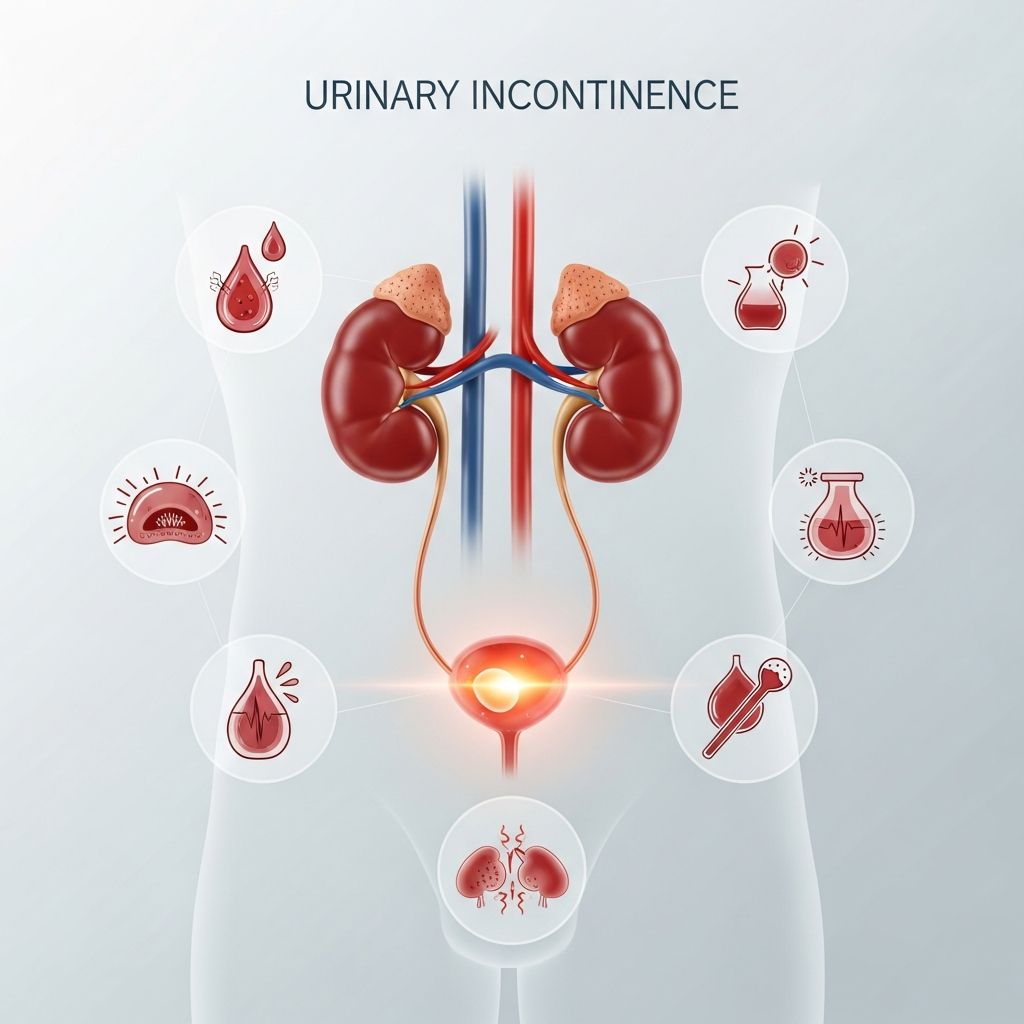
Understanding Urinary Incontinence
Urinary incontinence is a common condition characterized by the involuntary loss of urine, affecting millions of people worldwide. Rather than being a disease itself, urinary incontinence represents a symptom of an underlying bladder or pelvic disorder that requires proper diagnosis and management. The condition can range from occasional minor leakage to complete loss of bladder control, significantly impacting quality of life. Understanding the different types of urinary incontinence is essential for receiving appropriate treatment, as the management approach varies substantially depending on the specific type and underlying cause.
While urinary incontinence is often considered a natural part of aging, it is not inevitable and should not be accepted as a normal consequence of growing older. Many effective treatment options exist today, from conservative behavioral interventions to advanced surgical procedures. The key to successful management lies in obtaining an accurate diagnosis and working with healthcare providers to develop a personalized treatment plan.
Stress Urinary Incontinence
Stress urinary incontinence (SUI) is one of the most prevalent types of incontinence, particularly among women. This condition occurs when physical pressure or activity places stress on the bladder, causing involuntary urine leakage. The underlying mechanism involves weakness in the pelvic floor muscles and supporting structures that normally maintain the seal around the urethra, preventing urine from escaping during activities.
Common Triggers
Stress incontinence typically occurs during activities that increase intra-abdominal pressure, including:
- Coughing or sneezing
- Laughing
- Exercise or physical activity
- Lifting heavy objects
- Walking or bending
- Jumping or running
Risk Factors and Causes
Several factors increase the risk of developing stress incontinence. Pregnancy and vaginal childbirth are significant contributors, as the physical demands on pelvic floor muscles during pregnancy and the stretching and potential injury to pelvic nerves during delivery can weaken these structures. The aging process also increases vulnerability, as estrogen levels decline during menopause, affecting tissue elasticity and muscle strength in the pelvic region.
Obesity is another major risk factor, as excess weight increases pressure on the bladder and weakens supporting structures. Additionally, women who have undergone hysterectomy or other pelvic surgeries have an elevated risk of developing stress incontinence. The condition is more common in women than in men, though men who have undergone prostate surgery may experience stress incontinence as a complication.
Treatment Options
The primary treatment approach for stress incontinence typically begins with conservative measures. Pelvic floor muscle exercises, commonly known as Kegel exercises, strengthen the muscles that control urine flow and support the bladder. These exercises involve identifying the correct muscles (those used to stop urination midstream) and performing controlled contractions multiple times daily.
Lifestyle modifications can also reduce symptoms significantly, including maintaining a healthy weight, avoiding heavy lifting and repetitive strenuous activities, and adopting a high-fiber diet to prevent constipation, which can exacerbate incontinence. For many women, these conservative approaches provide substantial improvement.
When conservative treatments prove insufficient, minimally invasive surgical options are available. Procedures typically involve placing supportive material or implants to support the bladder neck and urethra. Many of these surgeries are performed as outpatient procedures with small incisions, allowing for quick recovery and minimal discomfort. Newer options such as laser therapy have emerged as innovative treatments ideal for women with mild to moderate stress urinary incontinence.
Related Stories



Urge Incontinence and Overactive Bladder
Urge incontinence, also known as overactive bladder (OAB), is among the most common types of urinary incontinence, affecting approximately 90 percent of patients with urinary incontinence symptoms. This condition involves involuntary bladder contractions that create a sudden, strong urge to urinate, often resulting in leakage before reaching the toilet.
Characteristics and Symptoms
Overactive bladder is characterized by frequent urination both during the day and at night (nocturia), combined with a compelling urge to void. Patients typically report sudden urges to urinate that occur with minimal warning, and the bladder may be only partially filled when these urges occur. The condition results from spontaneous bladder spasms caused by nerve dysfunction or heightened bladder sensitivity.
Underlying Causes
Multiple factors can trigger urge incontinence. Dietary irritants such as caffeine and alcohol stimulate the bladder and should be minimized or eliminated. Increased fluid intake, certain medications with urinary side effects, and urinary tract infections can all precipitate symptoms. More serious underlying causes include nerve dysfunction associated with diabetes, multiple sclerosis, spinal cord injury, or other neurological conditions.
Management Strategies
Treatment for urge incontinence typically begins with behavioral interventions combined with medication when necessary. Bladder retraining involves gradually extending the time between bathroom visits, training the bladder to delay voiding for longer intervals. This technique helps recondition the bladder and improve control over urgency sensations.
Timed voiding, where patients urinate on a regular schedule every two to four hours regardless of urge, is particularly beneficial for elderly, bedridden, or cognitively impaired patients. Dietary modification to eliminate bladder irritants represents another important behavioral strategy that often yields significant symptom reduction.
Medications specifically designed to treat overactive bladder are highly effective for many patients, working by reducing bladder muscle contractions and increasing the bladder’s capacity to hold urine. When behavioral and pharmacological interventions prove inadequate, additional options such as nerve stimulation therapies may be considered.
Mixed Incontinence
Mixed incontinence occurs when patients experience symptoms characteristic of both stress and urge incontinence simultaneously. This relatively common condition involves urine leakage that occurs both during physical activity (stress component) and in association with a sudden urge to void (urge component).
Managing mixed incontinence requires a strategic approach to determine which component—stress or urge—is most bothersome for the individual patient. Treatment typically addresses the predominant symptom first, often involving a combination of behavioral modifications, pelvic floor exercises, medications, and potentially surgical intervention depending on the specific presentation and severity.
Overflow Incontinence
Overflow incontinence represents a less common but important type of urinary incontinence. This condition occurs when the bladder cannot empty adequately, causing urine volume to exceed the bladder’s holding capacity. The resulting pressure causes unexpected leakage or continuous dribbling of urine.
Overflow incontinence often results from nerve dysfunction that prevents proper bladder contraction or outlet obstruction that impedes urine flow. Neurologic conditions such as multiple sclerosis or spinal cord injury can cause the bladder to overfill and overflow. Men with enlarged prostate glands may experience overflow incontinence as obstruction prevents complete bladder emptying. Proper diagnosis is essential, as treatment depends on identifying the underlying cause of inadequate bladder emptying.
Functional Incontinence
Functional incontinence describes urinary leakage in individuals with normal bladder function and control who are unable to reach the toilet in time due to physical limitations or cognitive impairment. The bladder itself functions normally, but the person cannot access bathroom facilities quickly enough due to mobility restrictions or mental confusion.
Causes include severe arthritis that limits the ability to manage clothing, Alzheimer’s disease or other forms of dementia affecting cognitive function, or other conditions restricting physical mobility. Treatment focuses on environmental modifications and assistive devices to improve bathroom accessibility, combined with management of underlying conditions affecting mobility or cognition.
Other Types of Incontinence
Vesicovaginal Fistula
Vesicovaginal fistula represents an abnormal connection between the bladder and vagina resulting in constant urine leakage into the vagina. This rare but serious condition can result from accidental injury during pelvic surgery, tumor invasion, tissue death from radiation therapy, or reduced blood supply from prolonged labor during childbirth. Surgical repair is typically necessary to restore normal anatomy and function.
Anatomic Incontinence
Anatomic incontinence involves congenital abnormalities or structural defects affecting urinary control. Birth defects affecting bladder or urethral anatomy may result in involuntary urine loss requiring specialized surgical intervention.
Temporary Incontinence
Many cases of urinary incontinence are temporary and reversible when the underlying cause is addressed. Urinary tract infections frequently cause temporary incontinence, with symptoms resolving once the infection is treated with antibiotics. Pregnancy-related incontinence often improves significantly in the weeks and months following delivery as pelvic muscles recover, though some women experience persistent symptoms.
Other reversible causes include uterine prolapse (sagging of the uterus) and vaginitis (vaginal irritation), both of which can trigger incontinence symptoms that resolve with appropriate treatment. Certain medications may cause incontinence as a side effect, with symptoms improving when medications are discontinued or changed.
Risk Factors and Causes Overview
Age-Related Factors
While incontinence is not an inevitable consequence of aging, advancing age represents a risk factor for multiple types of incontinence. Degenerative changes in the pelvic floor muscles, declining estrogen levels in postmenopausal women, and increased prevalence of neurologic conditions all contribute to higher incontinence rates in older adults.
Pregnancy and Childbirth
Pregnancy places significant stress on pelvic floor structures, while vaginal delivery can stretch and injure supporting muscles and nerves. Many women develop stress incontinence during pregnancy, with symptoms sometimes persisting long after delivery. The degree of incontinence varies considerably among women, influenced by factors such as birth weight, duration of labor, and tissue elasticity.
Neurologic Conditions
Diseases affecting the nervous system can disrupt normal bladder control. Multiple sclerosis, spinal cord injury, Parkinson’s disease, and Alzheimer’s disease all may cause incontinence through different mechanisms affecting bladder function or cognitive ability to manage toileting.
Surgical Complications
Pelvic surgery, hysterectomy, and prostate surgery can damage nerves and supporting structures, leading to incontinence as a postoperative complication. Radiation therapy for pelvic cancers may cause tissue damage resulting in incontinence months or years after treatment completion.
Lifestyle and Weight
Obesity significantly increases incontinence risk by placing additional pressure on the bladder and weakening support structures. Sedentary lifestyle and lack of regular exercise contribute to pelvic muscle weakness. Conversely, excessive heavy lifting and repetitive strenuous activities can strain pelvic floor muscles.
Treatment and Management Approaches
Conservative Management
Many incontinence cases can be effectively managed through behavioral and lifestyle interventions. Pelvic floor muscle exercises (Kegel exercises) represent the first-line conservative treatment for both stress and urge incontinence. Weight management through diet and exercise reduces bladder pressure and often provides significant symptom improvement.
Dietary modifications including increased fiber intake to prevent constipation, limitation of caffeine and alcohol, and appropriate fluid management help minimize incontinence triggers. Smoking cessation reduces cough-related incontinence and improves overall pelvic floor health.
Medical Therapy
Medications are highly effective for treating overactive bladder and urge incontinence, reducing bladder muscle contractions and increasing bladder capacity. Various medication classes address different mechanisms of incontinence. Antimuscarinic agents reduce involuntary bladder contractions, while beta-3 agonists relax bladder smooth muscle through alternative pathways.
Assistive Devices
Incontinence devices such as pessaries (removable support devices inserted into the vagina) and urethral inserts provide mechanical support for the bladder and urethra, particularly in stress incontinence. These devices offer a non-surgical option for women seeking symptom management without medication or surgery.
Surgical Interventions
Most surgical treatments for incontinence are minimally invasive outpatient or overnight procedures with small incisions that expedite healing and minimize pain and blood loss. Mid-urethral slings, placed through small incisions, provide durable support for stress incontinence treatment. Robotic-assisted surgery allows surgeons to perform complex pelvic procedures with enhanced precision through small incisions with magnified visualization.
When to Seek Medical Evaluation
Individuals experiencing involuntary urine leakage should seek medical evaluation to determine the underlying cause and appropriate treatment options. While incontinence is common, effective treatments exist that can substantially improve symptoms and quality of life. Healthcare providers can perform appropriate diagnostic testing to identify the specific type of incontinence and develop an individualized treatment plan addressing the patient’s particular needs and preferences.
Frequently Asked Questions
Q: Is urinary incontinence a normal part of aging?
A: While incontinence becomes more common with age, it is not an inevitable consequence of aging. Many effective treatments can manage incontinence regardless of age, allowing individuals to maintain normal activities and quality of life.
Q: Can pelvic floor exercises really help with incontinence?
A: Yes, pelvic floor muscle exercises (Kegel exercises) are highly effective for both stress and urge incontinence. Consistent, properly performed exercises can significantly strengthen the muscles controlling urine flow and often reduce symptoms substantially.
Q: What is the difference between stress and urge incontinence?
A: Stress incontinence occurs during physical activity or pressure on the bladder (coughing, sneezing, exercise), while urge incontinence involves a sudden, strong urge to urinate followed by involuntary leakage. The treatment approaches differ, making accurate diagnosis important.
Q: Are surgical treatments for incontinence safe?
A: Most surgical treatments for incontinence are minimally invasive outpatient procedures with excellent safety profiles. Small incisions allow quick recovery, minimal pain, and minimal blood loss. Your healthcare provider can discuss whether surgery is appropriate for your situation.
Q: Can lifestyle changes help with incontinence?
A: Absolutely. Weight management, limiting caffeine and alcohol, maintaining a high-fiber diet, avoiding heavy lifting, regular exercise, and smoking cessation can all significantly reduce incontinence symptoms and improve bladder control.
Q: How is temporary incontinence caused by UTI treated?
A: Urinary tract infections causing temporary incontinence are treated with antibiotics. Once the infection is resolved, incontinence symptoms typically resolve as well. Proper diagnosis confirms UTI as the incontinence cause.
References
- Types of Incontinence and Risk Factors — Brigham and Women’s Hospital. Accessed 2025. https://www.brighamandwomens.org/obgyn/urogynecology/types-of-incontinence-and-risk-factors
- Urinary Incontinence and Overactive Bladder — BIDMC of Boston. Accessed 2025. https://www.bidmc.org/conditions-and-treatments/reproductive-and-sexual-health/urinary-incontinence
- Patient Basics: Urinary Incontinence — 2 Minute Medicine. Originally published by Harvard Health. Accessed 2025. https://www.2minutemedicine.com/patient-basics-urinary-incontinence/
Similar Articles








Read full bio of medha deb