Typhoid Fever: Causes, Symptoms & Treatment
Complete guide to typhoid fever: understand causes, recognize symptoms, and know treatment options for this serious bacterial infection.
What Is Typhoid Fever?
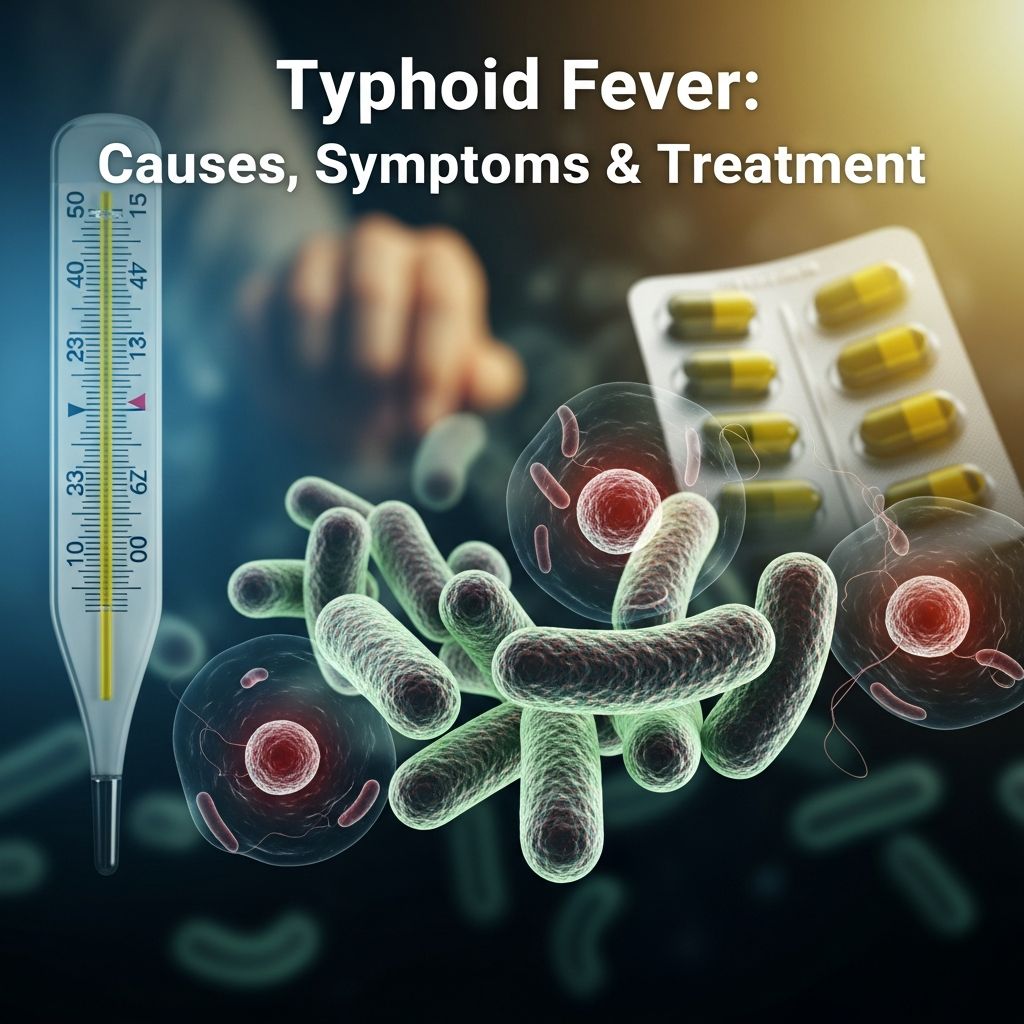
Typhoid fever is a serious, life-threatening illness caused by the bacterium Salmonella enterica serotype Typhi (S. Typhi). This bacterial infection affects multiple body systems and can lead to severe complications if left untreated. The disease is transmitted through contaminated food and water, making it particularly prevalent in areas with poor sanitation and limited access to clean drinking water. While rare in developed countries with modern water treatment systems, typhoid fever remains a significant public health concern in many parts of the world, particularly in South Asia, Africa, and Latin America.
Unlike some infectious diseases that develop suddenly, typhoid fever has an insidious onset, meaning symptoms develop gradually over time. Understanding the progression of this disease is crucial for early recognition and prompt treatment, which can significantly improve outcomes.
How Typhoid Fever Develops: The Four-Stage Progression
Typhoid fever develops in distinct stages, each with characteristic symptoms and severity levels. Recognizing which stage you’re in helps your healthcare provider determine the appropriate treatment and monitor for potential complications.
Stage One: Early Symptoms (Days 1-7)
After an incubation period of 10 to 14 days (range 6-30 days), the first stage of typhoid fever begins with mild to moderate symptoms. During this initial phase, you may experience headache, malaise, generalized aching, fever, and restlessness that can interfere with sleep. Additional symptoms may include loss of appetite, nosebleeds, cough, and either diarrhea or constipation. The fever typically starts low and increases gradually in a stepwise fashion, reaching approximately 38 to 40°C (100.4 to 104°F) by the third or fourth day of illness. The fever pattern is often lowest in the morning and peaks in the afternoon or evening.
Stage Two: Progressive Fever (Days 7-14)
As the disease progresses into the second week, the fever continues to rise and becomes more persistent. The fever typically reaches a peak of 39 to 40°C (103 to 104°F) after 7 to 10 days of illness. At this stage, patients often experience more pronounced symptoms, including weakness and fatigue that can significantly impact daily functioning. The persistent, high fever may continue with only slight morning remissions, and patients may develop a characteristic rose-colored rash on the trunk of the body.
Stage Three: Severe Phase (Days 14-21)
If the infection remains untreated beyond the second week, the third stage presents the most severe manifestations of typhoid fever. By the end of the third week, the patient may become visibly emaciated (thin and wasted), abdominal symptoms become marked with severe pain and distension, and mental disturbances become prominent. Patients may experience confusion, delirium, or changes in mental status. This stage represents a critical period where complications are most likely to develop.
Stage Four: Recovery Phase (Week 4 and Beyond)
In favorable cases, around the beginning of the fourth week, the fever begins to decline if the patient receives appropriate treatment or if the immune system begins to overcome the infection. Symptoms gradually abate, and temperature progressively returns to normal. However, without treatment, some patients may experience a relapse of symptoms.
Key Symptoms to Recognize
The symptoms of typhoid fever can vary from person to person, but certain signs are characteristic of the disease. Recognizing these symptoms is essential for seeking timely medical care.
Common Symptoms Include:
– Fever that can be as high as 103-104°F with a characteristic pattern of rising and falling- Severe headaches- Chills and sweating- Weakness and extreme fatigue- Muscle aches (myalgias)- Loss of appetite- Nausea and vomiting- Abdominal pain and discomfort- Diarrhea or constipation- Cough- Rose-colored rash (typically on the trunk)
Related Stories



Warning Signs Requiring Immediate Emergency Care:
– Very high fever (above 104°F)- Neurological symptoms such as confusion, delirium, or seizures- Coughing up or vomiting blood- Severe abdominal pain- Bloody or tarry (dark, thick, and sticky) stool- Difficulty breathing- Signs of severe dehydration
Diagnosis of Typhoid Fever
Accurate diagnosis is essential for proper treatment and preventing serious complications. Because typhoid fever symptoms overlap with many other illnesses, your healthcare provider must use a combination of clinical evaluation and laboratory testing to confirm the diagnosis.
Diagnostic Approach
Your healthcare provider will begin by taking a detailed medical and travel history. It’s crucial to inform your provider if you’ve recently traveled to areas where typhoid is common or if you believe you’ve been exposed to the disease. This information directly influences which diagnostic tests are ordered and what treatment is recommended.
During the physical examination, your provider will listen to your heart and lungs, check your vital signs, and assess your abdomen for tenderness or other abnormalities.
Laboratory Tests
Blood culture is the mainstay of diagnosis and is the most reliable test for identifying S. Typhi. Your healthcare provider will take blood samples to culture and test for the presence of the bacterium. Multiple cultures may be needed to identify the pathogen, as the bacteria may not appear in every sample.
Additional diagnostic methods include bone marrow cultures, which have a sensitivity of 80% in some studies and can remain positive despite antibiotic therapy. Stool and urine cultures are also performed but are positive less frequently than blood cultures. Serologic tests, such as the Widal test, are generally not recommended due to the high rate of false positives and difficulty distinguishing current from past infections.
Treatment Options
Prompt antibiotic treatment is the only effective way to treat typhoid fever. Early treatment can significantly reduce the duration of illness, lower the risk of serious complications, and reduce the risk of death. Most people who start antibiotics soon after becoming sick begin to feel better within a few days, though full recovery typically requires 7 to 10 days.
Antibiotic Therapy
The choice of antibiotic depends on several factors, including your travel history and the antimicrobial resistance patterns in the region where you acquired the infection. Due to increasing antimicrobial resistance worldwide, your healthcare provider will obtain antimicrobial susceptibility testing to guide treatment decisions.
Treatment Recommendations by Travel History
| Situation | Uncomplicated Illness | Complicated Illness ||———–|———————-|———————|| Traveled to Iraq or Pakistan | Azithromycin | Carbapenem || Did not travel internationally | Azithromycin | Carbapenem || Returned from other countries (India, Afghanistan, etc.) | Ceftriaxone or Azithromycin | Variable based on resistance patterns |
Important Note: Fluoroquinolones (such as ciprofloxacin) should not be used for empiric treatment, as most typhoid fever infections in the United States are caused by strains resistant to these antibiotics.
Additional Treatments
If you’re severely ill or have complications such as vomiting, diarrhea, or swelling in your abdomen or brain, you may receive additional treatments. Corticosteroids, such as dexamethasone, may be used in severe cases to reduce inflammation and prevent complications. Severe cases often require hospitalization, particularly if you’re experiencing significant dehydration or having difficulty breathing.
Recovery Timeline
When treated soon after symptoms start, typhoid fever typically lasts 7 to 10 days. However, if treatment is delayed or the case is untreated, the illness can persist for three weeks or longer. Relapses can occur even after successful initial treatment, requiring additional antibiotic courses.
Serious Complications
Without prompt treatment, typhoid fever can lead to severe, life-threatening complications. Before widespread antibiotic use, the case fatality rate for untreated typhoid fever was higher than 10%. Even with modern antibiotics, serious complications can develop if treatment is delayed.
Possible Complications Include:
– Intestinal perforation (a hole in the intestinal wall)- Pneumonia- Myocarditis (inflammation of the heart muscle)- Encephalitis (brain inflammation)- Delirium and altered mental status- Severe dehydration- Septic shock- Multi-organ failure- Death
Patients with underlying conditions such as cancer or sickle cell anemia are particularly prone to developing serious and prolonged infections with S. Typhi. With appropriate antibiotic treatment, the fatality rate of typhoid fever is lower than 1%, demonstrating the critical importance of early medical intervention.
Prevention Strategies
Since typhoid fever is transmitted through contaminated food and water, prevention focuses on avoiding exposure and maintaining immunity through vaccination.
Typhoid Vaccines Available in the United States
| Vaccine | Administration | Dosage | Time Before Travel | Minimum Age | Booster Schedule ||———|—————-|——–|——————-|————-|——————|| Ty21a (Vivotif) | Oral capsules | 4 capsules, one every other day | 1 week | 6 years | Every 5 years || ViCPS (Typhim Vi) | Intramuscular injection | Single 0.5 mL injection | 2 weeks | 2 years | Every 2 years |
If you’re planning to travel to areas where typhoid is endemic, consult with your healthcare provider about vaccination options at least 2 to 4 weeks before your trip.
Food and Water Safety
– Drink only bottled water or water that has been boiled and cooled- Avoid ice made from untreated water- Eat hot, cooked foods only- Avoid raw or undercooked meat and seafood- Peel fruits and vegetables yourself- Practice thorough hand hygiene, especially before eating and after using the restroom- Avoid eating from street vendors or establishments with questionable sanitation practices
When to Seek Medical Care
If you develop symptoms of typhoid fever, especially if you’ve recently traveled to an area where the disease is common, contact your healthcare provider immediately. Early diagnosis and treatment can prevent progression to severe stages and reduce the risk of complications.
Go to the emergency room immediately if you experience any of the warning signs listed previously, including very high fever, neurological symptoms, bloody vomit or stool, severe abdominal pain, or difficulty breathing.
Post-Treatment Considerations
After recovering from typhoid fever, it’s important to follow up with your healthcare provider to ensure complete recovery. Some people become chronic carriers of the S. Typhi bacteria, continuing to shed the organism in their stool and potentially spreading the disease to others, even after symptoms resolve. If your symptoms return after treatment, contact your healthcare provider immediately for additional testing and possibly another course of antibiotics.
Frequently Asked Questions About Typhoid Fever
Q: How long is the incubation period for typhoid fever?
A: The typical incubation period is 10 to 14 days, though it can range from 6 to 30 days. During this time, an infected person may not show any symptoms but can still transmit the disease to others.
Q: Can typhoid fever be cured?
A: Yes, typhoid fever can be effectively cured with appropriate antibiotic treatment. With early treatment, the fatality rate is less than 1%. However, untreated typhoid fever has a fatality rate of 10 to 30%.
Q: Is typhoid fever contagious?
A: Yes, typhoid fever is contagious and spreads through contaminated food and water. It’s transmitted via the fecal-oral route, meaning the bacteria in an infected person’s feces can contaminate food or water if proper hygiene practices aren’t followed.
Q: What should I do if I think I have typhoid fever?
A: Contact your healthcare provider immediately, especially if you’ve recently traveled to an endemic area. Provide information about your travel history and any known exposures. Seek emergency care if you experience warning signs such as very high fever, confusion, or bloody vomit or stool.
Q: Is it safe to travel after recovering from typhoid fever?
A: Most people can resume normal activities after recovering, but some become chronic carriers. Follow your healthcare provider’s recommendations and get tested to ensure you’re not spreading the disease to others.
Q: How effective are typhoid vaccines?
A: Both available typhoid vaccines are effective at preventing the disease, though no vaccine is 100% protective. The oral Ty21a vaccine is about 60% effective, while the injectable ViCPS vaccine is about 70% effective over 3 years.
References
- Typhoid Fever – StatPearls — National Center for Biotechnology Information (NCBI), U.S. National Library of Medicine. 2024. https://www.ncbi.nlm.nih.gov/books/NBK557513/
- Typhoid Fever: Definition, Symptoms, & Treatment — Britannica. 2024. https://www.britannica.com/science/typhoid-fever
- Clinical Guidance for Typhoid Fever and Paratyphoid Fever — Centers for Disease Control and Prevention (CDC). 2024. https://www.cdc.gov/typhoid-fever/hcp/clinical-guidance/
- Typhoid Fever: Causes, Symptoms & Treatment — Cleveland Clinic. 2024. https://my.clevelandclinic.org/health/diseases/17730-typhoid-fever
- Typhoid Fever: Causes, Symptoms, Treatment and Vaccine — WebMD. 2024. https://www.webmd.com/a-to-z-guides/typhoid-fever
Similar Articles








Read full bio of medha deb